It’s that time again! Here’s another Dear Hollywood post for you. I do love doing these posts especially as the current amount of content in regards to period dramas, is VERY disappointing. A lot of recent period dramas either a) completely ignore historical record & sources, b) completely mischaracterise historical figures despite there being an abundance of contemporary sources (i.e ambassadors letters) that detail the personalities of said historical figures, c) add unnecessary characters & drama & storylines despite the fact that a lot of historical figures had insane lives without added drama or d) cover the same subjects over and over. I mean I love Elizabeth I with my whole heart (QUEEN 4 EVA) but there’s very few parts of her life that haven’t been covered and there is such an abundance of of fascinating women who would make just as good entertainment. So here’s a few women I think deserve a big screen or small screen adaption!

I talked about her in my Double Queens feature found here, and I am so desperate for an adaption of her life. Meet Theophanu. Now her origins are very interesting; she was born with the name Anastasia or Anastaso in the Peloponnesian region of Lakonia probably in the city of Sparta circa 941, the daughter of a tavern owner whose name we believe was Craterus. Nothing is known about her mother. In 956 when she was around 15-16 she met Romanos the son and co-ruler of the Byzantine Emperor Constantine VII. How they met, we have absolutely no idea. What we do know is that Romanos fell head over heels with her and against the wishes of his father (who himself had married a princess and who was not best pleased at his son being in love with a dirt poor commoner) he married her thus making her royalty. Cinderella who? Upon marriage she took on the name Theophanu, and was (this won’t surprise you) immediately unpopular with the Byzantine elite due to her humble origins, despite her beauty and obvious intelligence. It’s also believed she clashed with her father in law, which was problematic considering the fact he was the Emperor. Part of the tension between them apparently seemed to stem from Constantine’s concern that Theophanu had far too much influence over his son. In 959 Constantine dropped dead. And I mean that literally. The man had been a beacon of health until one day, he died, suddenly and unexpectedly and as is the case in most unexplained deaths, everyone immediately jumped to the conclusion of poisoning with Theophanu as the lead suspect. Hence the picture above. Romanos thus became the sole ruler of the Byzantine Emperor, with Theophanu as his Empress; he quickly decided to purge the court of his father’s favourite officials and advisors and in the years following his accession he also apparently dismissed his mother Empress Helena from court and sent his sisters to nunneries. The exact circumstances surrounding these de-facto exiles isn’t clear and whilst Theophanu was blamed for her husband’s decisions, it’s possible there were other factors at play. I don’t personally think Romanos would have done all that simply because Theophanu didn’t like them – there’s likely to have been incidents or particular problems that lead to the controversial exiling of his family. Now Romanos was not a particularly war-hungry Emperor nor was he very politically shrewd; during his short four year reign he relied on a small group of very loyal advisors and Theophanu who became extremely influential, in many ways helping to dictate policy. Whilst this served Romanos well, it created a ton of problems long term, as his decision to rely on a small number of advisors and thus ignore the wider bureaucracy particularly the military, caused quite a significant amount of resentment. In early March 963, Theophanu gave birth to their only daughter and third child overall Anna (they already had two sons Basil & Constantine who were 5 and 3 respectively). Romanos organised a hunting expedition to celebrate and whilst on said hunting expedition, he fell dangerously ill and died on the 15th March 963. Accusations that Theophanu was responsible for his death, are to be frank, absolutely ludicrous. She had absolutely no reason to murder her husband; by doing so she would have gained absolutely nothing and potentially lost everything. She was safe and secure as an anointed Augusta; her husband’s death however made her the widowed mother of three very young children with no powerhouse political family to protect and support her, and a ton of enemies waiting in the wings to destroy her. I’d also like to point out she’d just given birth and was literally still in bed. At this point in Byzantine history, hereditary ascension was more of a matter of tradition, not law (or in the words of Barbarossa from Pirate’s of the Caribbean “the code is more what you’d call ‘guidelines’ than actual rules”) and although her boys were immediately declared co-emperors with her as their nominal regent, the positions were in name only and Joseph Bringas a powerful eunuch at court was the one really wielding power. Theophanu did not even remotely trust Bringas who she perceived to be power hungry (and she may have had a point; the man had a ton of enemies including Basil Lekapenos the illegitimate son of her husband’s grandfather Romanos I and therefore her husband’s half-uncle who was quite influential at court). Theophanu thus found herself in a position of having to find a way to a) secure her position, b) save her life and c) secure the future of her children. To do that she needed a protector. Passing over a plethora of would-be suitors who were eager to woo the very beautiful newly widowed Empress, she made an alliance with Nikephoros Phokas a celebrated military commander who the army had promptly proclaimed as their favoured choice for emperor just after Romanos’ death (remember the military were not exactly Theophanu’s #1 fans). Nikephoros was also one of Joseph Bringas’ aforementioned enemies. The Theophanu and Nikephoros marriage was seemingly a good political idea; marriage to the Empress gave him legitimacy whilst he gave a sacred oath to protect her children. Theophanu however decided to have a contingency plan on the side and allegedly took her new husband’s very handsome and inexplicably charming nephew John Tzimikes, another popular and influential general as a lover. In August of that year Nikephoros took control of Constantinople despite the resistance of many of Romanos’ former counsellors including Bringas who was swiftly dealt with. Nikephoros was crowned in the Hagia Sophia on the 16th August and married Theophanu shortly thereafter. The marriage, unsurprisingly provoked a ton of opposition from the church particularly the very very very conservative Patriarch Polyeuctus who was well known to have quite considerable enmity towards Theophanu who he had long considered a bit of an upstart. Both Theophano and Nikephoros were widowed, and the Orthodox Church at the time only begrudgingly accepted remarriage. Polyeuctus demanded that Nikephoros perform a penance for getting re-married, and when Nikephoros showed some resistance, he banned him from kissing the holy altar. Further complications arose when it was alleged that Nikephoros was godfather to at least one of Romanos & Theophano’s children, which placed the couple within a prohibited spiritual relationship (thus illegal under Orthodox law). Nikephoros organised a council which nullified the relevant rules, however Polyeuctus was not so easily dealt with and soon declared Nikephoros and Theophanu excommunicated until the former sent the latter away. In response a number of Nikephoros and Theophanu’s inner circle testified that the new Emperor was not in fact godfather to any of Theophano’s children and thus there was no legal reason to oppose the marriage. Polyeuctus was as bitter and resentful as ever but ultimately relented allowing Nikephoros to return to full communion and keep Theophano as his wife. That ladies and gentlemen is what we call a win for Theophanu. Now the thing is Nikephoros proved to be no more politically astute that Romanos and his gruff military style proved counter-productive to the workings of government as well as causing a number of diplomatic headaches, namely war on multiple fronts. As many monarchs will attest, the problem with war is that it’s costly and what are monarchs usually forced to do to fund, said costly wars? Raise taxes, and let’s be honest higher taxes are no fun for anyone and are usually very unpopular, especially when they coincide with a few years of poor harvests which have cause widespread famine in some areas of the empire. OOPS. When Nikephoros tried to mitigate the damage his foreign policy was doing to the people, he did so by limiting the wealth of monasteries which in turn only upset the church. To top off the chaos, he also managed to fall out with a number of his closest supporters including his nephew John Tzimiskes, who if you recall had allegedly begun sleeping with Theophanu shortly after she married Nikephoros. John and Nikephoros had some sort of a falling out, the origins of which aren’t clear (I’d wager infidelity might have played a role) and John was quickly dismissed from court. Feeling pretty aggrieved by the situation, he retaliated by conspiring with his good friend Basil Lekapenos (the uncle of Theophanu’s first husband who had never been a huge fan of Nikephoros and who was determined to see his own blood i.e Theophanu’s sons on the throne instead of Nikephoros brother Leo who it was believed he want to succeed him) and Theophanu herself; it’s thought she had tired of Nikephoros’ never ending stream of bad political decisions. A number of disgruntled generals who Nikephoros had also enraged supported them, leading to a convoluted plot which culminated in Nikephoros’ murder (FUN FACT: the inscription on Nikephoros’ sarcophagus ends with “Nikephoros, who vanquished all but Eve” in reference to Theophanu). The exact details of his death aren’t clear and what we do know is likely to have been heavily embellished over the years; John having been sent away from Constantinople allegedly crossed the Bosphorus into the harbour of the city, was then smuggled into the palace and into the bedroom of Nikephoros by Theophanu who apparently left the bedroom doors unlocked for him to enter. He then murdered his uncle and proclaimed himself Emperor. To top it off he then announced plans to marry Theophanu. The problem with that was Theophanu at this point had an astonishingly bad reputation (having been accused of murdering the last three emperors) and her old nemesis Patriarch Polyeuctus, appalled at having to deal with Theophanu’s shenanigans yet again, flat out refused to perform the coronation and demanded that John a) punish those who assisted him in the assassination, b) repeal of all Nikephoros decrees that he claimed were against the church and c) dismiss Theophanu from court. Theophanu’s ally/uncle by marriage Basil Lekapenos promptly turned against her and advised John to send Theophanu away. John evidently chose the legitimacy of his reign over any sentimentality he may have felt towards her and promptly agreed to send her into exile on the island of Prinkipo. Now if you remember, Theophanu had allegedly been responsible for her husband sending all his sisters to live as nuns in convents; this ended up biting Theophanu on the behind because the minute, she was exiled, John brought those princess-nuns out of their convents and immediately married one of them – Theodora – giving his reign further legitimacy. John would only rule for seven years with Theophanu spending the entirety of those seven years in exile. Her sons Basil and Constantine were technically under the guardianship of her former lover turned enemy however Basil Lekapenos her former ally/uncle by marriage acted as a protector of sorts to the two boys. John died suddenly in 976 returning from his second campaign against the Abbasids; his death like so many in Theophanu’s life was abrupt and unexpected and once again rumours of poison emerged. Except this time our girl Theophanu was innocent of all charges. It’s believed that it was Basil Lekapenos that had John murdered – apparently to guarantee that Theophanu’s now grown up sons would take power of the empire. Literally the first thing her boys did upon taking power was to recall their beloved mama back from exile. She returned to Constantinople and was given all the honours due to the mother of the co-emperors. She evidently upon her return had some political influence although exile seems to have mellowed her somewhat and she was more discreet in her influence than before. The last reference to her was in 978 just two years after her return when she beseeched the retired Georgian general T’or’nik of Tao to broker an alliance between her sons and his former overlord David III of Tao; she wanted David’s support against the Byzantine general Skleros who was revolting against the crown. She’s not mentioned again and it’s believed she died in the early years of her sons reign probably around 980. Now that would make epic tv. You could do a film however I would probably do a series with a couple of seasons. The first season could start with her meeting Romanos and end with her and Romanos being crowned with all the drama with his family and having heirs in between. The second season could then cover Romanos’ reign and end with his death/Theophanu agreeing to marry Nikephoros. The third season could start with their marriage and cover Nikephoros’ reign including all his questionable political wheeling and dealing, Theophanu’s scheming and affair with John; the season could end on John and Theophanu agreeing to kill Nikephoros. The fourth and final season could start with Nikephoros’ death and cover the seven years of John’s rule including his wars, the return of the princess-nuns, John and Theodora’s marriage and Theophanu’s imprisonment. The final season could then end with John’s death, her son’s accession and her triumphant return to Constantinople. It would be SO good but only if written well i.e writing Theophanu as a multi dimensional woman with complicated motives and questionable decisions and a woman doing what she had to, to survive, instead of painting her as some of scheming witch. There’s also a Cinderella element to her story which I love.

Maria of Castile was born in 1401 the eldest child of Henry III of Castile and Catherine of Lancaster making her a granddaughter of John of Gaunt. She grew up in Castile and remained in an entirely Castilian household – her godmther Maria de Ayala (a nun and illegitimate daughter of Peter of Castile) was a prominent fixture in her life. She had an extensive education. As the King’s eldest child, Maria was granted the title of Princess of Asturias, the title reserved for the first-in-line to the throne and she was formally recognised as heir presumptive at the Cortes of Toledo on 6 January 1402. Her father was evidently concerned there might be an Empress Matilda esque situation should he die so around the same time, so she was betrothed to her first cousin, Alfonso the son of her paternal uncle Ferdinand as a way to strengthen her status. The birth of her brother John temporarily rendered all these concerns; in 1405 however those concerns once again became relevant when her father died leaving her brother John II as King; she was once again heir to the throne. Her brother however was still a little boy and so their mother Queen Catherine governed the Castile as regent during King John II’s minority and made sure that Maria was able to observe the politics and machinations of rule and statesmanship. Maria and her mother were super close, even after Maria went to Aragon, in fact letters remain between the two which attest to this fact. Watching her mama rule clearly made Maria aware of her own responsibilities and prerogatives as a queen and later as a regent. Although the marriage between Maria and her cousin Alfonso (future King of Aragon) had been agreed upon since she was baby, it wasn’t formalised until 1408 when she was 7. As part of the marriage treaty, her brother John was to marry Alfonso’s sister Maria, whilst her younger sister Catherine was to marry Alfonso’s brother Henry. See the Spanish were doing incest galore even before the Habsburgs. What’s interesting and I did mention it above is that after the marriage was agreed, Maria remained in a completely Castilian household – in most situations a future Queen of Aragon would have been given Aragonese attendees to prepare her for marriage -for some reason this didn’t happen with Maria. Maria and Alfonso married at the Cathedral of Valencia on the 12th June 1415 when she was 14 – they were married by the Antipope Benedict XIII. Now the dowry that Maria was given was absolutely insane – both her and Alfonso were granted land and revenues galore and Alfonso was even raised to the rank of Infante of Castile – it’s believed that the dowry was so grand that it was actually the largest dowry ever given to a Princess of Castile. Her brother would later complain it was too large. Now the whole interlocked family thing proved to be bothersome and family squabbles were pretty much a hallmark of family life – the political ambitions of her in laws Ferdinand and Eleanor of Alberquerque frequently clashed with the ambitions of her mother whilst both her brothers and Alfonso’s brothers proved to be annoying little shits that caused all sorts of problems down the road. Now the marriage was not a particularly happy one – they had very contrasting personalities. To add to the that Maria’s health became increasingly frail post the wedding. Now there’s no evidence that she was considered a particularly frail child in fact her health doesn’t appear to have become a concern until the wedding itself. They weren’t able to consummate the marriage on their wedding night because she had yet to begin her menstrual period. That didn’t happen until two years into the marriage when she was 16. At some point around the wedding it became clear that she had epilepsy – as I said she wasn’t known as a child to have suffered from seizure. There’s some suggestion that the epilepsy was perhaps triggered by a bout of smallpox that left her permanently scarred. The marriage ended up being a political alliance, pure and simple. It didn’t however start off that way and there is evidence that there were some fleeting moments of happiness and a decent amount of romantic potential in the early years; their lack of a child, his mother’s overbearing involvement and his infidelity would prove to be MAJOR issues that diminished any happiness they once had, which is just tragic. He became King with Maria as His Queen in 1416 and their marriage went down hill from there. His mother Eleanor was overbearing and continued acting as the Queen of Aragon. She remained supreme at court with Maria given a supporting role – she had little involvement in politics and it doesn’t appear that either Alfonso or Eleanor ever really tried to include her. It was only in the early 1420’s when Eleanor’s health began to deteriorate that Maria began to develop more of a public profile. In 1421 Joanna II of Naples named Alfonso as heir to the Kingdom of Naples however he had a rival; Louis III of Anju who was backed by Muzio Attendolo Sforza and Pope Martin V. Due to various political machinations on Alfonso’s part, Sforza decided to betray Louis and abandon his cause, giving Alfonso the green light to become King of Naples however by 1423 Alfonso had begun to clash with Gianni Caracciolo the very powerful lover of Joanna. In a move that I would probably describe as unwise Alfonso had Gianni arrested. Now the man was a pain in the behind but arresting her lover was clearly not going to go down well with Joanna who immediately repudiated her adoption of Alfonso as heir and named Louis instead. Alfonso reacted like a kid having a tantrum over having to face the consequences of his own damn actions for the first time in his life and promptly began making plans to invade Naples. He left Aragon almost immediately and unwilling (understandably so) to leave the country in the hands of his ambitious, irritating and frankly untrustworthy brothers who all had delusions of grandeur and dreams of sitting on the throne themselves. With his mother’s health failing, he had nowhere to turn but Maria who he declared as regent, publicly stating that her authority was second only to his and that she now possessed the right to govern as if she were him. The incredible thing about Maria’s regency is that the rest of Alfonso’s life was dedicated to the capture and rule of Naples and Aragon was left to Maria for literal decades. I’m not even joking. Alfonso’s first period of abroad lasted from 1420 to 1423 during which time Maria proved she wasn’t quite as passive as everyone believed and watching her mother and then her mother in law wield extraordinary political power had actually taught her a thing or two. Alfonso’s return in 1423 was to put it mildly a low point. During his three years abroad he had taken a mistress Giraldona Carlino who he was supposedly smitten with; upon arriving back home he promptly announced that Giraldona had given birth to a son Ferdinand. Maria didn’t take the news well and rather insensitively announced to her husband there and then that his mother was dead, except she wasn’t just very ill. Ouch. The marriage to be quite honest never really recovered and Giraldona showing up at court only infuriated Maria further. The three of them resided rather awkwardly at court together between 1423 and 1432; during which time Alfonso and Giraldona had three children whilst Maria remained childless and deeply unimpressed. She appears to have been quite isolated in those days – she didn’t get along with her in laws and her husband was fixated on his mistress and obsession with conquering Naples. Records show that Maria’s household was almost exclusively Castilian at this point, mostly people who had accompanied her from Castile and it doesn’t seem like she had many friends outside of her immediate circle. When in 1432 the opportunity arose for Alfonso to potentially conquer Naples, permanently this time, Maria encouraged him to go. Despite how strained their marriage had become, she had previously done an exemplary job as regent and he trusted no one else to rule for him. He departed Aragon in 1432 and literally never came back; I’m being serious, the man left for Italy and remained there until his death in 1358 meaning Maria’s second regency literally lasted for 26 years. Combined with the three years she was in charge the first time, she ended up ruling as regent for 29-30 years which is around 70% of Alfonso’s 42 year reign. For those 29-30 years she had complete control over the provincial governors, prelates and religious orders, the nobility, the army, the municipal government, and all other subjects regardless of legal status. She granted constitutions, made laws in accordance with royal authority was empowered to carry out justice, both civil and criminal, and named judges and delegates. Assisted by a royal council separate from the king’s, she had full royal authority. She turned out to be a very shrewd leader; whilst her household was full of Castilian’s, she made sure they were deprived of political influence and the highest offices in government were all given to men from Aragon, which only helped increase her sky high popularity and ensured government functioned smoothly. She also helped with her husband’s quest to gain Naples; when he was captured at Ponza in 1435 she paid the ransom (frankly I’d have left him to rot). She also negotiated on his behalf with Aragon’s enemies and allies alike; on a number of occasions she oversaw negotiations between Aragon and her home-nation of Castile. On one occasion her and her cousin/sister in law Maria mediated a peace treaty in Valladolid on behalf of their husbands – it was noted by contemporaries that if the Queen of Castile had, had as much authority as the Queen of Aragon then peace in Spain may have been possible. In 1454 her brother died and she travelled to Castile to ensure peace remained; she stayed in Castile for three years until 1457. She remained as regent until 1458 when her husband died; how she felt about the news of his demise I have no idea – it had been two decades since she’d seen the man after all. Her husband’s bastard son Ferdinand succeeded him in Naples and her brother in law John succeeded him in Aragon leading to her promptly resigning as regent and leaving court. Her retirement didn’t last long; within four months she had followed her husband to the grave. Like with many of the women I highlight in these posts, we could legit have projects covering multiple periods of her life. I could see a series with 20-24 episodes per season being a pretty good fit; season 1 could start with her preparing for marriage, actually getting married and then the early years of their marriage when they as a couple had promise. It’d be bittersweet to see that promise vanish; the season could end essentially with the end of their marriage and his departure to Naples leaving her as regent. Season 2 could cover her first regency which lasted three years and include her scheming brother in laws, Alfonso’s quest for Naples, her handling the pressures of the Aragonese court and her early negotiations with her home country. The season could then end with Alfonso’s return and then season 3 would focus on his years back in Aragon, dealing with her and Alfonso having to co-habit once more, her political and emotional isolation and the appearance of his mistress Giraldona in the mid season finale. We could even have a fab Addison Montgomery circa Grey’s Anatomy season 1 finale esque arrival where instead of her saying “you’re the woman that’s been sleeping with my husband”, Giraldona could say “I’m the woman that’s been sleeping with her your husband”. Epic. 1000 memes. It’d be sooo good. That season could then end with Alfonso’s final departure, their bittersweet farewell and Maria finally the permanent ruler of Aragon. You could end it there or potentially do another season covering her 2nd regency however that lasts 26 years and a lot happens. I quite like the idea of it ending with Alfonso gone and Maria ending on top, with no husband or mother in law holding her back and 3 kingdoms (Aragon, Castile & Naples) fully accepting of her as Aragon’s Queen.
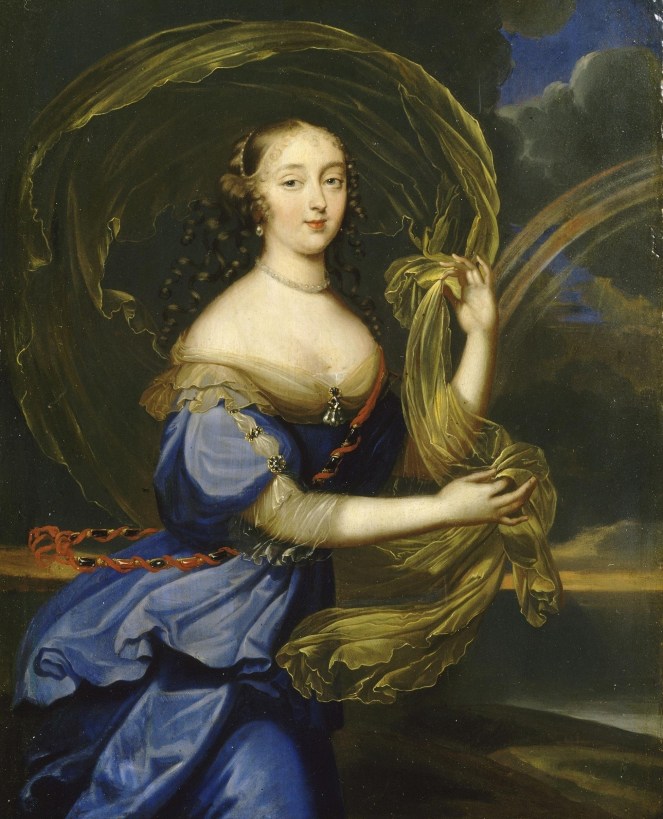
Now if you know anything about me, you know I LOVE a royal mistress and there are few I love more than this woman : Francoise-Athénaïs de Rochechouart de Mortemart was born in 1640 the daughter of Gabriel de Rochechouart the Duc de Mortemart and Diane de Grandseigne. Now unlike French mistresses i.e Pompadour who had more modest origins, Athenais, possessed the blood of two of France’s most ancient noble families and her lineage went back further than anyones (I mean we’re talking over a thousand years here). Not only had her mother served as Lady in Waiting to the Queen Consort then Queen Regent/Queen Mother of France Anne of Austria but her father had been a childhood companion of and later First Gentleman of the Bedchamber to Louis XIII as well as a confidante of both the aforementioned Anne of Austria and Cardinal Richelieu (who throughout Louis XIII’s reign pretty much ran the country) whilst her elder siblings Louis Victor and Gabrielle were childhood companions of the young Louis XIV. She was basically as blue blooded as they come, with exemplary royal connections. Educated at the Convent of St Mary in Saintes, Athenais grew to be a young woman of exceptional beauty with corn-coloured blonde hair, large blue eyes, pale skin and a curvy yet petite figure. She was also considered to be clever, sharp, amusing and possessing of a very sharp tongue, in fact her entire family were renowned for their famous Mortemart wit. In 1660 at the age of 20 she became a lady in waiting to the King’s sister in law Henrietta Anne of England the Duchess of Orleans. Three years later she was married off to Louis Henri de Pardaillan de Gondrin the Marquis de Montespan. Rumours abounded that he had not been her first choice however the man she desired had been forced to flee the country. Now as the Marquise de Montespan (as history would mostly know her), she continued serving the Duchess of Orleans and soon became considered one of the reigning beauties of court. She was well educated and cultured and her in-depth knowledge of politics and literature won her acclaim. She was also heavily courted by the men of Versailles. Alongside her sister Gabrielle and her brother Louis Victor, both of whom were as beautiful, intelligent and ruthless as her, she formed a renowned faction at court that was increasingly influential. By 1666 Montespan was beginning to challenge the King’s long term mistress Louise de la Valliere; awkwardly both de la Valliere and the Spanish-born Queen Maria Theresa completely underestimated the younger woman and didn’t consider her a rival, which I have no doubt spurred the very ambitious and slightly vindictive Montespan on even more. By 1668 Louise was no longer top dog and had been relegated to second place behind Montespan; the two women had connecting bedrooms so the King could visit Montespan without the rest of court knowing. Eventually Louise joined a convent and left court, leaving Montespan as the King’s undisputed favourite. She gave birth to her and the King’s first child – a little girl Louise Françoise – in 1669 (she already had two young children with her husband). Although the girl did not live long, Montespan and the King went on to have six more children between 1670 and 1678; three sons Louis-Auguste the Duke of Maine, Louis-Cesar the Count of Vexin and Louise-Alexandre the Count of Toulouse, and three daughters Louise-Françoise the Princess of Conde, Louise-Anne Marie Mademoiselle de Tours and Françoise Marie the Duchess of Orleans. In 1673 in an act that was almost unprecedented, her children with the King were legitimated and given the royal surname of Bourbon; in later years this secured the girls advantageous marriages and the boys high ranking positions, wealth and titles. Now unlike many mistresses who were usually unmarried or widowed or married specifically to a man who didn’t mind their wife sleeping with the King, Montespan was married, and not only was she married but she was married to a man who was most definitely not accepting of his wife’s infidelity. Her husband raised an absolutely stink at court, at one point allegedly challenging the King at Saint-Germain-en-Laye to a duel. He also in a less than subtle manner had his carriage and gates decorated with antlers (symbolising horns, a traditional symbol of the cuckolded husband). Montespan was to put it mildly mortified and the King was increasingly irritated by his mistresses sulking husband. Montespan’s husband was for a while imprisoned although eventually released and exiled to his lands. You’d think imprisonment would shut a guy up but noooooo this man was not willing to back down and between 1670 and 1686 he went to Paris every year to protest his wife’s infidelity. He also, and this quite frankly is insane, declared that she was dead to him and commanded an annual requiem mass to be sung for her (despite her being very much alive and living it up in Versailles) during her lifetime. He then forced their two young children to attend a funeral for their ‘dead’ mother. The unhappily married couple were granted an official separation in 1674 (this was most certainly the King’s doing) however opposition to the relationship did not end there. Not only did her husband object to her and the King’s adultery, the Catholic Church did too and they were very vocal about it. In 1675 a priest refused to give her absolution, something that was necessary for her to take Easter communion, a requisite for all Catholics. He allegedly said something to the effect of “is this the Madame that scandalises all of France? Go abandon your shocking life and then come throw yourself at the feet of the ministers of Jesus Christ”. Safe to say neither Montespan nor the King were particularly happy and although the King appealed to the priest’s superiors, the church refused to accept the affair. The church’s disapproval didn’t particularly seem to have much of an effect on the affair which lasted around fifteen years; those fifteen years would be the most glorious of Louis’ reign and she would go on to be the most celebrated of all his mistresses. She was widely acknowledged as the real Queen of France during her time and she definitely acted as such; she was extravagant and demanding and she was charismatic enough/Louis was besotted enough for her to get exactly what she wanted. Money was no object. Her apartments at Versailles were known to be lavish and she was spoilt with a never ending stream of gifts (usually jewels, flowers & animals). She was given the nickname “Quanto” meaning how much in Italian, not that anyone would dared have called her that to her face. They were far too scared of her. As I mentioned she was known for her sharp tongue and her brutal honesty; as Nancy Mitford wrote in her biography of Louis XIV, “both she and the King frightened people; she was a tease, a mocking-bird, noted for her wonderful imitations and said to be hard-hearted. This meant that she regarded serious events with a cheerful realism; she was not sentimental”. She also despised the Queen and unlike other royal mistresses made absolutely no effort to hide her feelings, in fact she was downright rude. The feelings were very much mutual with Saint Simon writing, “The Queen was finding more and more difficult to bear Montespan’s haughty behaviour, much different from the deeply affected respect that la Valliere had for her, et whom she loved very dearly, when she [Maria Theresa] was often sighing “Cette pure me fear mourir! / This bitch will be the death of me!”. Whilst perhaps less overtly political than Pompadour, she demonstrated a significant influence during her tenure as mistress; she openly favoured Colbert, supplanted the Queen during meetings with ambassadors where she charmed them with her famous wit, supported the intellectual awakening of court, was a generous patron of the arts and letters forming relationships with the likes of Corneille, Racine and La Fontaine and initially tried to prevent the war with Holland however when war did eventually break up she armed her own military ship. She also became one of the public faces of the monarchy with Antonia Fraser writing, “the public face of Athénaïs was now as the dazzling creature, the brightest star in the galaxy which surrounded the Sun King, the one for whom, without knowing it, he had always craved to complete his image in the world at large (if not the world of the Catholic Church)”. The Affaire des Poisons (a major political scandal which lasted from 1677 to 1682) would bring about the end of Montespan’s reign; the scandal involved a number of prominent members of the aristocracy being implicated and sentenced on charges of poisoning and witchcraft with accusations of black masses. The scandal reached into the inner circle of the king and led to the execution of 36 people. Some of those executed had ties to Montespan which caused all sorts of problems. Accusations were thrown that Montespan had not only attended the black masses but that she had used witchcraft to keep Louis in love with her and that she had poisoned Marie Angélique de Scorailles, a young rival for the King’s affection. She was never charged with any crime and it’s highly unlikely she was involved. She was however a very powerful woman with lots of very powerful enemies and accusing a woman of witchcraft (as pretty much every part of history will show you) is a sure fire way to ruin her reputation. Two of the King’s closest advisors Louvois and Colbert, the latter of whom Montespan had once been a key supporter of, helped keep the accusations hush hush in order to protect Montespan and her children. Louis didn’t end the relationship immediately but it was certainly the beginning of the end and by 1691, no longer in royal favour, she left court and retired to the Filles de Saint Joseph convent in Paris where she dedicated herself to charity, giving vast sums to hospitals and orphanages. She remained there until her death in 1707. Louis meanwhile took Francoise d’Aubigne the Marquise de Maintenon as a mistress (although she refused to conduct a physical relationship with him whilst his wife was still alive); awkwardly Maintenon had once been a close friend of Montespan’s and had been in charge of raising Montespan and the King’s children. A strongly religious person, Maintenon encouraged Louis to become more devout; he no longer took mistresses and banned operas during Lent. Once a controversial figure at court, Montespan would later be missed by those who had once loathed her and they lamented that Versailles was no longer as fun as it had been during her reign. There are already a number of depictions of Montespan however they’re never accurate; whether that be looks wise (she’s usually played as dark haired & thin – a look might I add that was absolutely not in fashion at the time, despite being her actually being blonde and curvy in real life) or in personality (yes Montespan was a tricky figure with a polarising personality and the habit of sometimes being a little bit bitchy) but she wasn’t evil incarnate. Nor was she involved in witchcraft. In some depictions she’s usually portrayed as a contrast to the saintly figure of the Queen. If a historically accurate series about her life was to be made, it could very easily be done in three seasons with the first season focusing on her catching the king’s interest and slowly usurping his other mistress Louise de la Valliere; the season could thus end with her as the Supreme Queen of Versailles. The second season would cover her reign and unlike other depictions of her which never fully explore the political influence she had, this season would include all the ways she affected not just the French court but also French policy. At the beginning of the third season she would start off top of the world, still his favourite but over the course of the season she would begin to fall out of favour with the Affair of the Poissons hitting hard towards the end. The season finale could then focus on Madame de Maintenon finally eclipsing Montespan and could end with her finally leaving Versailles.
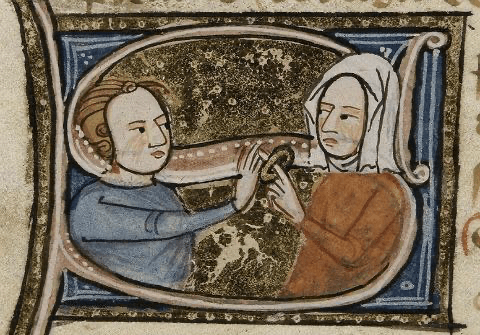
One of the things I’m most surprised of in the era of papal films/tv shows such as Conclave, The Young Pope and The Two Popes, is that a film/tv show has yet to be made about these two. You see the Theophylacti family were the OG papal family; they ran the papal show in the period known officially as the Saeculum Obscurum. Less officially it’s known as the Pornocracy or the Rule of the Harlots. Yes you read that correctly. The Saeculum Obscurum was a period of papal history between the death of Pope Formosus in 896 and the death of Pope John XII in 964; during those seventy years, there were 19 (!!!) popes and absolute chaos reigned in Rome; of those 19 popes, 12 of them were effectively chosen and controlled by the Theophylacti family, in particular two rather extraordinary and very very controversial women; Theodora and Marozia aka the OG Papal Mistresses. Now Theodora was the wife of Theophylact I, Count of Tusculum who held considerable sway of papal affairs whilst Marozia was their daughter. Theodora had huge influence over her husband who allowed her to do just about whatever the hell she wanted. In 905 at the age of around 15, Marozia became the mistress of Pope Sergius III who just happened to be Theophylact’s cousin; he also at the age of 45 was thirty years her senior. Sergius gave great influence to Marozia and her family and her father was appointed to various high positions, being promoted to the point that he effectively controlled Rome. Four years later in 909, Marozia was married to Alberic I of Spoleto although it’s possible she continued a relationship with Sergius. She and Alberic would have five sons John, Alberic, Constantino, Sergio and David/Deodatus and at least one daughter who Theodora and Marozia tried to marry to either Stephen Lekapenos or Constantine Lekapenos the sons of the Byzantine Emperor Romanos I Lekapenos. It’s been claimed that her eldest son was actually the son of Pope Sergius III although there’s very little proof and it doesn’t appear that the claims were hugely widespread at the time. Certainly Alberic seems to have been convinced John was his son; some historians tend to agree with him whilst others do not. Edward Gibbon said that Alberic was likely the father whilst Horace Mann said that Liutprand of Cremona’s report about John’s parentage “must be regarded as highly doubtful”. If Sergius was indeed John’s father then that gave Marozia and her family a bit of leverage; the Pope having a child was embarrassing to say the least. Now the impressive thing about Theodora and Marozia was the huge sway they had over the Papacy during the The Saeculum Obscurum; the first pope was obviously Sergius who Marozia was the mistress of. He was followed by Anastasus III whose candidacy was approved by Theodora (it’s also possible he was the illegitimate son of Sergius) and then Lando who was also a candidate of Theodora’s choosing. Both Anastasus and Lando were the pope for very brief periods of time. He was then followed by Pope John X who it’s believed was a distant relative of Theodora’s and a particularly close ally of her husband’s; it was also alleged that they were lovers although that’s unlikely. John began his time as Pope with three significant supporters – Theodora, Theophylact and Marozia’s husband Alberic. Theodora died in 916 and Theophylact died in 925. Alberic died later that year. That left Marozia as the supreme power player in Rome; in his book The Birth of the West, Paul Collins described her as “an extraordinary woman, her importance lies not in her paramours, but in the fact that she continued the tradition of the Theophylact clan in maintaining stability in Rome and the Patrimonium…She understood that the sexual was political and was able to use this to her advantage in a patriarchal world. Obviously beautiful and alluring to men, she was also intelligent, strong-willed, and independent like her mother.” John’s tenure as Pope came to an abrupt end in 928 when he had something of a falling out with Marozia; the throne of Italy at the time was contested (it to be quite honest was absolute pandemonium) and John invited Hugh of Provence to be the next King of Italy although Rudolph II of Burgundy also laid claim to Italy. Whilst that was all going on Marozia was remarried to Guy of Tuscany whilst led to somewhat of a power struggle with John X who made his brother Peter the Duke of Spoleto instead of one of Marozia’s sons. Marozia as you can imagine was unimpressed to say the least. The power struggle between Marozia and John X came to a bloody conclusion in 928 when Marozia and her husband staged a coup and attacked the Lateran Palace with a bunch of mercenaries. John was thrown in prison where he remained until his death; the date of which is unknown. The two most likely scenarios are that a) he was imprisoned for a short period of time before being smothered in his cell or b) he died in 929 over a year after his deposition, not as a result of violence but as a result of illness caused by the conditions of his incarceration. John was swiftly followed by Leo VI and Stephen VII both of whom were regarded to be Marozia’s puppets and were pope’s for very short periods of time. After Stephen’s death, Marozia managed quite an impressive task – she managed to have her eldest son John elevated to the Papacy despite the fact he was only 21. Around the same time she married Hugh of Arles (her husband Guy of Tuscany had died in 929). Remember when I said the throne of Italy was hotly contested? Well Hugh was one of the various men that had claimed the throne a decade earlier and at the point of their marriage was King of at least part of Italy. He was also Guy’s half brother. Yep you read that correctly. She married her brother in law. Now whilst in Rome Hugh managed to get into a pissing match with Marozia’s son Alberic II, who I’d like to add did not have a particularly good relationship with his mother. So much so that he ended up organising an uprising against his mother and step-father. Although Hugh was able to escape, Marozia was captured and imprisoned by her own son. She would spend five years in prison until her death; in those five years her husband and son continued quarrelling; her son Alberic seemingly inherited his mother’s ability to take control and he was soon the de-facto ruler of Rome. He chose the next four popes Leo VII, Stephen VIII, Marinus II and Agapetus II. Alberic died in 954. A year later his son John XII (aka Marozia’s grandson) became Pope. The identity of John’s mother is unknown; it’s possible he was the son of Alberic’s wife Alda of Vienne (if she is indeed his mother then that’s very awkward because she was not just Alberic’s wife, she was also his step-sister, as the daughter of Hugh of Arles aka Marozia’s third husband/Alberic’s nemesis) or there’s also the possibility he was the son of one of Alberic’s concubines. If John’s mother was indeed Alda then he was around 18 when he became Pope which is just insanity. If he was the son of a concubine then he was likely around the age of 25. John XII is widely regarded as the final pope of the Saeculum Obscurum although Theodora and Marozia’s influence would remain long after they were dead; in 974 another of Marozia’s grandsons was elected as Benedict VII (he was the offspring of her middle son David) whilst in 1012 Marozia’s great-grandson Theophylact was elected as Pope Benedict VIII (he was the son of Gregory Count of Tusculum who was the younger son of Alberic and Alda); he was succeeded in 1024 by his own brother Romanos as Pope John XIX meaning two of Marozia’s great grandsons were Pope. John XIX was then succeeded by his nephew Pope Benedict IX who was the son of Alberic III and therefore the great-great grandson of Marozia. In 1058 Benedict’s nephew (and Marozia’s great-great-great grandson) was elected as Benedict IX although he was opposed by a rival faction that elected Nicholas II instead, and proceeded to chase Benedict out of Rome. He’s now generally regarded as anti-pope. I would honestly do just about anything to have the Saeculum Obscurum adapted into a tv show with a focus on Marozia. I mean the woman turned the Papacy into a family business. The only issue is that there isn’t a phenomenal amount of contemporary sources and many of them include outright slander – Liutprand of Cremona wrote extensively about Marozia and Theodora, the latter of whom he described as a “shameless whore… [who] exercised power on the Roman citizenry like a man”, however it’s very important to remember that he was a partisan of Marozia’s third husband Hugh of Arles and he LOATHED both Theodora and Marozia. He’s the principal source for the idea that Marozia’s eldest son John was the illegitimate son of Pope Sergius III despite the fact that John was born in 910 whilst Luitprand wasn’t born until 920.
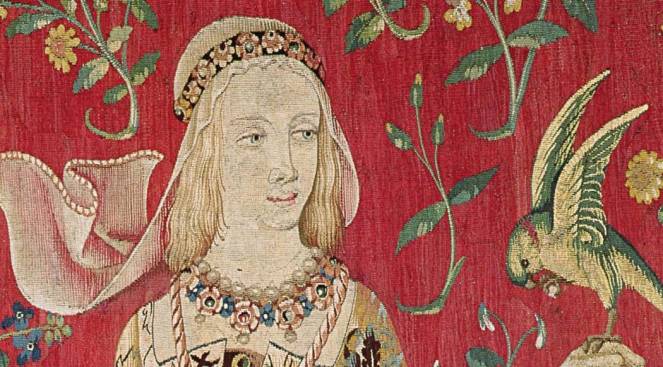
Now you all know I am fond of a royal mistress and there is none I am fonder of than this woman. Katherine Swynford was born circa 1350 the daughter of Sir Gilles de Roet a knight that probably came to England in 1328 when Philippa of Hainaut married Edward III King of England (the historical county of Hainaut now straddles the French-Belgium border). It’s been suggested that Katherine was born on the 25th November which is the Feast Day of St Catherine of Alexandria; Katherine wasn’t a particularly popular name in Hainaut and she would later demonstrate an affinity for that particular saint. Now there’s some debate about Katherine’s family background in particular whether or not her family were aristocratic or common folk; it’s been suggested that her father was a descendant of a collateral branch of the Lords of Roeulx however it’s also possible that she had no great ancestry and was essentially a commoner (the Alison Weir book on Katherine has a good section that explores Katherine’s possible family background). Her mother’s name and background are unknown but it’s likely her mother was also from Hainaut although there is a small chance her mother was English. After her father arrived in England in 1328, he remained there for a good number of years, serving the royal court; he served as the Guyenne King of Arms and in 1347 was sent to the siege of Calais where he conducted service on behalf of the Queen. In 1349 he returned to Hainaut, shortly after the Black Death hit England. Katherine’s father had four children overall Katherine, Elizabeth, Philippa and Walter; the latter it’s believed died sometime in the late 1350’s fighting in France whilst Elizabeth became canoness at the Convent of Saint Waltrude Collegiate Church at Mons in Hainaut. Elizabeth and Walter were significantly older than Katherine and Philippa with ten to fifteen years between them, suggesting they may have had different mothers. At some point in the 1350’s Gilles de Roet was sent to serve Margaret the Holy Roman Empress (who was also Philippa of Hainaut’s sister) leaving his younger daughters Katherine and Philippa in Queen Philippa’s care; we can thus infer that their mother was probably dead by this point. Raised under Queen Philippa’s aegis the girls were well educated and it’s possible that the Queen was quite fond of them; after all when Katherine was young (between the ages of 12 and 14), she was married to Sir Hugh Swynford lord of the manor of Kettlethorpe in Lincolnshire; the marriage was advantageous for Katherine who was potentially of common stock and it’s very possible that Queen Philippa arranged the match. Now Hugh at the time of the marriage was a knight in the service of none other than John of Gaunt, Queen Philippa’s third son. We have no idea when Katherine and John first met; she may have known him as a child (it depends on how much involvement Queen Philippa had in Katherine’s upbringing) or they may first have met upon Katherine’s marriage to Hugh in 1366. It’s likely that around the time of her marriage, Katherine entered the service of Blanche of Lancaster who was the Duchess of Lancaster & John of Gaunt’s wife (they had married in 1359 when they were both teenagers). Now Blanche was the daughter of Henry Grosmont the Duke of Lancaster and after the death of her sister Maud in 1362, she had become his sole heiress. This meant that when her father died, she inherited one of the largest fortunes in the country however due to the patriarchal politics of the period, all of it went to John instead. The Lancaster inheritance combined with his own royal inheritance made him the largest landowner in the country (owning land in pretty much every county in England) and the richest man in England. It also gave him ownership of at least 30 castles across England and France and gave him a household of considerable size, comparable to the household of his own father King Edward III. With land, money and castles, comes power and John of Gaunt had more than pretty much everyone else, bar his elder brother Edward and his father the King. Blanche and John’s marriage was by all accounts a happy one and is generally considered to have been a political match that turned into a love match. There is evidence that in the aftermath of her wedding and her entrance into the Lancaster household, Katherine grew rather close with Blanche; not only did Hugh and Katherine name their eldest daughter after the Duchess but both Blanche and John served as godparents to the baby and then had her placed in the royal nursery with their own daughters Philippa and Elizabeth. Blanche of Lancaster unfortunately did not last long dying in 1368, likely from either the plague or childbirth complications; I would personally say it’s more likely to be childbirth complications based on the dates. Now at this point Katherine probably left the Lancaster household and returned to her husband’s estate Kettlethorpe, however at some point in 1370-1371 she returned and was named by John to be governess to his daughters (throughout her life Katherine would maintain a good relationship with all three of John and Blanche’s children). We don’t know when exactly but around that time Katherine’s husband Hugh died; their youngest child was born in 1369 so it’s likely that he died sometime afterwards. He was almost definitely dead by the time John of Gaunt remarried Constance of Castille in 1371. Now Constance had a rather complex and very dysfunctional family background which included her father given the epithet “Peter the Cruel”, her father siring multiple illegitimate children herself included, arguments with the papacy, accusations of bigamy, her father imprisoning and potentially murdering his wife and a civil war that resulted in her uncle usurping the throne. Unlike his happy marriage to Blanche, John’s marriage to Constance was a purely political one and was based on the very ambitious John using his money, power and prestige as an English prince to win Constance’s throne back from her uncle so that they could be King & Queen of Castille together. There was nothing personal nor romantic in their marriage which is why around the time they became man and wife, he took Katherine as a mistress. Not exactly the best start to a union. Now the question of when Katherine became John’s mistress has been asked a thousand times and really no-one knows. There are three options; either she became his mistress a) before Blanche of Lancaster’s death (very unlikely), b) in between Blanche’s death and John’s remarriage (possible) or c) after he married Constance of Castille (also possible). My personal take is that the affair probably didn’t begin until after Katherine’s husband had died in 1371. Katherine throughout her life demonstrated that she was genuinely religious and I don’t think she would have committed adultery whilst her husband was still alive. Also in the 1390’s John told the Pope that they had never committed adultery whilst Blanche or Hugh had been alive; I suppose it’s possible he lied but lying to God’s representative on Earth in the 14th century was a fairly big no no. That doesn’t mean there wasn’t feelings or chemistry or any thing like that between John and Katherine, but I’m fairly certain she didn’t officially become his mistress until after she was a widow. In the novel “Katherine” by Anya Seton (which is based on Katherine’s life), John begins pursuing her after the death of his first wife but Katherine refuses to sleep with him whilst her own spouse is still alive, and only becomes his mistress after Hugh’s death. That theory, I can totally buy especially as there’s evidence that John first granted her a significant amount of money in 1372; the kind of money you’d only give to someone exceptionally close to you i.e your mistress. After becoming his mistress Katherine was almost constantly by his side (except when he was abroad at war) and between 1373 and 1379 they had four children. Their children were given the surname Beaufort supposedly after the Chateau of Beaufort in France which John had inherited through his first wife’s great-grandmother Blanche of Artois. It has thus been inferred by historians over the years that the Chateau of Beaufort was where their first child was born however it’s believed that John had already lost the castle by 1373 (the year their first child was born) so it’s unlikely their children were born there. Their first child was born the same year that John’s wife Constance gave birth to a daughter who awkwardly was named Catherine. Now I would like to think that John didn’t name his wife’s child after his mistress but no one has more audacity than a Plantagenet prince so who knows. In the years afterwards whilst Katherine continued to pop out baby after baby, John’s wife Constance did not and their lack of further children is often blamed on his devotion to his mistress. Despite this John and Katherine were initially fairly discreet about their relationship; although his wife knew, John’s family (including the King) almost certainly knew and it’s likely that whilst most of court knew, the wider public did not. It wasn’t until around 1378 that their relationship became public knowledge; from 1377 onwards the two were openly living together with he and his wife at this point informally separated. It was in the mid 1370’s that John’s political shenanigans began to earn him more public scrutiny and controversy; the increased scrutiny on John came about due to the deteriorating health of his brother, the impending demise of his elderly father and the fact his nephew was still very much a child. John thus became the leading political figure in the country and was tasked with among other things trying to keep the peace between the crown and the Commons. His money, influence and well-established ambition however led to accusations that he intended to take the throne should his father and brother die and his young nephew be left to rule. After the death of his father and brother and the accession of his nephew, John was thus the heir to the throne and to many, a man that close to the crown possessing of as much ambition and wealth as John had, was a recipe for disaster. Certainly John had ambition and to be honest I think he might have made a pretty good king but he was also extremely loyal to England and the crown and I find it very unlikely he ever seriously considered being King of England himself. The accusation however was enough to besmirch his name and throughout the late 1370’s John became increasingly unpopular especially after the deaths of his father and brother which forced him to become de facto regent (although not officially) on behalf of his nephew. He was thus forced to mediate between all the various factions of court, all of whom wanted different policies but shared one thing; they didn’t particularly like John. By 1380 enemies of John such as Thomas Walsingham had caught wind of John and Katherine’s affair and began ranting and raving about it, chastising John for his sins on a near daily basis. I won’t go into the various political debacles that followed but I will say that things got very bad, very quickly and in 1381 John was one of the principal targets of the Peasants Revolt. His extravangant London residence the Savoy was targeted by angry Londoners who blamed John for the introduction of a fiercely unpopular poll tax; the palace and everything inside it was completely demolished and what could not be smashed or burned was thrown into the river. Neither Katherine nor John were present; Katherine was not in London at the time and was safe and sound probably at Pontefract Castle in Yorkshire. In the aftermath John and Katherine’s relationship bizarrely became the focus of condemnation and it was suggested that God was punishing England because John was committing adultery with Katherine. Katherine and John thus became Public Enemy Number 1 & 2 and Katherine’s reputation was utterly shattered with the likes of Thomas Walsingham referring to her by every slut shaming epithet under the sun. John’s popularity too was at rock bottom and so out of political necessity as well as a desire to keep her and their children safe (some of John’s staff had been killed at the Savoy so god only knows what they could have done to Katherine), the two ended their relationship with John being forced to publicly renounce Katherine, admit his sins and reconcile with his wife. It was awkward and public and mortifying and I cannot imagine how it must have felt for Katherine and John who were by all accounts genuinely in love. With the affair over, Katherine returned to Kettlethorpe however spent significant time in Lincoln where she maintained a residence close to Lincoln Cathedral. Now despite the fact the relationship was officially over, at least in the eyes of the public, I don’t think it actually it was. I mean it’s likely the physical aspect of their relationship ceased to continue (no more children were born after 1381), but emotionally I’d say the two were still very much together. John it’s believed visited her discreetly throughout the 80’s, she was frequently at court with John’s nephew the King Richard II becoming rather fond of her, she remained close to John’s children and had a particularly good relationship with John’s daughter in law Mary de Bohun even becoming a member of her household at one point and in 1387 Katherine became a member of the Order of the Garter, the prestigious order of chivalry founded by John’s father Edward III. Before Katherine only 19 women had been made a Lady of the Garter and all of them had been either royalty or very high ranking/wealthy members of the aristocracy. Clearly Katherine was still very much in the royal fold. I mean John’s own brother Thomas of Woodstock allegedly commented in the mid 1380’s (when the two had supposedly been over for years) that his brother was a fool for loving Katherine so utterly and enduringly, which I think is rather romantic. In 1386 John and his wife Constance decided to finally press their claim for the throne of Castille; in order to fund the campaign and gain support against Constance’s cousin King Juan I of Castille, England entered into a political alliance with Portugal who plead their support (said alliance is still technically in place and is the oldest continuous alliance between two nations in world history). John’s daughter Philippa who Katherine had practically raised as her governess was married to the King of Portugal to cement the alliance. Whilst the marriage was a success (Philippa was a well loved and popular Queen and produced quite a few children who became known as the “Illustrious Generation” in Portugal), the campaign however was not and after a rather botched attempt at invading Leon, John and Constance decided to declare a truce with her cousin. Their daughter Catherine was married to his son Henry thus bringing both sides of the Castilian dynasty together. Following their return to England, John and Constance separated (they had married with the intention of becoming King and Queen of Castile, and with that no longer an option, there was no need to remain together) and John wasted absolutely no time, none whatsoever in asking Katherine to once again become his mistress. Katherine accepted (shocker) and the two were together from then on; although they remained discreet it was an open secret that she was his mistress once more. Politically the two were on safer ground; following John’s return to England, he reconciled with the King and was from then on a moderating influence on the chaos that frequently engulfed English politics. In 1394 his wife Constance unexpectedly died leaving him a widower again; at this point England was domestically at peace and finally stable and so the King began considering a truce with France (although John’s brothers the Dukes of York and Gloucester were not exactly happy at the idea). It was suggested that John as a widowed prince marry again possibly to French royalty to cement the truce; we have no idea how John or Katherine felt about the matter. What we do know is that in 1396 two royal marriages took place; the first was between the 29-year-old King Richard II who married Isabella of Valois (the six year old daughter of the French King) and the second was between John of Gaunt and Lady Katherine Swynford, thus catapulting Katherine from mistress to wife. The two married at Lincoln Cathedral on the 13th January and with that Katherine became the Duchess of Lancaster. Not only did the marriage make Katherine the highest ranking lady in the land (Richard and Isabella’s marriage didn’t happen until months later and so without a Queen, Katherine took the top spot) but with the approval of Richard II and the Pope, the marriage also made John and Katherine’s four children legitimate a fact which would go on to have MAJOR repercussions in English and Scottish history (the Stuart dynasty was descended from their granddaughter Joan who was the wife of James I King of Scotland & mother of James II, whilst the Tudor dynasty based their claim to the throne on the fact that Henry VII’s mother Margaret was John & Katherine’s great granddaughter. Interestingly enough whilst both sides of the House of Lancaster claimed descent from them, they were also ancestors of the House of York side of the War of the Roses with Edward IV and Richard III’s mother Cecily being John and Katherine’s granddaughter through their daughter Joan. In fact all four claimants to the throne of England during the War of the Roses – Henry VI, Edward IV, Richard III & Henry VII – were descended from John whilst three of them were descended from Katherine). Months after their marriage when John’s nephew the King married Isabella of Valois, Katherine accompanied him to France and was a member of Isabella’s household, helping the poor girl who at the age of six found herself Queen in a foreign country married to a man twenty-three years older than her. Katherine and John would not be married for long; John died in 1399 just three years after their wedding however their relationship at this point was nearing the 30 year mark. He was buried besides his first wife Blanche at St Paul’s Cathedral (her fortune had been the foundation of his power, wealth and infamy and she was the mother of his heir, so it’s not surprising he was buried besides her; politically speaking she also wasn’t as controversial as Katherine). In the aftermath of his death, John’s nephew Richard II blocked John’s son Henry from inheriting John’s land and titles, leading to Henry and a good portion of the English aristocracy who were tiring of the king’s shenanigans staging a coup against Richard who was overthrown and imprisoned with Henry taking the throne for himself. Interestingly enough Richard was imprisoned at Pontefract Castle in Yorkshire (where Katherine had been in hiding during the Peasants Revolt 18-years earlier) with none other than Katherine’s son from her first marriage Thomas Swynford serving as his jailer. Richard it’s believed later died after being starved by Thomas on Henry’s orders. Ah nothing like a bit of murder to keep step-brothers close. Henry was crowned on 13th October. There’s no mention of if Katherine was present at the coronation however evidence would suggest the two were quite close – not only did she practically raise him but in the early years of his reign he allegedly referred to her in documents as “the King’s Mother”. I personally love that Richard II & Henry IV were basically like “we agree on nothing but we both adore Katherine” (Katherine was also super close to some of John’s cousins and was friendly with his siblings). Despite the close relationship between Katherine and Henry it has been alleged that he interestingly tried to block John and Katherine’s children from being in the line of succession after him, apparently due to him feeling that John had favoured his children with Katherine over his other children. Despite this both Katherine’s son Thomas and her and John’s eldest son John Beaufort were close companions of Henry throughout his reign. Regardless Katherine was well looked after, following John’s death and upon her own demise in 1403, was buried in Lincoln Cathedral, the same place they’d married seven years earlier. Their daughter Joan was later buried besides her. I absolutely adore Katherine and John as a couple. They seem to have genuinely loved each other and been soulmates despite a barrage of obstacles thrown at them, their relationship appears to have endured to the end. Not only that but almost a century after their marriage, their descendants would emerge victorious from the War of the Roses with the crown of England on the head of their great-great grandson Henry VII. If an adaption was to be made of Katherine’s life, it would have to be a tv show maybe with each season focusing on the different periods of her life – lady in waiting, governess, young wife, widow, mistress, wife & duchess. Two things I would absolutely want to focus on is (1) the influence Katherine had and (2) her relationship with John. The thing with Katherine was that her influence wasn’t obvious in the way it was with some mistresses but by all accounts she had the ear of both John and Richard II (when John died, Richard took away the land of most of the Lancaster fam except Katherine who he allowed to keep everything), members of court began sending her gifts and beseeching her to intervene with John on their behalf very early on in their affair and she was politically involved enough that a) she was pretty popular with the whole of English court and b) when the shit hit the fan in English politics, everyone blamed her. As for her relationship with John I would give it the full epic love story treatment. I would want to see the build up of their relationship; it wasn’t love at first sight as they knew each other for years before anything happened but he clearly trusted her long before they were a couple. I mean he put his children in her care. I want to see the yearning at having to be apart but him still secretly visiting her. I want to see them navigating a secret affair whilst popping out kids left right and centre. I want him saying “fuck it” and marrying her despite knowing the disapproval that might come. I want it all. There’s actually a quote in Veronica Mars that reminds me of them, it’s “I thought our story was epic, you know. Spanning years and continents. Lives ruined and bloodshed. Epic.” Give me that in a tv show I beg of you!!!!

You know how some people spend their whole life in the shadow of famous parents or siblings or spouses? Well this girl right here was the 16th century nepo baby overshadowed by her more controversial mother. Isabella Jagiellon was born on the 18 January 1519 in Krakow in Poland the eldest child of Sigismund I of Poland and Bona Sforza, scion of the famous Sforza clan and a Machiavellian superstar in her own right. She spent most of her childhood at the Wawel Castle in Krakow however between 1527 & 29 and 1533 & 36, she lived in Lithuania with her mother whilst her siblings were left in Krakow. This was an ongoing pattern in their childhood; you see Bona favoured Isabella over her siblings and was barely parted from her. Not only that but Isabella was given a better education (humanist Johannes Honter was her tutor), was doted on by her parents and had her marriage arranged early whereas the other three daughters were frankly neglected and marriages weren’t arranged until they were waaaaay past the normal age for a princess to wed. There’s also the fact that Isabella and Bona were more alike in character; both were strong willed and very intelligent; by the time she was a teenager she could speak, read and write four languages Polish, Latin, German and Italian. Literally from the minute Isabella was born, there was talk of her eventual marriage and boy was she in demand. Bona being 100% that girl absolutely loathed the Habsburgs and really did not want her beloved daughter marrying into THAT family, so worked tirelessly behind the back of her husband to gurantee a different marriage; there was talk at different times of either a French or Italian marriage (as the only surviving child of a former Grand Duke of Milan, Bona had a decent claim to the Duchy and she hoped that by arranging a marriage between her daughter and a son of Francis I, Francis would then be willing to install Bona’s bloodline back on the throne in Milan). Francesco II Sforza (a cousin) was another name thrown in the marital ring as was Federico II Gonzaga, Duke of Mantua. Sigismund was quite happy with his daughter marrying into the Habsburgs and put her forward as a potential bride for multiple men of that family including Archduke Maximilian later Maximilian II, Holy Roman Emperor and Charles later Charles III of Savoy. Growing up so chummy with her mother meant that Isabella herself was not overwhelmingly a fan of marrying a Habsburg either (good shout my girl). At some point in the early 1530’s a plan emerged to marry Isabella to John Zapolya one of the claimants to the Hungarian throne; you see back in 1526 Louis II of Hungary had died at the Battle of Mohacs whilst fighting the Ottomans. He died with no children and no brothers meaning Hungary was left kingless and with no clear heir; in the aftermath Hungary had descended into chaos with one half supporting the Habsburg’s (Louis’ widow was Mary of Austria the sister of Charles V) and the other supporting the more home-grown candidate in John Zapolya. Zapolya knew he had little chance against the mighty Habsburgs and so sought the support of the Ottomans. We’re not entirely sure whose bright idea the idea of a marriage between Zapolya and Isabella was but we do know that two pivotal architects of the whole anti-Habsburg plot were Bona and Hurrem Sultan the wife of Suleyman the Magnificent (the Sultan of the Ottomans). Hurrem had been born in Poland and maintained throughout her life a keen interest in the country; one of the ways she did that was by building diplomatic ties with Polish political figures such as Sigismund and Bona (in one letter between Sigismund and Suleyman, Sigismund actually refers to Hurrem as his sister – I should point out they were definitely not siblings but the letter demonstrates the bond that grew between them). Whilst Hurrem convinced Suleyman of the benefits of the marriage, Bona did the same with Sigismund; there was an added layer to the match – John Zapolya had actually been Sigismund’s brother in law once upon a time (Sigismund’s first wife Barbara had been John’s older sister) and although Sigismund was fond of the man, he also didn’t want to upset the Habsburg’s (a priority evidently not shared by Bona and Hurrem). Eventually Sigismund relented on a condition that a peace treaty was concluded between Zápolya and the Habsburgs; the Treaty of Nagyvarad was signed in February 1538 and stipulated that the country would be split in half between the two sides and Zapolya agreed that if he died childhood, the Habsburg’s would get his half. At this point Zapolya was 52, suffering from gout and childless. Evidently the Habsburg’s weren’t convinced they’d have to wait very long before taking the whole of Hungary. Clearly they didn’t factor Bona, Suleyman and Hurrem into their calculations. Once the treaty was signed, preparations began to covertly arrange the marriage; Bishop Stjepan Brodaric arrived in Krakow to negotiate timing and conditions for the wedding in April of 1538, literally two months after the signing of the peace treaty. On the 15th January 1539, a huge Hungarian delegation featuring five hundred Hungarian knights arrived at Kraków for the grand wedding celebration with the betrothal ceremony taking place on the 26th January. We’re not 100% sure the date of the actual wedding ceremony but it was probably between the 28th of January and the 2nd February and Zapolya wasn’t actually there. He had remained in Hungary and so the wedding was done by proxy with one of the Hungarian knights standing in for him. Isabella who had turned 20 just 2 weeks before promptly left for Hungary (with her 32,000 ducat in cash dowry; she also received property worth another 6,000 ducats and when she arrived in Hungary, her new husband granted her multiple towns throughout the country). They met for the first time on the 22nd February; by the 24th they had married (again) and she was crowned Queen of Hungary. A whirlwind of a 48 hours if you ask me. The marriage wasn’t happy but it wasn’t exactly unhappy either; as I pointed out previously, he was 52, suffering from gout and fixated on ruling meaning he had very little time for his energetic 20 year old new wife. Not great but they clearly got along well enough because she was pregnant within a year. Her son was born on 7th July 1540. Cue everyone being overjoyed and (very) relieved. This however unbeknownst to everyone including Isabella was the beginning of a very trying period in her life; because just two weeks later on the 22nd July her husband died whilst dealing with some pesky rebels. Now I would have liked to say that the whole accession business was seamless and easy, alas that was absolutely not the case. According to the Treaty of Nagyvárad, Zapolya was supposed to be succeeded by Ferdinand (who was ruling the other half of Hungary) however the Hungarian nobles led by Bishop Martinuzzi were unsurprisingly not overwhelmingly thrilled at being ruled by non-native Hungarians and instead pledged allegiance to Isabella and her infant son John Sigismund. In September 1540 they all met and elected the two month old baby and installed Isabella as regent. The thing is, we have very little knowledge as to the full extent of her involvement – was she a key political player in her son rising to the throne OR was she merely a bystander who went along with the nobles scheming. Although there isn’t a huge amount of literature on her involvement, I find it unlikely that the nobles would have elected her as regent if she had no political acumen. This would suggest she had been involved in politics during their short marriage and thus had the faith of the nobles. Immediately upon her son’s accession Isabella sought shelter at Buda with her son, knowing that Ferdinand was likely to invade. And that ladies and gentlemen is exactly what he did. Ferdinand’s forces ripped through Hungary and in November 1540 reached Buda. The city managed to survive this first siege; another one took place months later in May. Luckily for Isabella, her and her mama Bona were still pals with Hurrem and Suleyman with the latter himself coming to Isabella’s aid (interestingly her father refused, not wanting to upset the mighty Habsburg machine). Suleyman agreed to support Isabella and her son as long as the Hungarians would continue to pay tribute to the Ottomans. Ferdinand’s brother Charles V was so incensed by the defeat that he, like a tantrumming child decided to stage an amphibious attack on the strategic Ottoman city of Algiers. It went horrendously wrong and the Habsburgs found themselves 2/2 against Suleyman who was no doubt very pleased at all this winning. In September 1541 she finally left Buda and moved firstly to Lippa then Gyal and then Gyulafehervar. Her life at this point continued to be tricky – she was after all trying to simultaneously keep the Ottomans sweet, keep Martinuzzi and his grand ambitions under control and keep Ferdinand at bay. That would be tough work for anyone, let alone a 22 year old widow, queen and single mother with very little political experience. To maintain her sanity, the very beautiful Isabella made sure to do a little bit of self care; her version of self care evidently included renovating the ruinous residences the Hungarians considered worthy of royalty and buying herself cute jewellery (she like many girls raised in extreme wealth had a thing for fancy jewellery). This fondness for jewellery and being young and beautiful didnt exactly endear her to some of the Hungarian nobility who weren’t overwhelmingly thrilled at having to do what a girl told them to (there’s a lot to be said about the fact that the villains in the vast majority of historical women’s lives are sexist dinosaurs). Now Ferdinand clearly had nothing else to do because he continued trying to conquer Isabella’s half of Hungary. Eventually in December 1541 she began to consider giving up and ceding territory however the Ottoman’s attack and subsequent victory on the city of Esztergom in 1543, was a tough loss for the Habsburg’s and Isabella soon forgot her sudden moment of doubt. Her father then decided to get involved and offered her as a possible bride to either Ferdinand’s brother Charles V who had been widowed in 1536 or his eldest Maximilian who was a few years Isabella’s junior. Both Isabella and Suleyman said hell no and the matter was quickly dropped. For a few years they continued like this; Ferdinand scheming, Isabella trying to keep everything under control and Suleyman occasionally reminding the Habsburg’s to back off. Then in 1548 the Ottoman’s went to war with the Persian’s and Suleyman decided they needed ALL of their forces for this one, which inevitably meant leaving Isabella’s half of Hungary vulnerable and a lot less protected. Isabella and her mother Bona hadn’t trusted Martinuzzi from day 1 BUT they had needed him on Isabella’s side and so had tolerated him. That came to an end when the traitorous pig made a deal with Ferdinand which would allow the latter to take the rest of the country so that a united Hungary could help the Habsburg’s against the Ottoman’s (Martinuzzi had never been overly fond of the Ottoman partnership; that had been Isabella and Bona’s pet project). The deal also included a promotion for Martinuzzi who was to become the Archbishop of Gran and become a cardinal, and a marriage for Isabella’s 8 year old son who would marry one of Ferdinand’s daughter. Isabella was understandably annoyed; despite having a very small army, very little back up from the Ottomans and absolutely no help from her brother the new King of Poland (who had made a deal with Ferdinand not to intervene as long as he was to marry for love instead of politics), she decided to take the forces she did have and take Ferdinand on. Oh you brave, brave girl. You won’t be shocked to find out that it didnt go well and in July 1551, facing superior forces and with absolutely no one coming to her aid, Isabella surrendered and signed a treaty that granted her several duchies in Hungary, significant land and wealth and established an engagement between her son and Ferdinand’s daughter Joanna. A month later she gave up the Holy Crown of Hungary (a long rumoured story said that before she gave it up her son broke the cross off the top and vowed he would one day unite the two pieces). According to legend, when Isabella stopped to have a rest at the gates of the town of Meszes, she engraved the abbreviation of her motto into the bark of an old oak tree: SFV – Sic fata volunt (“It is the will of fate”) a motto which she had on much of her jewellery and coins. She initially began living in Opole which she was now Duchess off however her residences were practically falling down, Ferdinand only gave her half of the money that he promised and hinted he had no intention of giving her the other half. So she decided to live Opole and move back to Poland where she lived with her family for the next five years. Her brother (feeling guilty perhaps over his lack of help) granted her wealth and land whilst her mother also gave up a title or two for Isabella to have. Despite not living in Opole, she remained politically involved in the Duchy and was particularly noted for indirectly supporting local Lutherans. The thing is, even with Hungary now under control of the Habsburg’s shit was still ongoing on and Martinuzzi was unsurprisingly at the centre. It turns out that Martinuzzi was not particularly popular amongst his fellow political leaders and they weren’t overly thrilled about the new Hungarian political landscape. In December 1551, Martinuzzi was assassinated and not long after the Ottoman’s resurfaced, capturing the important city of Cenad. What Isabella, living in luxury in Poland thought of all this we don’t know. What we do now is that not long after Hungarian nobles and Ottoman dignitaries showed up at her Polish doorstep and all but begged her to return (Bona and Hurrem were still at this point besties and Hurrem was well and truly at the peak of her political powers especially after 1553 when her husband’s son Sehzade Mustafa died meaning Hurrem had secured the throne for one of her boys. It’s likely with the Persian war on the back burner, Hurrem had encouraged Suleyman to once again back Isabella). Now Isabella and her mother didn’t immediately accept the requests to return to Hungary; remember when her brother Sigismund Augustus agreed not to help her simply so he could marry the girl of his dreams. Well she was dead and he was in need of a new wife. Step forward Ferdinand’s daughter Catherine who he married in 1553 which guaranteed that Ferdinand was on good terms with the Polish and therefore not a trend to Sigismund. Meanwhile Isabella demanded that Ferdinand pay her back the money he owed her. He told her he didnt have the money to which she was like “fine, fuck you, I will return to Hungary”. Which I can appreciate. In 1556 Isabella and her mother Bona both left Poland (Isabella was on route to Hungary whilst Bona had clearly had enough of her dumbass son and had decided to return to her native Italy where she had influence and a duchy waiting for her); Isabella spent the summer in Lwow but then made her grand entrance into Kolozsvar in October flanked by a delightful Ottoman army. On the 25th November she was entrusted with a 5 year regency on behalf of her now teenage son who she hadn’t seen in at least 6 years. She established a chancellery and government, minted her own coins (which depicted Madonna and Child on one side representing her and her son and a fancy coat of arms on the other). She designed the coat of arms herself and included the wolf/unicorn of her late husband’s family the Zapolya’s, a patriarchal cross, the four horizontal stripes of Hungary, the eagle of her native Poland, the snake of her maternal family the Sforza-Visconti’s and the three panther heads of Dalmatia (see here). Unfortunately her regency only lasted 3 years due to her death from a long unknown illness in 1559 at the age of just 40. The last three years of her life were dedicated to preparing her son for the throne, rebuilding her half of Hungary, foiling coups against her by the few noble families that preferred the Habsburg’s and handling religious differences following the arrival of the Reformation and Protestantism to Hungary. One of her landmark acts as Queen Regent was her signing an edict that granted freedom of religion to four denominations (aka Catholics, Lutherans, Calvinists and Unitarians). This made her the first European monarch in history to issue laws regarding religious tolerance. Her son would follow in her footsteps and in 1568 he signed the Edict of Torda which was at the time an unprecedented piece of religious legislation. Following her death, she was mourned by the Hungarian people who had considered her a stable and trustworthy leader in the midst of such volatile times. Now you could very easily do a series about Isabella’s life that covers all the juicy parts; it could begin with her marriage (I don’t think it’s necessary to show her childhood) and the first season could end with her husband’s death and her being chosen to rule as regent with the Ottomans on her side (kind of like this scene – fast forward to the 10 minute mark – in which Kosem has been named as regent for her son the new Sultan but a Hungarian version https://www.youtube.com/watch?v=Ep_rqSp90ao&t=236s). The second season could focus on her regency and end with the Ottoman’s leaving in 1548 and her having to take up arms to defend her son’s kingdom. Season three could focus on her attempts to retain control of Hungary, her subsequent surrender and her self induced exile in Poland (her son’s breaking of the Hungarian crown and her engraving on the tree would OF COURSE have to be included). Season four could start with her being invited back to Hungary and focus on her regency leading up to her death. One thing about her dying so young is you might inly need 1 actress to play her – someone in their late 20’s maybe who with good make up/prosthetics could look like a teenage bride in season one and an older queen regent in season 4. I just think her life is soooo juicy, even if she did die so young.
Well I hope you’ve enjoyed this!! I’ve actually got another post ready and raring which will be up next week. I know I say this every year but I am going to try not to let life get in the way and upload more pieces! Anyway see you next week.
Alexandra.

 The Monstrous Regiment of Women