Yesterday in 1498 Cesare Borgia became the first person in history to resign his prestige position as cardinal; that very same day Louis XII of France named his Duke of Valentinois. This coincided with a betrothal between him and Charlotte of Albret whose brother Jean/John was married to Catherine the Queen of Navarre and thus he was de-facto King. The Albret family ruled the county of Bearn and they were concerned that the French king was trying to assert his claim over Bearn. Louis XII however also wanted an annulment from his wife Joan of Valois in order to marry Anne of Brittany. The Albret’s supported his desire for an annulment hoping that might prompt him to keep his pesky hands away from Bearn. The only Louis could get an annulment was if the pope Alexander VI (aka Rodrigo Borgia) agreed. The Borgia’s agreed on the condition that a princess of royal blood marry his son Cesare. John and Catherine in turn proposed John’s baby sister. When I saw this date approaching I decided I wanted to do something Papal related but not necessarily about the Borgia’s. As much as I find them interesting there is certainly no shortage of books & tv shows and historians focused on the clan. So I decided to look further afield and consider other possible papal subjects. Like most Papal children, Cesare was a bastard and that got me thinking about the women that loved and lost, shared a bed with and lived life with the men married to God. I’ve covered royal mistresses aplenty on this blog but rarely touched on papal mistresses so here is a post about some of those women. Enjoy!
MAROZIA & THEODORA

When it comes to all-powerful papal families, your first thought is probably the Borgias although the Orsini’s (who produced five popes), the Medici’s (who produced two), the Della Rovere’s (who also produced two) and the Piccolomini (who also produced two) are also worth a mention and actually had more power over a longer period of time than the Borgias. Before those families were causing chaos in Rome however, there was the Theophylacti family. The Theophylacti were the most powerful family in papal politics in the period known officially as the Saeculum Obscurum. Less officially it’s known as the Pornocracy or the Rule of the Harlots. Yes you read that correctly. The Saeculum Obscurum was a period of papal history between the death of Pope Formosus in 896 and the death of Pope John XII in 964; during those seventy years, there were 19 (!!!) popes and absolute chaos reigned in Rome; of those 19 popes, 12 of them were effectively chosen and controlled by the Theophylacti family, in particular two rather extraordinary and very very controversial women; Theodora and Marozia aka the OG Papal Mistresses. Now Theodora was the wife of Theophylact I, Count of Tusculum who held considerable sway of papal affairs whilst Marozia was their daughter. Theodora had huge influence over her husband who allowed her to do just about whatever the hell she wanted. In 905 at the age of around 15, Marozia became the mistress of Pope Sergius III who just happened to be Theophylact’s cousin; he also at the age of 45 was thirty years her senior. Sergius gave great influence to Marozia and her family and her father was appointed to various high positions, being promoted to the point that he effectively controlled Rome. Four years later in 909, Marozia was married to Alberic I of Spoleto although it’s possible she continued a relationship with Sergius. She and Alberic would have five sons John, Alberic, Constantino, Sergio and David/Deodatus and at least one daughter who Theodora and Marozia tried to marry to either Stephen Lekapenos or Constantine Lekapenos the sons of the Byzantine Emperor Romanos I Lekapenos. It’s been claimed that her eldest son was actually the son of Pope Sergius III although there’s very little proof and it doesn’t appear that the claims were hugely widespread at the time. Certainly Alberic seems to been convinced John was his son; some historians tend to agree with him whilst others do not. Edward Gibbon said that Alberic was likely the father whilst Horace Mann said that Liutprand of Cremona’s report about John’s parentage “must be regarded as highly doubtful”. If Sergius was indeed John’s father then that gave Marozia and her family a bit of leverage; the Pope having a child was embarrassing to say the least. Now the impressive thing about Theodora and Marozia was the huge sway they had over the Papacy during the The Saeculum Obscurum; the first pope was obviously Sergius who Marozia was the mistress of. He was followed by Anastasus III whose candidacy was approved by Theodora (it’s also possible he was the illegitimate son of Sergius) and then Lando who was also a candidate of Theodora’s choosing. Both Anastasus and Lando were the pope for very brief periods of time. He was then followed by Pope John X who it’s believed was a distant relative of Theodora’s and a particularly close ally of her husband’s; it was also alleged that they were lovers although that’s unlikely. John began his time as Pope with three significant supporters – Theodora, Theophylact and Marozia’s husband Alberic. Theodora died in 916 and Theophylact died in 925. Alberic died later that year. That left Marozia as the supreme power player in Rome; in his book The Birth of the West, Paul Collins described her as “an extraordinary woman, her importance lies not in her paramours, but in the fact that she continued the tradition of the Theophylact clan in maintaining stability in Rome and the Patrimonium…She understood that the sexual was political and was able to use this to her advantage in a patriarchal world. Obviously beautiful and alluring to men, she was also intelligent, strong-willed, and independent like her mother.” John’s tenure as Pope came to an abrupt end in 928 when he had something of a falling out with Marozia; the throne of Italy at the time was contested (it to be quite honest was absolute pandemonium) and John invited Hugh of Provence to be the next King of Italy although Rudolph II of Burgundy also laid claim to Italy. Whilst that was all going on Marozia was remarried to Guy of Tuscany whilst led to somewhat of a power struggle with John X who made his brother Peter the Duke of Spoleto instead of one of Marozia’s sons. Marozia as you can imagine was unimpressed to say the least. The power struggle between Marozia and John X came to a bloody conclusion in 928 when Marozia and her husband staged a coup and attacked the Lateran Palace with a bunch of mercenaries. John was thrown in prison where he remained until his death; the date of which is unknown. The two most likely scenarios are that a) he was imprisoned for a short period of time before being smothered in his cell or b) he died in 929 over a year after his deposition, not as a result of violence but as a result of illness caused by the conditions of his incarceration. John was swiftly followed by Leo VI and Stephen VII both of whom were regarded to be Marozia’s puppets and were pope’s for very short periods of time.
After Stephen’s death, Marozia managed quite an impressive task – she managed to have her eldest son John elevated to the Papacy despite the fact he was only 21. Around the same time she married Hugh of Arles (her husband Guy of Tuscany had died in 929). Remember when I said the throne of Italy was hotly contested? Well Hugh was one of the various men that had claimed the throne a decade earlier and at the point of their marriage was King of at least part of Italy. He was also Guy’s half brother. Yep you read that correctly. She married her brother in law. Now whilst in Rome Hugh managed to get into a pissing match with Marozia’s son Alberic II, who I’d like to add did not have a particularly good relationship with his mother. So much so that he ended up organising an uprising against his mother and step-father. Although Hugh was able to escape, Marozia was captured and imprisoned by her own son. She would spend five years in prison until her death; in those five years her husband and son continued quarrelling; her son Alberic seemingly inherited his mother’s ability to take control and he was soon the de-facto ruler of Rome. He chose the next four popes Leo VII, Stephen VIII, Marinus II and Agapetus II. Alberic died in 954. A year later his son John XII (aka Marozia’s grandson) became Pope. The identity of John’s mother is unknown; it’s possible he was the son of Alberic’s wife Alda of Vienne (if she is indeed his mother then that’s very awkward because she was not just Alberic’s wife, she was also his step-sister, as the daughter of Hugh of Arles aka Marozia’s third husband/Alberic’s nemesis) or there’s also the possibility he was the son of one of Alberic’s concubines. If John’s mother was indeed Alda then he was around 18 when he became Pope which is just insanity. If he was the son of a concubine then he was likely around the age of 25. John XII is widely regarded as the final pope of the Saeculum Obscurum although Theodora and Marozia’s influence would remain long after they were dead; in 974 another of Marozia’s grandsons was elected as Benedict VII (he was the offspring of her middle son David) whilst in 1012 Marozia’s great-grandson Theophylact was elected as Pope Benedict VIII (he was the son of Gregory Count of Tusculum who was the younger son of Alberic and Alda); he was succeeded in 1024 by his own brother Romanos as Pope John XIX meaning two of Marozia’s great grandsons were Pope. John XIX was then succeeded by his nephew Pope Benedict IX who was the son of Alberic III and therefore the great-great grandson of Marozia. In 1058 Benedict’s nephew (and Marozia’s great-great-great grandson) was elected as Benedict IX although he was opposed by a rival faction that elected Nicholas II instead, and proceeded to chase Benedict out of Rome. He’s now generally regarded as anti-pope. I would honestly do just about anything to have the Saeculum Obscurum adapted into a tv show with a focus on Marozia. I mean the woman turned the Papacy into a family business. The only issue is that there isn’t a phenomenal amount of contemporary sources and many of them include outright slander – Liutprand of Cremona wrote extensively about Marozia and Theodora, the latter of whom he described as a “shameless whore… [who] exercised power on the Roman citizenry like a man”, however it’s very important to remember that he was a partisan of Marozia’s third husband Hugh of Arles and he LOATHED both Theodora and Marozia. He’s the principal source for the idea that Marozia’s eldest son John was the illegitimate son of Pope Sergius III despite the fact that John was born in 910 whilst Luitprand wasn’t born until 920.
VANOZZA DEI CATTANEI

If you were asked which Papal family is the most well known you’d probably say Medici (my faves) or Borgia – the latter based mostly on the scandalous lives of Rodrigo Borgia’s (aka Pope Alexander VI) rather notorious bastard children. Allow me to introduce you to the woman that bore them – Vanozza. Now there are a lot of theories about Vanozza’s origins and not a lot of evidence to help us figure it out. The main theories tend to be either a) she was Italian, from Mantua and that she and Rodrigo first in 1460, when Rodrigo was there on political affairs during the papacy of Pope Pius II but the relationship didn’t start until some years later or b) she was a prostitute and/or the daughter of a painter who was lucky enough to catch Rodrigo’s eye sometime between 1466 and 1472 (potentially whilst she was the mistress of Cardinal Giuliano della Rovere later Pope Julius II) or c) she was a Spaniard herself (like Rodrigo Borgia), and that he met her when he was in Spain in 1472 and brought her back with him when he returned to Rome (this stems from the fact there’s no mention of her connection to Rodrigo in the chronicles before 1474 however they might have just been incredibly careful as not to harm his blossoming church career) or finally d) she was the daughter of a minor nobleman from either Mantua or Brescia that had connections to the Curia. Now we do know that she owned a number of inns and taverns (at least several of which were in the Rione Borgo, where most cardinals lived) and became independently wealthy because of them although we don’t know if she acquired the establishments before her relationship with Rodrigo or after. I tend to think she was either a) the owner of a number of taverns where cardinals frequently visited or lived and that’s how she met Rodrigo or b) a courtesan who met Rodrigo at the usual festivities and parties that cardinals and other nobleman liked to host and attend (if she was a courtesan she was probably a higher class one i.e a cortigiane oneste known as an intellectual courtesan; cortigiane oneste‘s were usually well educated, beautiful, well dressed and well versed in various topics of conversation. We know that Vanozza could read and write and was educated enough to run a small business empire). I can’t imagine her being of noble birth because we’d know it, whereas if she came from the working class there’d be fewer traces of her origins, not to mention that there were very few noble women who would run hostels and taverns, which we know she did. It is possible they met though Della Rovere, which brings us to the question about the rumor that she was Della Rovere’s mistress first. It’s not impossible I suppose (and actually very impressive when you consider both men ended up becoming Pope) but the argument of her being della Rovere’s mistress first is usually brought up to explain della Rovere’s hatred of the Borgia family which lasted pretty much till the end of his life. I suppose it would explain more about their feud, but Della Rovere’s hatred of Rodrigo was based on his own prejudices involving the Borgia’s Spanish nationality and lack of noble birth (which was a common issue people in Italy had with the Borgias) and his own resentment/bitterness over Rodrigo’s achievements in life, in the Vatican. There doesn’t need to be the personal component of Vanozza being Della Rovere’s mistress first and then choosing Rodrigo over him to understand his (somewhat irrational) hostility to the Borgias (having said that there were also rumours at the time that Della Rovere wasn’t all that into women despite the fact he definitely had at least one illegitimate daughter so its difficult to figure it all it out). However this is all possible. Now there are occasional historians that argue that the 4 Borgia children that Vanozza and Rodrigo had were not Rodrigo’s based on upon other things the fact that Vanozza was married to someone else but most of the arguments can be explained and frankly Rodrigo was very open with claiming these children as his despite the condemnation and trouble it brought him. Why would he do that for children that weren’t his? Especially as he had a couple of other bastard children that were also definitely his but none of them received the love, interest and protection from him that his and Vanozza’s children did. He had three children before he and Vanozza had their children – Pedro Luis, Gerolama and Isabella; some historians have argued that Vanozza also bore them due to the fact that none of their mother or mothers are named in the registries. I don’t agree with this theory purely because Vanozza was devoted to her kids and her tombstone is engraved with their names. I don’t think she’d leave out three children and focus on the younger four? It doesn’t really make any sense. There’s also no sense to the notion that Vanozza and Rodrigo were not actually lovers; Meyer is one of the big supporters of his theory but in all his writings about them he seems to ignore the fact that Vanozza’s coat of arms included the Borgia Bull (one of her coat of arms can actually still be found today on a wall at literally a stone’s throw from Piazza Campo de Fiori, where she had another of her business activities, the Locanda della Vacca). I don’t know about you but I don’t think I’d incorporate the family sigil of a mere friend into my own coat of arms. Now because Rodrigo was a cardinal he obviously couldn’t marry her so instead he provided her with a series of respectable husbands: the first was Domenico Giannozzo, lord of Arignano who she probably married in 1473 in the early years of her affair with Rodrigo. He died shortly before the birth of Vanozza and Rodrigo’s second son in 1476. Her second husband was Giorgio della Croce who served as secretary to pope Sixtus IV, whom she married in 1480; during this marriage she gave birth to a son Ottavio or Ottaviano who Rodrigo did not acknowledge so we’re fairly certain he actually was her husband’s son. The little boy did not live long. Giorgio della Croce died in 1486 and she then married Carlo Canale, a humanist who had served cardinal Gonzaga and was a highly respected man in Rome. Canale was known to have a good relationship with Rodrigo and was very fond of his Borgia stepchildren (they appear to have been fond of him as well). In fact everyone got a long so well that people knew it was a good idea to befriend him and ask for his advice before dealing with the Borgias. After their marriage he actually took her surname and used it in his own business dealings. Now their affair seems to have fizzled at around the time he became Pope and in the early years of his papacy she was barely present in society; she didn’t even attend her daughter’s first wedding however it the festivities were held at the Vatican and her presence may have been considered ammunition for the portion of the cardinals who weren’t Borgia fans. Post Rodrigo becoming Lucrezia was also raised mostly by his cousin Adriana de Mila at a palace next to the Vatican not by Vanozza but once again that was probably to lessen the scandal that the Borgia children caused AND as a way of protecting Vanozza knowing the people of Rome could potentially become hostile to her. Despite all this we know Vanozza had close relationships with all of her children particularly Cesare who was said to dote on her. There’s also the suggestion that she kept her distance due to his affair with his new mistress Giulia Farnese however that affair did not last as long as his and Vanozza’s and we know that despite any public distance between Rodrigo and Vanozza, they did continue to see one another. There’s evidence in the Vatican records where she writes to him that she’s intending to visit him soon to discuss a number of issues including the recent birth of their grandson. The very fascinating thing about Vanozza and Rodrigo’s relationship is just how strong it was even after he became obsessed with others. Long after they stopped sharing a bed, he was as protective as he had been previously and continued providing for her. Most of his relationships burned passionately and then burnt out; his love for her lasted till death even if it wasn’t passionate obsession. E.R Chamberlin described it very well when he wrote “Vanozza’s and Borgia’s relationship was the sober affection of the married couple rather than the passion between lovers. Toward her, Borgia never showed the almost frantic jealousy which he displayed for her successor, yet he was remarkably faithful to Vanozza during the years of their active association. […]Despite the unsympathetic picture she presents posterity, Vanozza must have possessed very unusual qualities that enabled her to bind this most volatile lover to herself when he had the pick of Rome; to retain his affection and protection even after she had been supplanted by a younger and more glamorous rival; and above all, to direct his interest almost exclusively upon the four children she had borne him and not upon the children of his previous liaision”. A few other things we know about Vanozza is that as I mentioned she became a very wealthy woman from her business ventures and I have seen (although I can’t remember where – I will link it if I remember) a list of Vanozza’s jewels. The list is VERY long and in those days jewels weren’t an affordable thing if one didn’t have a lot of money. She also owned significant real estate including a house near San Pietro in Vincoli (see here). The street interestingly became known as Salita dei Borgia meaning her status as the matriarch of the Borgia family was a well known and openly acknowledged fact. Even after marrying her businesses remained hers, with her husband Carlo (as I previously mentioned) taking her surname -not the other way around. We also know that it was Vanozza that hosted her son Juan’s last supper in 1497 (at that house near San Pietro in Vincoli). The only people we know 100% were definitely there were Vanozza, Juan, Cesare and their cousin Juan Lançol. After the guests left Vanozza’s house, Juan allegedly told Cesare that he was going to find entertainment somewhere else, and dismissed his retinue. He took only his valet and a masked man whose identity was unknown. He then apparently rode to the Square of the Jews where he ordered the servant to wait for him until eight o’clock, and if he had not appeared until then, return to the palace. Then he rode off with the masked man behind him on the back of his mule. The next morning when no one had heard from him his servants began to panic and informed his parents. The Pope seemed to think that Juan was probably with a girl and was embarrassed at leaving her house in broad daylight. By the evening however a search party was formed to find him; the men sent to search for Juan came across a Slavonian timber dealer named Georgio who testified that he had been lying in his boat on the Tiber on the night of the murder to guard his wood when he saw five men throw a corpse into the river next to the fountain at the Hospital of Saint Jerome. Fishermen were summoned to drag the river and on the 16th June, two days after he had gone missing, Juan’s body was recovered from the Tiber. He had suffered nine deep knife wounds, one in the neck through the throat and the other eight in the head, body and legs. No one ever figured out what happened to Juan; he wasn’t exactly Mr Popular and suspects ranged from his own brother Cesare (the two brothers had a fierce rivalry) to Antonio Maria della Mirandola, the father of a young girl, whose house was located near the Tiber (shortly before his death, Juan had allegedly admitted to friends that he had taken the virginity of the daughter of one of the representatives of the ancient Roman family – probably Antonio’s daughter) to his other brother, Gioffre who allegedly murdered him after discovering that Juan was having a sexual relationship with Gioffre’s wife Sancha to men that Juan allegedly owed money to. The popular consensus among historians tends to place the blame on members of the Orsini family who were a) very hostile to the Borgia’s and b) gunning for vengeance over the death of Virginio Orsini at the beginning of the year in a Neapolitan prison. When he’d been imprisoned Virginio’s assets and had been confiscated and it was apparently well know that now he was dead Rodrigo planned to give said assets to Cesare and Juan. One of the factors held as evidence against the Orsini’s is that the murder was committed in the quarter of the city where the Orsini’s had significant influence (and were a large amount of Orsini and Orsini supporters lived). Juan was buried in the vault of the Basilica of Santa Maria del Popolo. Three years after his death Vanozza bought the first chapel to the right of the high altar as the burial place for her family including her second and third husbands, her son Juan (whose body was removed from the vault and put in the newly built Borgia Chapel) and Pedro Luis (Rodrigo’s second born before he met – this would suggest she probably had a decent relationship with Rodrigo’s other children and adds to the consensus that she was openly and publicly seen as the matriarch of the Borgia family. The chapel she built became known as the Borgia Chapel and was mega expensive; by all accounts it was quite lavish. That same year her third husband died. She did not remarry. Following the death of the Pope in 1503 and the death of her sons Cesare in 1507 and Gioffre in 1517, she lived a quiet life dedicating the rest of her life to juggling her business empire and donating to a significant number of charities. She died in November 1518 aged 76, quite an impressive age for the 16th century. She was buried with pomp and circumstance in a public funeral worthy of the highest members of society; one contemporary noted that she buried with the honours almost like she were “a Cardinal”. Member of the Papal Court officially attended the ceremony and it was noted that although Pope Leo X himself did not attend, he made sure that she recognised essentially as the the widow of Alexander VI as well as the mother of the Duke of Gandia, the Duke of Valentinois and the Duchess of Ferrara. Her wealth and belongings were left to her daughter Lucrezia who died a year later. The majority of Lucrezia’s assets (including her inheritance from Vanozza) was left to her eldest son Ercole II d’Este Duke of Ferrera.
GIULIA FARNESE
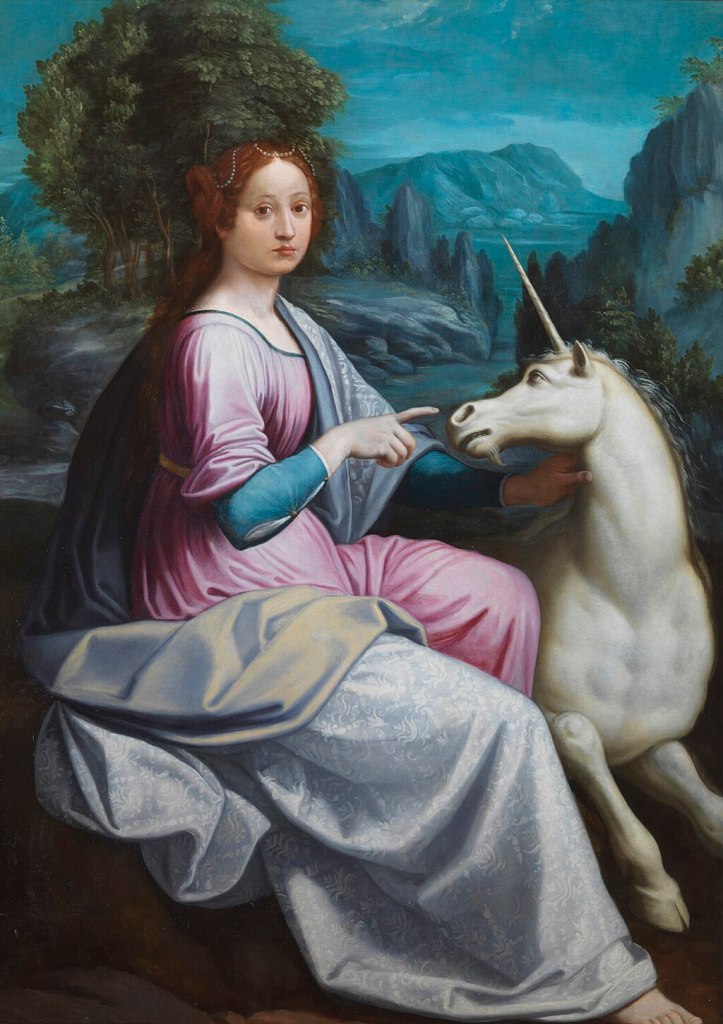
You know you’re doing the scandalous mistress thing correct when most of Europe knows you Giulia la Bella (aka Julia the Beautiful). Giulia Farnese was born into the noble Farnese family the daughter the daughter of Pier Luigi Farnese Sigmore di Montalto and Giovanna Caetani. Now whilst nowadays the Farnese family are arguably better known than the Caetani family, the Caetani’s were a major Italian power player in the medieval era and actually produced a Pope (Pope Boniface VIII who was pope from 1294 to 1303). Giulia had four siblings including three brothers Alessandro, Bartolomeo and Angelo and a sister Girolama. Giulia spent most of her childhood in Canino which is around 80 miles from Rome until she turned 14 in 1488 and her mother sent her to Rome in order to complete an education in the hopes of integrating herself into the Roman aristocracy (and finding a rich influential noble husband). Now Giulia it turns out was pretty good at the whole husband hunting business because a year after her arrival in Rome she married Orsino Orsini with an eye watering dowry of 3,000 gold florins. Now whereas Giulia was intelligent and clearly beautiful (most portraits of her suggest reddish hair whilst Cesare Borgia described her as having “dark colouring, black eyes, round face and a particular ardor”) Orsini was not exactly a catch himself – he was supposedly squint-eyed and devoid of any meaningful self-confidence but those things were irrelevant in the face of the fact that a) he was a member of the very old, very influential and very rich Orsini family and b) he was the son of Adriana de Mila who was the third cousin of Cardinal Rodrigo Borgia who was then the Vice Chancellor of the Catholic Church. This means she knew the Borgias from at least 1489 onwards. Rodrigo became Pope in 1492 as Pope Alexander VI. We don’t know when exactly Giulia became his mistress. It could have been before he was Pope however whilst he may have shown an interest in her beforehand, the majority of the evidence suggests the affair didn’t begin until after he was Pope. This is down to a number of things – firstly the affair only started once Adriana de Mila had given her approval and she did this solely to win a higher status for her son within the Vatican. If that’s your endgame you might as well wait until Borgia’s in the highest position of them all and can give all the promotions he wants. Secondly it wasn’t until the fall of 1493 that Giulia ceased living with her husband and began living with Adriana de Mila and the Pope’s daughter Lucrezia Borgia in a palace next to the Vatican (which made the Pope’s clandestine visits easier). It could be argued that she only stopped living with her husband once she became the Pope’s main mistress. One thing that does complicate matters is the birth of her daughter; in November 1492 aka immediately after he had become Pope Giulia gave birth to a baby girl who she named Laura. We have absolutely no idea who the father is. Most of her contemporaries were of the opinion that the child was her husband’s including Maria Bellonci who believes there’s evidence that she did indeed have a physical relationship with her husband. Giulia however claimed the baby was Laura’s which would only make sense if they’d been having a sexual relationship. Giulia claimed the baby was the Pope’s HOWEVER Pope Alexander VI never recognized or cared for Laura. He had a number of illegitimate children (four with Vannozza and a couple of others – they were all recognised as his and most carried the Borgia name). Obviously recognising bastards born post becoming Pope was a bit more taboo and politically stupid but he never even financially provided for Laura which is incredibly out of character for Alexander VI. That would suggest to me she wasn’t his child. The affair was not exactly top secret; pretty much the whole of Rome knew and to say that Giulia’s name was on the lips of every gossip in the city is an understatement. She was referred to among other epithets as “”the Pope’s whore” or “the Bride of Christ”. I should say there was an attempt in the 19th century by writers such as Michael de la Bedoyere to say that she wasn’t a mistress but the evidence is pretty overwhelming against that particular theory. Now Giulia began financially benefiting from her new relationship with God’s representative on Earth almost immediately; in 1494 it was noted by Lorenzo Pucci that “she has an intent goldsmith that makes rings for one thousand ducati” and when her brother brought Cardinal Pedro Ferris’ Roman Palace in early 1495 for 5,500 ducats, Giulia almost certainly either contributed or bought the thing in its entirety herself (we know Alessandro could not have afforded it because records from the Apostolic Chamber from autumn of 1500 put Alessandro’s annual income at just two thousand ducats, making him one of the poorest members of the Sacred College). That was the biggest way she benefitted from her affair with the Pope; he made her brother a Cardinal. That brother would end up becoming Pope in his own right. Despite being a Papal mistress Giulia didn’t exactly bend to her lover’s every whim; Whatever the case may be, Giulia claimed that Laura was indeed the Pope’s daughter, but this may have been to raise the status of the child for future marriage considerations. In 1494, she very much pissed the Pope off by travelling to Capodimonte to be at the deathbed of her brother Angelo. Even after her brother’s death, she remained there (allegedly at the request of her husband which would suggest he wasn’t altogether thrilled at his wife being the Pope’s mistress). Eventually the Pope harassed her husband so much that Orsini summoned her back to Rome. The only problem with this was that her little sojourn coincided with the French invasion of Italy under Charles VIII. Giulia was captured by the French captain Yves d’Allegre, who demanded from the Pope a ransom of 3,000 scudi for her safe return to Rome; the Pope who I can imagine was a bit annoyed agreed to the demand. The affair lasted until around 1499/1500 when she began to fall out of favour. Adriana de Mila was once again brought in to help ease any potential tensions and she negotiated the end of the relationship. Giulia’s husband died shortly after the end of the affair and she immediately left Rome, moving to Carbognano about 30 miles north of Rome where her husband had owned a castle given to him by the Pope. I love kings/Popes giving their mistresses husbands gifts like “sorry I’m sleeping with your wife, here’s a castle to make you feel better”!! Pope Alexander VI himself then died in 1503. She was apparently not lonely in her widowhood; in the years after she took a series of lovers eventually marrying one Baron Giovanni Capece Bozzuto di Afragola in either 1505 or 1506. That same year she returned to Rome for the first time since she’d left for the wedding of her daughter (who was just 13) to Niccolò Franciotti della Rovere Lord of Gallese. He too was intertwined with the Papacy – he was the brother of Cardinal Galeotto Franciotti della Rovere and the son of Laura della Rovere who was the sister of the then-incumbent Pope Julius II. It’s not known how involved Giulia was in negotiations for the marriage. In 1506, after her return to Carbognano she was named the governor of the town and it’s surrounding region (the perk of your daughter marrying the Pope’s nephew). Giulia took up residence in the citadel of the years and years later, her name was inscribed on its gate. By all accounts she was an able administrator who was well respected and liked by the people under her rule. She served as Governor until 1522 when she returned to Rome to live with her brother. It’s likely she returned due to health concerns because less than two years after her return, she died in her brother’s house at the age of just 50.
SILVIA RUFFINI

Born into a minor noble family, the daughter of Rufino Ruffini and his wife Giulia, Silvia Ruffini was raised in the Colonna neighbourhood of Rome with her six siblings Giacomo, Girolamo, Ascanio, Mario, Camilla and Ippolita. Very little is known about her early years; what we do know is that in her late teens (probably in 1496) she married Giovanni Battista Crispo a wealthy Roman merchant. There’s next to no information about their marriage but the fact they had three children in under four years would suggest that the two had a fairly good relation (their intimate life was evidently not a problem). At some point in their marriage she became an acquittance (possibly a friend) with Giulia Farnese (see above). Giulia at this point was no longer the mistress of Pope Alexander IV but she was still pretty infamous and influential; she introduced Silvia to her brother Alessandro Farnese who at the time was a cardinal (he got his cardinalship due to his sister’s affair with the Pope). He offered to be her escort around Rome whenever her husband was away and at some point the two embarked on a relationship; we have no idea when exactly but she gave birth to a daughter Constanza in 1500 and Alessandro recognised the baby girl as his meaning the affair began whilst her husband was alive. It’s also thus unlikely her husband didn’t know; it’s hard to have a kid without your husband noticing! Her husband died in 1501 and Alessandro & Silvia’s relationship continued. The two were by all accounts genuinely quite in love with one another and he was fairly devoted to her. Throughout their long affair they had three sons as well as a daughter (the first was born in 1500 and the youngest was born in 1509). Shortly after the birth of their youngest child, he was named the Bishop of Parma; the church’s vicar-general, Bartolomeo Guidiccioni demanded he end his relationship with Silvia which he did so reluctantly. Despite this he continued to look after her and had a close relationship with his children. It was noted that he was immensely protective over her and financially provided for their family. He became even more protective when he became Pope Paul III. Having seen the notoriety and negative publicity his sister had faced as a papal mistress, he made it clear from the beginning of his papacy that he wanted to keep her identity a secret. She apparently left Rome when he became Pope in order to be as anonymous as possible; it was suggested by a number of contemporaries including Baldassarre Molosso, a poet and guardian of the couple’s children, that after she left Rome she lived in the town of Bolsena a village that Paul III had given to their son. It’s known that Paul III had a villa in the town and occasionally stayed there. It’s thus likely that he may have continued to visit her whenever he was in Bolsena. Her sister Camilla also moved nearby. Due to her and Paul’s desire to keep her identity hidden, she had no political influence although he did promote Tiberio her son from her first marriage (rumours did emerge at one point that Tiberio was potentially Pope Paul’s son however he acknowledged all the others so I find it unlikely he’d fail to acknowledge one). Tiberio became a priest and served in a series of positions before being promoted to Cardinal by Paul in 1544. Paul also promoted his and Silvia’s own children; Pier Luigi was named Duke of Castro and later the first Duke of Parma and Piacenza and was a feared and famed mercenary soldier. Pope Paul III died in 1549 and at some point in the years after his death, she returned to Rome where she died on Tuesday 5th December 1561 in Rome, at the age of about 86.
MARIE GAUDIN
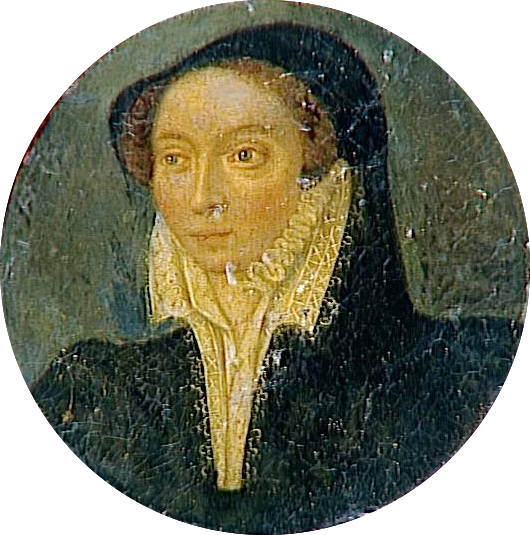
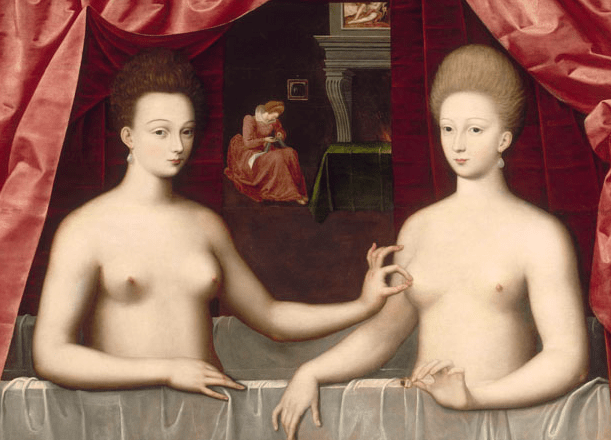
Marie Gaudin was born in France circa 1490; very little is known about her early life although she received some sort of an education and at the age of 15 was married to Philibert Babou a government official who served as Mayor of Tours. Following the marriage she joined the royal court where she was referred to as one of the prettiest girls in all of France. In 1515 she and her husband were part of the French delegation that accompanied the new king Francis I of France to meet with Pope Leo X in Bologna. During her trip to Bologna it was alleged that she and Leo had an affair (despite the fact that during his lifetime Leo was not rumoured to have had sexual relationships; after his death however he was rumoured to have had sexual relationships with men) – accusations of an affair between Leo and Marie stem from the fact that at the end of the summit he gave her a HUGE diamond known since as Diamant Gaudin. After she returned to France she became Francis’ mistress (it’s possible she was his mistress prior to the Bologna trip but we’re not 100%. We know she was the first mistress he had post becoming King but he had only been king very briefly prior to going to Bologna so it’s not clear if the affair had started by that point). Their affair lasted on and off until at least 1520 when Francis arranged for construction of the Château de la Bourdaisière for her. After the affair ended she and her husband Philibert Babou were allowed to keep the castle. The affair had definitely ended by 1521 when she gave birth to her son Jean; there was no questioning of paternity which there would have been were she still the king’s mistress. She was one of Francis’ lesser known mistresses; she was overshadowed firstly by Francoise de Foix, Francis’ first official mistress and Anne de Pisseleu d’Hilly his second official mistress (and a woman that became the most powerful woman in France at the time). Despite the end of the affair, she and Francis remained on good terms; her husband became Minister of Finance and between from 1532 to 1542 Marie was a lady-in-waiting to Francis’ second wife Eleanor of Austria. Interestingly Pope Leo X’s grand niece Catherine de Medici married into the royal family in 1533 when she married Francis’ son Henry (later Henry II). She would end up serving as Regent for her son and becoming one of Europe’s most influential figures; she seems to have developed a good relationship with the Babou family in particular Marie’s son Jean who served in numerous government positions under Francis, Henry II and Catherine’s eldest son Francis II; Catherine also arranged for him to marry one of her most loyal lady in waitings Françoise Robertet who served as Catherine’s lady in waiting between 1547-1575 (she also served briefly as the lady in waiting of Catherine’s daughter in law Mary Stuart in 1560 – allegedly to keep an eye on her for Catherine and Catherine’s other daughter in law Louise of Lorraine between 1575 and 1590). When Francis II died, Jean retired from court however Catherine trusted him enough to recall him to service and tasked him to teach and guard her son Francois the Duke of Alençon as well as putting him in command of the Duke’s guards. In 1562 he was made “captain of cities” and governor of the chateau d’Amboise and then in 1566 a knight of the Order of Saint Michael. Two more interesting tidbits about Marie; a) she served as the model for the statue of the Virgin that is in the collegiate church of Notre-Dame-de-Bon-Désir which is located between Tours and Amboise and b) the female members of her family inherited her beauty (they were described as the “most prolific clan of gallant women who ever existed in France.”) and a plethora of them became the mistresses of the most influential men in the kingdom. Her granddaughter Francoise was the mistress firstly of Louis de Bérenger, sieur du Guast a favourite of King Henry III and then Yves d’Alègre – she left her husband for d’Alegre and the pair court to live in Auvergne where he was appointed governor of Issoire by Henry III. They ruled the city together however their rule was SO highly unpopular, that in 1592, they were both assassinated for political reasons by citizens who broke in to their home. Another of Marie’s granddaughters Isabelle was the mistress of Philippe Hurault de Cheverny who served as Chancellor of France. It was her great-granddaughters however that caused the biggest scandals – one Angelique was a mistress of Henry III and later became an Abbess. Her affairs allegedly did not end after becoming a nun and her scandalous ways at the abbey resulted in her banishment to a home for “delinquents”. Another granddaughter Diane served as the mistress of the influential and notoriously scheming Jean Louis de Nogaret de La Valette the Duc of Epernon whilst her granddaughter Gabrielle became one of the most influential mistresses in French history and almost Queen of France as the great love of Henry IV (for more on Gabrielle I’ve written about her on my instagram see here). Gabrielle and her sister Julienne earned infamy for posing topless (see below). That topless portrait you may recognise as it popped up unexpectedly (see here) during the 2024 Olympic Opening Ceremony in Paris!
This is most definitely not an exhaustive list; these were the men who were particularly awful at hiding their lack of celibacy. There are other popes who had mistresses however the names of those mistresses have been lost to history; Pope Clement VII (born Giulio de Medici) is believed to have been the father of Alessandro de Medici the Duke of Florence (at the time he was recognised as the only son of Giulio’s nephew Lorenzo II de Medici with a small circle of people believing he was actually Giulio’s son. It’s now believed he’s more likely to have been Giulio’s than Lorenzo’s) whilst Pope Innocent VIII (born Giovanni Battista Cybo) is believed to have fathered at least seven children including Franceschetto Cybo and Teodorina Cybo whilst he was a regular priest/Cardinal (it’s not believed he fathered any after becoming Pope). Pope Julius II (born Giuliano della Rovere) is rumoured to have had multiple daughters although only is absolutely confirmed – Felice Della Rovere whom he conceived during a short fling with Lucrezia Normanni whilst he was Cardinal (Felice would go on to wield extraordinary wealth and influence both within and beyond the Roman Curia whilst her father was Pope) whilst Pope Gregory XIII (born Ugo Boncompagni) fathered a son Giacomo Boncompagni prior to becoming Pope. Another Pope Pope Leo XII (born Annibale Francesco Clemente Melchiorre Girolamo Nicola della Genga) also had a bit of a reputation for his lack of celibacy and whilst a prelate in Rome came under suspicion of having an affair with the wife of a Swiss Guard soldier – he then served as nuncio in Germany where he allegedly fathered three illegitimate children. There are of course also a number of Popes accused of having male lovers (although with some it’s entirely possible that accusations of homosexual relations were slanders to disgrace them); these Popes include Pope Paul II (who allegedly had a long time affair with a page), Pope Sixtus IV (although the only evidence of this is accusations made by Stefano Infessura who claimed Sixtus was a “lover of boys and sodomites” who awarded benefices and bishoprics in return for sexual favours. It should be noted that Infessura was a partisan supporter of the Colonna family who HATED Sixtus so he wasn’t exactly reliable or impartial), Pope Leo X (he wasn’t accused of anything during his lifetime, it was only after his death that he was accused of having sexual relations with men by the likes of Francesco Guicciardini and Paolo Giovio. Since the 18th century many historians have investigated the claims made against him; few have given credence to them and have found little evidence) and Pope Julius III (accusations about his sexual preferences spread across Europe as a result of the blatant and unearned favouritism shown to Innocenzo Ciocchi Del Monte a teenaged beggar found on the streets of Parma who was hired Julius’s family as a hall boy at their home. del Monte was between 15 and 17 and after Julius became Pope, del Monte made him a cardinal and showered him with gifts and benefices. Contemporaries of the two wrote at length about the rumoured relationship with one cardinal writing Julius showed the impatience of a “lover awaiting a mistress” while awaiting Innocenzo’s arrival in Rome and boasted of the boy’s prowess in bed, while the Venetian ambassador reported that Del Monte shared the pope’s bed”.)

 The Monstrous Regiment of Women