In a previous post about Queens of Castile, I mentioned I would be doing an accompanying post about a few of the Queens and Princesses of Aragon. As I mentioned in that previous post, one of the things I loved about the Iberian monarchies is the role of women. This idea of the Queen-Lieutenant although a feature of all Iberian Catholic monarchies, originated in and was most prominent at the court of Aragon.
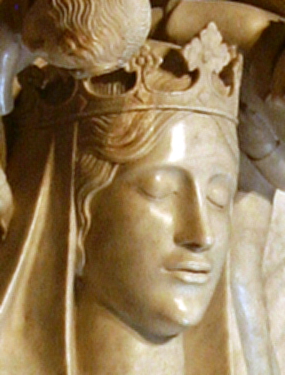
Eleanor of Sicily was born in 1325 the daughter of Peter II King of Sicily and Elizabeth of Carinthia; now Eleanor’s childhood was a tense one with the court in Sicily dominated by strife between a) the throne and the nobility, especially the oldest most prestigious families i.e the Ventimiglia, Palizzi and Chiaramonte, and b) Sicily and Naples – the two kingdoms were in a near eternal pissing match for dominance. The tense situation wasn’t helped by the fact that her father was not exactly the strongest of monarchs in fact most of his contemporaries regarded him as being feeble minded with Giovanni Villani referring to him as “quasi un mentacatto” (“almost an imbecile”) whilst Nicola Speciale was a tad nicer calling him “purus et simplex” (“pure & simple”). Eleanor’s mother was not quite feele minded and upon the death of Peter II in 1348, Elizabeth swiftly took charge ruling on behalf of her son (Eleanor’s younger brother) who was too young to rule alone. It was Elizabeth that decided that Eleanor should marry Peter IV of Aragon – this marriage was arranged on the condition that he renounce all rights to the Sicilian throne. He agreed – which is hardly surprising. You see Peter IV was very much in need of a son; despite only been 30 he’d been married twice before (firstly to Maria of Navarre and Eleanor of Portugal) but had no surviving sons from either marriage, although he did have two daughters. The marriage took place in 1349 and was a pretty big success; not only was Eleanor immensely popular and respected but she also fixed the no-legitimate heir problem that had plagued Peter’s reign. In fact she didn’t just bear him the all important son and heir; between 1350 and 1362 she actually managed to bear three sons John, Martin & Alfonso and a daughter Eleanor. Two of those sons would go on to be King of Aragon whilst her daughter became Queen of Castile. Eleanor’s death was a major turning point in the Aragonese royal family; she was basically the glue that held everything together and everything went downhill with her no longer around. Her husband seemed to recover from his grief within 10 minutes and quickly began romancing Sibila de Fortia, a lady in waiting of hers who was several decades younger than him (she was in her early-mid twenties whilst he was 56). King Peter & Sibila had married in 1377 in a wedding that had not gone down well with Eleanor’s sons John and Martin who were frankly livid; their anger had three components – the first was annoyance on their mother’s behalf, the second stemmed from the accusation that the relationship had begun prior to Eleanor’s death and the third was a result of Sibila’s age which meant that she was very much capable of getting pregnant; they were clearly not in the mood for younger brothers with ambitious mothers who could potentially cause chaos. John then married Violante of Bar without his father’s permission; Peter was unsurprisingly deeply unimpressed; the fact that the very beautiful, very headstrong and very intelligent Violante clashed spectacularly with Sibila upon arriving in Aragon, did not help matters. As the 1380’s progressed, court grew incredibly factionalised with Queen Sibila inviting her family to court – they became increasingly influential and with both sons furious at him, King Peter began to favour Sibila’s family over his own – Sibila’s brother Bernard especially became quite powerful. Court became increasingly split with Sibila, her family and allies on one side and John & Martin, their wives and their allies on the other. Both John and Martin would go on to be King after Peter’s death but the relationship between Eleanor’s loved ones never recovered.

Being.a Princess of France sounds like a pretty nice gig if you can get it. But what’s better than Princess of France? Well Queen of Aragon doesn’t sound too shabby, a fact I’m sure Violante of Bar here agreed with. Violante of Bar was born circa 1365 the daughter of Robert I Duke of Bar and Marie of Valois; she was her parent’s eighth child (we’re not actually sure about the specifics of her birth-date however we know she was around 15 when she married in 1380 so it’s safe to presume she was probably born around 1365). Her father was a powerful noble in France who ruled a nice territory in the North-East of the country which bordered the Duchy of Lorraine and various territories belonging to the Holy Roman Empire, whilst her mother Marie was the daughter of John II King of France and Bonne of Bohemia, sister of Charles V King of France and aunt of Charles VI King of France. Now we do know that Violante’s mother Marie was noted for her intelligent and intellectual pursuits and was renowned for having an extensive library that includes works about romance, poetry, history and theology; the French court was also the most cultured and intellectual in Europe. Marie was also a patron of the arts and a muse to the likes of Jean d’Arras who dedicated his Roman de Mélusine to her. Violante thus grew up at the French court under the very cultured tutelage of her mother, her aunt Jeanne de Bourbon Queen of France and Jeanne’s mother the formidable Isabelle de Valois Madame de Bourbon la Grande, Dowager Duchess of Bourbon. She grew up with the likes of Christine de Pizan and a whole host of aristocratic little girls including Marie & Philippa de Coucy the granddaughters of Edward III King of England. In other words her education was likely to have been AMAZING. Violante’s own daughter received an incredibly extensive education so it’s likely she was inspired by her own education. In 1380 when she was around 15 she married John Duke of Girona who was the heir apparent to the throne of Aragon. He was 15 years older than her and had been married once before; he and his first wife Martha of Armagnac had produced 5 children although at the point that Violante and John married, only one daughter Joanna was still alive. Now John and Violante’s was kind of a political marriage but also not really a political marriage – after the death of Martha, there had been a ton of wrangling about who John would marry. His father King Peter favoured a princess of Sicily however John evidently preferred Violante and made it clear he wanted to marry her. I’ve never seen evidence of this but I would assume that means they met although I’m not sure when. To give you some context tensions at the court of Aragon were at fever pitch; following the death of John’s mother Queen Eleanor in 1375, her widower & John’s father King Peter seemed to recover from his grief within about an hour and quickly began romancing Sibila de Fortia, a lady in waiting of his late who was several decades younger than him (she was in her early-mid twenties whilst he was 56). King Peter & Sibila had married in 1377 in a wedding that had not gone down well with Peter’s son John and Martin who were frankly livid; part of their anger stemmed from annoyance on their mother’s behalf whilst the larger part of their rage stemmed from Sibila’s age which meant that she was very much capable of getting pregnant; they were clearly not in the mood for younger brothers with ambitious mothers who could potentially cause chaos. Feeling resentful towards his father and evidently quite enamoured with Violante, he made the decision to marry her regardless of the consequences, and King Peter a) did not give consent to the marriage and b) wasn’t told about it until the last minute. Whilst John evidently had romantic feelings for Violante, marrying her was also politically advantageous – their marriage was both a) a way to strengthen ties between Aragon and France and b) a way for the Aragonese crown to support the Avignon Papacy. Peter was unsurprisingly deeply unimpressed; the fact that the very beautiful, very headstrong and very intelligent Violante clashed spectacularly with Sibila upon arriving in Aragon, did not help matters. John appears to have been very much in love with his new wife and didn’t take kindly to what he perceived as his step-mother’s rudeness towards his bride. This as you can imagine only caused further strife. As the 1380’s progressed, court grew incredibly factionalised with Queen Sibila inviting her family to court – they became increasingly influential and with both sons furious at him, King Peter began to favour Sibila’s family over his own – Sibila’s brother Bernard especially became quite powerful. Court became increasingly split with Sibila, her family and allies on one side and John & Violant and their allies on the other. You see Violante turned out to be quite the political player and proved to be far more than just a pretty French face. John and Violante appear to have been quite a formidable duo and throughout their sixteen-year-marriage were devoted to one another. There’s no record of infidelity on his part, in fact there wasn’t even a whisper of it, and the two conceived constantly; between 1382 and 1396, Violante gave birth to seven children James, Yolande, Ferdinand, Antonia, Eleanor, Peter & Joanna (and this doesn’t include miscarriages or possible stillbirths). Despite clearly have no problem with carrying children and then giving birth, the problem appears to have been keeping them alive afterwards and out of their seven children only one survived to adulthood. In 1387 Violante’s father in law King Peter died and her husband ascended to the throne as King John I meaning Violante was now Queen. The first decision they needed to make was how to deal with John’s step-mother Sibila who in the immediate aftermath of Peter’s death fled to the Santa Marti Sarroca. John and Violante forced her to return to Aragon in order to pledge her alliegace; upon arrival instead of executing her (as some may have expected them to do) they chose to demonstrate a degree of mercy and sent her to live under close guard in Barcelona. They were supported in this by John’s brother Martin; his support and the royal brother’s close relationship resulted in John naming his brother Duke of Montblanc. Previously the only other duchy in Aragon was that of Girona, a title reserved for the heir to the throne, so Martin being given a nice little duchy of his own was an enormous honour. Whilst John and Martin were tight, Violante and Martin’s wife Maria appear to have been less close. Violante’s husband would only rule for 9 years; two years into his reign in around 1388 his health began to falter – the exact cause of his illness is unknown however it fluctuated meaning he went through periods of good health and periods where he was practically bed-bound. When he was healthy John and Violante ruled together in what was considered a true partnership; when he was ill Violante wielded considerable administrative power on his behalf and from 1388 onwards she was Queen-Lieutenant of Aragon, effectively governing the kingdom as such. She seems to have followed her husband’s wishes whilst ruling and none of her policies were particularly rogue. In July 1391 in Valencia, a riot broke out against the Jewish population egged on by the Dominican preacher Vincent Ferrer – Violante intervened and ordered the officials in Valencia to increase the defence of the Jewish population. Violant’s brother-in-law was was sent to deal with the rioters; evidently the situation was worse than he expected and so he requested King John’s assistance. John however was evidently sick and thus unable to help so Martin was denied; he then appealed to Violante to intervene however she also refused. Contemporaries at the time noted that her refusal was due to constitutional reasons (the specifics of those constitutional reasons aren’t exactly clear), not personal reasons and it was commented that she appeared to genuinely want to help. Afterwards in an effort to ease the suffering of the Jewish people, Violante chose not to impose the higher rate of taxation originally established by her father in law by allowing the Jewish Community to pay only a quarter of the amount. Something that’s very interesting about Violante is the extent to which she remained involved in French matters and when arranging marriages for her family members she considered not just how it benefitted Aragon but also whether it was politically beneficial to France; in 1382 her parents gave her permission to explore a potential Aragonese marriage for one of her sisters as a way of boosting Violante’s position. Such a marriage would have made the connections between Aragon and France stronger. She also negotiated frequently with Juan I of Castile about various potential marriages between her family and his – it appears that Violante pretty much had free reign when it came to marriages and she considered unions between her step-daughter and either one of the sons of Juan I of Castile or an Aragonese duke (as a way of fortifying the already strong relationship between John and her cousin Charles IV of France. She at one point received an offer from Richard II to marry one of her daughters following the death of his wife Anne of Bohemia however Violante refused out of loyalty to Charles. In 1392 Violant brokered a marriage for her stepdaughter Joanna with Matthew Count of Foix further strengthening the connection between Aragon and France and that very same year she married her daughter to Louis II of Anjou who was not only a Prince of France but also King of Naples making her young daughter the Queen of Naples. Despite his illness John and Violante were a pretty perfect match and were both lovers of fashion, music and literature; she was clearly hugely inspired by her upbringing and experiences at French court. Under her authority, Aragon became one of the centres of European culture and living “in this particularly artistic atmosphere was a unique experience in Christendom. Other European courts patronised troubadours and encouraged the literary arts, of course, but nothing like this. The point was not simply to learn to read, write and perform verses, stories or songs but to incorporate the art into daily existence – to live poetry”. Violante in particular was noted for cultivating the talents of Provençal troubadours bringing some French flair to the court of Aragon. By the time John died in 1396, Violante was a seasoned and proactive political player; his death was actually kind of unexpected – he died during a hunt in forests near Foixá after falling from his horse – the fact he was on a horse in the first place would suggest he was one of his rare bouts of good health. With no living sons, his brother Martin was the next King. He however was dealing with pesky barons in Sicily and so it was up to his wife Maria who was hanging out in Barcelona to take charge; there was however one small little problem. Violante turned around and admitted that she had been intimate with her husband in the weeks/months leading up to his death (and she was only in early 30’s) meaning there was a very good chance she was potentially pregnant. Potentially pregnant with a son that would by birthright inherit the throne over Martin. This meant that although the cortes, the magnates and the councillors of Barcelona backed Maria, there was still a ton of the nobles in Aragon who were pretty hesitant to pledge their allegiance to Martin and Maria just in case Violant did produce a son. Maria’s saving grace was that as a native member of the Aragon elite she had familial ties to many of the kingdom’s most important families; Violante although a member of the French royal family lacked those ties in Aragon which put her at a disadvantage; her continued involvement in French affairs had evidently lead to a belief she wasn’t sufficiently loyal enough to Aragon. She was however potentially carrying the heir to the throne so that pretty much trumped everything. Now we don’t know 100% for certain whether she was telling the truth or not – Violante’s servants were questioned and whilst some denied the Dowager Queen was pregnant, others confirmed that she had, had sex with her husband recently so it was possible. Despite Maria basically begging for Martin to return, he refused to leave Sicily (part of Maria’s desire for him to return was also economic – the campaign in Sicily was costing stupid amounts of money that they didn’t really have). Whilst this uncertainty was going on, John’s daughter from his first marriage Joanna decided to chaos even more chaos by attempting to claim the throne for herself as her father’s eldest daughter supported by her husband Matthew de Foix and his very powerful family. The new Queen Maria then had Violante placed under virtual house arrest and moved to completely isolate Violante from her allies – arresting her closest familiars and removing from that their influential positions. They then waited until it was abundantly clear that Violante was not in fact pregnant. Throughout all of this Maria used a bit of good old fashioned xenophobia to blacken Violante’s reputation; in propaganda she cast herself as the virtuous, moral, simple homegrown Queen who had saved Aragon from Violante’s foreign, scheming & extravagant claws. She also sent Violante the horse that John (aka Violante’s late husband) was riding when he died which is just a bit evil actually. The thing is Maria couldn’t ultimately do all that much to Violante – the French would have caused absolute chaos if anything had happened to her; in the aftermath she dedicated herself to her daughter Yolande who ended up becoming the most powerful woman in Europe and the most ludicrously perfect politician so that’s a win for Violante I suppose. She also remained involved in the politics of both Aragon and France – the insanity of the French King and the chaos it caused meant that her daughter Yolande ended up taking a key role in the governance of France. Violante remained her daughter’s main supporter. In 1406 her former sister in law Queen Maria died leaving her husband and son behind. Shortly afterwards Maria’s daughter in law Blanche of Navarre (the second wife of her son Martin) gave birth to a son and heir also named Martin – as a way of bringing the family together and guaranteeing her bloodline on the throne of Aragon Violante arranged a marriage between her granddaughter Marie and the new heir to the throne of Aragon. He however died before the marriage could take place. Marie would go on to be the Queen of France as the wife of Charles VII of France – it was Violante’s daughter Yolande that got him on the throne in the first place. Like mother like daughter. Violante died in 1431 in Barcelona a decade into her granddaughter’s reign as Queen of France.
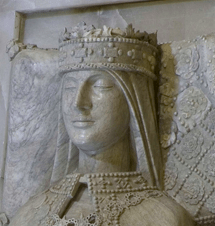
Juana Enriquez was born in 1425 the daughter of Fadrique Enriquez and Mariana Fernandez de Córdoba the 4th Lady of Casarrubios del Monte; her mother died in 1431 and the very young Juana inherited her mother’s title propelling her to the top of the eligible young ladies list. Now her family were influential members of the Castilian nobility; heir importance stemmed from the fact that they were descended (albeit illegitimately) from Alfonso XI of Castile who was Juana’s great-great grandfather. John of Aragon (the brother of the King of Aragon Alfonso V) wanted to get in on some of that influence and decided to ally himself with the powerful noble faction she belonged to, a faction which had major power in Castile at the time. He was also it just so happens, looking for a wife following the death of his late wife Blanche I Queen of Navarre. He was 27 years older than her but that stopped neither him nor her relatives who were ecstatic at the chance to make her a Queen. The two became engaged in 1443, but due to various political shenanigans in both Aragon and Castile, the marriage was delayed until 1447. Now during his marriage to his first John had ruled Navarre as de jure uxoris; with his remarriage John was technically no long the ruler of Navarre however Juana apparently supported his decision to simply not cede power to his children Charles Prince of Viana and Blanche of Navarre who were to put it mildly deeply unimpressed (the relationship between John and his son had always been distant, John remarrying turned it into full blown hatred) and because breaking the law has consequences, everything kicked off culminating in the outbreak of Navarrese Civil War in 1451. You see the Navarrese people were as livid as Charles and Blanche; Charles had been granted the title of Prince of Viana (the traditional title of the heir to the throne) by his grandfather Charles III of Navarre all the way back in 1423 (you know before Juana was even born) and they had long waited for him to become their King. Now Navarre was for a big portion of the medieval era a bit of a ping pong ball that was sometimes on the French side and sometimes on the Spanish side – John as King of Aragon obviously had the Spanish leaning nobles on his side whilst Charles had the French. The nobility however overwhelmingly favoured John; Charles was the chosen one of the people which makes the hostilities a bit of a class conflict which I find fascinating, and it was referred to as the war between farmers and nobles. During the course of the civil war John was predominantly on the front lines leading his army which culminated in him appointing Juana to act as regent. In 1452 she gave birth to a son Ferdinand (who winds up being that Ferdinand of Isabella and Ferdinand fame and is pretty well known for establishing the Spanish Inquisition and being responsible for some of history’s more reprehensible figures i.e Christopher Columbus). Charles evidently saw where this was going (i.e his father declaring his new baby son his heir over Charles) so that year after being defeated and captured at the Battle of Aybar, he fled to France the minute he was released to secure the support of the French king. Open warfare however did not end – remember the people were still pissed. Charles then decided that French support wasn’t enough and decided to try to entice his father’s older brother Alfonso V of Aragon to also back him. In 1555 all sorts of absolute chaos went down; firstly John tried to disinherit his son and thinking the public would be calmed by naming a different child from his first marriage heir, he named his daughter Eleanor wife of Gaston IV of Foix as his successor. Thing is, it turned out that John had miscalculated slightly; the Navarrese didn’t just want any of John and Blanche’s children to succeed. They specifically wanted Charles. To add the chaos of it all, Charles happened to be particularly popular in Spain whilst John’s popularity was nose diving as he refused to recognise Charles as his first born. I can only imagine how Blanche was feeling in the grave. The conflict completely went in Charles favour and that same year John was forced to leave Navarre with Charles of Viana being installed as regent in Navarre with Castilian support. Where was Juana in all of this? Well aside from popping out Ferdinand in 1452 and a daughter Joanna in 1455, she was heavily involved in the political machinations going on behind the scenes and was well known to be her husband’s most devoted supporter. By 1458 Navarre was no longer at war with its self and Charles and John were actually somewhat reconciled (and by reconciled I mean tolerating each other’s presence and not openly trying to murder one another) and the death of Alfonso V later that year meant that John and Juana were now King and Queen of Aragon. As a token of good will, Charles was offered the crowns of Naples and Sicily with John’s support. He however declined these proposals, and decided to return to Navarre in 1459 which is when Juana evidently decided she’d had enough (she REALLY wanted Ferdinand to inherit Navarre) and in 1460 she showed her husband a series of documents (given to her by her father in Castile) which allegedly proved that Charles of Viana was planning to murder his father. Do we think Charles was legitimately planning to kill his papa king? I’m not convinced but I wouldn’t blame him to be fair; we do know that he was negotiating with Henry IV of Castile to potentially marry Henry’s sister Isabella (yes that Isabella of Ferdinand Isabella fame). John was evidently appalled and ordered that his son be arrested and imprisoned for treason. Now the Catalonians had at this point been stewing in their anger over John’s treatment of his son for years so they vehemently protested against the arrest of Charles. John for reasons unknown to be and which quite frankly don’t make sense appointed Juana to be the lead negotiator with the Catalonians. Juana wasn’t exactly well liked by the Catalonians who viewed her somewhat as an Evil Stepmother trying to take Charles’ birthright. At the parliament of 1461, Joan Dusai a famous lawyer accused John of violating four of the Ustages de Barcelona, four of the Constitucions de Catalunya and the Furs de Lleida. They then demanded for the 100th time that John name Charles as his first-born son and heir, a demand he promptly refused, leading parliament to assembl an army under the Count of Modica. The army turned out to be quite the formidable foe and quickly captured Fraga. John in a panic John capitulated in February and freed Charles on the 25th February. On the 21st June, he signed the Capitulation of Vilafranca in which John recognised Charles as his first-born son, lieutenant-governor in perpetuity, and heir in all his realms. John also surrendered his right to enter the Principality of Catalonia without the permission of the Generalitat and reluctantly forfeited a number of royal prerogatives (i.e the appointment of royal officials was only allowed to be done on the advice of representative bodies). Behind closed doors, Juana was said to be quietly unhappy with the truce. Shortly thereafter however, Charles of Viana died and of course accusations of poisoning were not far behind with Juana as the main suspect. I’ll be honest I can totally see this. Especially as promptly 10 minutes after his son’s death John II proclaimed his son with Juana, Ferdinand, as the heir of Aragon. He then sent Juana back to Navarre with the teeny tiny task of convincing the Catalonians to accept Ferdinand as heir and governor of Catalonia. Good luck with that. So incensed at the turn of events, the Catalonians began objecting to John at literally every turn culminating in the Catalan Civil War of 1462 to 1472 which kicked off immediately after Juana Enríquez had her son hailed as the heir of Catalonia and his fathers governor of Catalonia on the 6th February 1462. Since Ferdinand was only 10 years old, she swore his oath to the Catalonians in his place, and vowed to act as Governor of Catalonia in his place. This didn’t last long. She was after all the woman the public were convinced had murdered their golden prince so they kicked up an almighty fuss to the point that Juana was forced to flee to Girona to seek the protection of the bishop. The Catalonians besieged Girona until July 1462 when John managed to get his wife out of there and she quickly returned to the Aragonese court. That same year John proved to be an even worse father that everyone thought when he had his eldest daughter Blanche arrested simply for the crime of existing; you see with Charles’ death the Catalonians declared that she was the rightful monarch and they promptly proclaimed her queen. Nothing Blanche did suggests she was gunning to be Queen. That evidently didn’t matter because she was imprisoned and given into the custody of her sister (and Daddy’s favourite golden girl) Eleanor and her husband Gaston of Foix. Absolutely deplorable sisterhood right there. It also added fuel to the already very hot fire and the Catalonians were incensed on her behalf leading to even more vicious fighting. It got to the point that Barcelona was clearly unsafe for John and Juana and they fled to Girona hoping to receive protection from the French army there. Two treaties were then signed between John and the French king Louis XI – one at Sauveterre and one at Bayonne. Louis XI agreed to lend 4,200 knights plus their retainers in military aid to John in exchange for 200,000 écues and as surety of payment, control of the counties of Roussillon and Cerdagne with the right to garrison Perpignan and Cotlliure. To seal the deal John tried to arrange a marriage between Blanche and the Duke of Berry who was the younger brother of the King of France; feeling fairly resentful Blanche outright refused, an act which irritated her father. In 1464, the Bishop of Pamplona Nicolas de Etchabaarri helped her escape the custody of her sister and she promptly rocked up to the Courts of Navarre. A mild scandal to be sure. de Etchabarri was promptly murdered. Just months later Blanche herself was poisoned. Juana was once again the main suspect. I’m less convinced of her culpability that in the Charles situation – her sister Eleanor was also a suspect as was her own father. Charming. The war dragged on throughout the 1460’s – with the John’s enemies basically proclaiming everyone who had a slight claim to the throne the rightful monarch over John who by this point they absolutely loathed. They at first offered the throne to Henry IV of Castile, who initially accepted although by June of 1463 had renounced his claim. They then offered it to the Constable of Portugal who was a grandson of James II of Urgell and who the Consell proclaimed as Peter V. He died in June 1466 leading to them proclaiming Rene the Good the Count of Anjou and Provence as their new King. He was the son of Yolande of Aragon and therefore the grandson of John I of Aragon. His selection was was designed to fracture the French alliance as Rene was an important vassal and uncle of the French King (Rene was the older brother of Louis XI’s mother Marie of Anjou). Juana dedicated this time to a) supporting her husband and b) planning on the accession of her son Ferdinand which included him taking an appropriate wife. She evidently fixated on Isabella of Castile the sister of Henry IV of Castile. She became even more determined to see them wed when in 1468, the brother of the childless Henry IV of Castile, Alfonso de Trastamara y Aviz died, meaning the throne of Castile was now likely to fall to either Isabella Henry IV’s sister or his daughter Joana (although there somewhat of an open question of Joana’s paternity). The proposed marriage won the approval of the Aragonese and Castilian magnates. Juana however got to witness her triumph; on the 13th February 1368 she died from what is believed to have been breast cancer. Her husband was devastated and never remarried reigning until his death in 1479. The marriage of Isabella and Ferdinand obviously went on to be one of the most famous in history, lasting for 35 years, producing a prince and four princesses who went on to be queens of England, Aragon, Castile and Portugal and lead to the unification of Spain and the emergence of Habsburg’s (in particular her great-grandson Charles V) as the dominant power in Europe. That was Juana’s true legacy.

One of the things I love most about Aragon is the phenomenon of the Queen Lieutenant which I wrote about in the opening of this post. Another woman who served in this is role is this girl right here Blanche of Anjou. Born the daughter of Charles II of Naples and Mary of Hungary, Blanche had bunch of quite impressive siblings who dominated the Mediterranean – among those were Robert I King of Naples, Louis of Toulouse (aka a literal saint), Philip I of Taranto Titular Emperor of Constantinople, Charles Martel of Anjou titular King of Hungary, Eleanor Queen of Sicily and Maria Queen of Majorca. In 1290 when she was just 10, she was betrothed to John I Marquess of Montferrat who needed a lil bit of help defending Montferrat. Hoping to making John his vassal, her father agreed to help in exchange for John marrying Blanche. The engagement was broken at some point in the early 1290’s probably circa 1293. John I should add ended up dying less than a decade later in 1305. In 1294 the new Pope Boniface VIII was elected at Naples under the auspices of her father; the new Pope quickly hit the ground running and mediated between Charles and James II of Aragon leading to the second engagement of Blanche. As part of the Treaty of Anagni she and John were betrothed to one another (to sweeten the deal the Pope promised the investiture of James as the ruler of Sardinia and Corsica). She was 13 about to turn 14. He was almost 30. They married on either the 29th October or the 1st November 1295. The marriage seems to have been a success; he had been a bit of a womaniser prior to her – he’d been married once and had multiple illegitimate children from relationships with various women. There’s no record of him being unfaithful during their marriage and he certainly had no illegitimate children. He also allowed her involvement in politics and she was considered a key mediator between her father and husband and her husband and her various sovereign siblings. The two had ten children during their marriage James (1296-1334) who became a monk, Alfonso (1299-1336) who became Alfonso IV, Maria of Aragon (1299-1347) who became a nun, Constance of Aragon (1300-1327) who became the Princess of Villena, John (1304-1334) who became Archbishop of Toledo & Tarragona and Patriarch of Alexandria, Isabella of Aragon (1305-1330) who became Archduchess of Austria, Peter of Aragon (1305-1381) the Count of Ribagorza, Empuries and Prades, Blanche (1307-1348) who became Prioress of Sixena, Ramon Berenguer of Aragon (1308-1366) the Count of Empuries and Baro of Ejerica and Violante of Aragon (1310-1353) who was married firstly to Philip Despot of Romania and then Lope de Luna, Lord of Segorbe. The birth of their youngest child took place during Blanche’s regency; he trusted so implicitly that when he was not at court he left her in charge. In 1310 he left to fulfil medieval king military duties leaving Blanche to act as Queen-Lieutenant ruling in his name. Whilst he was away, she went into labour giving birth to their daughter. A few weeks after birth she died suddenly suggesting her death was probably linked to their daughters birth.

I debated which post this woman should go in – Aragon or Castile but ultimately decided as Queen of Aragon she should make an appearance in this post! Maria of Castile was born in 1401 the eldest child of Henry III of Castile and Catherine of Lancaster making her a granddaughter of John of Gaunt. She grew up in Castile and remained in an entirely Castilian household – her godmther Maria de Ayala (a nun and illegitimate daughter of Peter of Castile) was a prominent fixture in her life. She had an extensive education. As the King’s eldest child, Maria was granted the title of Princess of Asturias, the title reserved for the first-in-line to the throne and she . was her formally recognised as heir presumptive at the Cortes of Toledo on 6 January 1402. Her father was evidently concerned there might be an Empress Matilda esque situation should he die so around the same time, she was betrothed to her first cousin, Alfonso the son of her paternal uncle Ferdinand as a way to strengthen her status. The birth of her brother John temporarily rendered all these concerns; in 1405 however those concerns once again became relevant when her father died leaving her brother John II as King; she was once again heir to the throne. Her brother however was still a little boy and so their mother Queen Catherine governed the Castile as regent during King John II’s minority and made sure that Maria was able to observe the politics and machinations of rule and statesmanship. Maria and her mother were super close, even after Maria went to Aragon, in fact letters remain between the two which attest to this fact. Watching her mama rule clearly made Maria aware of her own responsibilities and prerogatives as a queen and later as a regent. Although the marriage between Maria and her cousin Alfonso (future King of Aragon) had been agreed upon since she was baby, it wasn’t formalised until 1408 when she was 7. As part of the marriage treaty, her brother John was to marry Alfonso’s sister Maria, whilst her younger sister Catherine was to marry Alfonso’s brother Henry. See the Spanish were doing incest galore even before the Habsburgs. What’s interesting and I did mention it above is that after the marriage was agreed, Maria remained in a completely Castilian household Alfonso – in most situations she would have been given Aragonese attendees to prepare her for marriage. Maria and Alfonso married at the Cathedral of Valencia on the 12th June 1415 when she was 14 – they were married by the Antipope Benedict XIII. Now the dowry that Maria was given was absolutely insane – both her and Alfonso were granted land and revenues galore and Alfonso was even raised to the rank of Infante of Castile – it’s believed that the dowry was so grand that it was actually the largest dowry ever given to a Princess of Castile. Her brother would later complain it was too large. Now the whole interlocked family thing proved to be bothersome and family squabbles were pretty much a hallmark of family life – the political ambitions of her in laws Ferdinand and Eleanor of Alberquerque frequently clashed with the ambitions of her mother whilst both her brothers and Alfonso’s brothers proved to be annoying little shits that caused all sorts of problems down the road. Now the marriage was not a particularly happy one – they had very contrasting personalities. To add to the that Maria’s health became increasingly frail post the wedding. Now there’s no evidence that she was considered a particularly frail child in fact her health doesn’t appear to have become a concern until the wedding itself. They weren’t able to consummate the marriage on their wedding night because she had yet to begin her menstrual period. That didn’t happen until two years into the marriage when she was 16. At some point around the wedding it became clear that she had epilepsy – as I said she wasn’t known as a child to have suffered from seizure. There’s some suggestion that the epilepsy was perhaps triggered by a bout of smallpox that left her permanently scarred. The marriage ended up being a political alliance, pure and simple. It didn’t however start off that way and there is evidence that there were some fleeting moments of happiness in the early years; their lack of a child, his mother’s overbearing involvement and his infidelity would prove to be MAJOR issues that diminished any happiness they once had. He became King with Maria as His Queen in 1416 and their marriage went down hill from there. His mother Eleanor was overbearing and continued acting as the Queen of Aragon. She remained supreme at court with Maria given a supporting role – she had little involvement in politics and it doesn’t appear that either Alfonso or Eleanor ever really tried to include her. It was only in the early 1420’s when Eleanor’s health began to deteriorate that Maria began to develop more of a public profile. In 1421 Joanna II of Naples named Alfonso as heir to the Kingdom of Naples however he had a rival; Louis III of Anju who was backed by Muzio Attendolo Sforza and Pope Martin V. Due to various political machinations on Alfonso’s part, Sforza decided to betray Louis and abandon his cause, giving Alfonso the green light to become King of Naples however by 1423 Alfonso had begun to clash with Gianni Caracciolo the very powerful lover of Joanna. In a move that I would probably describe as unwise Alfonso had Gianni arrested. Now the man was a pain in the behind but arresting her lover was clearly not going to go down well with Joanna who immediately repudiated her adoption of Alfonso as heir and named Louis instead. Alfonso reacted like a kid having a tantrum over having to face the consequences of his own damn actions for the first time in his life and promptly began making plans to invade Naples. He left Aragon almost immediately and unwilling (understandably so) to leave the country in the hands of his ambitious, irritating and frankly untrustworthy brothers who all had delusions of grandeur and dreams of sitting on the throne themselves. With his mother’s health failing, he had nowhere to turn but Maria who he declared as regent, publicly stating that her authority was second only to his and that she now possessed the right to govern as if she were him. The incredible thing about Maria’s regency is that the rest of Alfonso’s life was dedicated to the capture and rule of Naples and Aragon was left to Maria for literal decades. I’m not even joking. Alfonso’s first period of abroad lasted from 1420 to 1423 during which time Maria proved she wasn’t quite as passive as everyone believed and watching her mother and then her mother in law wield extraordinary political power had actually taught her a thing or two. Alfonso’s return in 1423 was to put it mildly a low point. During his three years abroad he had taken a mistress Giraldona Carlino who he was supposedly smitten with; upon arriving back home he promptly announced that Giraldona had given birth to a son Ferdinand. Maria didn’t take the news well and rather insensitively announced to her husband there and then that his mother was dead, except she wasn’t just very ill. Ouch. The marriage to be quite honest never really recovered and Giraldona showing up at court only infuriated Maria further. The three of them resided rather awkwardly at court together between 1423 and 1432; during which time Alfonso and Giraldona had three children whilst Maria remained childless and deeply unimpressed. She appears to have been quite isolated in those days – she didn’t get along with her in laws and her husband was fixated on his mistress and obsession with conquering Naples. Records show that Maria’s household was almost exclusively Castilian at this point, mostly people who had accompanied her from Castile and it doesn’t seem like she had many friends outside of her immediate circle. When in 1432 the opportunity arose for Alfonso to potentially conquer Naples, permanently this time, Maria encouraged him to go. Despite how strained their marriage had become, she had previously done an exemplary job as regent and he trusted no one else to rule for him. He departed Aragon in 1432 and literally never came back; I’m being serious, the man left for Italy and remained there until his death in 1358 meaning Maria’s second regency literally lasted for 26 years. Combined with the three years she was in charge the first time, she ended up ruling as regent for 29-30 years which is around 70% of Alfonso’s 42 year reign. For those 29-30 years she had complete control over the provincial governors, prelates and religious orders, the nobility, the army, the municipal government, and all other subjects regardless of legal status. She granted constitutions, made laws in accordance with royal authority was empowered to carry out justice, both civil and criminal, and named judges and delegates. Assisted by a royal council separate from the king’s, she had full royal authority. She turned out to be a very shrewd leader; whilst her household was full of Castilian’s, she made sure they were deprived of political influence and the highest offices in government were all given to men from Aragon, which only helped increase her sky high popularity and ensured government functioned smoothly. She also helped with her husband’s quest to gain Naples; when he was captured at Ponza in 1435 she paid the ransom (frankly I’d have left him to rot). She also negotiated on his behalf with Aragon’s enemies and allies alike; on a number of occasions she oversaw negotiations between Aragon and her home-nation of Castile. On one occasion her and her cousin/sister in law Maria mediated a peace treaty in Valladolid on behalf of their husbands – it was noted by contemporaries that if the Queen of Castile had, had as much authority as the Queen of Aragon then peace in Spain may have been possible. In 1454 her brother died and she travelled to Castile to ensure peace remained; she stayed in Castile for three years until 1457. She remained as regent until 1458 when her husband died; how she felt about the news of his demise I have no idea – it had bee two decades since she’d seen the man after all. Her husband’s bastard son Ferdinand succeeded him in Naples and her brother in law John succeeded him in Aragon leading to her promptly resigning as regent and leaving court. Her retirement didn’t last long; within four months she had followed her husband to the grave.
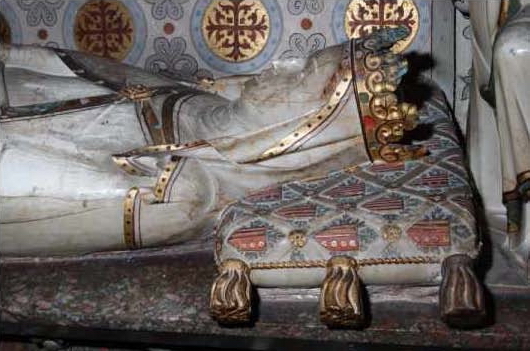
Eliasenda of Montcada was born in Aitona circa 1292 the daughter of Pere II Ramon Montcada d’Abarça and Elisenda de Pinos. Now she had quite the illustrious noble pedigree; the Montcada family was one of oldest and most influential noble families in Catalonia with significant ties to the monarchy. In fact she was actually related to the monarchy – her grandmother Constance of Aitona was an illegitimate daughter of Peter II of Aragon meaning that she was second cousins once removed with the King of Aragon who in 1322 was James II of Aragon (the widower of Blanche of Anjou who I wrote about earlier on this post!). Following Blanche’s death he had married Maria of Cyprus (for political reasons) however that marriage had been a sharp contrast to his first and had to be quite frank been a disaster that had culminated in 0 children and James losing his chance to potentially rule Cyprus (the lack of children was probably down to a) their very different personalities and b) the fact that Maria was already 42 when they wed). Maria died in 1319 (the exact date isn’t clear) and James certainly didn’t grieve for all that long because literally within a few months of her death he beseeched the Church to grant him a dispensation of consanguinity in the third or fourth grade to arrange new nuptials. What’s interesting is that he refused to say who he was planning on marrying however the specificity of the dispensation means he certainly had someone in mind. He was by all accounts very eager to marry the mysterious woman and insisted to just about anyone that would listen, that he wanted the wedding to happen ASAP. As it would turn out the woman in question was Elisenda of Montcada. Now due to their distant relation and her families exalted position in Catalonia society,, it’s likely they had known each for years but there’s nothing to suggest any sort of romantic relation prior to Maria of Cyprus’ death. It’s very difficult to tell exactly how the marriage came to be but his eagerness would suggest the marriage was perhaps a personal one. Something I find very interesting is that Elisenda was at the point they married in 1322, 30 years old which is quite old for a first-time bride in the 1300’s; there’s nothing to suggest she was ever married or even betrothed prior to James, and she clearly hadn’t taken holy vows so her being single at 30 is curious to say the least. James II and Elisenda were married on Christmas Day 1322 – she was 30, he was 55 and a father of 10. He gave her some A+ wedding presents; the incomes of the towns of Berga, Burriana, Tortosa, Morella, Torroella de Montgri and Pals were granted to her whilst her favourite brother Ot also received a sweet gift – the incomes of the towns of Serós and Mequinensa. Through their marrige she became step-mother to his 10 children; she appears to have had a pretty decent relationship with them and it was known that she was particularly close with his grandson Peter who later became known as Peter the Ceremonious. They had no children other own. Now James and Elisenda were very contrasting personalities; he was very rigid, serious and severe whilst Elisenda was known to be charming; it’s possible they balanced each other out. She was described by her contemporaries as being mature, highly educated (unusually so), beautiful and extremely pious. Despite his seriousness, Elisenda made sure that the atmosphere at court was warm and happy. The two of them were not particularly extravagant or flashy and both preferred a private life; he was noted to greatly resect her opinions and she frequently intervened in affairs of state. In 1324 when he left Aragon he left her in charge as a Queen-Lieutenant – she effectively ruled until his death in 1327 – partly due to his absence but also because when he returned his health began to fail. Elisenda it was noted took great care of James in his last years with her religiosity seemingly bringing him great comfort – Jesus Ernest Martinez Ferrando (a Spanish historian who served as the Director of the Archives of the Crown of Aragon from 1940 to 1961) wrote of her: “Elisenda, for her feminine qualities, for her exquisite religiosity, was the best sedative that the monarch could find in the bitterness of his last years; dialogue with the devoted wife sweetened their hours of spiritual and physical ordeal; it can be said that Elisenda helped James II to die well”. Whilst nursing him and running the country she somehow found the time to found a monastery of the Order of the Poor Clares. Work on the monastery began in 1326 and the management and construction of the building happened in warp speed; it’s believed that James II knew he was dying and therefore wanted it complete before he died. The basic structure of the monastery was done literally within a year and the first nuns moved in on the 3rd May 1327. In his will which was dated shortly afterwards James made sure to make a fairly large donation to the monastery; he also wrote an extensive list of grants he wished to give her – a large income, jewels, fine fabrics, gold & silver plates and the gold crown that he had commissioned when they’d married. After his death in November 1327 it was expected that she would retire to Tortosa which was in the middle of her dowry lands and had served as a residence to her late husband’s first two wives. She however decided to remain in Barcelona where she devoted herself to religion and charity; she commissioned a palace built next to the monastery which she lived in for the rest of her life. She survived James by 37 years ; despite no biological connection to her late husband’s children she remained involved in royal affairs – as previously mentioned she was close with her grandson Peter (later Peter IV) and supported him when he became King in 1336 at the age of 16. When the remains of Saint Eulalia were transferred to the Cathedral in Barcelona, she was at the head of the royal procession with Peter’s new wife Maria of Navarre and Peter’s sister (and therefore Elisenda’s step-granddaughter) Constance who was Queen of Mallorca as the wife of James III of Mallorca. She remained highly involved in the day to day running of the monastery and effectively acted as one of the nuns even if she never actually took holy vows – she participated actively in the decision making of the religious community around the monastery and used her place as the Dowager Queen to obtain several privileges for it – for example she made sure the monastery was under the direct protection of the city of Barcelona through the Consell de Cent which meant that the monastery would not face economic difficulty after her death. She fell ill in the Spring of 1364 and her will was issued on the 11th April. She died several month later on July of that year; pretty much everything she owned was bequeathed to the monastery bar a few material belonging that were left to various family members including nieces/nephews, step-children and step grand-children including Peter IV. Oddly she also requested that upon her death her place be burned to the ground immediately; Peter IV agreed and it was done within days of her demise.

99% of the time in medieval Europe, the Queen Consort is from another royal family; Aragon had queen consorts from the royal families of kingdoms such as Castile, Hungary, Navarre, Portugal and Sicily. Occasionally however there are Queen Consorts from less anointed backgrounds. Queen Consorts like this one. Maria de Luna was born in 1358, the eldest child of Count Lope de Luna and his second wife, Brianda d’Agout. Now she may not have been royal per se but that doesn’t mean she was Cinderella 2.0. Whilst her mother was from a Provençal noble family, her paternal family the de Luna’s was one of the most influential clans in Spain, with various members occupying some of the wealthiest and most influential political and religious offices in the realm. Lope Fernandez de Luna the Archbishop of Zaragoza (a very important religious post in Aragon) and the Antipope Benedict XIII were all fellas she called relatives. Now her father was ambitious with a capital A but he was also fiercely loyal to the Aragonese crown and such devotion won her father handsome rewards. First he was knighted by the King then several years later, made a count, all the while making a ton of money and wracking up a nice little property portfolio. The House of de Luna becoming counts gave pretty significant prestige especially as they were the only family in Aragon with the title of “count”. Maria’s mother was her father’s second marriage – his first was childless and the second didn’t last long enough to be full of children; Lope and Brianda only had Maria and and a second daughter (who was born shortly after Lope’s death). He had an illegitimate son born prior to both of his marriages but illegitimate kids couldn’t inherit anything back then meaning that Maria was her father’s heir. This fact was actually never questioned and he made it abundantly clear everything would go to Maria. An heiress with immense wealth and A+ familial connections is a big deal in the aristocratic marriage market and when her father died when she was a mere toddler, the King of Aragon Peter IV was chuffed at the opportunity to bring said immense wealth into the royal family. He negotiated with her mother and relative the Archbishop of Zaragoza, and all three agreed that Maria would marry Peter’s second son Martin. The marriage contact agreed that Maria would be raised by her own family until she was 8 at which point she’d leave her family and move to the court of Peter’s wife/the Queen/Maria’s future mother in law Eleanor of Sicily (see above). The marriage everyone agreed wouldn’t take place until Maria was 14. For some reason (and we’re not entirely sure why) everything happened sooner than it was supposed to and records from Queen Eleanor’s household & account books show that Maria was living with her mother in law as early as 1362 when she was 4-5 years old. Although it was probably quite awful leaving her family at such a young age, it did mean that she knew her future husband extremely well by the time they’d married because they’d grown up together. It wasn’t one of those horror situations where bride and groom meet on the wedding day and realise much to their horror that their new spouse is AWFUL. We know very little about the specifics of her childhood i.e what life was like growing up at Queen Eleanor’s court however we can we do know that as an adult Maria was a collector of books, wrote extensively and took over the administration of her wealth and estates at quite a young age, suggesting that Queen Eleanor made sure that Maria’s education was quite extensive. On the 13th June 1372 Maria and Martin married officially at the Church of Santa Maria del Mar in Barcelona, with King Peter, Queen Eleanor and all the head honchos of the Aragonese clergy and nobility present. Considering John was a second son and his older brother John was the heir to the throne, Maria wasn’t considered particularly important at the beginning of their marriage and all we really know about the first first few years of their marriage is that the two seemed largely happy, spending their time bearing four children (although three died in childhood) and running Maria’s various estates. Martin and Maria seem to have been firm favourites of the King who was eager to reward his younger son whilst Martin also had a very close relationship with his older brother John and Maria was friendly with John’s wife Martha of Armagnac (who he was married to from 1373 to 1378). Things seemed to be going pretty swimmingly in the Aragonese royal household; that is until 1375 when Queen Eleanor died and within roughly 15 minutes of his wife’s death, King Peter seemed to recover from his grief and turned his attention to Sibila de Fortia his late wife’s lady in waiting who was in her twenties (whereas he was 56). The two wed in 1377 which John and Martin did not react well too. And by “did not react well” I mean they were PISSED. Furiously actually and the close relationship between Peter and his sons was basically dead from that moment on. Not only were Martin and John annoyed on their late mother’s behalf but Sibila’s age meant that she was very much capable of getting pregnant and they were clearly not in the mood for younger brothers with ambitious mothers who could potentially cause chaos. Things got ugly, only made worse by the death of John’s wife in 1378 and the disagreements that followed as to who he should re-marry. King Peter wanted him to marry a princess of Sicily however in 1380 with tensions at an all time high John married the niece of the French king Violant of Bar instead. Peter had no given his consent to the marriage and was deeply unimpressed; the fact that the very beautiful, very headstrong and very intelligent Violant clashed spectacularly with Sibila did not help matters – John appears to have been very much in love with his new wife and didn’t take kindly to what he perceived as his step-mother’s rudeness. Martin and Maria wisely seem to have got the hell of dodge and in 1380 he was appointed lord and regent of the island of Sicily, then known also as Trinacria, since its queen Maria of Sicily was underage. She was John and Martin’s cousin on their mother’s side and they had come to an agreement that if the young Queen died without an heir, Martin would inherit the island. As the 1380’s progressed, court grew incredibly factionalised with Queen Sibila inviting her family to court – they became increasingly influential and with both sons furious at him, King Peter began to favour Sibila’s family over his own – Sibila’s brother Bernard especially became quite powerful. Court became increasingly factionalised with Sibila, her family and allies on one side and John & Violant and their allies on the other. Martin and Maria seem to have sided with the latter although their lack of geographical proximity meant they weren’t as involved in the family feud. King Peter died in 1387 and John ascended to the throne as King John I. Martin supported John’s decision on how to deal with their stepmother; Sibila who had fled to the Santa Marti Sarroca in the immediate aftermath of her husband’s demise was forced to return to Aragon in order to pledge her allegiance. Instead of executing her (as some rmonarchs may have done) John and Violante chose to send her to live under close guard in Barcelona. Martin’s support and the royal brother’s close relationship resulted in John naming his brother Duke of Montblanc. Previously the only other duchy in Aragon was that of Girona, a title reserved for the heir to the throne, so Martin being given a nice little duchy of his own was an enormous honour. Another reason for this was probably that that was a chance that Martin would succeed John; you see despite having had two wives and seven children in his time John only had one surviving male heir – his and Violante’s son James who was 5. His sons from his first marriage – James, John & Alfonso – had all died as small children as had his daughter Eleanor. Only one daughter Joanna from his first marriage, his son James and a daughter Yolande from his second marriage was still alive (YES I’M TALKING ABOUT THAT YOLANDE OF ARAGON). Girls however couldn’t inherit the throne if there was a living male so if anything happened to little James, then Martin would be John’s heir. Martin and Maria don’t appear to have played a massive role during John’s reign; Martin was occupied with his role as regent in Sicily whilst Maria seemed to dedicate herself to raising (and unfortunately grieving) their children and overseeing the administration of her and Martin’s quite impressive estates. Now Maria and Martin were not the only ones mourning their children – John and Violante had seven children James, Yolande, Ferdinand, Antonia, Eleanor, Peter and Joanna and yet only Yolande would end upliving to adulthood. This meant that throughout John’s reign, Martin was either first or second in line to the throne. John was only king for 9 years and during those 9 years his health wasn’t great leaving Violante to do the majority of the ruling with her acting as a Lieutenant-Queen. When John died in 1396, Martin became King however he was dealing with pesky barons in Sicily and so it was up to Maria who was hanging out in Barcelona to take charge; there was however one small little problem. The Queen now Dowager Violante of Bar had evidently been intimate with her husband in the weeks/months leading up to his death (and she was only in early 30’s) meaning there was a very good chance she was potentially pregnant. Potentially pregnant with a son that would by birthright inherit the throne over Martin. This meant that although the cortes, the magnates and the councillors of Barcelona backed Maria, there was still a ton of the nobles in Aragon who were pretty hesitant to pledge their allegiance to Martin and Maria just in case Violant did produce a son. Maria’s saving grace was that as a native member of the Aragon elite she had familial ties to many of the kingdom’s most important families; Violante although a member of the French royal family lacked those ties in Aragon which put her at a disadvantage. She was however potentially carrying the heir to the throne so that pretty much trumped everything. Despite her entreaties to her husband to return, he refused to leave Sicily (part of her desire for him to return was also economic – the campaign in Sicily was costing stupid amounts of money that they didn’t really have). Whilst this uncertainty was going on, John’s daughter from his first marriage Joanna decided to chaos even more chaos by attempting to claim the throne for herself as her father’s eldest daughter supported by her husband Matthew de Foix and his very powerful family. On May 27th 1396 Maria called a council to decide what to do next; Violante’s servants were questioned and whilst some denied the Dowager Queen was pregnant, others confirmed that she had, had sex with her husband so it was possible. Maria then had Violante placed under virtual house arrest and moved to completely isolate Violante from her allies – arresting her closest familiars and removing from that their influential positions. They then waited until it was abundantly clear that Violante was not in fact pregnant. This is where I have a bit of a problem with Maria – she turned to good old fashioned xenophobia as a way of blackening Violante’s reputation; in propaganda she cast herself as the virtuous, moral, simple homegrown Queen who had saved Aragon from Violante’s foreign, scheming & extravagant claws. She also sent Violante the horse that John (aka Violante’s late husband) was riding when he died which is just a tad nasty I think. Violante in the aftermath dedicated herself to her daughter Yolande who ended up becoming the most powerful woman in Europe and the most ludicrously perfect politician so that’s a win for Yolande I suppose. With the Violant situation solved and Joanna and Matthew paid off and dealt with, Maria decisively took charge of Aragon until her husband’s return. There’s a great piece about Maria, Violante & the latter’s daughter Yolande called “Playing the Catalan: The Rise of the Chess Queen; Queenship and Political Motherhood in Late Medieval Aragon and France” by Zita Rohr which you can find in Virtuous or Villainess? The Image of the Royal Mother from the Early Medieval to the Early Modern Era (Palgrave Macmillan, London, 2016) ed by Carey Fleiner and Elena Woodacre which sums up the three women like this; “Violante of Bar, Maria de Luna and Yolande of Aragon were extremely determined and talented political mothers. Like the stateswomen-queens who had preceded them, and their worthy contemporaries and successors, they rang in the transformation of the chess queen, anticipating the powerful female sovereigns who would govern with full executive powers in the realms of Spain, England, Scandinavia, Navarre, Austria-Hungary and Russia” (page 186-187). With her husband’s return Maria gave up that full executive power however she remained quite influential and Martin continued to view her as one of his key counsellors, one of as evidenced by various episodes over the next 13 years – in 1402, she tried to force an end to the exploitation of the remença (the rural Catalonian peasantry) by their aristocratic overlords – to do this she sought the support of Pope Benedict XIII in this matter. She also in 1398 was granted control over seven Jewish and six Muslim communities, and was given responsibility for the aljama which was the legal term for the minority group made up of Muslims and Jews. The Jewish community was still reeling from the events of 1391 when the Dominican preacher Vincent Ferrer had incited violence against them; they were also dealing with the influx of refugees caused by repeated attacks on the Jewish community from the likes of the Union of Valencia and the Kingdom of Castile. To ease their financial burden, Maria chose not to impose the higher rate of taxation originally established by her father in law and instead followed in the footsteps of John and Violante who had allowed them to pay only a quarter of the amount. In 1401 she protected the Jewish people further by preventing the jurats (basically the local authorities) from levying an added property tax on Jewish assets, and in 1403 when her husband passed a law that forced Jewish people to wear large badges of both yellow and red (a good reminder that there was absolutely nothing original about the actions of the Nazi and was the culmination of centuries of xenophobia and hatred). Maria evidently rejected her husband’s policy and decreed that it wouldn’t be enforced in the communities Morvedre and Onda which were Jewish-heavy communities where many of them conducted trade. She also at one point intervened in a case where a number of Jewish women was accused of renouncing their prior conversions to Catholicism; Maria forced the bishop who had imprisoned the women to let them go. Maria was above all a devoted mother and she had a particularly close relationship with her surviving son who became King of Sicily by way of him marrying Maria Queen Regnant of Sicily. She appears to have been a critical source of support for him during his brief reign (he ruled with his wife until her death in 1401 and then by himself until his death in 1409). Maria died in 1406 leaving her husband and son behind. Shortly afterwards her daughter in law Blanche of Navarre (the second wife of her son Martin) gave birth to a son and heir also named Martin. Shortly after his birth there was somewhat of a reconciliation between Martin and his sister in law Violante (who despite losing all official power had somehow managed to remain influential in both Aragon and France) with the two proposing an engagement between Martin’s newborn grandson and Violante’s granddaughter Marie, as a way of bringing the two sides of the House of Barcelona together. Tragedy struck however in 1407 when the baby died. Two years later in 1409 Maria’s only surviving child Martin the King of Sicily also passed away meaning her husband lacked an heir. When he died he ended up passing the throne to his nephew Ferdinand – the son of his sister Eleanor. Due to her son’s lack of a legitimate heir, Maria’s legitimate line died with him although he had a couple of bastards who technically kept the blood line going.

Violant of Hungary was born at Esztergom probably in 1215 the daughter of Andrew II King of Hungary and Yolanda of Courtenay; Yolanda was the great-niece of Baldwin I and Henry I both Emperors of Constantinople; very little is known about her childhood except from the fact that she had a number of failed betrothals. It wasn’t until 1235 when she was 20, that one of the betrothals stuck – she was married to James I of Aragon as his second wife – his first wife Eleanor of Castile had died in 1229. If Violant was expecting a fairytale ending with her new husband she was sorely mistaken; after his wife’s death he had started a relationship with Teresa Gil de Vidaure a renowned beauty who James had allegedly promised marry when the time was right. That is until Violante aka the great-niece of an Emperor knocked on his door and he dropped his desire to marry Teresa, real quick. The relationship however did not end, and Teresa was his mistress throughout his marriage to Violant who I can’t imagine was entirely thrilled by the circumstances. Despite this Violant and James’ married was an exemplary success in the bedroom; between 1236 and 1251 they had ten children – six daughters Violant (later Queen of Castile), Constance, Sancha, Isabella (later Queen of France), Maria and Eleanor and four sons Peter (later Peter II of Aragon), James (later James II of Majorca), Ferdinand and Sancho. Despite his relationship with his mistress, Violant was the undisputed Queen of Aragon and refused to allow her husband’s mistress to outshine her. She was evidently very intelligent and her husband evidently was quite a fan of this trait; he allowed her significant influence and she became very involved in matters of state. She was one of the most valuable advisors of her husband – on whom she had a surprisingly strong influence and she was heavily involved in various international agreements including the Treaty of Almizra in 1244; during negotiations she demanded that Zayyan ibn Mardanish surrender of the city of Valencia; when he did she triumphantly entered with her husband on 9 October 1238. To this day the 9th October is the national day of the Valencian community commemorating James and Violant’s entrance in the city. The celebration is known as the Mocadorada of Sant Dionis; men typically give their partners a scarf (mocador) containing candied fruits and vegetables made of marzipan; these candies are said to represent the fruits and vegetables that Valencian Muslims offered James and Violant when they entered the city, according to legends of the period. She was immensely popular in Aragon and since the nineteenth century, numerous streets have been dedicated to her in Barcelona, Zaragoza, Valencia and multiple other cities in Spain. Violante also did significant philanthropy and was the patron of a number of religious institutions including the Monastery of Santa Maria de Vallbona. Most sources agree that she died in 1251 although 16th century historian Jerónimo Zurita y Castro wrote in his Anales de Aragon, that while some annals state that Violant died in Santa María de Salas in 1251, others report that she lived for a few years after (the probable sources of the 1253 date), and that she only made her will and testament in Huesca in 1251 – hence the belief she died in 1251. After Violant’s death, her husband and his mistress were free to be public with their relationship and entered into a common law marriage not allowed by the church. In charters granting her ownership of various tax-exempt castles and estates, Teresa was not referred to as the king’s wife but as his concubine. Despite this James wrote a letter to Pope Cement IV in 1265 in which he claims they’re married. Regardless he ended up casting her aside in 1265 in order to have an affair with his cousin. A real prince to the end I see.
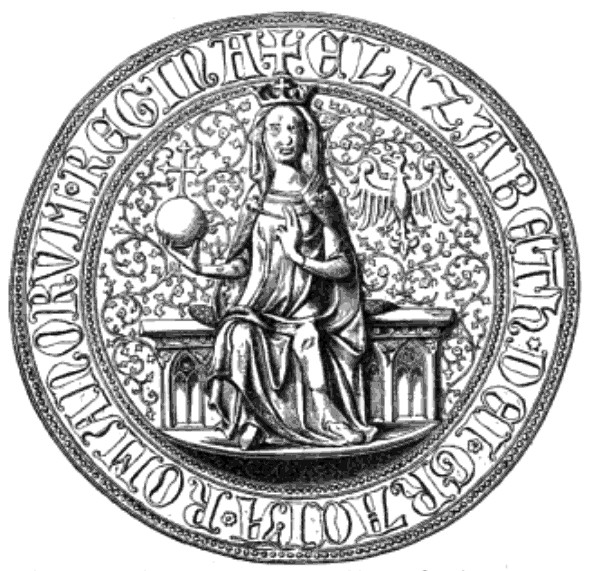
Isabella of Aragon was born probably in 1248 the eighth child of James I of Aragon and Violant of Hungary; her exact birthdate isn’t completely clear – it likely took place in early 1248 – we think this because her father mentioned a baby in the will he wrote in January 1248 stating that if Violant gave birth to a son he should become a knights templar but if the baby is a daughter she should enter the Santa Maria de Sigena as a nun. In 1258 when she was 10 years old the Treaty of Corbeil was concluded between Isabella’s father and King Louis IX of France; the peace treat hinged on a betrothal arrangement between Louis’s second son Philip and Isabella. Due to the age of Isabella and Philip; the formal wedding wasn’t held until May 1262 – by this time Philip was the heir to the French throne as his older brother Louis had died in 1260. Now Isabella and Philip seem to have genuinely fallen in love with each other and had their first son within two years of marriage. Isabella was by all accounts VERY beautiful and very charming and immensely popular at court. Basically a fairytale princess. Now when her husband and father in law decided to go on everyone’s favourite medieval road trip aka a Crusade (this was the Eighth) – it was rumoured that Philip could not bear to be parted from her. Following in the footsteps of her iconic ancestor Eleanor of Aquitaine, Isabella went on crusade and ended up pregnant (what is it with Queens of France getting knocked up on crusade?) . This would turn out to be the most disastrous of ideas; in fact the entire Crusade was a catastrophe. On the return to France literally everything that could have gone wrong, went wrong. First the crusaders lost 40 warships during a storm, then Isabella’s brother in law Jean Tristan died of dysentry in Tunis on the 3rd August 1270. Weeks later on the 25th August her father in law also died of dysentry making Isabella and Philip King and Queen of France and they were declared as such. The French’s road trip back to France went from bad to worse when Theobald the King of Navarre and the husband of Isabella’s sister in law Isabelle died of illness in Trapani in December 1270. Just weeks later tragedy struck when Isabella herself died; in the Memoirs of the Queen of France, A. Forbes Bush recounts Isabella’s death writing that “in fording a small river near Cozenza, in Calabria, Queen Isabella fell from her horse, had her back broken, which, she being pregnant, occasioned her a premature delivery, that caused her death”. After her accident she was first transported to Martirano Castle and then to Cosenza where she died two weeks later. Her death was slow and excruciating and left her husband absolutely heartbroken. Having died obviously so far from home the logistics of her funeral arrangements were a tad tricky; she was initially buried with her newborn son at Cosenza Cathedral before being moved to the royal necropolis at the Basilica of St Denis. Isabella’s death wasn’t the final tragedy to befall the French royal family on what was almost certainly the road trip from hell; her sister in law Isabelle died in May in Provence of some sort of sickness months after Isabella’s death. Horrifically by the time Philip returned to Paris, his mother Marguerite had only been informed of her husband’s death meaning that it was only upon her son’s return “that the queen mother discovered the magnitude of the loss that the crusade had wrought: her husband, son, daughter, daughter in law, son in law, grandchild, brother in law and sister in law were all dead”. Isabella’s death also left her small children without a mother – out of her sons two of them had children of their own and both named their eldest daughter Isabella in her honour – one of those granddaughters would go on to be the iconic Isabella of France. Amongst her grandchildren would be four Kings of France, a Queen of England, a Countess of Hainaut, Countess of Blois, an Empress of Constantinople, a Count of Alençon, a Countess of Beaumont-le-Roger, a Duchess of Calabria, a Duchess of Bourbon, two counts of Chartres and a Queen of Germany and Bohemia. Despite later remarrying Marie of Brabant, Philip made it clear in his will that he wished to be buried with Isabella which he kind of was was upon his death – I said kind of because after he died his body was cut up into various pieces – his flesh was sent to the Narbonne Cathedral, his entrails to La Noë Abbey in Normandy, his heart to the now demolished Church of the Couvent des Jacobins in Paris and his bones to the Basilica of St Denis where they were interred beside Isabella’s remains. Despite her short life, her brief tenure as Philip’s wife and her even briefer reign as his Queen, Isabella had an undeniable impact on French history; according to A Forbes Bush “Isabella was the mother of four princes, of whom one, Philip-le-Bel, succeeded to the throne; two others, who died young; and Charles de Valois, who was the royal branch from which thirteen French monarchs sprung. The king and court deeply regretted this beautiful and amiable princess, who was universally beloved”.

For a Catholic monarch there’s only one thing better than being a monarch, and that’s being a saint. Elizabeth of Portugal was born in 1271 the daughter of Peter of Aragon and Constance of Sicily; at the time of her birth her father was the heir to the throne of Aragon whilst her aunt/namesake Elizabeth was also a saint. We know very little about her childhood but we do know two things 1) she was raised alongside her brothers three of whom became kings – Alfonso and James became King of Aragon whilst Frederick became King of Sicily and 2) she was raised very strictly religious. I mean most European monarchs in the 1200’s were fairly devout obviously but she was raised very very piously; she said the full divine office daily, fasted and did other penances. In 1281 when she was 10 it was arranged for her to marry Denis of Portugal who I can’t imagine was thrilled about the marriage – I mean she was 10 whilst he was 20 and already a father. Now Denis would go on to be a very good king – under him Portugal prospered and he not only oversaw a centralisation of royal power, Lisbon flourishing as a centre of European culture and learning and the founding of the Portuguese navy but under him Portugal became equal with Aragon and Castile which had previously dominated the politics of the Iberian peninsula. Fab king. Not so great husband. He was extremely unfaithful siring at least six children during their marriage; this by all accounts lead to arguments which some contemporary sources suggest turned violent. Despite this the two managed to work together for the sake of the state; she was an active participant in Portuguese politics and acted as a mediator on a number of occasions including as the decisive conciliator during the negotiations concerning the Treaty of Alcañices signed by Denis and Fernando IV of Castile in 1297; the treaty was an agreement between the two nations regarding the border. Seven years later in 1304 her brother James II of Aragon and Fernando asked her to mediate their squabbles. She was most famous though for her charity work (aka the thing that made her a saint); from an early age she had given significantly to the poor and sick – this continued as Queen. She was devoted to the poor and needy and was known to support very religious institutions and organisations, as well as founding some of her own. During the famine of 1293, it was noted that she donated flour from her cellars to the starving in Coimbra; she also provided lodgings for pilgrims, distributed gifts daily, paid the dowries of poor girls, educated the children of impoverished nobles, became the benefactor of hospitals in Coimbra, Santarem and Leiria ad financially provided for religious projects (such as the Trinity Convent in Lisbon). Contemporaries noted that she dressed modestly and somewhat un-Queen like; she was humble in conversation and kind to those around her. Adored by the public, she wasn’t massively popular at court owing to just how strict she was religiously. She was also a devoted mother to the two children she and Denis had – their daughter Constança was born in 1290 and their son Afonso was born in 1291. Now the relationship between their son and her husband was not a good one. This was partly due to Denis’ overt favouritism of his illegitimate son Afonso-Sanches who had delusions of grandeur and wished to succeed his father despite the fact he was illegitimate and had a very legitimate brother who was the heir. Denis did nothing to temper the increasing tension between the two nor did he do anything to reassure Afonso that he would be king regardless of his half brother’s ambitions. The two brothers had a bitter rivalry that culminated in a civil war (1322-1324) that effectively led to Elizabeth’s son Afonso rebelling against his father; Elizabeth was called to act as a mediator; Denis was at a distinct disadvantage – he had very little support amongst the people who had been enraged by the sheer number of privileges he had granted to the nobles in the preceding years; it is interesting how the civil war essentially became a class conflict with the lower classes, common people and urban areas supporting Afonso. In 1323 the civil war came to a head when the two were meant to have engage in battle in Alvalade – at the last minute however as the legend tells it, Elizabeth, mounted on a mule, positioned herself between the opposing armies in order to prevent the combat. She then mediated peace between the two; Denis agreed to exile his illegitimate son whilst Afonso pledged loyalty to his father. Despite their marital problems Denis does appear to have been genuinely affected by Elizabeth’s piety and throughout their marriage was influenced by his wife to support religious institutions. Perhaps feeling remorseful over his years of sin, infidelity and spousal abuse, he became far more religious in his later years and by the time he died was said to have become quite religious. Her husband died in 1325 and her son became King. He exiled his troublesome half brother and stripped him of all the honours their father had granted him; Afonso-Sanches was not a happy bunny and promptly dedicated his life to ruining his brother’s. From his place of exile in Castile, Afonso-Sanches tried to orchestrate a series of failed attempts to usurp the crown. When that didn’t work, he decided to simply invade Portugal, which also failed. Elizabeth then once again intervened and arranged for the two to sign a peace treaty. She then retired fro court and moved to the monastery of the Poor Clare nuns which she had founded in Coimbra in 1314 and dedicated the rest of her life to philanthropy. Despite this she was occasionally called back to court to intervene and owing to her consistent peace-keeping missions during her lifetime, became known as the Peacemaker. In 1336 things kicked off between her son Afonso and his son in law Alfonso XI of Castile; Alfonso was married to Elizabeth’s granddaughter Maria however treated her abominably; he had a long-term mistress Leonor de Guzman who he had ten children wit and who he esteemed over Maria, leaving the young Queen to send frequent bouts of time depressed and alone in seclusion at the Royal Monastery of San Clemente in Seville. By 1335v Maria had had enough and tried to return to her father who was to put it mildly livid; he made alliances with the Pope and the Muslims and rebels inside Castile to cut as much trouble as possible for Alfonso. Eventually he threatened invasion and this led to a series of military clashes. When Elizabeth caught wind of the news that the two men had their armies positioned at Estremoz in anticipation of a clash, she insisted on traveling to Estremoz to stop the violence, despite her age and the fact that by this point she was already ill. As she had done seemingly a thousand times before, she stopped the fighting and caused terms of peace to be arranged. It was clearly all too much for her because after the treaty was signed, she collapsed from over-exertion and her son took her to the nearby Castle of Estremoz where she died days later. Despite her husband’s desire for her to buried beside him, she was instead buried per her wishes at Convent of Santa Clara in Coimbra. Several centuries later her body was moved to the Monastery of Santa Clara-a-Nova due to flooding. She was first beatified in 1516; Pope Urban VIII then canonised her in 1626. Her feast day was originally the anniversary of her death (July 4th) however in 1694 it was moved to the 8th July, as not to clash with the celebration of the Octave of Saints Peter and Paul, Apostles. In 1955 however that octave waas abolished meaning her feast was moved back to the 4th July (although in America it’s celebrated on July 5th).
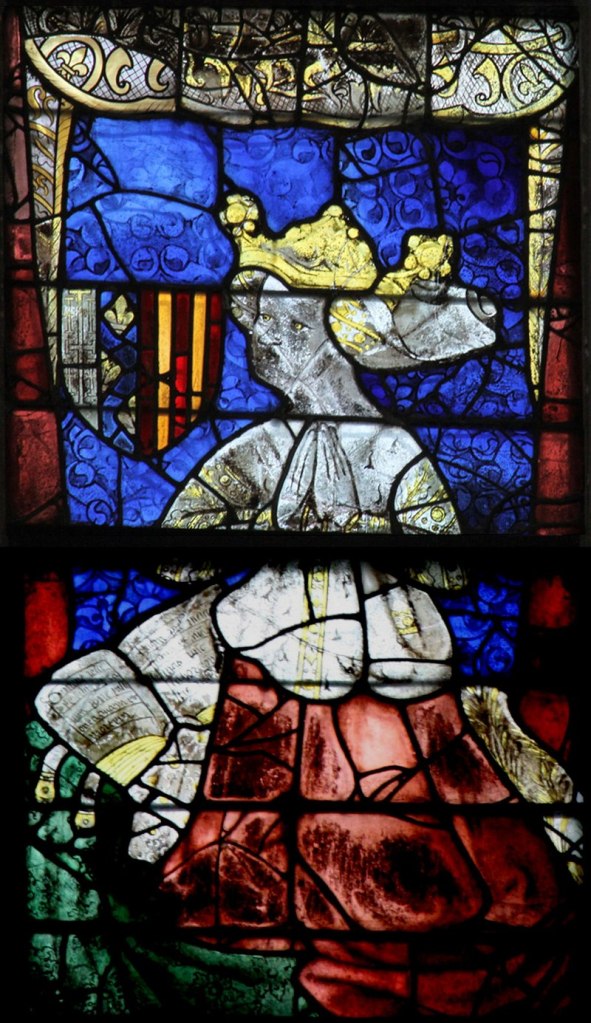
I couldn’t do a post about the girls of Aragon without mentioning this woman right here – my number 1 Yolande of Aragon. Now I’ve actually done a full profile of her that you can read here;

 The Monstrous Regiment of Women
One thought on “THE LADY OF ARAGON”