The name of March is believed to come from Martius which is the first month of the earliest version of the Roman calendar. Martius was named after Mars the Roman god of war (his Greek counterpart was Ares); he was the ancestor of the Roman people through his sons Romulus and Remus, the former of whom would be the first King of Rome (in other traditions Rome was founded earlier by Mars’ other son Aeneas). March is a month of particular importance in Roman history, and March 15th is especially significant; not only was the day marked by several religious festivals, but it was also the deadline for settling debts. Most importantly, March 15th was the date that Julius Caesar was assassinated by a group of senators at the Curia of Pompey in 44BC, forever changing the course of Roman and world history. In honour of March, it’s connection to Rome and the significance of the 15th, I’ve decided to do a post about some of the Roman women I find particularly fascinating; Roman society particularly the upper echelons was full of interesting women who don’t exactly fit into what I think many people today envision a women of antiquity was like. This post will exclusively be about the women of the Roman Republic and Roman Empire (in particular my favourites the Julio-Claudian dynasty) – I will not be including women from the later Byzantine Empire or any of the dynasties that come after the Julio-Claudians; that will be in another post!!
LUCRETIA // THE WOMAN THAT BROUGHT DOWN THE REIGN OF KINGS
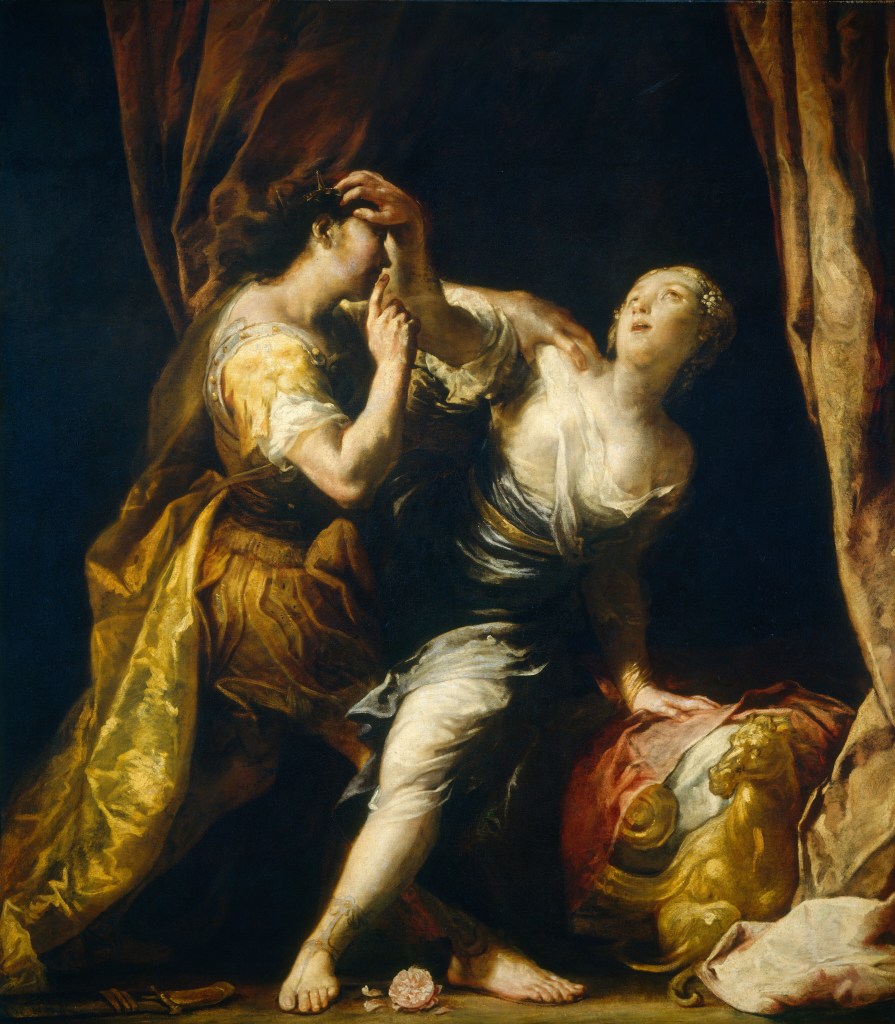
One of the recurring themes in Roman history/mythology is the role of women in bringing about some sort of significant change; unfortunately the role of the women in question, usually tends to be them enduring some sort of horrendous and tragic fate that is so horrendous and tragic that it somehow changes history. Lucretia is a key example of this. Now the most important thing to remember in regards to Lucretia is that there are no contemporary sources written about her; every bit of info regarding Lucretia, her rape and suicide, and the consequences of events leading to the founding of the Roman Republic, come from the accounts of individuals such as Livy and Dionysis of Halicarnassus, and were written about five hundred years after she died. These secondary sources all vary slightly although they all reiterate the same basic events of the story which does suggest that Lucretia did indeed exist and she did indeed play a critical role in the downfall of the Kings of Rome and the subsequent founding of the Republic. Whether the course of events actually followed the stories used in later Roman propaganda is not entirely clear. Now Lucretia was born the daughter of the influential Roman politician and magistrate Spurius Lucretius. As a girl she was married to Lucius Tarquinius Collatinus, the son of Arruns Tarquinius, a nephew of Lucius Tarquinius Priscus the fifth King of Rome. He was thus the cousin of the reigning King of Rome Lucius Tarquinius Superbus. The marriage between Lucretia and Collatinus was basically depicted as the ideal Roman union; the two were by all accounts very in love and faithfully devoted to one another (whether the marriage really was as idyllic as Livy made it out to be, is unknown). Lucretia was by all accounts the perfect Roman woman, beautiful, pure and utterly faithful to her husband, exemplified in a story told by Dionysius in which the men of Rome were away at war and upon returning home found their wives socialising and drinking with one another. Lucretia however was not among them; her husband found her at home sewing waiting for him. Lucretia being portrayed as Little Miss Perfect was probably Livy and Dionysius’ way of making what happened to her somehow even more tragic. There’s been lots of debate about when Lucretia exactly lived; her date of birth is unknown but the date of her rape is slightly easier to estimate as it was likely the same year as the first of the fasti. Dionysius of Halicarnassus interpreted that to mean “at the beginning of the sixty-eighth Olympiad …. Isagoras being the annual archon at Athens” which in normal English means 508/507 BC. This approximate date has been met with consensus by other historians in the centuries since however there in situations like this there’s always room for error. The story goes like this; whilst fighting at the siege of Ardea, Lucius Tarquinius Superbus the King of Rome sent his son Tarquin to Collatia where he was wined and dined as a prince of Rome by his cousin Lucius Tarquinius Collatinus aka Lucretia’s husband. There are a few variations of what happened next but in the most consistently reported version, Tarqiun and Collatinus went on a bit of a night out, during which they along with their friends began debating the virtues of wives. Collatinus basically declared he had the most virtuous wife of all and proposed riding to his house to see how perfect Lucretia was. Upon their arrival, the men all agreed that Collatinus was indeed married to the most virtuous woman in all of Rome. Collatinus then invited the men to stay however they decided to return to camp. Tarquin however returned later that night, managing to sneak past the slaves who were sleeping at her door and entered her chambers (Collatinus was evidently elsewhere). When she woke up, she was faced with the Prince staring at her; he identified himself and asked her to have sex with him as his future wife and queen; Lucretia however refused and stood firm in her devotion to her husband, even when Tarquin threatened her life (he allegedly threatened to kill her and her one of her slaves and claim that he had caught them having adulterous sex) and honor. Despite her refusal he then raped her, committing the grievous sin that ultimately brought about the downfall of Rome. There are two versions of what happened next; in the first version (courtesy of Dionysius) Lucretia travelled to her father’s house in Rome the next morning dressed in all black, where she knelt before her husband and father, disclosed the rape, asked them for vengeance (her father as chief magistrate couldn’t ignore such a plea) and insisted on summoning her slaves as witnesses to the heinous crime. Whilst her father and husband were debating the proper course of action, she committed suicide by stabbing herself in the heart with a dagger. Alternatively in the version by Livy, Lucretia did not go to Rome and instead summoned her father and husband to Collatia and asked them to each bring a friend to act as a witness. After they arrived in Collatia, she disclosed her rape before asking the men for an oath of vengeance (an oath they apparently gave willingly) saying, “pledge me your solemn word that the adulterer shall not go unpunished”. Once they’d all given her their oath, she drew a poignard and stabbed herself in the heart. Dio’s version goes into more detail about the aftermath of her suicide; he wrote that Collatinus was completely and utterly distraught and held her body, kissed her and talked to her for hours afterwards. His friend Brutus (also another royal cousin albeit one with a claim to the throne) proposed to everyone present that they drive Tarquin from Rome. Using the bloody dagger she’d stabbed herself with, he swore by Mars and all the other gods of the Roman pantheon that he would do everything in his power to overthrow Tarquin and the entire dynasty. Both Dio and Livy agree that everyone present then made the solemn oath “by this blood—most pure before the outrage wrought by the king’s son—I swear, and you, O gods, I call to witness that I will drive hence Lucius Tarquinius Superbus, together with his cursed wife and his whole blood, with fire and sword and every means in my power, and I will not suffer them or anyone else to reign in Rome”. The group then formed a revolutionary party of sorts that placed Lucretia’s body in front of the Roman Forum where it remained so that everyone would know of the dishonour committed against the most virtuous woman in all Rome. The people of Rome then began piling on with every Tom, Dick and Harry that had even a minor grievance about the royal family voicing their issues. In response an army started to form with the aim of abolishing the monarchy; the fact that the revolutionaries will all magistrates meant that the protests were pretty peaceful. Brutus was the Tribune of the Celeres and thus technically had the power to summon the curiae (which was an organisation of patrician families who ratified the various decrees of the king); he summoned them and thus the crowd basically went from revolutionary army to legislative assembly in the matter of a few hours. A number of charges were then levelled against various members of the royal family including the claim that the King had murdered his father in law/predecessor. The most grievous crime of all everyone agreed was the rape of Lucretia. The Queen Tullia was awkwardly watching the proceedings from her palace which happened to be right next to the forum; the anger of the revolutionaries led to her fleeing the city. The banishment of the royal family from all the territories of Rome and the establishment of a republican form of government with two consuls in place of a king executing the will of a patrician senate was the ideal solution, everyone agreed. There would also be the establishment of an interrex who would nominate all new magistrates and conduct an election of ratification. Lucretia’s father was quickly chosen as interrex (this is likely due to the fact he was already Prefect of Rome). He then chose Brutus and Lucretia’s widower Collatinus as the first two consuls, a choice that was swiftly ratified by the curiae. After Lucretia’s body was paraded through the streets for all the plebians to see and Brutus, Collatinus and her father all gave speeches, a general election was held with the public overwhelmingly voting in favour of the banishment of the Tarquins and and the establishment of Roman Republic. The King and his son would try several times to regain his throne, enticing the Etruscans and the King of Clusium to conspire against the new Republic. They failed each and every time and all those that supported them within Rome were executed for treason; this awkwardly included Brutus’ own sons Titus and Tiberius. The entirety of this story is obviously not the truth, however historians are in agreement that at least certain aspects of it are. The story is absolutely horrendous and tragic; it’s also very fascinating that what happened to Lucretia, was the nail in the coffin of the monarchy, not the other acts of tyranny they had committed against their enemies and the people of Rome as a whole. I also think the fact that Lucretia is by no means a passive participant in the establishment of the republic, despite being dead, is also super interesting. It is her demands for justice and vengeance that brought down the reign of kings and ushered in the Republican Roman era we all love. Usually in history, when men act in the name of a woman, she has no say in the matter. Lucretia is different in that she serves as the impetus for everything that follows.
CORNELIA // MOTHER OF THE GRACCHI
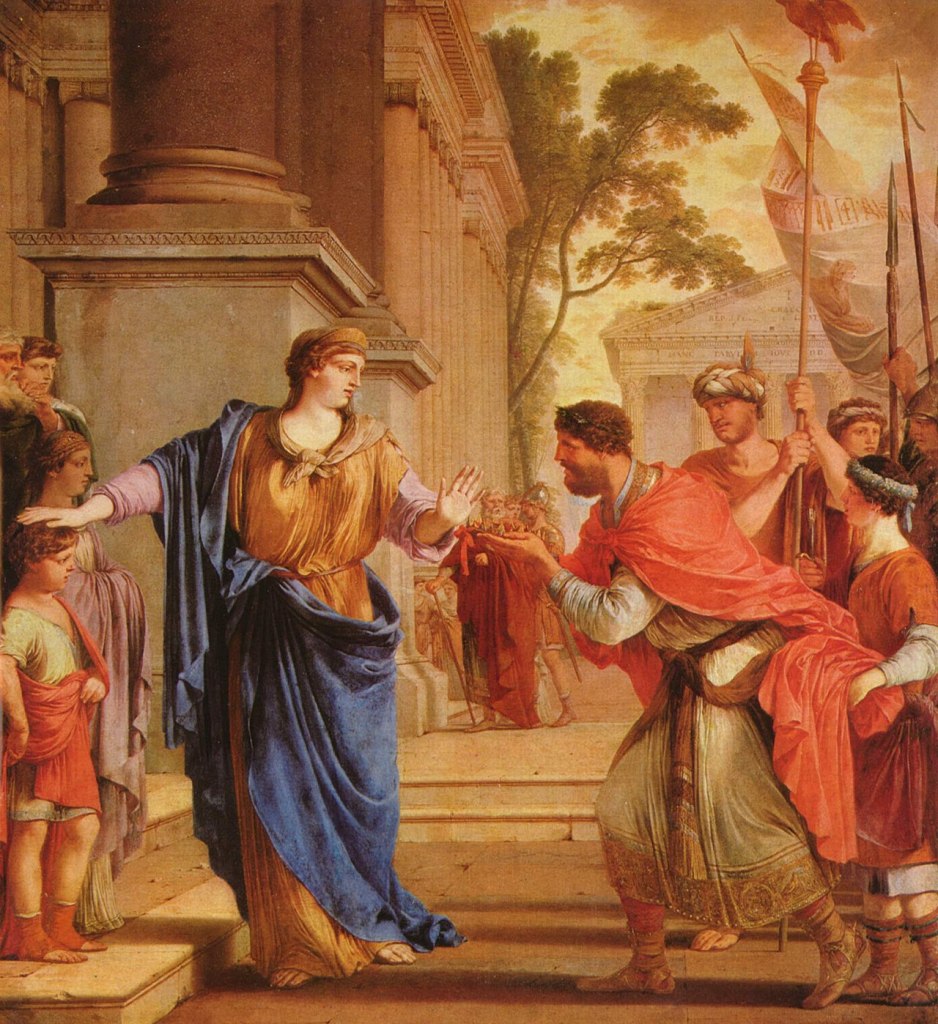
Cornelia was born at some point around 190BC (although the exact year is unknown) the second daughter of Publius Cornelius Scipio Africanus and Aemilia Paulla. Her father was a Roman general and statesman who was pretty much the architect of Rome’s victories against Carthage in the Second Punic Year, the most famous victory of which was at the Battle of Zama against the Carthage general Hannibal in 202BC. That victory made him a legend and he is now often considered to be one of the best military commanders and strategists of all time. His victory at Zama earned him the epithet Africanus, literally meaning “the African”; contrary to popular belief he himself was not African, rather it was the Roman’s way of referring to him as the conqueror of Africa. Her mother Aemilia was a member of one of the most famous families in Rome and both her father and brother were influential consuls. Now, Cornelia’s parents were a bit of a power duo – her father an immensely talented general and her mother a very wealthy woman who by all accounts was a bit of a trendsetter. Her parents were also fiercely devoted to one another and were considered a tad controversial amongst the more traditional, conservative parts of Roman society. Scipio was unusually liberal and he allowed Cornelia’s mother a freedom and wealth that wasn’t granted to most wives – she’s one of the few women from the Middle Republican era that we have real details on. As their daughter Cornelia was everyone’s golden girl and was by all accounts treated as a little bit of princess. As a girl, she was married to the much older Tiberius Sempronius Gracchus, a strict yet immensely popular politician (he was born circa 220BC meaning he was between 20 to 30 years older than her); he served as consul twice, once in 177BC and once in 169BC. Despite the quite significant age gap, the two seemingly had a very happy marriage that seemed to mirror her parent’s union; during the course of their admittedly not that long marriage, they had twelve children – six daughters and six sons. I would like to note that contrary to popular belief, twelve children for one couple, was somewhat of a rarity in the Roman era. Out of those twelve children however we know of only three that lived to adulthood a daughter Sempronia and two sons Tiberius and Gaius Gracchus; her children were still young when their father died and responsibility to secure their future fell on Cornelia; admittedly she was the daughter of a man that during his lifetime had been a bit of a living legend so she kinda had privilege beyond belief. Cornelia dedicated herself to her children in particular her boys who she ensured had the best Greek tutors money could buy; she also took advantage of those tutors herself studying literature, Latin and Greek with philosophers such as Blossius and Diophanes. Those tutors taught them languages, oratory and political sciences; they were also trained in horsemanship and combat. This came in handy for Tiberius who as a young man demonstrated talents worthy of a grandson of Scipio; during the Third Punic War, he was the first Roman soldier to scale Carthage’s walls and at one point allegedly saved an army of 20,000 Roman men (the details of this particular endeavour are a little sketchy). It was in the aftermath of her husband’s death that Cornelia emerged as a major figure in Roman society; she was considered so prominent that King Ptolemy VIII of Egypt even proposed marriage. She said no, claiming that as a dutiful and virtuous wife, she could never take another husband despite the fact she was a widow. In reality, she held an exalted position in Rome and was a woman of significant wealth and freedom; it’s unlikely she was willing to give that up. She also made sure her daughter’s future was prepared for; Sempronia would later marry Cornelia’s first cousin Scipio Aemilianus Africanus (he was also Cornelia’s adoptive nephew as he had been adopted by her brother). Cornelia and her cousin were seemingly close and Cornelia had at least part of her children’s education take place in Scipio’s household, a place of literature, art, philosophy and culture, which became known as the Scipionic Circle. All three of Cornelia’s children would go on to be prominent in Roman history; her sons became known as the Gracchi brothers who became two fiercely influential politicians who instituted major pretty much revolutionary reforms that infuriated the conservative echelons of society. Tiberius was successful in passing land reform legislation that established a commission to distribute public land principally controlled by the aristocracy – to the rural plebs and military veterans, in addition to other social and constitutional reforms whilst Gaius proposed a ton of reforms including the creation of a state subsidised grain supply, a law that codified tax farming in Asia, the construction of granaries, roads and other public works, the establishment of new Roman colonies at Scolacium and Tarentum, a law that restricted judicial bribery and a series of new custom duties. Cornelia it’s known was very politically active during her son’s political careers and she was their fiercest supporter and defender; we know of at least several laws her sons proposed that she objected to – they seemingly then withdrew the proposals not wanting to displease her; according to Plutarch there was one such occasion when Gaius removed a law that disgraced Marcus Octavius, simply because Cornelia asked him to. She also allegedly helped aided Gaius in his feud with Lucius Opimius who was at that point serving as Consul. Tiberius and Gaius also used their mother’s reputation as a chaste, honourable noble woman and her position as the great Scipio’s daughter to their advantage in their political rhetoric. Both of her son’s glittering political careers crashed and burned; some of their reforms were simply too controversial and although greatly loved by the people, they did somewhat overestimate the reliability of the people as a power base. Not only that but the Roman constitution was incredibly strict and there were too many checks and balances that blocked their ability to get all of their revolutionary laws passed. There was also the fact that Tiberius was extremely ruthless and despite the fact his reforms were good and just, his tactics left a lot to be desired. Tiberius died in 133BC murdered by a mob led by his first cousin Publius Cornelius Scipio Nasica (the son of Cornelia’s elder sister). Cornelia’s son in law (the husband of her daughter Sempronia) was away in Spain at the time however it’s possible he either arranged it or at the very least knew it was going to happen and did nothing to prevent it; upon his return he basically justified Tiberius’ murder accusing him of harbouring desires to make himself King. This did not go down well with the people and both men lost significant popularity. Sempronia by all accounts blamed her husband and the two (already very unhappily married) were basically estranged in the aftermath. It should be noted that Tiberius’ enemies had long pushed the rumour that Tiberius and Sempronia’s relationship was a little too close (*cough* incest *cough*) although there’s no proof of this; years later an up and coming politician by the name of Lucius Equitus claimed to be the illegitimate son of Tiberius and Sempronia – the aristocracy were fuming, the public were thrilled at the prospect of Tiberius having a surviving ascendant but Sempronia by then the only surviving member of her immediate family refused to confirm or deny. Now Tiberius’ murder was immensely important in the history of the Roman Republic and some have pointed to it as the beginning of the republic’s downfall; it essentially started a cycle of increased aristocratic violence that sought to suppress popular movements, in others words “the oligarchy had introduced violence into the political system with the murder of Tiberius Gracchus and over the years the use of violence became increasingly acceptable”. This was emphasised in 121BC when Cornelia’s other son Gaius was also murdered; he had attempted to continue his brother’s reforms, further infuriating the conservative elites of Rome that had arranged his brother’s death a decade or so before. Despite their deaths, some of Tiberius’ and Gaius’ reforms remained and despite their controversy amongst the upper echelons of society, they remained immensely popular among the common folk. Considering Cornelia often referred to her boys as her jewels, it’s likely she was devastated by their deaths, however she advocated against seeking vengeance for their deaths writing to Gaius in the aftermath of Tiberius’ death “you will say that it is a beautiful thing to take vengeance on enemies. To no one does this seem either greater or more beautiful than it does to me but only if it is possible to pursue these aims without harming our country. But seeing as that cannot be done, our enemies will not perish for a long time and for many reasons, and they will be as they are now rather than have our country be destroyed and perish”. This excerpt was first published in a manuscript by Cornelius Nepos a Latin biographer who lived c. 110-24 BC. This excerpt along with another had been referenced earlier by Cicero who mentioned them; the veracity of the excerpts cannot be confirmed although it’s highly possible they are indeed Cornelia’s words. If they are, then their existence would make Cornelia one of only four Roman women whose writings survive to the present day. Cornelia outlived her sons by a number of years; in the aftermath of Gaius’ death, she retired from Rome to a lavish villa in Misenum which became a meeting place for many learned men particularly Greek scholars who visited her to debate their philosophical ideas freely. She remained well revered in Rome and upon her death, the city voted for a statue to be built in her honour. Unfortunately only the base of the statue remains; it was the first statue of a secular Roman woman (i.e not a goddess or Vestal Virgin) and included a plaque that referenced her sons (this was apparently down to her daughter Sempronia who insisted on the reference to her brothers). In later years anti-populist conservatives opposed to the liberal policies of her sons filed away the reference to them and instead emphasised her place as the daughter of Scipio. The statue endured for much of the Roman Republic including through the revolutionary reigns of Sulla and Caesar. Cornelia was so impressive that she was still being referenced by the matriarchs of Rome centuries later including by Helena the mother of Constantine the Great.
AURELIA COTTA // THE MATRIARCH OF ROME

Everyone knows Caesar. The guy is very possibly one of the most famous dudes in history, but how much I ask, do you know about his mother? I bet before you read this post, you did not even know her name. Well you do now. Meet Aurelia Cotta. Born circa 120BC the daughter of Rutilia and either Lucius Aurelius Cotta or his brother Marcus Aurelius Cotta. If her father was indeed Lucius, then he was consul at the time of her birth becoming consul in 119 BC; her paternal grandfather was also at one point consul serving in 144BC whilst all three of her brothers would also become consuls – Gaius Aurelius Cotta in 75BC, Marcus Aurelius Cotta in 74BC and Lucius Aurelius Cotta in 65BC . Her paternal family was in particular, quite prominent during the Roman Republican era, although her maternal family less so and they were only of consular rank. As a young woman she was married to the praetor Gaius Julius Caesar a supporter & brother-in-law of Gaius Marius who held the office of consul an unprecedented seven times and was hailed by some as “the third founder of Rome” after Romulus and Camillus. Marius’ legendary feud with Sulla, his military reforms which included establishing an army not loyal to the republic but to specific commanders and his constant breaking of long-standings precedents that bound the ambitious upper class of the Roman republic together effectively lay the groundwork for the transition from republic to empire completed by Aurelia’s great-grandson Octavian/Augustus. Other than their infamous son, they also had two daughters Julia Major and Julia Minor. Aurelia was an extremely involved mother; her husband was rarely in Rome and so the upbringing and education of the children – Julius in particular – fell to Aurelia. The historian Tacitus claimed that she offered her children the best opportunities of education and she became renowned throughout Rome for her intelligence, independence, wit, beauty and wisdom. She was considered particularly popular with the people and held in high regard by the elites who considered her a model Roman matriarch. Her husband died when her children were just teenagers; despite this young age her son was already growing in stature. When he was around 18, he was ordered by the then dictator Sulla to divorce his wife Cornelia Cinna (a marriage that had apparently been arranged by Aurelia and Cornelia’s father Lucius Cornelius Cinna); this was due to the fact that Cornelia’s father was a loyal supporter of Sulla’s arch-rival Marius (who if you recall had been married to Aurelia’s sister in law). Caesar refused to divorce Cornelia (who was he was by all accounts very much in love with) which very much endangered his life because let’s be honest Sulla was not the kinda guy you said no to, I mean it wasn’t totally unheard of for him to dispose of anyone that annoyed him. Caesar was forced to go into hiding which resulted in Aurelia with the support of her brother Gaius, intervening in the matter. She presented Sulla with a petition to save her son (Sulla and Aurelia it should be noted probably knew each other pretty well at this point); she also enlisted the backing of some of Sulla’s own supporters and the Vestal Virgins in arguing for her son’s case. Sulla gave in reluctantly and was said to have admitted that he saw many a Marius in Caesar; despite technically being forgiven by Sulla, Caesar ended up leaving Rome anyway not wanting to test his luck too much. Which to be fair, I understand. The possibility of him meeting a grizzly end had he stayed was not outside the realm of possible. His wife Cornelia remained in Rome as did Aurelia and the two women waited for him to return; his return took place after Sulla’s death. One very cute story of Aurelia and her son is that when he was elected pontifex maximus he made sure to kiss his mother for good luck beforehand, and told her “mother, to‑day thou shalt see thy son either pontifex maximus or an exile”. In 68BC Aurelia’s daughter in law Cornelia died (probably in childbirth) and Aurelia took on responsibility of raising her granddaughter Julia. She also became head of her son’s various households and was involved in the whole murky business that ruined Caesar’s second marriage; in 62 BC, during a religious festival one of Aurelia’s maids discovered that Publius Clodius had entered the house secretly dressed as a woman in order to either a) start an afair with Caesar’s wife Pompeia or b) continue an already going on affair. Clodius entering the house interrupted the sacrifice, leading to him being charged with sacrilege. Aurelia was a witness at the trial as was her granddaughter Julia. The whole debacle ended in Caesar and Pompeia divorcing despite the lack of evidence that any affair had actually taken place – Caesar would later say “Caesar’s wife, like all Caesar’s family, must be beyond suspicion”. Aurelia was allegedly in favour of the divorce. She remained until her death, her son’s number one supporter. She died in 54BC, the same year as her granddaughter Julia. The blow of losing both mother and daughter absolutely devastated Caesar and he was never really the same; his alliance with Pompey (aka Julia’s husband) began to break down in the aftermath. Decades after her death, her great-grandson Octavian/Augustus (the grandson of her daughter Julia) would be the one to turn the republic into an empire; she alongside her granddaughter Atia and Cornelia (aka the woman above) became considered the three most revered of the Roman matriarchs with Tacitus writing “thus it was, as tradition says, that the mothers to he Gracchi, of Caesar, of Augustus, Cornelia, Aurelia, Atia, directed their children’s education and reared the greatest of sons. The strictness of the discipline tended to form in each case a pure and virtuous manners which no vices could warp, and which would at once with the whole heart, seize on every noble lesson”.
SERVILIA // THE MISTRESS OF CAESAR
Julius Caesar was lets be honest, not a man exactly known for his chastity; his list of conquests is long and complex and there are of course some lovers more infamous than others (you know who I’m talking about). One of the most enduring of his romantic/sexual relations was with this woman. Servilia was born circa 101BC (taking records of birth-dates in Rome was ATROCIOUSLY BAD) the daughter of Quintus Servilius Caepio and Livia; it’s likely she was the eldest of her parent’s children although she also had a half brother from her father’s first marriage. Her parents divorced when she was 3 or 4 and her mother quickly remarried; from that marriage came a daughter Porcia and a son Cato the Younger, the latter of whom Servilia was later known to be very close to. Servilia was through her father, a member of a very distinguished family, the Servilii Caepiones who had emerged very early on in the years of the Roman Republic. Servilia’s childhood was filled with tragedy; first there was her parents divorce then the deaths of both her mother and step-father (they died at some point between her half brother’s birth in 95BC and 91BC), then the assassination of her maternal uncle Marcus Livius Drusus in 91BC and the subsequent death of her father in 90BC. Following the death of her mother, she had been taken in by her uncle who had raised her in his house; his assassination took place in 91BC in his own atrium (it’s very possible that Servilia, then nine years old, was in the house at the time of his assassination). Her uncle’s assassination triggered the Social War; it was during this conflict that her father was ambushed and killed, leaving Servilia eleven years old and an orphan. In the aftermath she was raised likely by either her maternal uncle Mamercus Aemilius Lepidus Livianus, her maternal grandmother Cornelia or her paternal aunt Servilia. It’s thought that Servilia was given an exemplary education and she was said to be extremely intelligent. At the age of either 13 or 14, she married Marcus Junius Brutus who in 83BC was tribune of the plebs; very little is known about the marriage other than the fact that Brutus benefitted greatly from the marriage – upon being legally declared an adult, Servilia inherited a significant fortune from her various deceased relatives. A son Marcus Junius Brutus was born to the pair probably in 85BC. Seven years later, in 77BC her husband was murdered by Pompey after surrendering at Mutina. Like Cornelia and Aurelia before her, Servilia now a young widow took on the raising and education of her children herself. She had her son adopted into her family which allowed for the Servilii name to be preserved. Not long after her first husband’s death, she married again – this time to Decimus Junius Silanus with whom she had three daughters. In time Servilia would arrange for all three girls to marry into prominent and politically active families (one of her son in laws was Marcus Aemilius Lepidus who along with Octavian and Mark Antony would later form the Second Triumvirate). It has been suggested that Servilia and Caesar’s affair began shortly after her marriage to Silanus who it’s said did not object to the affair however there was never any question of the paternity of her daughters nor is there any proof the affair between them began so soon. After Caesar’s death there were illusions to the possibility that Caesar was the biological father of Servilia’s son Brutus from his first marriage however it’s highly unlikely – Caesar was only 15 when Brutus was born and it’s not clear whether the two even knew each other at that point. On a whole historians have pretty much dismissed the rumour. It’s more likely that whilst they may have known each prior to Silanus’ death in 59BC, their affair didn’t begin until after he died. Servilia it’s important to note, never remarried, content to live as an independently wealthy woman free from the confines of marriage. Relatable. Now Caesar as I mentioned had rather a lot of illicit relationships with numerous lady friends, none however lasted as long as his affair with Servilia which as I just said probably started in either 59BC or the following year and lasted on and off for years. Aristocratic affairs that this time usually didn’t last long and usually damaged the woman’s reputation, if it became public knowledge. Neither of these things applied to Servilia and Caesar’s relationship; not only was it long and enduring but Servilia’s reputation managed to evade any real damage. It’s not known when the relationship became public knowledge; the first time it’s mentioned in contemporary sources is in 63CBC when Servilia was caught by her half brother Cato sneaking a note to Caesar, like two smitten teenagers in secondary school. Unsurprisingly Cato was pissed. It does speak to the strength of their bond that even when he was away they maintained long distance contact. One of my favourite tidbits about their relationship is that in 59BC during his consulship he was said to have gifted with the most outrageous pearl necklace, reportedly worth around six million sesterces. During the Roman Civil War (49-45BC) between Caesar and Pompey, Servilia found herself in an incredibly awkward and very unenviable position, with her loyalties torn between her lover of a decade and her son and half brother who both supported Pompey. The exact nature of Servilia and Caesar’s relationship is hard to figure out; certainly there was a great deal of affection between them. I mean you don’t remain in a relationship on and off with someone for two decades without there being a great deal of affection. It’s usually depicted that Servilia was passionately and faithfully devoted to Caesar who whilst fond of her did not feel quite as strongly. I disagree. Yes he was married to Calpurnia. Yes he had liaisons with most women that possessed a pulse but he clearly felt strongly for her. I also LOATHE the depiction of Servilia as being desperate in her love of him. There’s simply no evidence of that (also you don’t give a necklace worth six mil to just anyone). Relations with her brother Cato seem to have deteriorated somewhat in the mid 40’s as he became increasingly anti-Caesarian. Her sons decision to divorce his wife Claudia to marry Cato’s daughter Porcia in 45BC didn’t help matters; Servilia had after all arranged Brutus and Claudia’s marriage and she was unhappy at it’s end. Servilia doesn’t appear to have been politically involved during the course of their relationship although she’s often noted as having been a vital factor in Caesar’s decision to name her son urban praetor in 44BC; not only that but her political moves after his death does not seem to be the moves of a political novice). That same year Caesar was assassinated by a group of senators at the Curia of Pompey; both her son in law Gaius Cassius Longinus and her own son Brutus were key conspirators. It’s believed they may even have met to plan said assassination at her house. It’s widely believed however that Servilia knew nothing of the plan itself; there were apparently concerns from the other conspirators that she would tell Caesar should she learn of the plot. This clearly demonstrates that her loyalties were heavily divided in this period and that the people that knew her best, feared she’d choose Caesar if it came down to it. It’s likely the affair had ended by the time he died although this isn’t definite and even if it had the two were still said to be close. Her feelings on the assassination are unknown however it’s unlikely she was pleased about it. That didn’t however stop her from trying to protect her stupid relatives who had been involved in the conspiracy and now had a very angry and very vengeful Octavian and Mark Antony to contend with. Servilia it was said attended various senate meetings to ensure the safety of said relatives, especially her son. Really, Brutus would have been much better of in life, if he had just listened to his mother. At these Senate meetings, Servilia was one of only three women that attended. Her attendance at this meetings were noted by Cicero who accused her of being nervous – it’s likely he meant politically cautious. Following Caesar’s death there was a wave of unrest and both Gaius and Brutus were forced to leave Rome. In mid May Antony proposed reassigning Brutus and Cassius from their provinces; at a subsequent meeting at Brutus’ house attended by Servilia, Cicero, Brutus and Cassius, the latter announced his intention to go to Syria whilst Brutus decided to go to Greece. Antony’s proposal to reassign Brutus was swiftly dropped – Cicero claimed this was because of something Servilia did although we have no idea what. In July of 44BC a series of games were held in honour of her son’s paternal ancestor Lucius Junius Brutus – Brutus did not attend leaving the planning to his mother. That same month she also led a council meeting to discuss the possible return of Brutus and Cassius (marking one of the very few times a woman was allowed to oversee such a meeting in this period). Because Octavian and Mark Antony were, well, Octavian and Mark Antony, their desire for vengeance was not abated for long and in a very complex political realignment, Octavian managed to make himself Consul. He subsequently passed a law which retroactively named Brutus and the other conspirators murderers. This led to yet another civil war with Octavian and Mark Antony on one side and Cassius and Brutus on the other. You almost feel bad for Cassius and Brutus because boy were they outnumbered and EXTREMELY outplayed by Mark Antony and Octavian, the latter of whom was let’s be honest frankly terrifying. In perhaps the most unsurprising moment of antiquity, Brutus and Cassius were forced to surrender at the two battles of Philippi in October 42. Brutus was forced to commit suicide shortly afterwards; in a show of some degree of mercy, Antony sent her, her sons ashes. Somehow, almost miraculously Servilia managed to escape the purges of the Second Triumvirate (made up of Octavian, Antony and Lepidus); whether this was down to their personal relationships with her, their knowledge of Caesar’s affection for her or the protection of long term friends and allies, we can’t be sure. Very little is known about her life afterwards; it’s likely she wisely kept her head down. It’s believed she died a natural death at some point between 27BC and 23BC meaning it’s likely she witnessed Octavian fulfil the ultimate ambitions of Caesar; the fall of the republic, rise of the empire and the Julio-Claudian’s wearing the crown and ruling over it all.
CALPURNIA // THE FORGOTTEN WIFE OF ROME
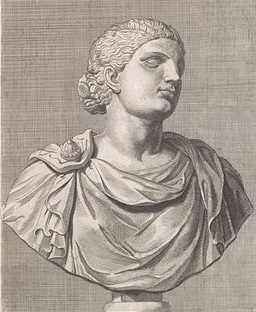
When you ask someone to name a lover of Julius Caesar, the answer will nearly always be Cleopatra. When you ask someone to name the woman Caesar was married to at the time of his death, they will nearly always not know the answer. That’s because our girl Calpurnia here, has been given a pretty rough ride in the annals of history (to be fair the ride granted to her in life wasn’t great either). Now she was born during the Roman Republic (probably circa 76 BC) the daughter of Lucius Calpurnius Piso Caesonnius and thus the half sister of Lucius Calpurnis Pico; her family were wealthy and prominent but were not considered one of Rome’s most powerful clans. In around late 59BC she was married to the one and only Julius Caesar; at the time of the marriage, she was probably about 17 whilst he was 41. To make matters worse she was likely younger than her new step-daughter Julia (see below) who was a product of Caesar’s marriage to Cornelia and had possibly been born either the same year as Calpurnia or the year before. In fact Calpurnia and Julia were not just born around the same time, they also became first time brides around the same time; Calpurnia became Caesar’s third or fourth wife (his first marriage is disputed) whilst Julia married Pompey the Great either shortly before or shortly after. Around the same time as the marriages, Caesar, Pompey and Crassus, founded The First Triumvirate becoming the rulers of Rome. Now, Caesar and Calpurnia’s marriage was a purely political one at it’s inception; the marriage was beneficial for Caesar who by marrying Calpurnia bolstered his standing with a faction sympathetic to his liberal policies whilst Calpurnia’s father was gaining the most prominent man in Rome as a son-in-law; it was this familial connection that led to her father being named Consul in 59BC the same year as the wedding. Despite the inherently political nature of the marriage, the two did genuinely seem to grow to love one another with Caesar’s fondness for her said to be known throughout Rome despite his many (and I mean MANY) infidelities; his lovers included the Mauretanian queen Eunoë, the aforementioned Servilia and of course Cleopatra.. One thing that always irritates me about depictions of Calpurnia is that she’s always portrayed as being desperately in love with her husband and utterly heartbroken by his repeated infidelities; whilst it’s entirely possible that she did really love him, there’s nothing to suggest she was bereft with jealously or rage at his affairs; a woman of integrity and honour, she acted as the model Roman wife, looking the other way, nursing no grudge against him and remaining his most loyal and devoted supporter. She was noted by contemporaries to have been a humble and shy young woman who it appears was well liked and respected. During the course of their marriage, it’s believed she acted as the model for the goddess Venus on the aureus minted by Caesar for his fifth consulship. One of the most interesting things about Calpurnia is the story of what happened the night before Caesar’s assassination; she allegedly dreamed that Caesar had been wounded, and lay dying in her arms. In the morning, she begged him not to meet the Senate as he planned; not a woman known for her dramatics, he was apparently convinced enough by her distress that he decided not to go. Unfortunately for both Caesar and Calpurnia, Brutus one of Caesar’s closest friends apparently convinced him otherwise; Brutus of course would turn out to be one of the conspirators. YOU SHOULD HAVE LISTENED TO YOUR WIFE CAESAR. The whole dream thing is let’s be honest, a bit sketchy and I tend to think it was likely a way of mythologising Caesar who was later on deified as a god in Roman society; it fits neatly into the narrative of how Caesar ignored the warnings of the gods in the lead up to his murder. Calpurnia trying to stop him from going to meet the Senate was widely reported by contemporaries so it’s likely to be true; if that’s the case then it’s possible she caught wind of the conspiracy. This incident is so interesting to me because it suggests two things about Calpurnia; firstly it tells us that if she really did hear about the conspiracy, it’s possible she was potentially far more politically engaged than was noted by contemporaries and secondly the fact Caesar was initially willing to listen to her and trust her instincts emphasises the closeness of the couple. When the assassination did take place, Calpurnia it appears, was informed immediately and there are reports of her rushing out of their house in grief accompanied by several women and slaves who attempted to stop her from running to the Curia of Pompey. His body was taken directly to her and in the chaotic few days that followed, she sat unwaveringly beside him until he could have a proper funeral; Calpurnia and her father played a prominent role in arranging the funeral thus making it a family affair. As his widow, she had possession of all his papers and valuable works of art and it was thus up to her to decide what to do with them; the fact she turned them over to Mark Antony had a undeniable impact on post-Caesar politics with Mark Antony achieving pre-eminence among Rome’s politicians. This demonstrates that she had tangible political agency of her own rather than simply being a bystander in Caesar’s tragedy. She seems to have become conspicuously absent from Roman society after the initial aftermath of his death and had no involvement in the political shenanigans that took place afterwards; we’re not even entirely sure when she died. To top off the mystery of what happened to her, she was also peculiarly missing from the pro-Caesar propaganda that was prevalent during the early Roman Empire. Interestingly though the prominence her family gained through her marriage, remained despite Caesar’s death and her half brother was a long serving loyalist to Caesar’s adopted son and heir, Octavian (later, Augustus), serving as a consular legate under that emperor’s authority in Thrace, a proconsul of Asia between AD 12 and 32 and as Rome’s praefectus urbi under both Octavian/Augustus and his successor Tiberius.
JULIA // THE FIRST LADY OF ROME
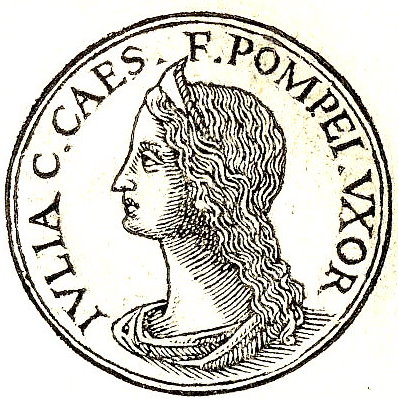
Being the daughter of Julius Caesar, I can imagine does come with some perks although to be fair there were probably a few draw-backs too, Now Julia the only daughter and most beloved of all Caesar’s children, was born circa 76BC the daughter of Caesar and his wife Cornelia (Cornelia was either his first or second wife – there’s a question as to the legality of his first marriage to Cossutia). Cornelia was the daughter of Lucius Cornelius Cinna, one of the most influential politicians in Rome at the time and was consul for a term of four consecutive years between 87BC and 84BC; he was a partisan of Gaius Marius during the latter’s very vicious feud with Sulla. Julia’s mother died in 69BC probably in childbirth or not long after it, and so Julia was predominantly raised by her maternal grandfather Aurelia Cotta. Her father by all accounts doted on his darling girl. She was as a young girl betrothed to a man by the name of Servilius Caepio; we’re actually not 100% sure who this guy was although it’s been suggested that it was actually Brutus (later one of Caesar’s assassins) who after being adopted by his uncle was briefly known as Quintus Servilius Caepio Brutus. There isn’t however much evidence to back up this theory. I think it’s likely; there’s no way in hell that Caesar would had betrothed his prized daughter to a man of of little significance (I mean Caesar’s family was one of the most prominent in Rome) and I find the fact we know basically nothing about this guy, very odd. The engagement however was called off in 59BC when Caesar married her to Pompey in order to broker an alliance that became known as the First Triumvirate. Pompey was immediately infatuated with his new wife who despite being thirty years younger seemed to reciprocate his feelings; Caesar also adored his daughter meaning she was basically the anchor to a political/familial alliance that terrified Caesar and Pompey’s opponents. Now Julia was very popular; she was beautiful, kind and extremely virtuous, and Pompey was utterly devoted with rumours spreading through Rome that he had lost interest in politics and was leaning towards a domestic life with his young bride. This rumour was probably caused by Pompey’s decision to remain in Rome rather than travel to Hispania Ulterior which he had granted the governorship of – there’s no strong evidence to suggest Julia had any involvement in the matter, rather it’s believe Pompey chose to remain in Rome in order to oversee the Roman grain supply in his role as curator annonae. In 55BC Julia allegedly suffered a miscarriage; the miscarriage was caused according to Plutarch by an incident in which during the election of aediles, Pompey was surrounded by a pretty livid mob, and somehow in the turmoil his robe ended up being stained with blood (albeit not his own). The robe was then taken to his house where Julia saw it and leapt to the quite dramatic conclusion that her husband had died. This caused her to go into premature labor, miscarrying thereafter. As a result of the marriage, her health was deeply effected and she never quite recovered. Less than a year later, she fell pregnant yet again and in August of 54BC she died in childbirth, with it said that her body had never quite recovered from the miscarriage the year before. Some contemporaries claimed the child was a son whilst others claimed it was a daughter; regardless of the gender the child did not survive and died shortly after Julia. Caesar was not in Rome at the time; according to Seneca he was in Britain when he received word of Julia’s death and was absolutely broken by the news. In the aftermath of her death there was a bit of a disagreement about where her ashes should be interred; Pompey wished for her ashes to rest at his favourite Alban villa whilst the Roman people, adoring of Julia, felt the ashes should be laid to rest in the field of Mars. In order for that to happen, a special degree of the Senate needed to be sought; Lucius Domitius Ahenobarbus a man who loathed both Pompey and Caesar tried to block it with the help of the Tribunes however the public eventually won out and her urn was place in the field of Mars. Ten years later when her father died, the official pyre was initially built beside her tomb, although he ended up being cremated in the Forum. Julia’s life had been of great-importance, tying together two of Rome’s greatest politicians. Her death was of similar importance, and it was after her tragic demise that Pompey and Caesar’s alliance began to fall apart culminating in a civil that left Julia’s husband dead and Julia’s father the unrivalled ruler of Rome. Julia’s particularly interesting to me because we have absolutely no idea what would have happened, had she lived. It’s very possible that Pompey and Caesar’s alliance would have held with her there to keep it all together although it’s also a possibility that they were somewhat fated to fall apart. The potential outcomes had she lived are just so numerous and it’s mind-boggling how much her life and death changed the course of history.
ATIA // THE MOTHER OF THE EMPIRE
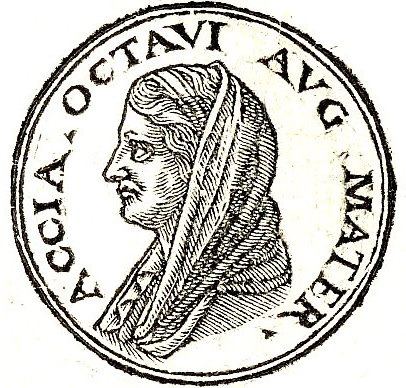
As much as I love HBO’S Rome (the fact it was iced in favour of Game of Thrones will never not enrage me; if you’ve seen the plans for the seasons of Rome that were tragically never made, I’m sure you agree with me), the character of Atia was highly inaccurate; I mean Atia herself was real; the characterisation of her in the show however was entirely false and much closer to the public perception of other prominent Roman women that lived in the years following Atia. The real Atia was born Atia Balba in 85BC the daughter of the praetor Marcus Atius Balba and Julia Minor the sister of Caesar. Atia’s father was a cousin of Pompey the Great meaning that she was closely related to two of the three members of the First Triumvirate (cousin and uncle); years later in a funny turn of events, she would end up closely related to two of the three members of the Second Triumvirate (her son Octavian and son in law Mark Antony). Atia was one of at least two daughters – it’s possible there was a third daughter and maybe even a son although we’re not sure. If there were three or more daughters, then Atia was likely the second born. In 61BC she was married to Gaius Octavius; at the time of their marriage he was governor of Macedonia and he would in later go on to serve as praetor. Very little is known about the marriage other than the fact that they had two children a daughter Octavia born in 66BC and a son Octavian born in 63BC. Atia was highly respected in Rome and became renowned for being exceptionally religious; Tacitus noted her piety writing, “in her presence no base word could be uttered without grave offence, and no wrong deed done. Religiously and with the utmost delicacy, she regulated not only the serious tasks of her youthful charges but also their recreations and games”. Her husband died in 59BC when their youngest child was just four and like her grandmother Aurelia and Cornelia before her, Atia became devoted to her children, determined to give them an exemplary education and secure their future. One very interesting thing about Atia is that in the run up to her son’s birth she allegedly experienced a series of divine omens that she claimed prophesied her son’s ultimate fate; Suentious wrote that Atia had given birth to Augustus ten months after she spent a night in a temple of Apollo where she was approached by a serpent. Octavian was thus “regarded as a son of Apollo. Atia too before she gave him birth dreamed that her vitals were borne up to the stars and spread over the whole extent of land and sea”. It’s very likely this was all good-old fashioned imperial propaganda meant to mythologise Octavian although Atia was not the only one said to have experienced divine omens predicting Octavian’s rise; her husband allegedly “dreamed that the sun arose from Atia’s womb” whilst following his birth Publius Nigidius “declared that the ruler of the world had been born”. This further adds to the theory that this was all hyperbole meant to exalt Octavian in the eyes of the deeply religious Roman people. Like Aurelia and Cornelia she was a devoted and dedicated mother and Tacitus wrote of her “thus it was, as tradition says, that the mothers to the Gracchi, of Caesar, of Augustus, Cornelia, Aurelia, Atia, directed their children’s education and reared the greatest of sons. The strictness of the discipline tended to form in each case a pure and virtuous manner which no vices could warp, and which would at once with the whole heart, seize on every noble lesson”. Unlike Aurelia and Cornelia, she did not remain a widow for long and after the ten month mourning period for widows was up, she married Lucius Marcus Philippus who served as governor of Syria from 61-60BC and who served as consul in 56BC. She thus became step-mother to his three children. It’s not known if they had children – if they did, then they likely did not survive to adulthood. It’s believed that Atia had a pretty good relationship with her uncle Caesar; by 49BC the feud between her uncle and the senate, led by his former ally Pompey, had all but turned to open warfare. Atia’s husband was passed over for command by the anti-Caesarian faction of the Senate in early 49BC purely due to the fact he was Atia’s husband and when the Pompey faction demanded all senators vacate Italy and join them across the Adriatic, Atia and her husband showed an incredible shrewdness by seeking a special dispensation from Caesar that allowed Philippus to live outside just outside Italy as a neutral. This meant he was technically doing what Pompey wanted (by leaving Italy) but not going as far as the Adriatic and thus remaining in Caesar’s good books. Atia’s second husband by all accounts had a fairly good relationship with her two children whilst it was well known that Octavian was utterly devoted to both Atia and his sister Octavia. After Caesar’s assassination in 44BC, his will revealed that he had posthumously adopted Octavian as his son & heir; unlike HBO’s version of Atia who did just about everything she could to secure Octavian’s place as Caesar’s heir, the real life Atia was said to be incredibly incredibly nervous at the thought of Octavian assuming Caesar’s place. Understandable considered the last guy had just been slaughtered by the Senate. Atia’s husband agreed with her and allegedly advised Octavian against taking Caesar’s place. He didn’t listen and despite her reservations, she remained until her death a year later one of his most loyal supporters. Octavian was said to be quite devastated following her death, and granted her her every honour under the sun, including a very public state funeral. Atia is now considered one of the most revered matrons in Roman history.
LIVIA DRUSILLA // THE FIRST EMPRESS
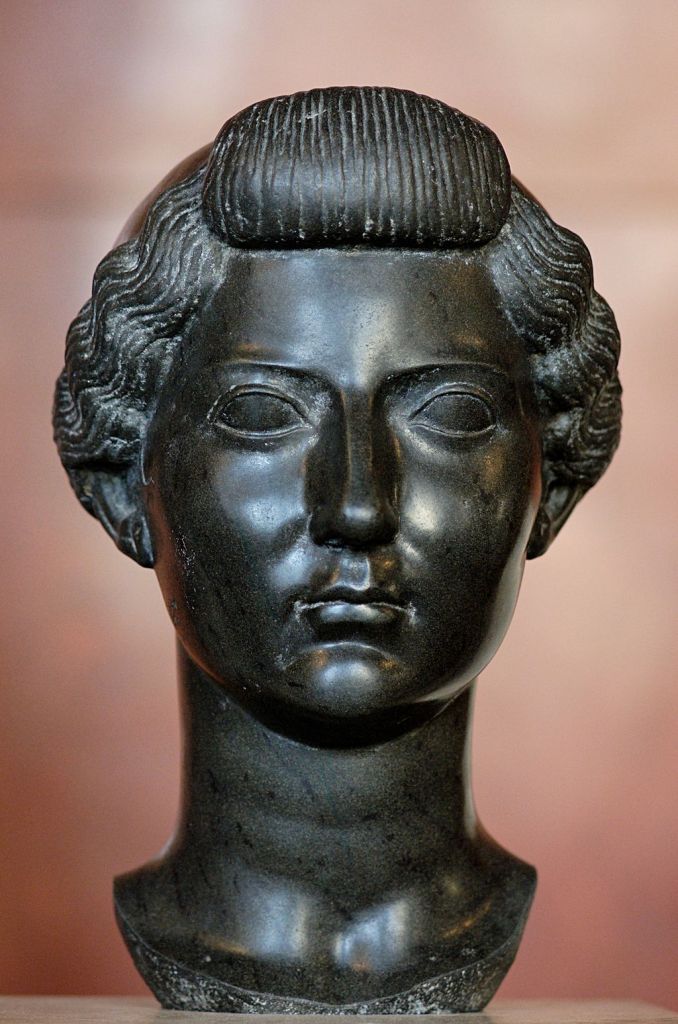
If Augustus served as the blueprint for all emperors of the imperial Roman period, then this girl right here served as the blueprint for all Empresses. Livia Drusilla was born in 39BC the daughter of Marcus Livius Drusus Claudianus and Alfidia; she was likely not her father’s eldest daughter. In the whole post-Ides of March chaos, her father made the very questionable choice to back the conspirators that had murdered old Julius Caesar, infuriating his great-nephew/heir Octavian/Augustus who swore vengeance on the murderers, Cassius and Brutus in particular. In 43BC she was married to her cousin Tiberius Claudius Nero, another Cassius & Brutus supporter. After Cassius and Brutus inevitable lost at the Battle of Philippi, they were forced to commit suicide alongside Livia’s father. Her husband did not perish and went on to continue fighting Octavian, this time on the side of Octavian’s former ally and all round personifiction-of-chaotic-energy Mark Antony. You get the impression that Livia’s husband was willing to back anyone that hated Octavian/Augustus which is hilarious when you consider what happens down the road. Livia’s first child was born in 42BC and just two short years later, post the siege of Perusia, the family were forced to flee Italy to avoid the vengeance-loving Octavian. They were first based in Sicily where they hung around with Sextus Pompeius, the son of Pompey Magnus who was also anti-Octavian. Wasn’t everyone? They then moved to Greece. Eventually Sextus Pompeius and his supporters established peace with ya boy Octavian/Augustus and everyone that had been run out of Rome was allowed to return; Livia and her husband did so in 39BC and upon her return, she promptly met the man that had run her family out of Rome. Legend says it was love at first sight but Augustus doesn’t strike me as the Hollywood-rom-com romantic type so this narrative was probably later imperial propaganda. Now Livia was at this point pregnant with baby number 2; you know who else was pregnant? Octavian’s wife Scribonia. In fact upon Scribonia giving birth in October 39BC, Octavian being the charmer he was, promptly divorced her and took his daughter with him (Roman law dictated that the father’s assume parental responsibility upon divorce). Months later Livia’s husband divorced her; it’s likely Octavian forced him into doing so. On the 14th January, Livia gave birth to a second son and just three days later, she and Augustus married with her ex-husband Tiberius Claudius Nero very awkwardly present. He even gave her away. You just know the man did it through very gritted teeth. Whilst it’s nice to think it was some great love story, the fact of the matter is that the marriage was far more political in it’s nature than Roman propaganda would have you think. The marriage was after all very beneficial to both; the Claudii were of great important to Octavian’s cause whilst tying themselves to the master of Rome secured her family’s political survival. I tend to think the decision to marry was both personal and political; not only did they both politically benefit but I also think Octavian probably recognised that in Livia he had found someone who was every bit as ambitious and shrewd as him. That’s not to say they didn’t love one another, they almost certainly did with Suetonius admitting that after he and Livia married, Augustus loved and esteemed her “unice et persevanter” (right to the end, with no rival), I just doubt that love was the sole impetuous for the marriage occurring. The couple ended up being married for fifty one years and they were pretty devoted to one another so the marriage was clearly a success; the most interesting thing about their enduring devotion is that it wasn’t dependant on her abilities to bear a child. In fact she didn’t. Throughout their fifty one years together she did not give birth once; although we do believe there was at least one miscarriage. Fifty one years and no child???? Find me another Emperor who would do the same. Now I’m not saying that Augustus wasn’t eager for a child; at the beginning of their marriage he allegedly received a supposed omen of an eagle dropping a pregnant hen with a laurel branch in her mouth into Livia’s lap, which he interpreted to be a reference to her fertility (remember she’d managed to two kids in two years with husband number 1). Whilst I’m 99% sure this didn’t happen, the fact this story became public knowledge and was used as imperial propaganda, would suggest that Octavian/Augustus very much expected there to be a child at some point. The fact there wasn’t, doesn’t appear to have hindered their marriage, although it did cause problems down the line in terms of the succession. God if they had, had a son, it would have fixed so many later problems; the child would have been his undisputed heir and all the fierce factionalism and bickering over the throne and succession crises that followed would have been avoided. Now in 31BC Mark Antony committed suicide following his defeat at the Battle of Actium; Octavian/Augustus thus returned utterly triumphant and the undisputed master of Rome; in January 27BC the Senate bestowed upon him the honorary title of Augustus (“honorable” or “revered one”). He rejected monarchial titles (despite very much holding monarchical power) instead choosing the more politically palpable title of Princeps Civitatis (“First Citizen of the State”) or Princeps Senatus (“First among the Senate”). Now in the aftermath, Livia was let’s be very honest, the PERFECT consort, I mean she played her role beautifully and together the pair formed the role model for Roman couples and households. Despite the fact they were immensely wealthy and powerful, Augustus was careful to maintain a certain image, eager to “protect an image of modesty and simplicity, to stress that in spite of his extraordinary constitutional position, he and his family lived as ordinary Romans”. Everything about their life was carefully and meticulously arranged to cultivate that desired image; literally the Kardashians had nothing on Augustus and Livia in regards to PR. Their house and the furnishings within were not hugely lavish, their dinner parties were always fab but not overtly extravagant, their clothes were graceful and fashionable but not excessive or pretentious (it was said Livia actually made most of his clothes) and their behaviour always perfectly above reproach; in fact whilst many accusations were later levelled at Livia in terms of bumping off the opposition, there was never any hint of sexual impropriety on her part, with her moral reputation in that regard remaining intact. Even Tacitus who absolutely loathed the woman and accused of murdering half the imperial family, never accused her of anything sexually inappropriate. Some members of the family i.e Augustus’ daughter Julia did not get the memo about chastity and modesty and the tension in her relationship with her father was partially because of this; she lived lavishly as you would expect a princess of Rome too, allegedly telling her father that whilst he could forget he was Augustus, she could not forget she was Augustus’ daughter. Livia wisely followed a different route to the notoriously rebellious Julia; she was a dedicated and faithful wife who exhibited impressive self restraint and discretion and very much gave off the impression of being the perfect subordinate Roman wife. The thing with Livia was that she had absolutely no precedent to guide her. There had never been a Livia Drusilla before and so she had to establish a model for the role of Rome’s First Lady. In doing so, she made sure that every imperial wife that followed would be judged in comparison to her. She also had to be careful not to repeat the mistakes of the women that had gone before her; there had been a number of women – Mark Antony’s wife Fulvia being the prime example – that had risen above all others (although not quite as high as Livia) and their stories had all ended pretty tragically. Livia had to walk a very fine line, and as I said she did so beautifully. Livia’s greatest talents were very evidently – a) her immense intelligence which she used to navigate herself through decades of upheaval and b) her deep understanding of Augustus’ notoriously difficult character; it’s clear she knew him inside and out and knew what to do and what not to do, as his wife. Anthony B Barrett wrote of her talents, “she was a skilful tactician who knew how to manipulate people, often by identifying their weaknesses or ambitions, and she knew how to conceal her own feelings when the occasion demanded it: cum artibus mariti simulatione filii bene composita (well suited to the craft of her husband and the insincerity of her son) is how Taictus morosely characterises her talent”. Dio wrote of an exchange between Augustus and a group of senators, in which he apparently told them they needed to do as he did and have more control over their wives (cue all the senators trying not to laugh). The senators were apparently quite skeptical of Augustus’ claim; Barrett refers to the incident writing, “the senators were fully aware of the power of Livia’s personality but recognised that she conducted herself in such a way that Augustus obviously felt no threat whatsoever to his authority”. Despite how she may have appeared, Livia was absolutely not a passive participant in their marriage, and throughout their fifty one years together, she enjoyed the status of a privileged counsellor and sounding board; she was known to often petition him on the behalf of others and influence his policies. She wasn’t his only counsellor though and on one occasion in AD 2 when her son Tiberius asked nicely to be allowed to return from exile, Livia tried tirelessly to convince her husband to say yes. He refused and instead said he would be willing to listen to the advice of his grandson Gaius, not Livia. Speaking of young Gaius, if you remember correctly, Augustus only had one daughter from his earlier marriage and no sons, nor did he and Livia have children. This meant the identity of Augustus’ successor wasn’t obvious. Livia proved herself to be true mama bear, encouraging Augustus to consider her sons from her first marriage his heirs. Out of her two sons, the younger Drusus seemed the more obvious choice – he was very popular, a trusted and competent general, was married to Augustus favourite niece Antonia Minor and had three children including two sons to succeed him. There were however others who Augustus considered; he had a nephew Marcellus and multiple grandsons from his daughter Julia’s marriage to Agrippa including the aforementioned Gaius. None of these dudes lasted very long; Marcellus died in 23BC whilst Augustus’ grandsons died in AD 2 & AD 4 respectively. Livia was of course accused of being behind the deaths of all three with the likes of Tacitus and Cassius Dio claiming that there were rumours at the time of Livia’s involvement. She was also claimed to have been behind the exile of Augustus’ wife Julia the Younger and the execution of her husband Lucius Aemilius Paullus for allegedly conspiring against Augustus. One death she was likely not involved in was the death of her son Drusus who died in 9BC. This left her eldest son Tiberius her only choice left for the top job. In 11BC Augustus forced his daughter Julia and Tiberius to wed, as a way of bringing the two sides of the family together. In AD 4 after the death of Augustus’ grandson, Tiberius was named his heir. A triumph on Livia’s part. Augustus died in AD 14; contrary to rumour, Livia did not murder her husband. In his will, he left one third of his property to Livia whilst the other two thirds went to her son & his successor Tiberius. She was also granted the honorific title of Augusta and adopted officially into the Julii family with the new name Julia Augusta. Her husband was deified by the Senate shortly afterwards. For the early years of Tiberius’ reign, Livia and her son seem to have had a pretty civil relationship; in AD 20 he made it a law that speaking against her was legit treason whilst in AD 24 she was allowed to sit in the theatres among the Vestal Virgins. Livia was at this point a political vet and exercised very unofficial but very tangible power throughout Rome, a fact that her son became increasingly unhappy about. He even went as far as to veto the Senate’s unprecedented decision to bestow on her the title of Mater Patriae (“Mother of the Fatherland”); now I don’t think Livia was quite as awful and domineering as Tactitus and Dio depict. I do however think she probably wished to be involved in the affairs of state of Rome and I don’t imagine Tiberius particularly liked the idea. She’d spent five decades as a sounding board for every Roman policy; the idea of fading into irrelevance was probably not on her to do list. Even after their relationship however began to deteriorate she remained a fervent supporter of his and when his very popular nephew Germanicus (Livia’s own grandson might I add) died suddenly in AD 19, Livia found herself on the list of possible suspects with concerns about Germanicus’ loyalty and apparent desire to return the empire to the republic. I’m also 99% that Germanicus was not some revolutionary republican hero who wished to do away with the monarchy (this narrative has never made much sense to me); he was however very popular and with his wife Agrippina (Augustus’ favourite granddaughter and Rome’s favourite golden girl) formed a major power couple that Livia and Tiberius may have considered a threat. Tiberius’ reign became a literal nightmare with the imperial family turning on each other at every opportunity. The death of Germanicus turned out to be a major political headache for Tiberius whose popularity took a massive hit; one person who was convinced that Tiberius was involved was none other than Agrippina who was absolutely livid. Relations between the various members of the dynasty deteriorated until everyone basically hated everyone; Tiberius and Agrippina clashed non stop, Livia and Agrippina went from discreetly disliking each other to openly hating one another, Tiberius and Livia’s relationship deteriorated and the infinitely-untrustworthy Sejanus (aka Tiberius’ right hand guy) became incredibly influential which put him at odds with both Agrippina, Livia and Tiberius’ son Drusus. Things ended up getting so bad that Tiberius apparently couldn’t handle the intensity of the situation and so in AD 22 left Rome to live a more relaxing life on the island of Capri; another reason for his departure was also that he allegedly could no longer put up with his mother. In his absence Sejanus did most of the heavy lifting in regards to matters of state; Livia however was a vital figure head. Despite Agrippina and Livia’s very open feud, they both recognised how ambitious and power hungry Sejanus was; in Tiberius’ absence Livia’s presence seems to have checked Sejanus’ overt power. Livia’s death in AD 29 however changed everything, and in the years that followed Sejanus led a crusade against his and Tiberius enemies, putting on ridiculous and tyrannical show trials and carrying out purges against just about everyone. When Livia died in AD 29 Tiberius refused to come back to Rome and instead sent his great-nephew Caliguala to deliver the eulogy. When he did eventually return to Rome he vetoed all the honours the Senate had posthumously granted her and even cancelled the fulfilment of the will, which is really just rude. Tiberius remained until his death an ungrateful shit; Livia’s grandson Claudius was less so and during his reign, all honours were restored to her. She was also deified by the Senate as her husband had been, being granted the title of Diva Augusta “The Divine Augusta”. He had a statue of her set up in the Temple of Augustus, chariot races were held in her honour and women were able to invoke her name in their sacred oaths. Tiberius might not have appreciated her but at least Claudius made sure her legacy was secure.
JULIA // THE EMPEROR’S DAUGHTER
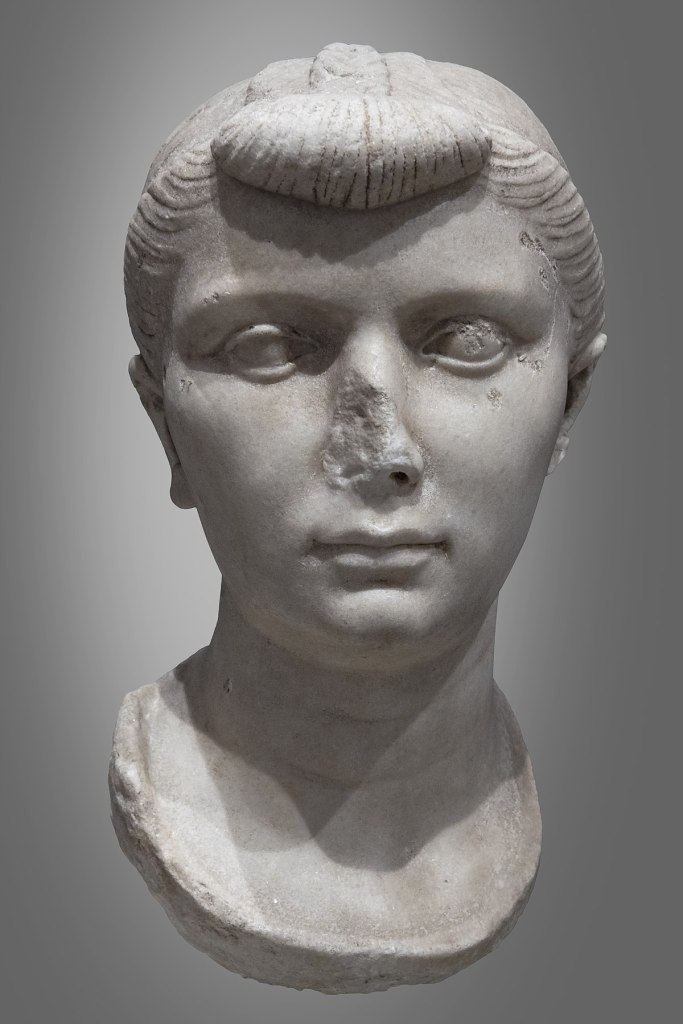
There’s somewhat of a recurring theme in the Julio-Claudian clan and that’s the head honchos of the family being married multiple times and yet only managing one single legitimate daughter. Just ask Julius Caesar and his great nephew/adoptive son Octavian/Augustus; both were married multiple times (Caesar 3 or 4 times and Octavian/Augustus twice) and yet both only managed to bear one legitimate daughter (Caesar it should be noted had other children outside of marriage but they weren’t legitimate). Both Caesar and Octavian/Augustus named their daughter Julia. Octavian/Augustus’ daughter Julia was born in 39BC the sole product of his brief marriage to Scribonia. It’s important to note that at the time her birth, he had not yet received the title of Augustus and so was referred to as Octavian until 27BC when Julia was 11. Rather cruelly, Octavian divorced Scribonia the day she gave birth to Julia (what a douche) and so the newborn was taken away from her mother not long afterwards. This was due to the fact that in Roman divorces, the father claimed complete parental control over any children born during the marriage. A year after her birth, her father married Livia Drusilla; Julia was then sent to live with her new step-mother. Her education under Livia Drusilla appears to have been very strict and quite old fashioned with an emphasis on feminine skills such as spinning and weaving; her father it said made sure she had the best tutors he could find. Julia it’s believed had a particular fondness for literature, unsurprising coming from a household known for it’s patronage of culture. Julia’s childhood was somewhat isolated; access to her was strictly controlled and no one ever get anywhere near her who hadn’t been strictly vetted by her protective father. Despite everything that happened as an adult, as a child Julia was said to be close to her father who doted on her. Julia by all counts grew up to be a bold, headstrong young girl who had somewhat of a rebellious streak; Macrobius reported her father as saying of her, “there are two wayward daughters that I have to put up with: the Roman commonwealth and Julia”. In 37BC when she was a literal baby, it was agreed that Julia would marry Mark Antony’s son Antonius Antyllus however this little thing called a civil war broke out, bringing an end to the engagement. Mark Antony was defeated a the Battle of Actium leading to Antony and Cleopatra committing suicide. This culminated in Julia’s father becoming the sole ruler of the Roman Empire. As with all aristocratic girls, there was an emphasis on her marrying and having children; as her father’s only surviving child, there was an even greater expectation on Julia with the expectation of course being that she would have sons to succeed her father. In 25BC at the age of 14, she was married to her first Marcellus the son of her paternal aunt Octavia; Her father’s best friend and right hand man Agrippa stood in her father due to his absence; he was fighting in Spain at the time. Agrippa was not exactly thrilled about the marriage – as long as Octavian/Augustus had no heirs, the expectation was that if something happened to him, Agrippa would assume authority. Not only did Marcellus and Julia’s marriage promote Marcellus but Octavian/Augustus also raised the young man to the pontificate and curule aedileship; this apparent preference for Marcellus prompted Agrippa to leave Rome and go to stay for an extended period in Mytilene in Greece. Julia and Marcellus were not married for long; he died in 23BC after just two years of marriage. Two years after that Julia was married to Agrippa, a commoner who had impressively risen from next to nothing to the most trusted general, best-friend and right hand man of the Emperor. The marriage apparently came about due to a comment by Maecenas who apparently told Octavian/Augustus “you have made him so great that he must either become your son-in-law or be slain”. Julia was by all accounts not thrilled at the match hence why she allegedly began being unfaithful within roughly 30 seconds of becoming Mrs Agrippa. Here’s the thing Julia was accused of having a lot of affairs (marrying the best-friend of one’s father isn’t exactly ideal so I’m not sure I blame her); some I tend to believe – Sempronius Gracchus for example (their relationship was a long lasting one with Tacitus describing him as a “persistent paramour”; the affair came to an abrupt end when he was exiled by her father who discovered the relationship), others I think were just rumour and innuendo. Despite Julia’s initial unhappiness at the marriage, the two did manage to have five children – three sons Gaius Caesar, Lucius Caesar and Agrippa Postumus and two daughters Julia the Younger and Agrippina the Elder. From June 20 BC to the spring of 18 BC, Agrippa was governor of Gaul; it’s likely Julia was with him. They had two children during their time in Gaul before returning to Italy where they had three more children; the youngest was born months after Agrippa’s death. In 17BC Augustus decided to adopt Agrippa and Julia’s sons as a way of promoting them as his heirs. I tend to think that whilst Julia and Agrippa were never in love with each other, they did eventually develop a somewhat affectionate relationship and both Nicolaus and Josephus made reference to an incident where Julia was travelling to meet her husband, and in the course of her travels, she got caught up in a flash flood in Ilium, almost drowning in the process. Agrippa was said to have been absolutely livid and fined the locals the eye watering amount of 100,000 drachmae. Agrippa was so pissed by the incident that the locals were actually too scared to lodge an appeal with him; eventually Herod the King of Judea intervened and asked Agrippa nicely, to revoke the fine. In October 14BC they moved to Athens where Julia once again gave birth. Between 17 BC and 14 BC they spent the majority of their time in Syria where he was based. After their return to Italy, in the winter of 14BC, Agrippa died suddenly whilst Julia was pregnant. He was buried in Augustus’ own mausoleum. Her son was born several months later and was named Marcus in his honour. Literally whilst Julia was still mourning, her father made the very questionable decision to marry her to her step-brother Tiberius (the son of Augustus’ wife Livia Drusilla); Livia was eager for her son to be named heir whilst Augustus had obviously adopted Julia’s sons in order to promote them as his heirs. Augustus evidently felt that marrying Tiberius and Julia would bring the two sides of the dynasty together. Awkwardly Tiberius was already married – his wife happened to be Julia’s stepdaughter Vipsania Agrippina, the eldest daughter of Agrippa from his first marriage. Augustus and Livia forced Tiberius and his wife to divorce. Tiberius was genuinely in love with his love and was devastated by the divorce he absolutely didn’t want; the first time he saw her after their divorce, he was so visibly upset that Augustus ordered that the two had to be kept apart at all costs in order to avoid any more awkward displays of emotion. Another problem was that Tiberius and Julia didn’t actually like each other; he like everyone else had heard the rumours of her infidelity and therefore had a somewhat low (aka judgemental) opinion of her character. By 6BC when Tiberius left for Rhodes, the two had permanently separated. In 2BC Rome was scandalised when Julia was arrested for adultery and treason; remember at this point in time Julia was the daughter of Augustus, the biological mother/legal sister of his heirs and wife of another heir. Despite this, her scandalous shenanigans had evidently got a little too public for her father’s liking and she was arrested; the fact he was at the time trying to pass legislation promoting family values was also a tad embarrassing. It’s likely that it wasn’t just a father upset at his daughter’s lack of marital fidelity (she’d been unfaithful whilst married to Agrippa, a fact her father had almost certainly been aware of and he’d never arrested her before), and there was probably a political component to the arrest. Later chroniclers suggested that Julia had been plotting against her husband with the intention of removing Tiberius from favour and replacing him with Iullus Antonius (the son of Mark Antony & Fulvia) and one of Julia’s lovers; for his relationship with Julia, Iullus was forced to commit suicide. Despite his anger at her behaviour, Augustus was extremely reluctant to execute her and instead exiled her to the tiny island of Pandateria; it’s believed that Tiberius despite their mutual dislike for one another also advocated against her execution. Her mother, Augustus’ forsaken ex-wife Scribonia accompanied her into exile, suggesting that despite Augustus taking custody of her when the pair initially divorced, mother and daughter had managed to build some sort of a relationship in the years since. In AD 4, Julia moved to Rhegium on the mainland where she was given pretty nice property, an annual allowance and she was allowed to freely walk around the two. Her moving to Rhegium coincided with the death of her eldest son Gaius; this meant that out of Julia’s five children only her two daughters and her youngest son remained alive. Augustus never allowed her to re-enter Rome a fact that infuriated the public and caused his popularity to wane slightly in his twilight years; it’s believed the Roman public petitioned him on multiple occasions to allow her to return. In AD 8 her eldest daughter suffered the same fate as her; accused of adultery she too was exiled. She doesn’t appear to have tried fleeing at any point and in contemporary reports from the time there appears to have been only one plot to take her from captivity. Her father died in AD 14 without ever reconciling with her; her former husband Tiberius succeeded him. Despite showing sympathy for her initially (he’d advocated against her execution) he decided to be the world’s worse ex husband and actually enforced far harsher conditions on her than her father had. He removed her dowry, revoked the yearly income her father had granted, denied her permission to leave her house, prevented any and all visitors and left her pretty much destitute. She ended up dying less than a year after her father’s death, allegedly as a result of Tiberius’ actions against her although the exact circumstances are a bit murky. She was not allowed to be buried in her father’s mausoleum – Augustus had actually written in her will that she was not to be buried beside him. Father of the Year right there ladies and gentlemen.
AGRIPPINA THE ELDER // THE ALMOST EMPRESS OF ROME
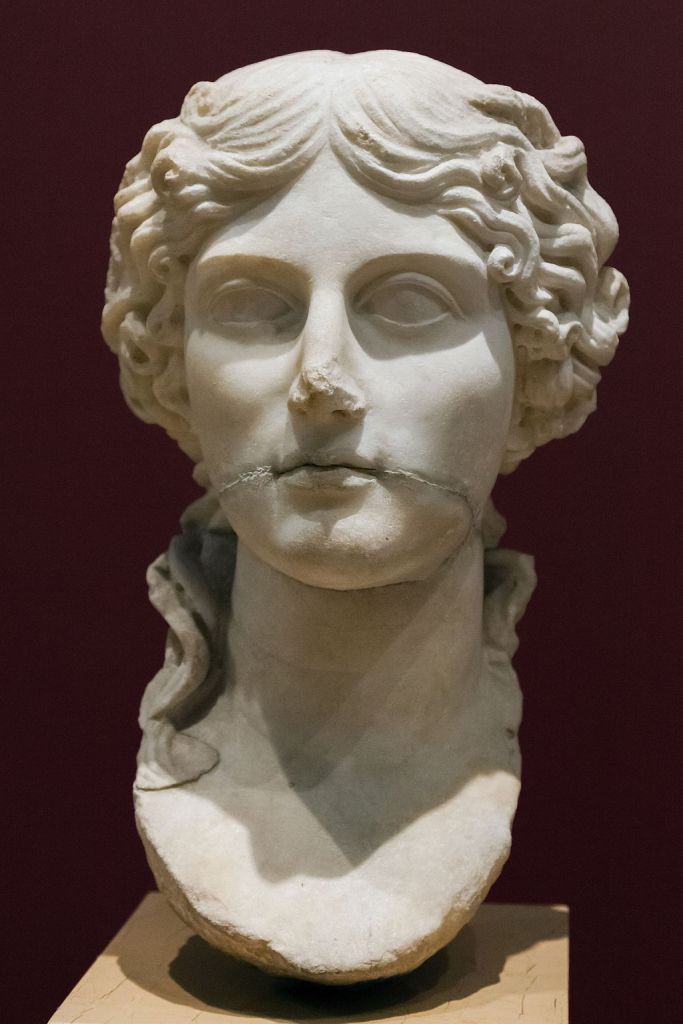
I think it’s well established that I LOVE Agrippina the Younger (an icon) so I’m unsurprised that she gets so much focus when it comes to the ladies of the Julio-Claudian dynasty; that does however mean that her mama Agrippina the Elder tends to get less attention. Part of that I would think is because she never actually became Empress. Agrippina the Elder was born probably in 14BC the daughter of Marcus Vipsanius Agrippa and Julia; her father was the best-friend and right hand man of Octavian/Augustus the First Emperor of Rome whilst her mother was his daughter. She was thus the biological granddaughter of Octavian/Augustus; adding to her prestige was the fact that he only had two. She was raised alongside a ton of siblings; three full brothers Gaius, Lucius and Postumus-Agrippa, one full sister Julia and three half sisters Vipsania Agrippina, Vipsania Attica, Vipsania Marcella & Vipsania Marcellina, on her father’s side. In the early years of her grandfather’s reign there were no clear cut successor due to the fact that her grandfather had no sons of his own; it was somewhat assumed that if anything were to happen to the Emperor, Agrippina’s father would assume power as her grandfather’s right hand and son in law. In 17BC however, her grandfather decided to adopt her brothers thus signalling to the world Augustus’ intentions for the future of his dynasty and the empire; the adoption coincided with the first ever Ludi Saeculares (“Secular Games”) and the combination of the two events (the games and the adoption) was widely considered to be Octavian/Augustus’ way of ushering in a new era of peace. The early years of her childhood were spent wherever her father was based; following her grandfather’s adoption of her brothers in 17BC, her father was given command of the eastern provinces with proconsular authority resulting in the family living predominantly in Syria until 13BC when they returned to Rome. Agrippina’s father died in 12BC after travelling to Pannonia to suppress a rebellion on Augustus’ behalf (I should say he wasn’t killed during battle; he travelled during a bitterly cold winter and fell ill) and her grandfather, in one of his shittier decisions decided to marry his daughter Julia (aka Agrippina’s mother) to his step-son Tiberius (the son of his wife Livia and her first husband) as a way of bringing the two sides of the dynasty together (Livia it’s well known was very eager for her son to become the next Emperor). The problem with that plan was that Julia and Tiberius loathed each other and the marriage was to put it mildly absolutely miserable. Agrippina was thus super closely related to every emperor of the Julio-Claudian dynasty; the first (Augustus) was her grandfather, the second (Tiberius) was her step-father, the third (Caligula) was her son, the fourth (Claudius) was both her brother and son in law and the fifth (Nero) was her grandson. After her father’s death, she was raised in her grandfather’s household where she was both a) spoiled as the princess she was and b) somewhat isolated from the rest of the world due to the fact that access to her and her siblings was very strictly controlled. I’m of the opinion that Agrippina was likely her grandfather’s favourite grandchild; in surviving letters between them, he refers to her as “his Agrippina” which demonstrates the fondness he clearly had for her whilst she was pretty much the only girl in his family not married off as a child to an old man decades her senior. I also think she was everything he dreamed of in a heir – intelligence, ambition, boldness and strength – if she’d been born a boy, she’d have almost certainly been considered his heir. Her father’s death resulted in her grandfather promoting his grandsons more than ever before and they were included on currency issued in 12BC after their father’s death. Her brothers political and military careers thus began and they slowly but steadily began rising in prominence, rank and stature. Their rise to the top however was cut brutally short by their early deaths – Lucius died in AD 2 at the age of 18 whilst Gaius died in AD 4 at the age of 23. Both died of short illnesses although there were of course rumours of foul play; Tacitus and Dio both raised the possibility that their step-grandmother Livia (the wife of Augustus) had arranged their deaths in order to secure the succession for her son Tiberius. There’s no evidence of murder although it’s a possibility and I’m fairly certain if Livia had arranged their deaths, she absolutely would not been caught. In the span of 18 months, the succession of the Roman Empire, still very much in it’s infancy, was thrown into utter disarray and Augustus was once again forced to go on a search for heirs. There were two main options – his step-son Tiberius and his great-nephew Germanicus, the latter of whom was both the grandson of Augustus’ beloved sister Octavia through her youngest daughter Antonia the Minor and the grandson of Livia through her late second Drusus (aka Antonia’s husband). Livia was fully in favour of Tiberius’ accession, culminating in Augustus’ decision to adopt him. The adoption however did come with a caveat; Tiberius had to adopt Germanicus so he would become second in the line of succession. To sweeten the deal it was then agreed that Germanicus and Agrippina would marry. I tend to think that the two were probably a little wary of marrying each other at first (they basically grew up together and were second cousins), but it does seem that they grew to be very much in love with one another, developing a faithful, devoted and happy marriage that produced nine children; six sons Nero Julius Caesar, Drusus Julius Caesar, Tiberius Julius Caesar, Gaius the Elder, Gaius the Younger (later known as Caligula) and a son whose name has been lost (although he’s sometimes referred to as Ignotus) and three daughters Agrippina the Younger, Julia Drusilla and Julia Livilla. All three of their daughters and three sons survived to adulthood with Tiberius, Ignotus and Gaius the Elder all dying as children. The fact they had so many kids will never not amuse me; pretty much every emperor in this family must have had either stress induced erectile dysfunction or a genetic low sperm count because they all married multiple times, had literally one single child from those multiple marriages and outlived said single child, causing a succession crisis in pretty much every generation. Meanwhile you’ve got Germanicus and Agrippina popping out kid after kid after kid, as if it’s the easiest thing in the world. Now Germanicus and Agrippina quickly emerged as the IT couple of the early Roman Empire. She was an intelligent, beautiful, ambitious, headstrong and universally adored princess; he was a handsome, equally as intelligent, ambitious and fearless prince who the public believed was a genuinely good guy (HE WAS). The two were clearly very in love, basically the personification of love’s young dream, Rome’s Golden Couple, the greatest Emperor and Empress there never was and the public WORSHIPPED them; I mean according to Lindsay Powell, they were “mobbed by crowds wherever they went – a clear sign of there popularity with the people”. Germanicus made his military debut in the Batonian War of AD 6 and from then onwards his military career began advancing to the point that he would end up becoming somewhat of a war hero. By AD 12 he was consul and just a year later he was given command of Gaul and the eight legions that made up the Roman forces on the Rhine. Agrippina was not ya average Roman wife; she travelled constantly with her husband who did not wish to be parted from her, and her and children became familiar faces in her husband’s war camps. On the 19th August AD 14 Augustus died whilst in Campania, with Tiberius succeeding him. While Germanicus was administering the oath of fealty to the new Emperor, a mutiny began among the army officers; the mutiny was quelled by none other than Agrippina who brought out their 1-year-old son Gaius. The little boy was dressed in a full, head to toe, army outfit including hobnailed booties (nicknamed caligae); not only did the sight of Germanicus’ beautiful wife and very cute son only garner sympathy from the soldiers but it also earned her son the nickname Caligula. Tacitus claimed her actions quelled the mutiny. Once the mutiny was over, Germanicus dealt with the ringleaders and then lead the rest of the soldiers against various Germanic tribes. Agrippina and Germanicus remained in Gaul until AD 16 when Tiberius summoned them back Rome. Already beloved amongst the people, his military triumphs won Germanicus a huge amount of renown and his and Agrippina’s return to Rome in May AD 17 was a triumph. In the aftermath of their return, things got a little dicy between the golden couple and his uncle/her step-father Tiberius. It’s often said that Germanicus & Agrippina’s increasing popularity and Tiberius’ less than stellar popularity led to tensions between them, with Tiberius allegedly growing VERY suspicious of his nephew/stepdaughter. Honestly it’s kinda of hard to tell how much of the tension between Germanicus and Tiberius was real and how much was hyperbole on the part of contemporaries, most of whom were later very anti-Tiberius. Tacitus is a prime example of this, and one of the reasons he gives for the apparent tension between the two men was that Tiberius and his mother Livia apparently feared that Germanicus had inherited the republican tendencies of his father and was eager to see the empire revert back to the republic. I’m really don’t believe this and neither does Anthony B Barrett who wrote “Germanicus no doubt did inherit his father’s popularity but nothing he did even hinted at an interest in restoring the republican system”. Why would he? Come on people. I have absolutely no doubt the relationship between Germanicus and Tiberius was a difficult one; the cut throat imperial system clearly cultivated feuds and fostered resentment between family members, but I’m not sure the tension between the two was ever as outright hostile as later chroniclers would suggest. The fact that in AD 18, Tiberius granted Germanicus control over the eastern part of the empire, just as Agrippina’s father Agrippa and Tiberius himself had received before, when they were successors to the emperor, prove that Tiberius considered Germanicus his heir; if relations between them were really as bad as later Roman historians suggested, then surely he wouldn’t have granted Germanicus such honours. In January AD 19 Germanicus does appear to have offended Tiberius a tad by arriving in Egypt to relieve a famine (this was absolutely vital might I add – Egypt was hugely important to Rome’s food stores). Germanicus’ arrival in Egypt violated an order by Augustus that no senator was allowed to enter the province of Egypt without consulting the emperor; Germanicus evidently did not get Tiberius’ permission and the emperor was pissed. In the aftermath Germanicus’ feud with Gnaeus Calpurnis Piso, the governor of Syria and a political appointee of Tiberius’ reached fever-pitch and Germanicus actually ended up sending the man back to Rome despite the fact he kinda sort of didn’t have the authority to do so. In October of that year, Germanicus died after a brief illness, leaving Agrippina a widow with a ton of small children. His death was a HUGE scandal; although the official cause of death was natural, rumours quickly spread that he had been poisoned with Tiberius becoming chief suspect number 1 with Piso, Livia and Tiberius’ loyal dog Sejanus also being considered suspects. I tend to be in the camp that thinks it possibly was murder; a very healthy young man in the prime of his life does not just suddenly fall ill and then die; poisoning is absolutely as far as I’m concerned a very real possibility. Despite this I’m not actually 100% convinced that if it was poisoning, that Tiberius was responsible; the relationship between Germanicus and Tiberius was very clearly a tricky one, an unsurprising fact considering the political circumstances. The evidence though, as far as I’ve seen it, shows Germanicus despite any negative feelings he may have towards Tiberius remained utterly loyal to his uncle as emperor, and Tiberius’ behaviour towards Germanicus seems mostly okay and not outwardly hostile; there’s also the fact that Tiberius was devoted to his late brother when they were young and I can imagine his love for his brother extended to Drusus’ son, especially as Drusus and Germanicus were said to be quite similar. I also don’t think it was Livia – Germanicus at the end of her day was still her grandson and frankly any and all sudden deaths in the late days of the Roman Republic and early Roman Empire tend to be blamed on Livia so I’m less inclined to think she was involved. Having said I don’t outright dismiss the possibility that either of them played an active role in the plot against Germanicus and his subsequent demise although I’ve yet to see solid proof. It’s just very difficult to tell. If I had to guess I’d probably guess that if Germanicus’ death was indeed poisoning, then it was either Sejanus or Piso, the latter of whom ended up being put on trial months later for a number of crimes including insubordination, corruption, abandoning and re-entering a province (following Germanicus’ death he almost immediately tried to regain control of Syria, having been dismissed by Germanicus months earlier), summary justice, sacrilege and miss-using the emperor’s funds. He committed suicide before he could be found guilty. If I’m right about Sejanus and Piso, the question of if they were directed to take action against Germanicus by someone higher up (i.e Tiberius) is a question we’ll probably never know the answer to. The death of Germanicus turned out to be a major political headache for Tiberius whose popularity took a massive hit; this I think adds to the theory that Tiberius probably wasn’t responsible. I’m fairly certain he could have predicted that the suggestion he killed Rome’s golden boy, was likely to cause some popularity problems. One person who was convinced that Tiberius was involved was none other than Agrippina who was absolutely livid. Livid actually isn’t actually a strong enough word to describe how angry Agrippina clearly was, and I think part of the tragedy of Agrippina after her husband’s death is that there are moments when she makes political decisions clearly guided by her rage, decisions that end up being a tad questionable. I actually think it makes her more endearing; she fact she goes on to make very visceral, grief-fuelled decisions that only further her downfall, is really quite humanising. I should also say the fact that she was clearly SO convinced that Tiberius was behind it all, should be taken into account when debating whether or not it was poison and whether or not Tiberius was involved. Agrippina would absolutely have known the dangers of accusing Tiberius without at least a little proof; the fact she did so, could imply she knew something we do not. Now Agrippina was front and centre at her husband’s funeral; she personally carried the ashes of her husband from Antioch to Rome and the crowds that welcomed her upon her arrival was ginormous. As she passed each town, the people and local magistrates came out to show their respect; family members such as Drusus the Younger (Tiberius’ son) and Germanicus’ brother Claudius joined the procession as did consuls, senators and members of the military. Tiberius and Livia did not make an appearance, a fact that did not go unnoticed by the Roman public nor Agrippina. In the aftermath of the funeral, Agrippina dedicated herself to three things a) the advancement of her sons whom she was determined to see on the throne that should have been their fathers, b) the defensive of her husband’s honour and c) justice for her husband who she believed had been murdered. With Germanicus and her mother dead (her mother had died in AD 14), Agrippina now no longer had any real blood ties to Tiberius, and she became vocal in claiming that Germanicus was murdered to promote Tiberius’ son as heir; this led to a period of intense suspicion and conspiracy that throughout the 20’s extended to every inch of the upper echelons of Roman society. Agrippina’s opposition to Tiberius is so interesting to me because it was so open and she did very little to hide it despite the fact he was the Emperor; her actions are very much a transgression of typical gender roles which you would think (considering how society usually reacted to women that transgressed typical gender roles) would have earned her widespread condemnation. But it just didn’t. If anything historians writing in the century after her death are actually rather positive; this suggests that Tiberius was so egregiously disliked that even the likes of Tacitus didn’t have a problem with her vocal hatred of the man. Basically in the imperial family everyone began hating everyone and it was a major problem; Tiberius and Agrippina clashed non stop, Livia and Agrippina went from discreetly disliking each other to openly hating one another and the infinitely-untrustworthy Sejanus became incredibly influential which put him at odds with both Agrippina and Tiberius’ son Drusus. The death of Drusus in AD 23 emboldened Sejanus whose influence only grew. To say that Sejanus and Agrippina hated one another is the nicest way I could possibly put it. Now after Drusus’ death Agrippina sought to have her boys names as Tiberius’ heirs; to be fair to her they were the obvious choices as the great-grandsons by blood of Caesar – the others options were Drusus’ children however they were literal babies. After the death of Tiberius’ son, Sejanus led what some might call a crusade against Agrippina’s family. Agrippina’s eldest two sons were becoming pretty popular and there was a growing consensus that they as Germanicus’ sons should get the throne after Tiberius which threatened the growing influence of the very ambitious Sejanus. This in turn lead to a pretty intense feud between Sejanus and Agrippina who in true Roman matriarch style absolutely refused to back down. Things in Rome became very testy and very factionalised with the aristocracy having to choose between Agrippina and her sons and Sejanus. On New Years Day AD 24, Sejanus had the priests and magistrates say prayers for the health of the increasingly popular Nero and Drusus (normally only prayers for the emperor’s health would be read out). Tiberius was not a happy bunny and he was vocal in his displeasure, not just at this but also at the fact that Agrippina’s sons were becoming the toast of the town with powerful supporters behind them. Despite this, he seems to have continued to consider them his heirs. In AD 25 Sejanus requested permission to marry Tiberius’ niece Livilla; Agrippina understandably objected to the marriage, knowing that this would have made her mortal enemy a member of the imperial family and thus even harder to defeat. Luckily for Agrippina, Tiberius refused; if he had allowed Sejanus and Livilla to marry it would have threatened the line of succession that Tiberius was comfortable with. By refusing Sejanus’ request, Tiberius made it clear to everyone he was content with Agrippina’s children being his successors. Despite her devotion to her husband’s memory, Agrippina clearly came to the conclusion that she needed the support of a powerful individual outside of the imperial family that could protect her and her children; this led to her asking Tiberius for permission to remarry. This is such a baller move, because she was basically reprimanding Tiberius. One of his main roles as Emperor was meant to be acting as the guardian of the imperial family and yet he was allowing the likes of Sejanus to attack members of the family. By asking for permission to seek protection elsewhere, she was basically telling Tiberius he was failing in his duty as Emperor. Relations between Tiberius and Agrippina got so bad that she refused to have dinner with him, out of concern she’d be poisoned. Tiberius apparently couldn’t handle the intensity of the situation and so left Rome to live a more relaxing life on the island of Capri, which quite frankly is an idea I understand. It however left Agrippina and her family at the mercy of Sejanus who was left in charge of the empire. Luckily for Agrippina, Livia did not go with her son and stayed in Rome. Despite Agrippina and Livia’s very open feud, they both recognised how ambitious and power hungry Sejanus was; in Tiberius’ absence Livia’s presence seems to have checked Sejanus’ overt power, and inadvertently kept Agrippina somewhat protected. Livia’s death in AD 29 however changed everything, and Sejanus as I previously mentioned led somewhat of a crusade against Agrippina’s family. He began a series of purges and show trials against anyone that opposed him including various senators and Agrippina’s family. Some of Agrippina’s supporters were accused of treason and sexual misconduct, including Gaius Asinius Gallus. In AD 30 Agrippina and her eldest sons were arrested and promptly exiled. One of Agrippina’s sons was exiled to Pontia where he was either murdered or forced to commit suicide whilst her other son died in prison after being starved of food. Agrippina herself was exiled to the island of Pandateria where she died in AD 33 of starvation. Out of her immediate family only her daughters and her youngest son Caligula managed to survive the purges; her daughters were subsequently raised by their grandmother whilst Caligula was sent to live in Capri with Tiberius in AD 31. Here’s the thing Tiberius may not have been directly responsible for Agrippina and her sons deaths but he did absolutely nothing to stop it. He remained in Capri allowing Sejanus to run riot in Rome. He did eventually return and luckily for everyone in Rome, Sejanus did eventually get his comeuppance. The victor in all this ended up being Agrippina’s son Caligula and namesake daughter Agrippina the Younger; Caligula became Emperor upon Tiberius’ death just as Agrippina wanted. After Caligula’s tumultuous reign (which might I add ended abruptly with his murder at the hands of the Praetorian Guard), Agrippina’s brother in law Claudius (Germanicus’ younger brother) became Emperor, later taking Agrippina’s daughter also named Agrippina as his Empress. The younger Agrippina would go on to be arguably the most powerful woman in Roman history and the mother of Nero (the real tragedy in all this is that Germanicus and Agrippina went to all the trouble to have all those kids just to have ONE grandchild make it to adulthood and said grandchild ended being Nero!!) I love Agrippina, I mean I love both Agrippina’s but thinking about this Agrippina is just kind of sad, I mean the woman really went to her grave defending her husband’s honor and trying to seek justice for the man she loved. We were truly robbed of them ushering in a golden age of Roman imperial politics. Just imagine how different things might have been had they been allowed to rule.
VALERIA MESSALINA // THE SO CALLED WHORE OF ROME
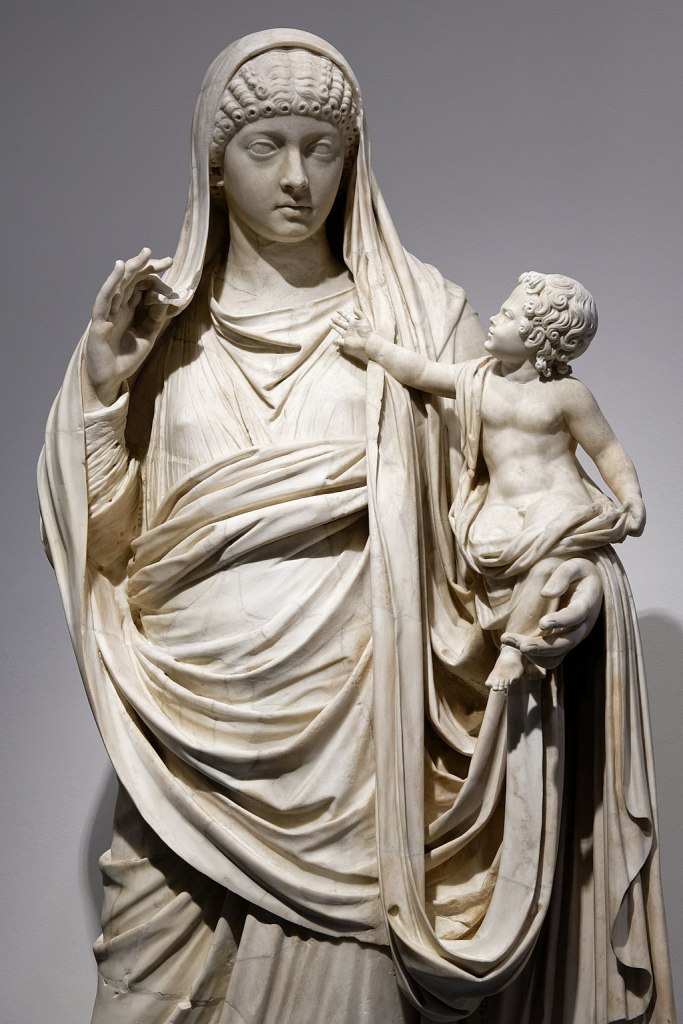
Look we all have our favourites kings and queens, the ones that we naturally gravitate to and have the greatest interest in. Emperor Claudius is just not that guy for me. I have very little interest in the man beyond the invasion of Britain. The same cannot be said for his wives who in my humble opinion are easily the most fascinating thing about him. I will say he has excellent taste in women because I too would happily marry Agrippina The Younger (see below) or this woman Valeria Messalina. Now there was a ton of in-breeding in the Julio-Claudian dynasty and Messalina was most definitely a product of it; she was the daughter of Domitia Lepida and her first cousin Marcus Valerius Messalla Barbatus. Her mother was the youngest child of the consul Lucius Domitius Ahenobarbus and Antonia Major and the sister of Gnaeus Domitius Ahenobarbus who was Agrippina’s first husband (making Messalina a first cousin of Emperor Nero). Messalina’s paternal grandmother was Claudia Marcella the Younger (daughter of Octavia the Younger and her first husband Gaius Claudius Marcellus and thus the niece of Octavian) whilst her maternal grandmother was Antonia the Elder (the daughter of Octavia and her second husband Mark Antony and thus also the niece of Octavian) meaning her grandmothers were half sisters. She first came to prominence in AD 38 when she married Claudius the uncle of the reigning emperor Caligula. The pair were of course related; Claudius’s grandmother, Octavia the Younger, was Messalina’s great-grandmother on both her mother and father’s side. They were also quite a bit different in terms of age; he was 47 whilst she was either 21 or 18 (her date of birth is contested however historians have estimated she was born in either AD 17 or 20). Claudius, in comparison to the chaotic energy that the rest of the family seemed to radiate, was a calm, seemingly composed, intelligent guy who due to several deformities (he had a limp and was partially deaf) went pretty much under the radar for most of his life. Unlike other members of the family, he escaped the political purges that took place in the reigns of his uncle Tiberius and nephew Caligula; alongside his disabilities, he also a) kept his head down and was careful not to infuriate whomever was Emperor at the time, b) remained uninvolved in various political shenanigans and c) proved himself to be an able, efficient and loyal public servant. These factors meant that he was never considered a threat and thus managed to survive the notoriously difficult-to-survive imperial court. Very little is known about their marriage prior to Claudius becoming Emperor; he was often accused of being dominated by the women in his life (although considering those women in question were Messalina and Agrippina, that’s not exactly a surprise) so it’s likely she had some influence over his decisions between their marriage in AD 38 and his accession in AD 41. In those three years they had two children a daughter Claudia (born in either AD 39 or 40) and a son Britannicus (born in AD 41). In AD 41, Caligula was murdered and the Praetorian Guard proclaimed Claudius as the new Emperor thus propelling Messalina to the plum title of Empress. It also propelled her into the public eye in a way she’d never been before and the majority of what we know about her happened in the Empress phase of her life. It’s really important to remember that the principle contemporary sources we have from the period in regards to Messalina weren’t actually written during her lifetime; Tacitus & Suentonius wrote their works seventy years after she died in a time where the public perception of the Julio-Claudians was a tad hostile. Tacitus’ writings were based on what his elders a) wrote and b) told him; he didn’t name any of his sources other than the memoirs of Agrippina the Younger but then Agrippina not only succeeded Messalina as Claudius’ wife but her son displaced Messalina’s in the imperial succession meaning that Agrippina was probably more than happy to talk shit about her rival, whilst Suentonius was known to be a bit of gossip and repeated any and all piece of rumour regardless of the authenticity of said gossip. Another prominent Messalina critic Cassius Dio didn’t write until almost two centuries after her demise and he was noted to have a not-so-healthy mistrust of women. In other words Messalina was in all likelihood not quite the sex-crazed, power-hungry political tyrant she’s usually portrayed as, nor however she was innocent. The truth as always is probably somewhere in the middle. In the aftermath of her accession as Empress, Messalina threw herself head first into the complex unyielding scheming of the imperial family; her main goal was to make sure that her son Britannicus succeeded her husband as Emperor. Remember when I mentioned that her husband had somehow managed to survive the cut throat years that his uncle Tiberius and nephew Caligula had ruled? Well Messalina was determined that her son would do the same and to this end, she purged many of her opponents from his inner circle. Claudius was seen as being pretty politically vulnerable (his refusal to engage in various political shenanigans in the prior years meant he lacked a) experience and b) allies, two things that someone like Agrippina for example did not lack); because of this the early years of his reign are notable for the significant purges aimed at members of the Senate. Sentators were basically dropping like flies, a fact that Messalina is held at least partially responsible for although I’m sure her husband endorsed such purges; she tends to be held more responsible for targeting the female members of his family – his niece Julia Livilla (the daughter of Claudius’ brother Germanicus & sister of Emperor Caligula) had been exiled by her brother some years earlier but was allowed to return by Claudius. Not long afterwards she was accused by Messalina of committing adultery with Seneca the Younger (another rival of Messalina’s) culminating in her execution (Seneca however was only exiled although returned when Messalina herself died). Another niece Julia Livia (the daughter of Claudius’ sister Livilla and her husband Drusus Julius Caesar (aka the son of Emperor Tiberius) was also accused of immorality by Messalina in AD 43 and executed. Oddly enough Messalina also allegedly accused her of incest which is rich coming from a woman whose family tree is basically a circle. The reason for all this was not some gossipy female catfight; rather Julia Livia had a son Rubellius Plautus who Messalina likely feared could be a threat to her son’s future. With an executed mother, Rubellius was unlikely to be considered for the top job in the future. Messalina faced opposition from a litany of senators in the aftermath in particular Appius Silanus, Valerius Asiaticus and Marcus Vinicius. All three met pretty awful fates, courtesy of Messalina of course. Silanus was not just a Senator, he was also her step-father as the husband of her mother Domitia Lepida. In AD 42 Messalina and her close ally Narcissus convinced Claudius that Silanus was conspiring against him and was even planning to murder him; this led to Claudius having the man executed. Gossip suggested that although he was her step-father Messalina coveted Silanus for herself but that he had (appropriately) refused her. I doubt she was petty enough for that; I’d also like to point out the penalty for adultery especially against the Emperor was pretty damn high and if she was hitting on every Tom, Dick and Harry in Rome (including her own stepfather) she was taking a phenomenal risk. Valerius Asiaticus was another one of Messalina’s apparent victims; he was super rich and super powerful and Messalina was immensely suspicious of him, not helped by the fact that he was the lover of her rival Poppaea Sabina the Elder. In AD 46, Messalina accused him of failing to maintain discipline amongst his soldiers, adultery with Sabina and for engaging in homosexual acts. Claudius it must be said was apparently somewhat hesitant at ordering his execution however his fellow consul Lucius Vitellius recommended he do so. I think it’s safe to take a wager that Messalina and Vitellius were likely allies. Asiaticus was executed without both a) notifying the Senate and b) a proper trial, earning Claudius and Messalina widespread condemnation. At this point, Messalina perhaps should have reverted to her husband’s former policy of keeping his head. Did she? Well what do you think? If anything Messalina got worse and she continued to target Poppaea Sabina until the woman had enough and committed suicide. The same year that Asiaticus met his grissly end, Messalina allegedly ordered the poisoning of Marcus Vinicius and Polybius, one of her husband’s freedmen secretaries. She allegedly poisoned Vinicius because he refused to sleep with her (it was likely far more complex than that) whilst the death of Polybius was apparently due to some sort of disagreement. This would be a major error on her part; the other freedmen had long been allies of hers, the death of one of their own however changed that. Afterwards it became clear that she had well and truly met her match. Step forward Agrippina. Now in the very incest-heavy family tree that was the Julio-Claudians, Agrippina’s bloodline was perhaps the most prestigious and arguably most incestueous of them all; she was the daughter of the very popular war hero/Roman general Germanicus aka Claudius’ older brother and his equally as admired and popular wife Agrippina the Elder, sister of Emperor Caligula, great-niece of Emperor Tiberius, maternal granddaughter of Julia the Elder aka the daughter of Octavian/Augustus and the revered Roman general/statesman Marcus Vipansius Agrippa and paternal granddaughter of Antonia Major and the talented military commander Nero Claudius Drusus. Agrippina’s grandmother Antonia was the daughter of Octavia the Younger and Mark Antony, making her a niece of Octavian/Augustus whilst Agrippina’s paternal grandfather Drusus the Elder was Octavian/Augustus’ step-son. This made Agrippina the great-granddaughter, great-great niece and step-great-granddaughter of Octavian/Augustus who despite being dead for decades was still seen as the big cheese of imperial politics, the founder of the empire and the one that all Emperors had to at least attempt to live up to. Agrippina was also a) exceptionally beautiful, b) every bit as cunning as Messalina and c) immensely popular in a way Messalina could only have dreamed of. You see Agrippina was the last of her immediate family left and her life had admittedly been pretty awful with her father’s likely murder, the persecution of her family at the hands of Tiberius, the tragic deaths of her mother and siblings and the fact she’d been exiled twice (once by Tiberius and once by her own brother); this series of unfortunate events had earned her pretty considerable sympathy from the public. Messalina zeroing in on Agrippina as a new target was not the wisest of decisions; Messalina initially accused of her being involved in the crimes of Statilius Taurus with Messalina alleging that Agrippina directed him to partake in “magical and superstitious practises”. We don’t exactly know how but Agrippina seemed to escape any punishment and the matter was swiftly dropped; whilst Messalina’s popularity waned, Agrippina’s only grew. I think it’s safe to say that Agrippina played the game just as dirty as Messalina did, she just played it a little better. Now Messalina’s main gripe with Agrippina was that the latter had a son later known as Nero. Messalina evidently feared that the boy was a threat to her own son’s future and in AD 48 at the Secular Games, Nero and Agrippina allegedly received a louder applause than Messalina and her son Brittanicus, leading to Messalina allegedly ordering Nero’s death. According to Suetonius, Messalina sent several assassins into Nero’s bedroom at night to murder him, but they were frightened off by what they thought was a snake slithering out from under his bed. Whilst the excuse for the failure of the assassination is a bit stupid, it’s not outside of the realm of possibility that she really did order Nero’s death. If it did happen than it’s safe to say Agrippina was in all likelihood not a happy bunny. In AD 48 Claudius, whilst in Ostia received the very unpleasant information that Messalina had married someone else – the Senator Gaius Silius in Rome and had thrown a particular lavish wedding banquet in Claudius’ absence. I have to say, I have absolutely no idea what Messalina was thinking, it’s insanity pure and simple. There tends to be three trains of thought in regards to Messalina’s motivations; the first is exactly the conclusion that Claudius jumped to – that Messalina and Silius were planning on overthrowing Claudius, crowning Silius and naming her son Britannicus as heir thus securing his future. The second is that Silius somehow convinced Messalina that Claudius was on the verge of being overthrown anyway and her best hopes of survival lay with him. In a rare act of defending Messalina, Tacitus later claimed that Messalina was resistant to marrying Silius but ultimately conceded due to her desire to a) survive and b) see her son on the throne. There was also the fact that Silius had apparently divorced his wife with the sole intention of marrying the Empress. The third option is that Messalina and Silius were actually taking part in a sham marriage as part of a Bacchic ritual; this theory is based on the fact that at the time of the so called wedding Rome was in the midst of celebrating the Vinalia a festival of the grape harvest. I really have no idea. The third option seems ludicrous but the first two options really rob Messalina of any intelligence and I do think her history proves she far too shrewd to make such a colossal mistake. I mean marrying someone else whilst already married to the emperor is basically just a suicide mission. The details of what happened next are a bit hazy; whatever took place culminated in Messalina’s execution (if she really did marry Silius then her death was kinda inevitable). Claudius rushed back to Rome and had his men search Silius’ home where they found a number of family heirlooms allegedly belonging to Claudius’ ancestors; he subsequently confronted Messalina who then sought refuge with her mother. Narcissus once an ally of hers then sent officers of the Praetorian Guard to execute her. The guards gave her the so called honorable option of taking her own life however unable to slit her own throat, she was run through with a sword by one of the guards. Tacticus and Dio claimed that Claudius had not given the order himself; allegedly Narcissus had feared that Claudius was too soft and likely to forgive his wayward wife and so had unilaterally ordered her death in order to protect himself. I tend to be more of the opinion that Claudius was not as malleable as he’s been portrayed and it’s likely he had her executed. I mean he ordered the execution of his own nieces for adultery and they certainly didn’t marry their apparent lovers. I think it’s super unlikely Narcissus unilaterally murdered Messalina, especially as he was not punished in the aftermath of her death and Claudius’ reaction is not of a man particularly devastated or shocked (it’s said when hearing the news he simply turned to a servant and asked for a glass of wine). In the aftermath of Messalina’s death, the Senate ordered a damanatio memoriae which basically meant that Messalina’s name had to be removed from all public and private places and all statues of her should be destroyed. This wasn’t entirely successful and some images of her remain although many of them are debatable; a bust of a woman thought to have been Messalina, now displayed in the Uffizi Gallery in Florence, has become a source of contention with some believing that it’s actually a bust of Agrippina instead, whilst another statue, this one of Messalina and her son Britannicus (now displayed in the Louvre) has also come under debate. After her death the Senate would also put pressure on Claudius to remarry with their favoured choice being none other than Messalina’s number one enemy Agrippina. The Senate hoped the marriage between the two (who were uncle and niece might I add) would bring an end to the squabbles between the various branches of the family. Agrippina was able to succeed where Messalina failed and when Claudius died in AD 54 (allegedly on Agrippina’s orders) it was her son, not Messalina’s that became the next Emperor of Rome.
AGRIPPINA THE YOUNGER // THE POWERHOUSE OF ROME
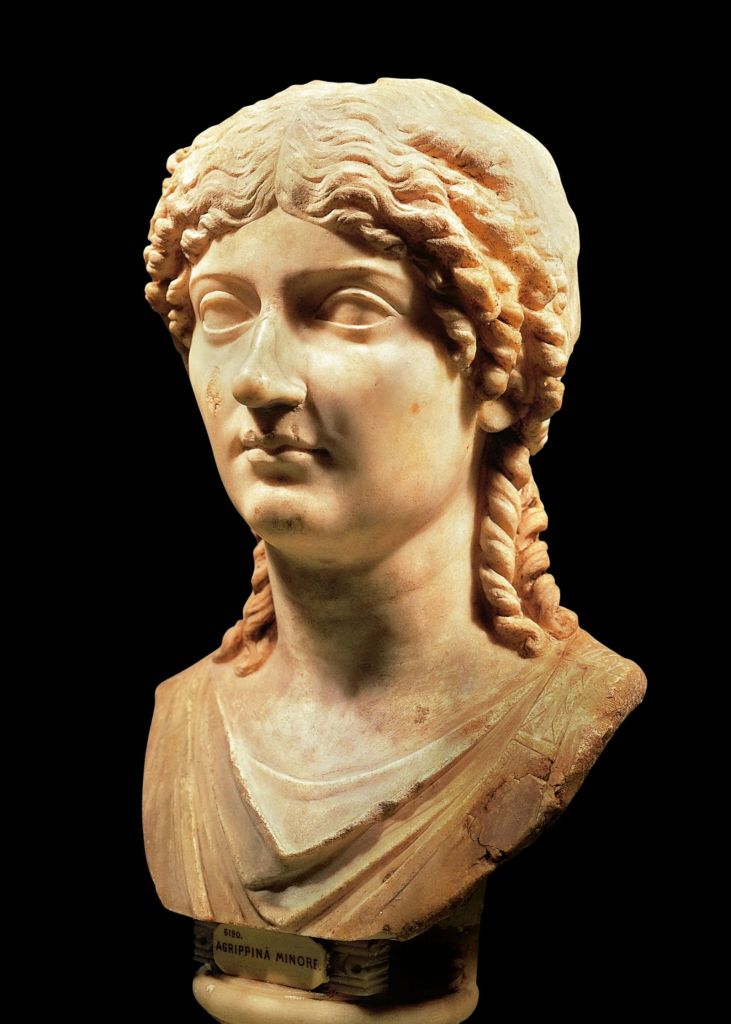
Agrippina the Younger was most iconic woman in the entire family.
I know, I know that’s a pretty huge statement to make considering the women I’ve discussed throughout the post but I stand by my bold words; Agrippina is arguably the most powerful woman of Roman history and was an absolute powerhouse, an amalgamation of all the women that had come before. She was born in AD 15 the daughter of the aforementioned Germanicus and Agrippina the Elder, aka the Golden Couple of Rome as their fourth child. Now in the very incest-heavy family tree that was the Julio-Claudians, Agrippina’s bloodline was perhaps the most prestigious and arguably most incestuous of them all; on her mother’s side she was the granddaughter of Julia the Elder (aka the daughter of Augustus) and the revered Roman general/statesman Marcus Vipansius Agrippa (aka the best-friend & right hand of Augustus) whilst on her father’s side she was the granddaughter of Antonia Major (aka the favourite niece of Augustus) and the talented military commander Nero Claudius Drusus (aka the step-son of Augustus). This made Agrippina the great-granddaughter, great-great niece and step-great-granddaughter of Augustus who despite being dead by the time she was born, was seen as the big cheese of imperial politics, the founder of the empire and the one that all Emperors had to at least attempt to live up to. Now Agrippina’s parents had both been favourites of Augustus – her mother Agrippina the Elder had been his favourite grandchild whilst Augustus had also been very fond of her father Germanicus, to the point that he had forced his step-son/son-in-law/successor Tiberius to adopt Germanicus with the expectation being that Germanicus would inherit the throne after Tiberius. This means that when Agrippina was born she was the paternal great-niece and adoptive granddaughter of the reigning Emperor. Agrippina’s life was pretty dramatic from beginning to end; as a child her extremely popular father Germanicus died suddenly (the cause of death is officially unknown but there was a ton of speculation that his paternal uncle and the-then Emperor Tiberius had ordered his death due to paranoia over Germanicus’ significant popularity & increasing power). The death of Germancius, the rumours about Tiberius’ potential involvement and the increasing unpopularity of the Emperor led to a period of intense suspicion and conspiracy, not helped at all by Agrippina’s (very brave) mother who was, to put it nicely, extremely vocal about her belief that her husband had been murdered on the order of the Emperor. Things in the imperial household got tense and by tense I mean as tense as you can possibly imagine; Agrippina’s mother refused to have dinner with Tiberius out of concern she’d be poisoned. Her mother’s insistence that her husband had been murdered put her at odds with Tiberius and Tiberius’ right hand man Sejanus who after the death of Tiberius’ son led what some might call a crusade against Agrippina’s family. Agrippina’s eldest two brothers were becoming pretty popular and there was a growing consensus that they as Germanicus’ sons should get the throne after Tiberius which threatened the growing influence of the very ambitious Sejanus. This in turn lead to a pretty intense feud between Sejanus and Agrippina’s mother who in true Roman matriarch style absolutely refused to back down. Things in Rome became very testy and very factionalised and Tiberius apparently couldn’t handle the intensity of the situation and so left Rome to live a more relaxing life on the island of Capri. It however left Agrippina and her family at the mercy of Sejanus who was left in charge of the empire. Sejanus as I said led somewhat of a crusade against Agrippina’s family, holding a series of show trials against her mother’s supporters, accusing them of treason and sexual misconduct. Various people were executed and exiled, including Agrippina’s brothers one of whom was exiled to Pontia where he was either murdered or forced to commit suicide and another who died in prison after being starved of food. Her mother meanwhile was also exiled to the island of Pandateria where she died two years later of starvation. This left only Agrippina, her youngest brother and her two sisters Livia and Drusilla remaining; they in the aftermath of their mother’s exile were raised predominantly by their grandmother Antonia. Now Agrippina at this point was already a wife having been married off at the age of 13 to her first-cousin once removed Gnaeus Domitius Ahenobarbus who was double her age. We know next to nothing about the marriage and about this brief period of her life in general; what we do know is that her husband was not exactly Mr Popular with Suetonius claiming that he was “a man who was in every aspect of his life detestable”. It wasn’t until Tiberius’ died and Agrippina’s youngest brother Caligula became Emperor (Sejanus if you’re wondering got his comeuppance and suffered a sudden and unexplained downfall not long after he exiled Agrippina’s mother) that Agrippina really begin to emerge as THE girl to watch. Caligula was very close to his sisters (arguably too close if you believe the incest rumours) and gave them a ton of honours, befitting an empress despite them only being imperial princesses; they received the rights of the Vestal Virgins, were honoured with their faces on coins alongside Caligula’s and had their names added to imperial edicts such as loyalty oaths and consular motions meaning that when someone pledged their allegiance to Caligula they had to pledge their allegiance to his sisters too (e.g., “I will not value my life or that of my children less highly than I do the safety of the Emperor and his sisters”). Around the time Caligula became Emperor, Agrippina gave birth to her son Nero. Apparently her husband after the birth of their son, commented something to the effect of “I don’t think anything produced by me and Agrippina could possibly be good for the state or the people” which I mean isn’t the greatest thing to say about your newborn son but you’ve got to give the guy pointers for self-awareness (and foresight) I suppose. In the early years of Caligula’s reign, Agrippina and her sisters (particularly her sister Drusilla who was Caligula’s favourite) were very important and very influential; the closeness between brother and sister however didn’t last and the death of Drusilla from fever seems to have been somewhat of a turning point. Caligula’s already somewhat paranoid personality seems to have been altered by his sister’s death and the popular perception of Caligula as being insane, really didn’t become a thing until after she died. His relationships with his remaining sisters soured and in AD 39, Agrippina and Livilla, along with their maternal cousin Marcus Aemilius Lepidus (also Drusilla’s widower) were accused of plotting to murder Caligula, in a plot known as the Plot of the Three Daggers. The plot’s aim was to murder Caligula and crown Lepidus the new emperor. Lepidus, Agrippina and Livilla were accused by Caligula of being lovers which is pretty rich coming from a man who was accused of sleeping with his own sisters. Not much is known concerning this plot and the reasons behind it; whilst there was certainly a plot, I’m not 100% convinced that Agrippina was as involved as Caligula claimed, I mean at Lepidus’ trial Caligula produced handwritten letters discussing how they were going to kill him. I’m sorry but I highly doubt that Agrippina was stupid enough to write the plot down and then leave said plans lying around for her very paranoid, mentally unbalanced brother to find. I tend to think she probably knew about the plot and likely endorsed it but wasn’t actually a full blown participant. Also I don’t know that Lepidus becoming Emperor was necessarily a benefit to Agrippina in regards to her ambitions for her son Nero; it was a very real possibly that if Lepidus became Emperor he could remarry and sire sons of his own, which would dramatically decrease the possibility of Agrippina’s son becoming Emperor. The three of them were found guilty and Agrippina was promptly exiled along with her sister to the Pontine Islands whilst Lepidus was executed. I do find it very interesting that Agrippina and Livilla weren’t actually executed but rather exiled. Agrippina remained in exile from AD 39 to AD 41; during which time her brother went on a downwards trajectory, upsetting and offending just about everyone to the point that he allegedly announced to the Senate that he planned to leave Rome and move to Alexandria in Egypt where he apparently hoped to be worshipped as a living God. Understandably annoyed the political elite in Rome planned several failed conspiracies against him until eventually in January AD 41 officers within the Praetorian Guard succeeded in murdering him, his wife Milonia Caesonia and their daughter Julia Drusilla. In the aftermath Caligula and Agrippina’s uncle Claudius managed to win the support of the Praetorian Guard, leading to him becoming Emperor. Claudius promptly granted a general amnesty to those involved, although he executed a few junior officers involved in the conspiracy whilst he also quickly recalled his nieces back from exile. According to Suetonius, Caligula’s body was placed under turf and left without any honours befitting an Emperor; it was only upon Livilla and Agrippina’s return that his body was cremated and then entombed within the Mausoleum of Augustus. Agrippina was reunited with her son and soon requested that his inheritance be reinstated; the new Emperor was kind enough to say yes. Her son became even wealthier when Gaius Sallustius Crispus Passienus a prominent politician who served as consul twice, divorced his wife Domitia Lepida the Elder (Agrippina’s sister in law) and married Agrippina. We know very little about their relationship but I highly doubt it was a romantic one; Agrippina was clearly positioning her son to be the next Emperor and she needed a wealthy, powerful protector to guarantee her ambitions. Now Claudius was at the time married to Agrippina’s paternal second cousin Messalina; she too wished her son on the throne leading to a bit of a feud between the two women although Agrippina tried to keep a low profile, staying away from the imperial court. Messalina if the rumours are to be believed was eager to guarantee her son’s place on the throne after his father and tried to get rid of anyone she considered a threat to that; Agrippina’s own sister Livilla was one such victim and was accused by Messalina of committing adultery with Seneca the Younger. Agrippina by all accounts then became Messalina’s main target. This was not a wise idea. Agrippina was a) exceptionally beautiful, b) every bit as cunning as Messalina and c) immensely popular in a way Messalina could only have dreamed of. You see Agrippina at this point was the last of her immediate family left and her life had admittedly been pretty awful with her father’s likely murder, the persecution of her family at the hands of Tiberius, the tragic deaths of her mother and siblings, the fact she’d been exiled twice (once by Tiberius and once by her own brother) and the fact she was a widow (her husband Crispus died in AD 47 making her a widow twice over); this series of unfortunate events had earned her pretty considerable sympathy from the public. After turning her attention to Agrippina, Messalina accused her of being involved in the crimes of Statilius Taurus with Messalina alleging that Agrippina directed him to partake in “magical and superstitious practises”. We don’t exactly know how but Agrippina seemed to escape any punishment and the matter was swiftly dropped; whilst Messalina’s popularity waned, Agrippina’s only grew. I think it’s safe to say that Agrippina played the game just as dirty as Messalina did, she just played it a little better. In AD 48 at the Secular Games, Nero and Agrippina allegedly received a louder applause than Messalina and her son Brittanicus, leading to Messalina allegedly ordering Nero’s death. According to Suetonius, Messalina sent several assassins into Nero’s bedroom at night to murder him, but they were frightened off by what they thought was a snake slithering out from under his bed. Whilst the excuse for the failure of the assassination is a bit stupid, it’s not outside of the realm of possibility that she really did order Nero’s death. If it did happen than it’s safe to say Agrippina was in all likelihood not a happy bunny. Agrippina continued keeping a low profile until late in AD 48 when Messalina overplayed her hand and suffered a particularly horrible downfall. This led to Claudius being in need of a new wife. The Senate were very in favour of Agrippina; not only was she the last remaining great-grandchild of Augustus and daughter of a still very beloved yet very dead Germanicus but it also was a way of bringing together the two branches of the imperial family who had been feuding pretty much ever since the death of Agrippina’s father. Levick makes a good point when he notes that marrying Agrippina was hugely beneficial to Claudius writing, ” Agrippina was the last surviving daughter of the beloved Germanicus and his…wife, descended from Augustus… by marrying her, Claudius could both right old wrongs and immeasurably reinforce his political position”. Now we don’t know how much of a choice Agrippina had in the decision to marry her uncle. It certainly wasn’t her idea but I tend to think Agrippina was willing to do whatever she had to, to secure her son’s place as Claudius’ successor. They married on New Years Day AD 49 in a ceremony which caused widespread disapproval; after all in Roman society an uncle and niece marrying was considered incestuous and immoral. She as Claudius’ Empress was hugely influential; she signed government documents, met foreign ambassadors, established close working ties to the Senate, imposed order and moderation in the courts, earned the title of Augusta and basically became Claudius equal, something that had never before happened in Roman history; much was made of the influence Agrippina had over him with Dio writing that “she gained complete control over Claudius” whilst Tacitus wrote, “from this moment the country was transformed. Complete obedience was accorded to a woman”. She also made the unprecedented step of standing beside the emperor in public with one famous example being when the British king Caratacus was paraded in chains through the streets of Rome as a prisoner of war following the invasion of Britain. He was brought before Claudius to beg for mercy; the speech Caratacus gave was so impressive that Claudius was moved to tears and promptly spared the man’s life. Caratacus thanked the emperor and then went to Agrippina who was seated in a separate gallery, thanking her too. Tacitus wrote of this incident, “it was an innovation, certainly, and one without precedent in ancient custom, that a woman should sit in state before Roman standards: it was the advertisement of her claim to a partnership in the empire which her ancestors had created”. She also convinced him to adopt her son, despite the fact that he had a son of his own. Agrippina’s entire life had been shaped by violent and brutal power struggles and she evidently felt the need to plan for her son’s ascent to the imperial throne with as little violence as possible, although she clearly knew that it was never going to be that simple. She worked tirelessly to establish in the minds of the Roman people that it was her son, not Britannicus that was the obvious successor. She made it a condition of her marriage to Claudius, that Nero would marry Octavia, Claudius’s youngest daughter; she also made sure Nero appeared in public with her and the Emperor frequently and tried to build close ties between her son and the Senate. On one occasion Dio wrote that during during one of Claudius’ brief illnesses , “Nero entered the senate and promised a horse race in the case the emperor should recover. For Agrippina was leaving no stone unturned in order to make Nero popular with the masses and to cause him to be regarded as the only successor to the imperial power”. Her plans were successful and Nero became the obvious successor to his step-father; Claudius apparently began to regret that before he died quite suddenly in AD 54. Ancient sources are near unanimous that he was poisoned and 99% of said sources accuse Agrippina; their marriage had become pretty tense in the months leading up to his death and there were concerns amongst Agrippina’s faction that Claudius would change his mind and name his own son heir above Nero. There’s no consensus of who killed Claudius and indeed if Claudius was even killed; ancient sources accuse Agrippina whilst modern historians have cast doubt on his death being murder and have instead focused on his ill health and old age (he was 63) suggesting natural causes. I’m almost certain he died of natural causes; Claudius’s health was generally poor and as I said above, he wasn’t exactly a spring chicken. Regardless of how he died, his death made Agrippina’s son Nero Emperor. Now Nero was only 17 and so Agrippina took advantage of his youth and inexperience; upon becoming Emperor he announced during his funeral oration for Claudius that Agrippina would be taking over his public and private affairs. In the initial phase of his reign, Agrippina was openly de-facto co ruler and watched senate meetings, issued orders, held court and in all coins and statues, she appeared as an empress regnant. Fo the first year or so of his reign she was basically the one calling the shots however tensions between mother and son grew in the few years afterwards. She clashed with the new men he promoted as they weren’t eager to share his power with his mother. She ended up being removed from Rome and lived in Misenum where she remained influential and wealthy, despite the fact she was no longer in the inner circle of imperial power. Nero allegedly tried to kill her multiple times although the woman was like a cat with nine lives and survived. Eventually in 59 AD his attempt’s were successful and Agrippina was murdered. The exact reasons for the execution are pretty much open to interpretation; contemporary sources couldn’t agree on why Nero did it and they couldn’t even agree on the how. To cover up the matricide (a very frowned upon crime in Roman society), Nero and his advisers crafted a justification for her death, accusing her of various crimes which according to Tacitus, included “[aiming] at a share of empire, and at inducing the praetorian cohorts to swear obedience to a woman, to the disgrace of the Senate and people.” In the aftermath of her death, Nero whose reign is usually associated with decadence, tyranny and debachery, really began to go off the rails. A guilty conscience perhaps? Without Agrippina, Rome fell into disarray and Nero’s death without an heir to succeed him resulted in the end of the Julio-Claudian dynasty and an intense period of civil war known as the Year of the Four Emperors. Despite the negative propaganda written about her at the time and in the years since, there was a begrudging respect among later historians for Agrippina with Tacitus writing that of her, “when she asked astrologers about Nero, they had answered that he would become Emperor but kill his mother. Her reply was, ‘Let him kill me – provided he becomes emperor”. Now despite her morally questionable ways I love Agrippina and there’s a line in the film Gladiator that always reminds me of her which is when Marcus Aurelius says to his daughter, “if only you had been born a man. What a Caesar you would have made”. This line is literally perfect for Agrippina; she was cannier, more cunning, sharper, more ambitious and 100x more ruthless than the men around her and let’s be honest pretty much outlived them all bar her son. One of the things that I think speaks volumes about Agrippina is that she had so much authority and involvement in running the government that her marriage to Claudius was seen as a positive turning point in his’ reign whilst her death was seen as a major negative turning point in the reign of her son. God she’s just so cool.
Now this is not an exhaustive list; there’s a number of other women that I could have included; Octavian/Augustus’ sister Octavia, her four daughters and Claudius & Germanicus’ sister Livilla, just to name a few other examples. I probably will do a second post about them, which will probably be up next week! Hope you enjoyed this post and I’ll see you soon.
Alexandra

 The Monstrous Regiment of Women

.jpg)
_01.jpg)

