It’s no great surprise that the majority of ancient, medieval or Early Modern queens most vilified by historians are the ones considered to have transgressed the boundaries of what was considered sexually acceptable. Throughout pretty much all of history the easiest way to bring about a woman’s downfall was to made charged accusations about apparent sexual transgressions, even if said sexual transgressions never actually happened (hello, Anne Boleyn). The mere accusation was enough. And those accusations always came from men, usually those who resented the power that these women had or because one woman was standing in the way of whatever ambitions they had. Men have quite frankly been acting like fools since the dawn of time and considering the men currently in power around the world, they don’t appear to be stopping with their foolish shenanigans anytime soon. There were however, and this may come as a surprise, some men that played second fiddle to their more powerful paramours. Some did so willingly, others less so. The idea for this post came up when I was doing some research for the blog post about my favourite royal mistresses (see here) and thought it’d be interesting to delve into their male equivalents, so I hope you enjoy 🙂

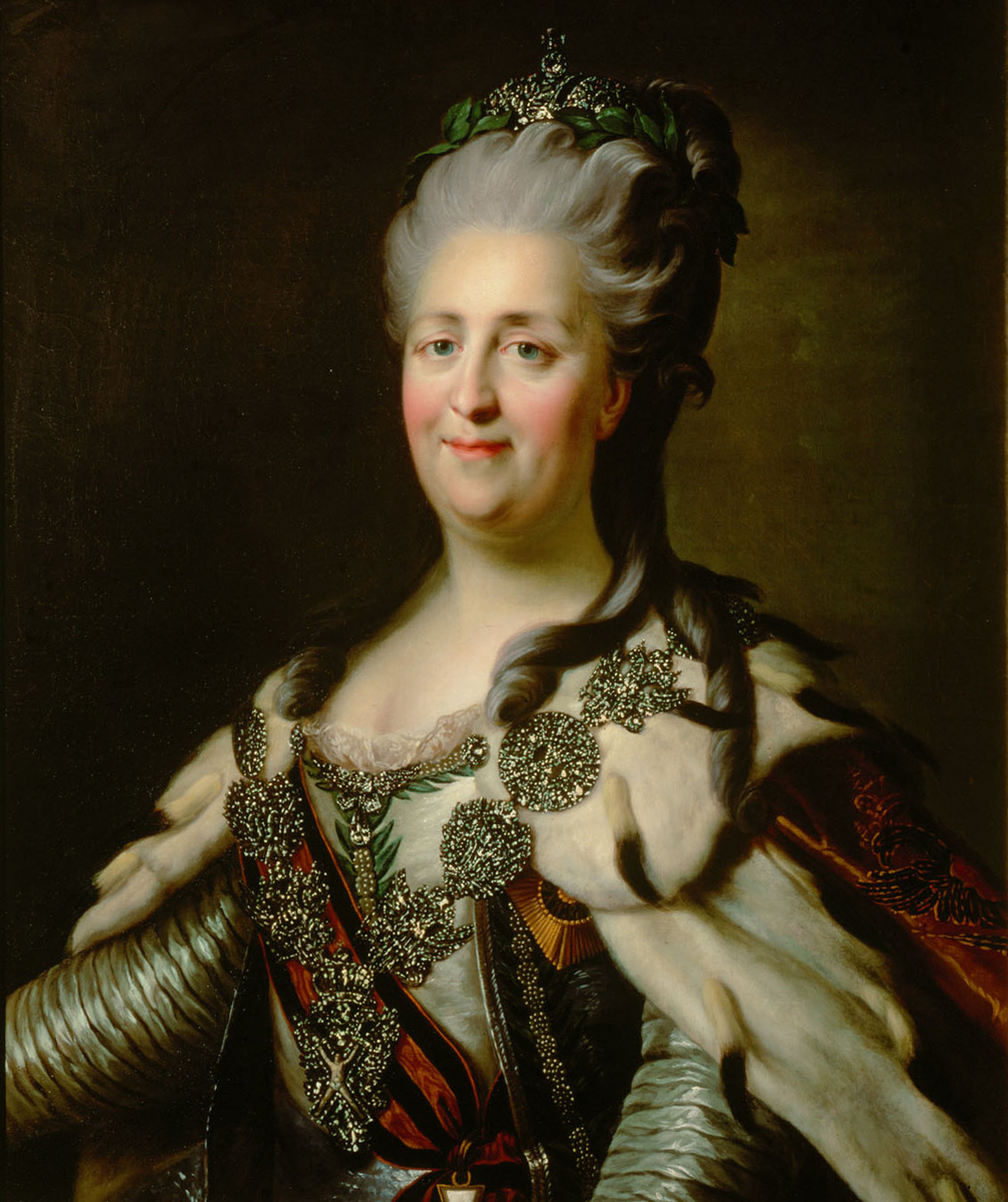
There’s few women whose sex life has been discussed more than Catherine the Great’s. No she did not have sex with a horse. That’s just one of the many colourful (slanderous) accusations lobbied against her. Whilst she may not have taken a horse as a lover, she did take a number of male human lovers, the most prominent of which were Prince Grigory Grigoryevich Orlov (see below) and his subsequent replacement, this guy Prince Grigory Alexandrovich Potemkin. Now Potemkin had a relatively uninteresting childhood; he was born into a family of middle-income noble landowners. His father was a decorated war veteran (although it’s been suggested his father actually wasn’t his father, a viewed held by Simon Montefiore who has written extensively on Catherine – his biography of Catherine & Potemkin is pretty great as his book on the Romanov dynasty as a whole. If you want to read a good biography solely about Catherine, Robert K Massie’s biography of her is excellent) and Potemkin was raised with the knowledge he would one day serve the Russian Empire in some capacity. His mother ensured he gained a good education and he was enlisted in the army at the age of 11 in 1750. Although that seems way too young, that was pretty standard for children of the nobility. In 1755 he won a place in the elite Horse Guard’s regiment however instead began studying at the University of Moscow where in 1757 he won a medal. It was noted that he was a gifted student of Greek and theology. That year however something changed in him and he was eventually expelled. His family were livid and he began “drinking, gambling and promiscuous lovemaking” aka being a bit of a man-whore, which only enraged his family further; he also fell into significant debt and ended up rejoining the guards where he excelled. The first time he seems to have had contact with Catherine was in 1762 when she and her long-term lover Prince Orlov (see below) lead a coup that dethroned her husband Peter III. As a member of the guard (which was overwhelmingly loyal to Catherine) Potemkin took part in the coup and when she reviewed the troops in front of the Winter Palace, he allegedly gave her his sword knot (due to her lacking her own). After the coup was successful and Catherine was proclaimed Empress of All Russia (nice gig if you can get it), she seems to have taken a special interest in Potemkin and a number of promotions followed; he was named second lieutenant and then gentleman of the bedchamber. He was also tasked with guarding her ex-husband; he failed and Peter was murdered in July of that year. It’s not thought Potemkin was directly involved in said murder. Now as I said Potemkin was a bit of a man-whore and he was SUPER flirtatious with Catherine; she was similarly a flirt and did little to discourage him. He was noted to frequently kiss her hand and declare his love which can’t have gone down well with the Orlov’s (Catherine’s lover Grigory and his four brothers) who were the dominant political force at Catherine’s court. Towards the end of that year, Potemkin lost his eye. Yes you read that correctly. No I have no idea how. The circumstances of him losing an eye are a bit sketchy and most film/television adaptions of Catherine’s life (of which they are many) usually blame the Orlov brothers. Although he became the procurator for the Holy Synod in 1763, he seems to have become a bit of a hermit in the aftermath of losing his eye. He eventually returned to court in around 1765 (probably summoned by Catherine). He became the spokesman for the non-Russian peoples at the Legislative Commission of 1767–1768 and in 1768 Catherine named him chamberlain. Catherine then had his military commission revoked suggesting she wanted him close; despite this it’s not believe they at this point were a couple – she was still in a slightly unhealthy relationship with Orlov. The Russo-Turkish war then kicked off (it lasted until 1774) and Potemkin begged Catherine to allow him to fight writing to her, “the only way I can express my gratitude to Your Majesty is to shed my blood for your glory. This war provides an excellent opportunity for this and I cannot live in idleness. Allow me now, Merciful Sovereign, to appeal at Your Majesty’s feet and request Your Majesty to send me to… the front in whatever rank Your Majesty wishes… [to serve]”. His words seemed to have worked a treat because she gave in and he went on to fight with distinction under Field Marshal Peter Rumyantsev from 1769 to December 1773. He returned to St Petersburg for small intervals including in the Autumn of 1770. During those visits to St Petersburg he became increasingly popular, developing a reputation for his handsome looks (even with only one eye), his devilish intelligence and wit, hilarious impersonations (one of his most famous impersonations was allegedly of Catherine, apparently she didn’t mind), and his talents at storytelling (most of his stories revolved around his military exploits). He wasn’t just popular at court, he also seems to have grown even closer to Catherine and the two are recorded as having private dinners a minimum of ten times. During the war he won military acclaim and at some point fell ill; he rejected medicine meaning his recovery was slow. 1772 was a defining year for both Potemkin and Catherine; there was a lull in the war and Catherine and Orlov’s long relationship finally came to an end. These two things resulted in Catherine summoning him back to St Petersburg. Although he became one of her closest advisors, he did not instantly become her lover. He returned to war in 1773 however Catherine appears to have missed him and sent a letter to him in December of that year. What the letter said we don’t know but he promptly left the war and returned to her side. He returned a war hero. The political situation in 1772-1773 was complex to say the least; the end of Catherine and Grigory Orlov’s relationship left somewhat of a power vacuum at court, Yemelyan Ivanovich Pugachev emerged as a pretend to the throne claiming to be her dead husband whilst her son (with whom she did not have a good relationship) turned 18 and began building a political faction of his own. In the midst of this Catherine and Potemkin became lovers, probably in February 1774. The relationship was, as Simon Montefiore describes it, a relationship of “laughter, sex, mutually admired intelligence and power”. It was widely believed at the time that they had a daughter Elizabeth born in 1775; this became a popular rumour after an unknown baby girl began living in Potemkin’s household. He claimed she was a orphan but others at court speculated the child was born of Catherine and Potemkin. It’s now widely believed Catherine was not the mother of the child although it is possible Potemkin had a child with someone else. During their relationship he became incredibly powerful and exceedingly wealthy; Catherine named him Lieutenant-Colonel of the Preobrazhensky Guards in March 1774, captain of the Chevaliers-Garden from 1784, Governor-General of Novorossiya, Vice President of the College of War, Commander in Chief of the Cossacks, Adjutant General in 1776 and a member of the State Council. He was awarded various prestigious orders of chivalry; the rulers of Prussia, Denmark and Sweden also bestowed upon him their national orders of chivalry whilst he became a Prince of Holy Roman Empire on Catherine’s request in in 1776. He also became one of her most important diplomats; he was a major Anglophile and negotiated with the English ambassador on a number of occasions; he also met with the Austrian Emperor Joseph II in 1780 which was seen as a pretty big victory on Potemkin’s part (much of court including Catherine’s son favoured an alliance with Prussia over Austria). He was also responsible for the annexation of Crimea, lead the Russian army when war with the Ottomans kicked off again in 1789, embarked on a building frenzy in the 1780’s founding the cities of Kherson, Sevastopol and Simferopol and sought to make the Russian navy world class building a new Black Sea Fleet which the British ambassador claimed was made up 27 ships; it could never quite claim supremacy over the British Royal Navy which was the largest and greatest navy in the world at that point. Now the big question about Catherine and Potemkin has always been did they get married. Some historians believe they did, some believe they did not. In correspondences of hers Catherine first refers to him as her husband in December 1784 and there are at least 22 existing letters in which she refers to him as her consort. It’s usually believed that if they did marry (and I’m honestly quite torn on if I personally think they did) they likely did so in either 1775, 1784 or 1791, three date that have all been put forward as the possible year of their marriage. Even if they didn’t marry, they certainly acted as husband and wife even after their relationship ceased to be physical. The thing that I think is fascinating about these two is that their physical relationship actually didn’t last that long; she had taken another lover by December 1775. Despite this they remained the defining person in the other’s life; he was her closest advisor and dearest friend; he would basically back-ground check any men that took Catherine’s fancy which caused a significant number of problems. The Russian court in the late 1770’s and 1780’s was basically one big love triangle between Catherine, Potemkin and whoever Catherine was sleeping with. It’s believed that they did have an occasional fling when she was between favourites. Catherine’s most interesting relationship post Potemkin was with Alexander Lanskoy which lasted from 1780 until his death in 1784; she appears to have genuinely loved Lanskoy and courtiers admitted they had never seen her in such a state following his sudden demise. She shunned any and all visitors in the aftermath only agreeing to see Fyodor Orlov (the brother of her former lover), Potemkin and her chancellor Bezborodko. Interestingly Potemkin and Lanskoy seemed to have had a fairly decent relationship and both were pretty unhappy when Catherine began nursing her former lover Grigory Orlov after he fell into a period of pretty severe mental illness, brought on by the death of his wife. Potemkin and Lanskoy conspired together to convince Catherine to exile Orlov. Lanskoy however was a great comfort to Catherine upon Orlov’s death in 1783. Potemkin was less supportive. During this time he took lovers of his own including his own niece who potentially bore him a child (awkward). Catherine’s longest relationship was with Platon Zubov from 1789 until 1796. He was 22 whilst she was 60. Potemkin being a bit of a prick, publicly predicted it wouldn’t last long. He ended up being 100% incorrect, not only did the relationship last 7 years but Zubov effectively took over Potemkin’s place as the most powerful man at court. Potemkin ended up dying in October 1791 supposedly from pneumonia or something similar. Catherine was utterly distraught. He had been arguably the most important person in her life, her consort if not her legal husband and she was heartbroken at his death. I actually think they were probably soulmates; he was the only one of her lovers who matched her politically, intellectually and sexually and as one Russian senator put it at the time “she’s crazy about him”. She died five years after him.


As I previously said most of the stories about Catherine the Great’s sex life, are tales of fiction, slanders and propaganda crafted to tear her down. Some however are true. She was clearly a woman who enjoyed the company of men and had no qualms about engaging in sexual relationships with men she wasn’t married to. Her first love was Sergei Saltykov who she began a relationship shortly after marrying her less than impressive husband; first loves however are always a little idealised. Her first real relationship, the first man I think she was truly in love with this guy Prince Grigory Grigoryevich Orlov. Born in Bezhetsky in 1734 the son of Grigory Ivanovich Orlov and his wife Lukerya Ivanovna Zinovieva; Orlov was born into a family entrenched in politics – his father was for a time Governor of Novgorod and all four of his brothers particularly his brother Alexei gained military and political prominence. He was educated in the corps of the cadets at Saint Petersburg becoming an artillery officer in 1749. He first gained military prominence during the Seven Years War (1756-1763) where he valiantly fought in the Battle of Zorndorf (1758). In 1759 he was tasked with escorting a Prussian prisoner of war back to St Petersburg; whilst in the city he was introduced to the heir to the throne Grand Duke Peter Fyodorovich and his wife Grand Duchess Catherine Alekseyevna. Orlov threw himself into the riotous social scene in St Petersburg which evidently caught Catherine’s attention and at some point in 1760 they became lovers. The two were together for two years until the death of Catherine’s de-facto mother in law Empress Elizabeth (she was actually the maternal aunt of Catherine’s husband as the sister of his mother, but Elizabeth had adopted him as she had no heirs of her own). That meant Catherine’s husband Peter was now Tsar however unbeknownst to him, a plot was afoot to dethrone him and crown Catherine. Orlov, Catherine and his brother Alexei were the chief architects behind the coup which proved to be 100% successful and soon enough Catherine was Empress and Autocrat of all Russia. Her husband died not long afterwards; one of the people tasked with keeping the ex-Emperor under lock and key was Orlov’s brother Alexei, meaning that when Peter died suddenly and somewhat mysteriously, everyone pointed the finger at the Orlov brothers (Catherine & Peter’s son evidently blamed them because when he became Emperor upon Catherine’s death in 1796, he staged a weird state funeral for his father, and forced Alexei aka the only Orlov still alive to carry the crown behind the coffin). In the aftermath of the Orlov’s claiming a crown for Catherine, she rewarded them handsomely; Grigory Orlov was given the title of count, promoted him to the role of Adjutant General, named him General in Chief and made him Director-General of Engineers. We know for a fact that Catherine wished to marry him and have him as her consort however Orlov was not popular at court (partially due to the sheer level of power he had and the fact he had absolutely no qualms about demonstrating that power) and most of her advisors were vehemently against it; Nikita Panim in particular was desperate in his attempts to prevent it from happening. Although they never married, they did have an illegitimate son Alexei Grigoryevich Bobrinsky who was born in 1762 just months before the coup that made Catherine empress (as a side note the fact Orlov and Catherine managed to keep a whole pregnancy secret is a bona fide miracle; the fact everyone remained unaware of the child until she was Empress and her husband was dead is also fairly impressive). Interestingly enough Catherine’s son Paul was very fond of his half-brother and gave him land and titles after Catherine’s death, despite the fact that Paul hated both his mother and Orlov. Unlike some of Catherine’s other favourites, Orlov was not particularly a statesman of the highest calibre. He was however a man of quick wit, charm and intuition; he had a pretty good understanding of current affairs, was fiercely patriotic, was a sympathetic and loyal counsellor to Catherine and knew her better than anyone. There appears to have been quite a strong bond between them and for over a decade he was the person closest to her. After Catherine became Empress she had “The Instruction” written; it was a document that recommended liberal, humanitarian political theories that were to be used as the foundations of government reform and the formulation of a new legal system. “The Instruction” was written as a guide for a legislative commission that was formed to devise a new code of laws and institute various reforms; Orlov was a member of the commission and he was a strong advocate for reforms that would improve the conditions of the Russian serfs. He was also the founder and President of the “Free Economic Society” which was supposedly free from government intervention although it’s widely believed Catherine and Orlov came up with the idea of the society together. On her behalf he also conducted the empire’s diplomacy and she sent him as her chief delegate to attend the peace conference that brought an end to the Russo-Turkish war where he advocated the liberation of Christian subjects from Ottoman rule and was keen to see the end of the Ottoman Empire. After 12 years together the relationship began to fall apart, not doubt frustrated by her advisors who sought to get rid of Orlov and slandered him every chance they got. Eventually it all got too much and in 1772 despite Orlov’s attempts to fix them (by presenting her with one of the world’s largest diamonds – now known as the Orlov diamond) the relationship ended. By 1775 he had left Russia and in 1777 aged 43 he travelled to France with his 18-year-old relative Ekaterina (she was either a cousin or niece, probably a cousin and was awkwardly one of Catherine’s lady in waitings). Cousin marriages at this point were illegal in the Russian Orthodox Faith and everyone was up in arms about the marriage; the Russian Senate discussed the matter and suggested the couple should be separated and sent to monasteries. The Holy Synod which basically governed the church brought a complaint to the Empress. Catherine and Orlov engaged in several of their infamous public fights about the marriage; one of those fights ended in Orlov yelling “damn you completely” and storming off. I should mention that Orlov and Catherine’s fights had pretty much always been very heated. Despite everyone being very unhappy with the marriage, Catherine clearly still had some affection for Orlov, and thus appealed the decision of the Senate, dismissed the complaint of the Synod, gave Ekaterina a number of lavish gifts and even awarded her the Order of Saint Catherine which caused an absolute scandal. Orlov and his wife weren’t married for very long; they spent the first part of their marriage in Switzerland before returning to St Petersburg for two years before Ekaterina fell seriously ill with tuberculosis. They then returned to Lausanne, Switzerland where she died in 1781 at the age of just 22. Her death devastated Orlov who fell into a deep period of terrible mental health which culminated in a complete mental collapse; in the aftermath of her death it was Catherine that nursed him, much to the annoyance of Potemkin (who had replaced Orlov in her bed) and her then favourite Lanskoy. He died in 1783 and Catherine wrote of his death, “Although I have long been prepared for this sad event, it has nevertheless shaken me to the depths of my being. People may console me, I may even repeat to myself all those things which it is customary to say on such occasions–my only answer is strangled tears. I suffer intolerably”. I tend to be of the opinion that whilst she might have felt affection for some of her lovers (Saltykov for example was her first love), Orlov, Potemkin and probably Lanskoy were the only ones she was truly in love with.

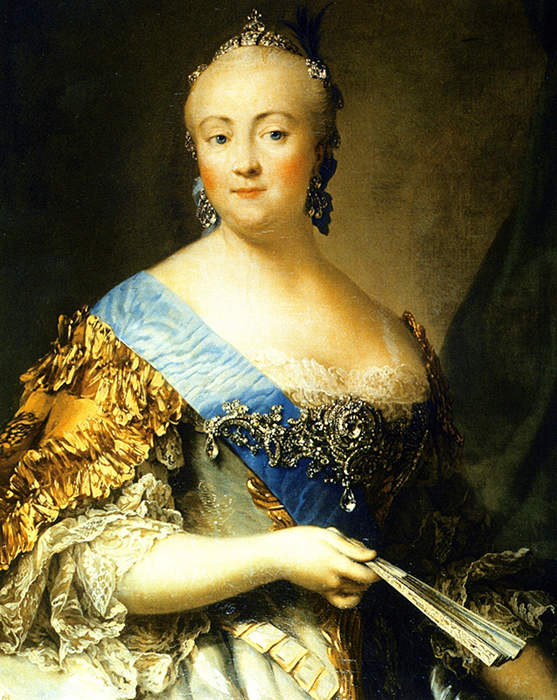
You’ve all heard of Elizabeth I “The Virgin Queen” who remained unmarried and allegedly chaste, ruling alone as one of her country’s greatest monarchs without a man by her side. There was however another Elizabeth of note and this one has just an interesting love story as the first. Elizabeth Petrovna was born in 1709 the fifth of her parent’s twelve children, although only Elizabeth and her sister Anna survived to adulthood. Interestingly her parents had a pretty unique love story; her mother Catherine was a peasant originally named Marta whilst her father Peter was an Emperor. The two fell in love and Catherine was his mistress for a few years before he made her his wife. After his death, she ruled as Empress Regnant in her own right. Elizabeth was sixteen when her father died and eighteen when her mother died. After her mother’s death, the throne in theory should have gone to either Elizabeth or her sister Anna however the complicated nature of Russian politics in the 1720’s led to Elizabeth’s nephew Peter, the son of her much-older (and long deceased) half brother also named Peter gaining the throne. This was in part due to the fact that her half brother was the son of a Russian noblewoman whereas Elizabeth’s own mother was a former maid. In the early half of her nephew’s reign, she was treated well and with respect; Prince Alexander Menshikov her father’s best-friend/her mother’s former lover continued to be influential and it’s possible he protected her. She was also beautiful, charming, vivacious and intelligent and even Peter was smitten with her. There is some evidence to suggest she had significant influence over him; she was allegedly the one that convinced him not to marry Ekaterina Alekseyevna Dolgorukova who she personally disliked; she also wished to keep the girl’s relatives away from any significant political power. In the second half of his reign however her influence waned and Menshikov was exiled, leading to her own banishment from court. When her nephew died after just a few years on the throne, she was once again cheated out of the throne, this time in favour of her cousin Anna. The two young women were not friendly towards each other and Elizabeth kept her distance; behind closed doors however she was preparing to take the throne, gaining supporters both foreign and domestic (it’s believed both Sweden and France backed her to be Empress). As the daughter of Peter the Great she was awarded a certain degree of loyalty amongst the guard regiments and she made sure to maintain that loyalty, holding special events for the soldiers and acting as godmother to their children. Whilst her political career was progressing, her personal life was not. As a teenager she’d been engaged to Charles Augustus of Holstein-Gottorp however he had died just weeks before the ceremony leaving her by all accounts devastated. The fact her mother had died just two weeks previously was particularly crushing. No-proposals had come forth in the reign of her nephew and her marital prospects only decreased upon Anna’s accession to the throne. After all, everyone knew that Anna and Elizabeth were rivals, both politically and personally; I mean there’s one cringe-inducing story where Anna allegedly asked the Chinese ambassador who the most beautiful woman in Russia was, expecting that he would flatter her, but instead he pointed to Elizabeth. This open rivalry meant that no Russian nobleman nor foreign prince would propose marriage to Elizabeth as not to infuriate Anna who as ruling Empress had absolute power, nor could Elizabeth marry a commoner as it would deprive her of her royal status, property rights and claim to the throne. She was basically stuck in a rut and so decided if she could not have a husband, she’d have a plethora of lovers instead. She was said to be quite infatuated with one lover Alexis Shubin a sergeant in the Semyonovsky Regiment however upon discovering the affair, the ever delightful Anna had his tongue removed and then exiled him to Siberia. Clearly Elizabeth living a long, miserable, solitary existence was Anna’s goal. Elizabeth however had other ideas and in 1732 she met this guy above. Alexei Razumovsky had been born in 1709 in Lemeshi, a farm near Chernihiv in what is now Northern Ukraine; his father Gregory Rozum was a Ukrainian born Cossack. In his youth he was a shepherd and given a basic education, being taught to read and write by a rural sexton. In 1731, Colonel Vyshnevsky, a high ranking courtier, passed through the village on his way back to the Russian capital from a mission to Hungary, and was evidently impressed by Alexei’s talent. He invited him to Saint Petersburg where he joined the choir of the Russian palace chapel. Upon meeting Elizabeth was instantly smitten with the talented musician who was tall, handsome and possessed a beautiful singing voice and the two became lovers, by all accounts, rather quickly upon meeting. Unlike Shubin, Razumovsky managed to escape Anna’s wrath, suggesting she remained unaware of the relationship which would go on to last thirty years. Razumovsky was made manager of one of Elizabeth’s palaces which kept him close to her, at least close enough as not to draw any suspicion. Upon Anna’s death her will named her great-nephew Ivan VI (and Elizabeth’s first cousin twice removed) the new Emperor with his mother Anna Leopoldovna as regent despite the fact that a) he was a literal infant and b) he claimed the throne as the great-grandson of Ivan V through a female line whilst Elizabeth was the literal daughter of Peter the Great. Her claim was infinitely greater than his, a fact that even Ivan’s mother acknowledged. The regime led by Ivan’s mother was a disaster from the get go and within fourteen months of his accession, Elizabeth had garnered the support she needed to stage a coup. She rallied the Preobrazhensky regiment and marched with them to the palace where the young infant Emperor, his parents and their closest advisors were all arrested. Miraculously no blood was shed in the coup that made her Empress and that night she made a vow that for as long as she ruled she would not sign a single death warrant, a vow that she to the surprise of just about everyone kept. Alexei was by her side the night of the coup and played a key role in securing her the throne. He would never end up leaving her side. Within days of the coup he was appointed chamberlain. The morning of her coronation he was promoted further and within the first two years of her reign he was granted various orders and honours including the Order of Alexander Nevsky and the Order of St Andrew (the highest Russian order of chivalry). He was also granted multiple estates on the outskirts of Saint Petersburg and Moscow. Elizabeth was never subtle about their relationship and she never bothered to hide the devotion between the two; the Holy Roman Emperor Charles VII granted him an honorary title and diplomats who visited the country were advised to seek his favour. He however differs from the majority of the other guys on the list because other than his involvement in the coup that made her Empress, he made a concerted effort to stay out of politics despite the various military advancements she gave him (he became field marshal in 1756). He was noted to be close to Alexey Bestuzhev-Ryumin, Elizabeth’s chancellor and usually supported him over Elizabeth’s other advisors but he was always careful not to overstep and seems to have been pretty happy just being Elizabeth’s partner. In the 21 years she ruled, he had an exclusive place at court, his apartments were connected to hers, he had complete access to her at all times, he travelled with her and she grew close with his family, naming his brother the President of the Russian Academy of Sciences. She’s also recorded as visiting his family’s native village. Their devotion was surprising considering the fact that Elizabeth like her English counterpart had no children of her own. The thing is Elizabeth didn’t necessarily need children. She had a nephew Peter (there’s so many Peter’s in this story it’s ludicrous) who was the son of her sister Anna who had died just a year after the death of their mother. Prior to their deaths however Elizabeth, Anna and their parents had demonstrated exceptional foresight by making sure that Anna’s marriage contract allowed any children from her marriage to be included as possible heirs to the throne. This meant that upon becoming Empress, Elizabeth named her nephew her heir and had him brought from Germany so she could raise him in Russia. When he was older she arranged for him to marry Sophie Frederike of Anhalt-Zerbst later known to history as Catherine the Great, hoping that those two would be able to further add to the dynasty. This meant that Elizabeth didn’t need a heir and thus a political marriage was worthless. That’s not to say she never married though. They were rumours throughout her reign that Elizabeth and Alexei had secretly wed. We have no idea when such a marriage may have taken place (it could have taken place at any point after she became Empress) but in the aftermath of her death Alexei was asked to destroy all documents relating to their relationship including according to rumour, the marriage certificate. I tend to be of the belief that if she did marry him, it probably took place in the later half of her reign, most likely after her nephew had married and started a family of his own, thus securing the dynasty’s future. Another thing that people often point to as evidence of a possible marriage is that a number of years after Elizabeth’s death, Catherine the Great (known back then as Catherine II) offered to grant him the title of Prince with the rank of Highness, the sort of title one might expect for the widower of an Empress. He refused and retired quietly from court, dying nine years after his beloved in the palace she’d gifted to him. Their relationship would be a topic of controversy for years after their deaths especially in the 1770’s when a number of young women came forward as pretenders to the throne, claiming to be their secret daughter and thus the rightful Empress. What’s interesting is that even if any of these women, were their daughter she wouldn’t necessarily be the rightful Empress; illegitimate children could not inherit. Their claims to the throne hinged on the belief that Elizabeth and Alexei had 100% been married. I personally don’t think Elizabeth and Alexei had any children, secret or otherwise. Based on the ages of the pretenders they would have been born during Elizabeth’s reign. There’s absolutely no way an Empress spends nine months pregnant and then gives birth without anyone noticing. Not only that but if they were indeed married, why would they hide it? Even if they weren’t married, they could have married upon discovering the pregnancy and thus guaranteeing their child’s legitimacy. The secret daughter thing just doesn’t make any sense, a fact that Catherine II agreed with. The only thing I find slightly odd is that one of those pretenders was buried upon her death in the Romanov family crypt which seems like a weird thing to do if she wasn’t actually a member of the family. Regardless, the thing I love most about Elizabeth and Razumovsky is how completely ride or die he was for her with absolutely no ambition of his own and no intention of trying to share in her power. He was completely happy to play second fiddle to her, which let’s be honest doesn’t always happen, even nowadays in 2022 so for Alexei to be this relaxed in the 1700’s, puts him firmly in the camp of #HusbandGoals. He just really loved her and she really loved him and their relationship seems so easy in comparison to most royal marriages which always seems to come with 1000 complications.
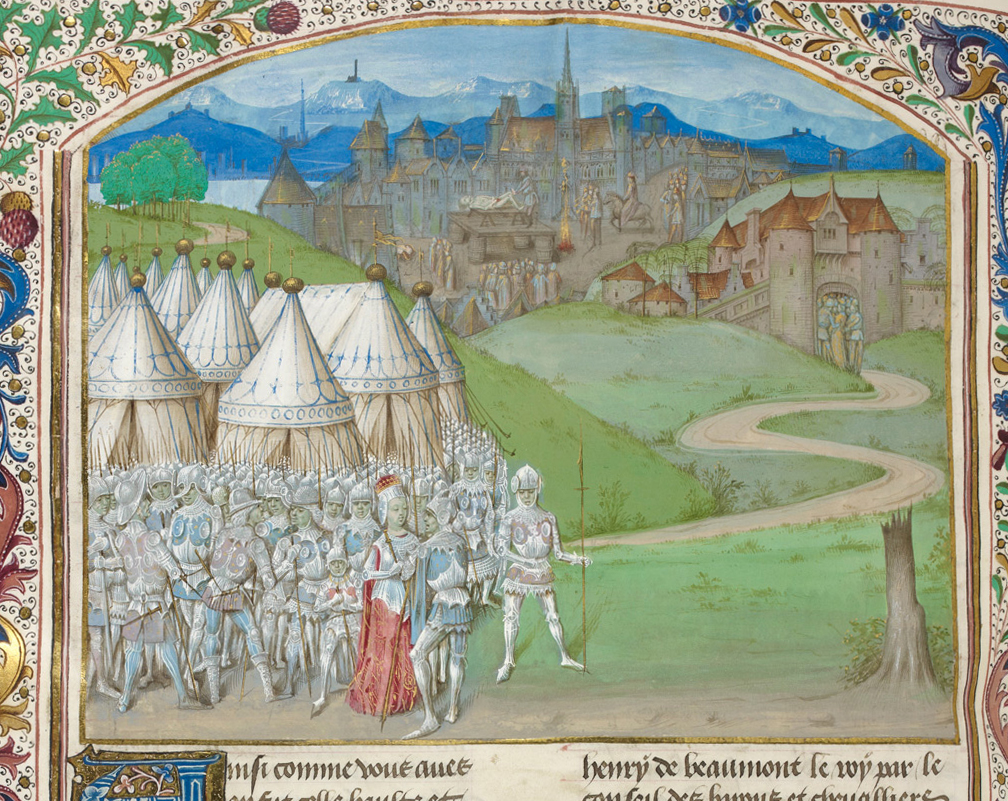
History, as we’ve discussed many times before, is not particularly kind to women that act in a way, the patriarchy deems as being distinctly un-womanly. Overthrowing one’s probably-homosexual husband & crowning your underage son, is the sort of thing the patriarchy tends to frown upon, hence why Isabella of France is often known as the She-Wolf of France. Now I will no hear slander of Isabella. I absolutely adore her and will defend her to all; her taste in men however I cannot defend because this fella here – Roger Mortimer the Earl of March was well to put it politely a bit of a douche. Isabella however I do think did actually love him. Poor girl. Now Isabella was the daughter of Philip IV King of France and Joan I Queen Regnant of Navarre & Countess Suo Jure of Champagne; her childhood was an interesting one, not only was her mama AMAZING (in 1297, Joan raised an army and then lead them against Henry III Count of Bar when tried to invade Champagne) but her parents despite having a politically arranged marriage, were very much in love and Philip was pretty much emotionally dependant on his wife. He also doted on little Isabella who was their only daughter (they had three sons all of whom later became King of France). Her mother died in childbirth when she was 10 and three years later she was married to Edward II King of England. She was around 13 whilst he was 24. Records remain that demonstrate that when Isabella moved to England she did not pack light; her wardrobe included gowns of silk, velvet & taffeta, 72 headpieces and various jewels and crowns. A little fashion icon in the making. She was also described by Geoffrey of Paris as “the beauty of beauties… in the kingdom if not in all Europe” whilst her new husband gave her the nickname “Isabella the Fair”; others noted her charm (she was said to have a particular talent for conniving people to follow her course of action) and unusually for the period, her peers commented on how extremely intelligent she was. Contemporaries particularly chroniclers were often overly effusive in their praise of monarchs in order to gain favour however the number of people that commented on Isabella’s intelligent and beauty is so significant that it’s likely they weren’t lying. Edward clearly agreed with their assessment and despite his well documented idiocy I’m inclined to believe him. Edward was well……Edward was an interesting character. Extremely handsome, tall, athletic and charming, he was wildly popular at the beginning of his reign. His popularity however deteriorated quickly. Not only did he have little interest in activities that were seen as traditionally kingly (i.e jousting, hunting & warfare) instead preferring things such as music and poetry (which were seen as being more feminine) but he was also notoriously argumentative, getting into a seemingly never ending stream of bitter arguments with his nobles (evidently he had learnt nothing from great-grandpa John). Then there was the small matter of his sexuality; Edward was almost certainly gay developing relationships with a number of men the most prominent of which were Piers Gaveston & Hugh Despenser. I said almost certainly because he and Isabella managed to have four children within nine years of marriage so I suppose there’s a chance he was also attracted to women (he had to sleep with Isabella for the purpose of heirs). Gaveston was Edward’s first favourite and Isabella almost immediately upon arriving in England realised he was a problem. I mean Edward chose to sit with Gaveston at his and Isabella’s wedding and refused to grant her, her own household. Her uncles who were present at the wedding were absolutely seething and Isabella later complained to her father that Edward visited Gaveston’s bed more than hers, leading to her father furiously intervening. At the outset of their marriage, Isabella loathed Gaveston and she was rumoured to have reached out to her father, the pope and various cardinals in England, France & Rome to have him exiled. Whilst these marriage shenanigans were going on, the nobility of England were beginning to oppose Edward, led by Edward’s relative Thomas of Lancaster. It’s believed Isabella started acting as an intermediary between the barons and her father who was covertly funding the opposition to Edward. Eventually Edward realised he needed to exile Gaveston and sent him to Ireland. With Gaveston absent, Edward and Isabella seem to have somewhat developed a relatively good relationship and he was much less of a douche to her granting the honours owed to her as Queen, honours he had previously given to Gaveston. In return, Philip IV stopped funding the rebels. Gaveston then returned to Ireland and at some point between 1390 to 1311 the three of them seemed to develop a weird kind of menage a trois. Eventually Lancaster came to consider Isabella and Gaveston allies. Remember when I mentioned Isabella’s intelligence? Well that became extremely helpful in the midst of the political turmoil; she started building up her own faction at court, gaining allies such as the Beaumont family who were known to be fierce opponents of Lancaster. Everything fell to pieces a bit in 1311 when the barons rebelled against Edward; Isabella chose to support her husband and sent quite fuming letters to her uncles demanding their help. Edward made a bit of cock up when he led a military campaign against the rebels; he had 0 military skills whilst he also forced Isabella to remain at Tynemouth Priory instead of fighting alongside him. The campaign was a disaster and Gaveston was caught and executed. I can’t imagine Isabella was particularly devastated. Enter Hugh Despenser, who was frankly an even bigger problem than Gaveston. See? The grass is not always greener!! The Despenser fam were opponents of the Lancaster’s and their allies in the Welsh Marches. One of the Welsh Marcher families that were allies of the Lancaster’s and opposed Edward was none other than the Mortimers. Enter this guy Roger Mortimer. Now things were already pretty disastrous but Despenser and Mortimer did not help matters. What followed was disaster after disaster – Edward was defeated in Scotland, the Tour de Nesle incident took place when Isabella visited her father in Paris, there was a Great Famine between 1315-1317 and a royal pretender popped up to cause chaos. In the midst of this Isabella took an increased role in government leading to Sir James Douglas the Scottish general to try to capture Isabella personally. She only just escaped. Then there was Despenser; he became Edward’s new beau and despite Isabella managing to find common ground with Gaveston when he was alive, she couldn’t with Despenser. Eventually the Lancaster alliance against Edward culminated in them asking Isabella to intervene and prevent civil war; she begged Edward to exile the Despensers. He did for about 10 minutes until everything once again kicked off; an incident at Leeds Castle between Isabella’s guards and the garrison led to the beginning of the Despenser War – Isabella managed to get hold of the Great Seal and assumed control of the Chancery but Edward ordered the return of the Despensers. Over the next four years Edward and Despenser ruled England catastrophically and the relationship between Isabella, her royal husband and his lover deteriorated to the point that Isabella and Edward basically separated in 1322. In 1324 things go so bad between Edward and Isabella that he confiscated all of her lands, took over the running of her household, arrested & imprisoned the French staff who were loyal to her and in a move Edward would come to regret he removed her youngest children from her (her eldest son remained with her) and placed them in the custody of the Despensers!!! The audacity is truly mind-boggling. Understandably Isabella had reached her limit. She returned to France in 1325 to negotiate with her brother; whilst in Paris the nobles opposed to Edward (many of whom had fled to France) rallied around her. One of those nobles was the aforementioned Roger Mortimer. Now there are suggestions that they’d met before – he was imprisoned by her husband in 1322 but had escaped a year later and Victorian historians pushed the theory that she had helped him. There’s no evidence of that and it’s unlikely they met before Paris. Now Mortimer was a married man with 12 children whilst Isabella was technically a married woman, married to a King no less with four children. A relationship between the two was a sin with a capital S. They were introduced, we believe, by Isabella’s cousin Joan the Countess of Hainaut who suggested Isabella’s son marry her daughter Philippa. When Isabella travelled to Hainaut in the summer of 1326 to arrange said marriage, Mortimer accompanied her. We believe the two became lovers at some point in 1325; Geoffrey le Baker’s Vita et Mors Edwardi Secundi says that in France in 1325/26, it was well known that Isabella was “in the illicit embraces of Mortimer” whilst Adam Murimuth, a royal clerk and chronicler who knew Queen Isabella and Roger Mortimer very well in the latter 1320’s, states that while they were in France in 1325/26, Isabella and Roger had an “excessive familiarity”. Now there are some chroniclers who suggest it was a purely political relationship and he was merely her advisor/confidante; chroniclers of the period are definitely reticent to full on say “they’re having sex” which isn’t shocking. She was still the Queen of England, wife of the King of England, sister of the King of France and then mother of the King of England. Chroniclers may have been a bit cautious in writing about her without solid proof. I happen to disagree with the assertion that they were not lovers. I think they probably were. But were they in love? I have no idea. I’m not convinced it was a great love story like some historians sometime make out but I’d love to one day be proven wrong. There’s no doubt that they were incredibly close and their close association endured. Now in 1325-1326 whilst they were maybe or maybe not having an affair, Isabella also began gathering allies and building an army with the sole intention of sailing to England and seizing power. Mortimer was one of the pre-eminent lords that supported her in this endeavour and when she landed in England in September 1326, he was by her side. Amazingly when Isabella arrived in England, she was wearing widows weeds despite her husband being very much alive. She then joined up with Henry of Lancaster, the Duke of Norfolk and her uncle, all of whom chose to back her. This was genius because it meant that all of Edward’s opponents were now in one single coalition with Isabella at the helm. Edward fled London although Despenser managed to hold Bristol where he was keeping Isabella’s daughters. Bristol however also eventually fell and not only did she get her daughters back but she made life for Edward and Despenser an absolute nightmare. By mid November her husband and his lover were arrested and Isabella was in charge; what followed was a whole lot of death. Edmund Fitzalan one of her husband’s supporters was executed on Isabella’s orders, Hugh Despenser The Elder (the father of her husband’s lover) was brutally hacked to pieces and then fed to dogs by his Lancastrian enemies (Isabella we believe did try to protect him), Simon of Reading was hung for insulting Isabella and her husbands lover Hugh Despenser the Younger was pulled from his horse and stripped; biblical verses against corruption and arrogance were allegedly written across his body and then he was presented to Isabella and Mortimer. His death was honestly gruesome – he was hung, castrated and then drawn and quartered. With all her main enemies out the way, Isabella advised caution in regards to lesser supporters of Edward; some were merely removed from their positions rather than physically harmed. All that was left to figure out was, what the hell to do with her husband who was under house arrest. In January 1327 her son was confirmed as Edward III by parliament with Isabella named as his regent. There were however still people that believed Edward II was the rightful king, a fact that Isabella was aware of and she by all accounts was very concerned about the possibility of his remaining supporters staging a counter-coup and putting him back on the throne. The fate of Edward II is a super controversial historical topic. No ones all that sure what exactly happened. All we know is he died mid September at Berkeley Castle and was buried at Gloucester Cathedral (although his heart was given to Isabella). Who ordered his death we have no idea. Isabella and Mortimer are usually blamed but there’s very little evidence to actually back up that theory. Obviously they benefitted the most from his demise but I’d like to emphasise that Edward II was not a popular man; there was a quite significant list of people who wanted him dead. I’d also like to point out the story of Edward being killed with a red hot poker being forced up his behind also has no contemporary sources to back it up. I also refuse to believe the rumours that Edward somehow escaped. It’s pretty ludicrous in my opinion. I tend to believe that Edward died in Berkeley in September 1327. Was he assassinated, possibly. By Isabella. Also possible but not a foregone conclusion. It however is also possible that conditions inside Berkeley Castle were not great and he died due to those. In the aftermath of Edward’s death, Isabella and Mortimer began ruling together; they did so until 1330. In those three years Mortimer became increasingly unpopular and their alliance with the Lancastrians began to fall apart. Isabella however stuck by Mortimer which suggests a certain degree of loyalty; she very easily could have thrown him under the bus in order to keep the Lancastrians and her increasingly-unhappy son on her side. She however did not which I think adds to the theory that Isabella and Mortimer seemed to greatly care for one another. By the summer of 1330, Isabella and Mortimer’s government was pretty hated (Mortimer was far more disliked than Isabella) and her son Edward III had had enough of Mortimer’s level of power. There’s also a suggestion that Isabella gave birth in 1329; a baby with Mortimer would have been a big problem for her son, although it would also have been very politically inconvenient for her. I’m not convinced on the baby theory, if I’m honest. In the fall of 1330 the young Edward III staged a coup to remove Mortimer from power. After his arrest Isabella allegedly begged her son to let Mortimer live. A month later, parliament was convened and Mortimer was put on trial. Isabella managed to remain somewhat unscathed; she was portrayed as an innocent bystander, manipulated by the scheming, lying Mortimer. There was no mention of sexual relationship between the two; this isn’t surprising, after all confirmation of an affair between the two would have blackened Isabella’s reputation more than Mortimer’s. The trial did not go well for Mortimer and he was sentenced to death. Isabella intervened with her son who showed leniency and ordered Mortimer be hung but not drawn or quartered. Isabella was held under house arrest for a while however her and her son evidently reconciled because she did later demonstrate some involvement in matters of state although never to the level that she and Mortimer once had. Some historians have suggested she suffered a nervous breakdown after Mortimer’s death although I don’t think there’s enough evidence of that. Historians have also suggested that she never forgave her son for executing Mortimer. It’s possible she privately nursed a bit of a grudge but it’s hard to know for certain; she was friendly with some of her son’s most important supporters including Henry Grosmont Duke of Lancaster and was frequently visited by her son and his own children. She was said to be a particularly doting grandmother. When she died in 1358 she was interestingly buried in the mantle she’d worn at her wedding to her late husband decades earlier and his heart was interred with her body. Isabella’s such a fascinating figure to me and her relationships with both Edward and Mortimer are SO interesting. I tend to think she did genuinely care for both. Whether she was ever actually in love with either of them, I don’t think we’ll ever know for sure.


Everyone knows the legend of Elizabeth I, Gloriana, the Virgin Queen, that ruled alone without a man by her side. Except she did have a man by her side. Meet Robert Dudley. The pair first met as children although when exactly is unclear. It’s also unclear how close they were as children but a report from the French diplomat in 1566 does suggest they were fairly intimate by the time she was eight and he nine. In the report Jacob de Vulcob discloses that he had, had a conversation with Dudley in which the latter “told me his true opinion was that [Elizabeth] would never marry. To convince me he added that he considered that he knew her Majesty as well as or better than anyone else of her close acquaintance, for they had first become friends before she was eight years old. Both then and later (when she was old enough to marry) she said she never wished to do so”. That suggests they were pretty close from a young age. Robert was the sixth son of John Dudley who became Earl of Warwick in 1547 and the Duke of Northumberland in 1551 and his wife Jane Dudley (née Guildford). The Dudley’s were a particularly large family; Robert was one of 13. They were also a particularly happy loving family which contrasts quite significantly with Elizabeth’s tyrant-father, executed-mother & step-mother, sexually-abusive step-father and dysfunctional sibling bond familial situation. Robert and his siblings received an exemplary education and they were tutored by the likes of John Dee and Roger Ascham who also served as Elizabeth’s tutor. He taught them Greek and Latin and noted the intelligence of both teenagers. Elizabeth and Robert remained close throughout the infinitely complex years that followed, including throughout the reigns of her brother Edward and sister Mary (Robert served as a companion to Edward). Following Edward’s death in 1553, Robert’s father (who had for some time been de-facto running the country due to the Edward’s young age and the execution of the former Lord Protector the Duke of Somerset) attempted to stop the accession of Mary (despite her being the rightful heir and all that) due to her Catholicism. He instead crowned Elizabeth and Mary’s cousin Lady Jane Grey (a Protestant) who was his daughter in law. In a show of sisterly solidarity Elizabeth backed Mary whilst Robert’s father ended up being executed for his actions. During Mary’s reign both Elizabeth and Robert were imprisoned for suspected treason, coincidentally at the same time and this uniquely horrific experience would bond them forever. He was quite literally by her side when she became Queen in 1558 and she quickly appointed him Master of Horse. From this moment on, he barely left her side. For the first few years of her reign, it was widely rumoured both domestically and internationally that the unmarried Elizabeth’s true desire and intention was to marry Dudley despite the fact he already had a wife (he’d married Amy Robsart as a teenager apparently out of lust). Their closeness was noted upon by just about everyone and neither were particularly subtle with their affection. The giant problem with Elizabeth and Dudley was that even if they weren’t lovers, they certainly acted like it, causing all sorts of rumours that just never really went away. I mean the woman herself wrote of Robert, “I love him and will love and regard all my life long, for he deserves it” which is frankly as subtle as a brick to the face. I personally believe she did remain a virgin in keeping with the legend that she built around herself. However IF I’m wrong (and I hope I am) and she was indeed intimate with a man, there’s almost no doubt in my mind that that man was Robert. I mean they had connecting bedrooms, there’s ambassador reports from the period that attest to the fact he would just walk into her room whenever he fancied, sometimes first thing in the morning when she was in a state of undress and he was clearly the person she trusted the most. There was certainly a huge amount of physical and emotional intimacy there which is unsurprising considering their long history. Without getting too into the details, I think there’s a lot two consenting adults can do that doesn’t include full-blown vaginal sex and I would absolutely not be shocked if they kind of did all that (also I think Elizabeth would have been too paranoid about potentially getting pregnant to have gone all the way with Robert, even if she really wanted too). I tend to think there was a degree of emotional dependance between them too; both had suffered pretty severe trauma in their youth and lost their closest family members; the fact both had managed to survive was a miracle in itself. That sort of shared trauma and set of experiences probably bonds two people in a way that few things do. Certainly the two could never really go cold turkey from one another; they bickered and then reconciled and then bickered again and then reconciled again and it was little bit like an addiction. Despite the volatility of their relationship, he was, even when they were at their worst, completely devoted to her and she to him, although as Queen, she always had to put England first. The rumours of a possible marriage came to a screeching halt when in 1560 his wife Amy tragically and suddenly died in a mysterious death that led to rumours that either Elizabeth and Robert had murdered her so they could be together or that Robert had individually orchestrated her death so he could marry Elizabeth. Both rumours were politically disastrous for Elizabeth domestically and internationally and it’s widely believed Amy’s death put an end to any chance of Robert and Elizabeth marrying. I’ll be honest, I don’t personally think marriage was ever a possibility for these two; Elizabeth was nothing if not a master politician and she knew that if she did wed, it would have to be for politics. Robert offered no international alliance. He was also ambitious to a fault, a man and thus a threat to her sovereignty and power as a female monarch, didn’t have a particularly sterling reputation amongst the people (in part due to his family history) and then there was the fact that marriage to an Englishman would have caused considerable jealously and factionalism which risked civil war. Despite all that Robert clearly hoped he still had somewhat of a chance. The death of his wife and the questionable circumstances surrounding that clusterfuck however was basically the nail in the coffin for that dream. As a side note I personally think his wife’s death was a tragic accident that was mysterious and unexpected enough for Dudley’s critics to concoct wild conspiracy theories around it. I don’t think any of the rumours surrounding her death had any validity whatsoever. Although marriage was completely off the table, the two didn’t exactly change their behaviour and after Amy’s death, he spent almost twenty years solely and constantly by Elizabeth’s side. Their relationship was during this time as intimate, volatile and devoted as ever, and despite the assertion that marriage between the two was off the table, rumours about the nature of the pair’s relationship persisted. One of the bigger fall outs in their relationship came in 1578 when he married Lettice Knollys. Lettice in a slightly-odd turn of events was not only a cousin of Elizabeth’s but was also basically her decade-younger doppelgänger. Awkwardly everyone knew of the nuptials before Elizabeth but no one could bring themselves to tell her, fearing her reaction. When she did eventually find out, she was unsurprisingly to those who had avoided telling her in the first place, completely and utterly livid and she banished both of them from court. The thing is I understand both Elizabeth and Robert’s perspectives; Elizabeth ADORED her cousin Catherine Carey who was Lettice’s mother and she had been quite generous to Catherine’s family (Lettice included). Lettice marrying Robert knowing a) that Elizabeth loved him but couldn’t have him and b) that Elizabeth had been very generous to her family, was quite the betrayal and so I do understand Elizabeth’s rage. Having said that, Robert was an ambitious member of the aristocracy who throughout the course of his and Elizabeth’s long relationship had been given a bunch of fancy titles, land and wealth and he understandably wanted an heir to pass them too. He couldn’t do that without getting married, a fact you’d think Elizabeth would be sensitive to. So I understand Robert’s perspective. Not telling her in advance was a bit shady but then Elizabeth was a bit of a drama queen so I can imagine her being difficult and not giving Robert and Lettice permission to wed. After that, their relationship was distant for a while but eventually as always they reconciled and their relationship continued as before. Lettice however was never allowed back at court again. The last decade of their relationship was less intense than before, a fact I think stems from age. Neither were as hot-headed as they had perhaps been in their youth and I think with age comes a certain degree of perspective and wisdom. When he died in 1588 Elizabeth was absolutely heartbroken and I think Sarah Gristwood wrote it well when she wrote, “he had been her councillor, her unofficial consort and commander of her army. He had loved her, advised her, understood her, sat by her bed in sickness and represented her on state occasions; and she had raised him, the son and grandson of convicted traitors, to be the greatest man in the land”. In the aftermath of his death, she apparently locked herself in her room for two days and refused to allow anyone in culminating in her advisors being forced to knock down the door. When she herself died in 1603, his final letter to her was found by her bedside which is just pretty damn sad. I love these two because on the one hand I think it’s so tragic they never got the chance to have their happy ending and be together the way they wanted, however on the other hand I think they would have driven each other absolutely insane had they married. I don’t think Elizabeth necessarily found trusting people easy (with her history that’s not a surprise) and yet it’s clear she trusted him implicitly even if he was at times a bit of a conniving shit. A conniving shit that loved her though. I do think that despite everything, despite the ups and downs and the betrayals and quarrels, they were each other’s great loves. He I think was the defining relationship of her life and in some other universe maybe they could have been together.


Political marriages unfortunately always come with the risk of you finding yourself married to an utter moron. Unfortunately that was exactly the case for Caroline Matilda the daughter of Frederick Prince of Wales and Princess Augusta of Saxe Gotha, and sister of George III. Now she was her parent’s youngest child and was born three months after the sudden and unexpected death of her father; growing up she had very little to do with her grandfather George II and his royal court; there had been some tension between her dad and grandad before her father’s untimely demise and her mama Augusta chose to raise her kids pretty much in seclusion away from the rest of the world. In hindsight isolating her kids so completely probably wouldn’t have won her any mama of the year awards. Caroline was a temperamental child but also an intelligent one. She spoke three languages, was musically gifted and a lover of reading. In 1764 a marriage was arranged between Caroline and the Crown Prince of Denmark later Christian VII. They were first cousins (OF COURSE) and Caroline was actually unaware of the engagement when it took place – her mother Augusta chose not to tell her because she was just 13 which is ewwwwwww. In the middle of negotiations Christian’s father died suddenly and he became king. Now Christian had also been a victim of questionable parenting; his mother had died when he was 3, his step-mother showed him absolutely no affection and his father was an alcoholic prone to debauchery. Christian was thus pretty much deprived of any and all affection and grew up a shy, sensitive and weak willed but intelligent child who suffered from epileptic seizures and in his teenage years began demonstrating some mental instability which concerned just about everyone. After marrying, Christian and Caroline’s marriage was also immediately a disaster. He had very little interest in consummating the marriage and despite being intelligent and charming she was not popular at the strict Danish court. Christian’s dislike of her could be down to any number of things – his mental instabilityand his resentment over being forced into marriage by the royal court who hoped a wife would improve his mental state, are two possible factors. It was also rumoured he was gay however we know for a fact he frequently visited female courtesans (beginning a relationship with one Anna Kartina Bentgagen aka Stovlet Cathrine in 1766) meaning he was at a bare minimum bisexual. Far from improving his mental health, their marriage only made it worse and he demonstrated a variety of symptoms including paranoia, self mutilation and hallucinations. As I’ve said 100 times before, I’m not a fan of diagnosing mental illnesses in people from centuries ago but historians & psychologists do tend to suggest he was likely to have suffered from schizophrenia. This is where this guy above Johann Friedrich Struensee enters the picture. He was a physician and philosopher who was an enthusiastic supporter of the Enlightenment and was suggested to the royal court by a number of like-minded Danish aristocrats. Struensee became Christian’s physician in 1768 and accompanied him on an eight month tour of England – during those eight months the King became very fond of Struensee and the Danish court were to put it mildly ECSTATIC at Struensee’s influence over the King; Christian had fewer episodes of embarrassing behaviour after Struensee became his physician. Caroline Matilda was one of the only people initially not a fan of the hot doctor. That was until he managed to bring about a reconciliation between the King and Queen. For a while Christian and Caroline were in a relatively good place and even managed to have a son & heir Frederick. This led to Struensee and Caroline becoming close. She clearly felt he was the only one that didn’t treat her like shit, and he genuinely seemed interested in her likes, dislikes and opinions etc; they also shared an interest in the ideas of the Enlightenment and writers such as Voltaire. Then there was the fact that he had such influence over the King that he was sort of responsible for the King dismissing a number of his advisors, most of whom were pretty hostile to Caroline. As early as 1769 eyebrows were raising at the closeness of Caroline and Struensee leading to her limiting her contact with him for a while. They clearly couldn’t stay away from each other and by the beginning of 1770 Caroline and Struensee had begun a full blown affair. BIG MISTAKE. That summer Caroline’s mother Augusta came for a visit – Struensee barely left Caroline’s side and Augusta was immediately concerned, to the point that months later she sent Caroline’s brother to visit. Both issued warnings to Caroline about her behaviour. She evidently paid them no mind. Not only was Struensee sleeping with the King’s wife but he also kinda took over the King’s country; Christian’s mental health was so terrible and he had such little interest in ruling that he basically gave power to Struensee who ruled as de facto regent from 1770 until 1722. The period he was in charge became known as “The Time of Struensee” and during that time Struensee and Caroline instituted a shit ton of reforms; they abolished torture, censorship of the press, capital punishment for theft and noble privileges, as well as instituting reforms to the military and higher education, banning the slave trade in Danish colonies and re-organising the judicial system to avoid corruption. All sounds good, don’t you think? The Danish aristocracy disagreed and accused Struensee of not respecting Danish and Norwegian customs. Struensee’s abolition of the press censorship came back to bite him on the arse because no censorship meant that anyone could write anything and a shit ton of anti-Struensee propaganda hit the press. This resulted in the public, particularly the middle class who had once favoured him, turning against Struensee. Whilst this was going on, he continued sleeping with the Queen. This was apparently not an open secret; she openly demonstrated her new happiness and the two were noted to have blindingly obvious during masquerade balls thrown by her close friend Caroline von Schimmelmann. Not only that but being in love clearly worked a charm on Caroline who grew in confidence, abolishing the rules of the court and gaining a new group of friends outside the nobility which was seen as a scandal. In July 1771 Caroline gave birth to a daughter Louise Augusta. Despite the fact the King and Queen very rarely shared a bed, if ever, the King did not question the paternity of the girl and accepted her as his own. Everyone else however knew the King was almost certainly not the dad. The fact the girl apparently resembled Struensee didn’t help the illicit lovers. Rumours then began spreading that they wanted to imprison the King and declare Caroline regent; this is highly unlikely. Christian wasn’t a problem, if anything he actually protected them and their relationship. Now allegedly in the fall of 1771, Struensee became very concerned about their safety and the never ending rumours and begged Caroline to either a) run away with him (romantic but stupid) or b) let him leave the country in order to protect them (a smarter idea). Caroline said no. In January 1772, everything fell to pieces when Struensee was removed from power by a coup led by the King’s half brother Frederick and step-mother the Dowager Queen. Struensee and Caroline were both arrested; she was taken to Kronberg Castle with her daughter and one lady in waiting, a woman who happened to hate Caroline and vice versa. The King was put in a gold carriage and driven around Copenhagen with the people rejoicing at his so-called liberation. Struensee was interrogated and tortured in regards to his relationship with Caroline; he initially assumed they would not dare lay a hand on her and so denied the relationship was criminal. Eventually he confessed the relationship; his main political ally Enevold Brandt also admitted to being aware of the two. Oddly the paternity of their daughter wasn’t used against her. Caroline’s staff were also questioned and apparently no one in 1770’s Denmark had any degree of loyalty because the testimony of many of her chamber maids & ladies in waiting completely threw her under the bus. Eventually a committee was sent to interrogate her. She refused to talk and when she did, denied the relationship hoping she’d be able to save his life. Eventually his signed confession was presented to her and she admitted the truth. She later signed a confession of her own, a confession which basically admitted it was all her fault. It’s believed she signed it once again hoping to take the blame from him and thus save his life (she was unlikely to get executed being the sister of a King who was the ruler of the largest empire in the world at that point). She was eventually found guilty and her marriage to Christian VII was dissolved. Weeks later Struensee and Brandt were both executed; Caroline initially wasn’t told about the execution and was only informed later – she however apparently already knew and later recalled that she had intuitively known he was dead. I can’t work out if that’s creepy or cute. What happened to Caroline in the aftermath is depressing. On the orders of her brother, the British government began to negotiate her release and tensions increased to the point that the British allegedly threatened a military intervention; a squadron sent by the British arrived in Copenhagen however no violence took place as George III was informed that the Danish government agreed to guarantee Caroline’s freedom. They also agreed to return her dowry, give her a pension and allow her to retain her title as Queen. George III then suggested that his sister be allowed to live at Celle Castle in Hanover, which he ruled. Heartbreakingly she was forced to give up custody of both of her children – they remained in Copenhagen and she never saw them again. Her life in Celle was quiet although she was allowed visitors; many of her relatives visited her including her older sister Augusta; she was also reunited with her best-friend Countess Louise von Plessen who had been her closest companion in Denmark but had been dismissed by Christian during one of his episodes. She had a small theatre built for her in her new home; she also had an extensive library and became known in Celle for her philanthropy doing significant charity work aimed at helping poor children and orphans. She had very little to do with the Danish court; the only communication she had with the court involved her children. Although disgraced, she was still the mother of the future King. She also still had a handful of supporters, many of whom had been exiled for their support for her. In the months leading up to her death, a scheme emerged with the objective of removing Caroline’s brother in law and step-mother in law from power and naming Caroline the new Regent. She agreed but only with the support of her brother. George III agreed but refused to act until her supporters gained more power at the Danish court. Nathaniel Wraxall acted as an agent exchanging letters between Caroline and her brother; he visited her three times in Celle and also visited George III in London. Before anything could happen however Caroline fell ill with scarlet fever and died suddenly on the 10th May 1775. Tragically she was only 23. She was buried in the crypt of the Stadtkirche St Marien near her paternal great-grandmother Sophia Dorothea of Brunswick Lüneberg who like Caroline in a bizarre twist of fate was also divorced and exiled. Between Struensee’s death and her own, Caroline did not publicly mention him nor is there any record of her making any sort of private comments either. Christian himself does not appear to have mentioned his wife or Struensee that much either although towards the end of his life apparently said “ich hätte germ bride gerettet” (“I would have liked to have saved them both”). Most historians believe he said that in reference to Struensee and Brandt who were both executed, however I’ve also seen it suggested he was referring to Struensee and Caroline. In 1784 Caroline’s son reached adulthood and staged a coup of his own removing the regents – his uncle and step-grandmother who had condemned his mother. He continued as Regent until his father’s death in 1808 before being crowned himself as King. Bizarrely her daughter Louise did not learn from the moral of her mothers story; she was forced to marry a man she did not love who did not love her; to mitigate her misery she took multiple lovers including the court doctor (!!!) leading to questions over the paternity of her own children. She however was never imprisoned for her infidelity. Caroline’s children remained close and when Frederick died without a son & heir, his cousin Christian became King of Denmark – because incest is strong in the traditions of European royals, Christian married Louise’s daughter (and therefore Caroline Matilda’s granddaughter & namesake) Caroline Amalia. I’ll be honest I have no idea of what to make of Caroline Matilda and Johann’s relationship; was it true love? Did he get close to her in order to secure a powerful ally? His motivations are I think more questionable than hers. I think it’s quite clear she was in love with him. I’d like to think they were mutually in love and happy even for such a brief period of time.
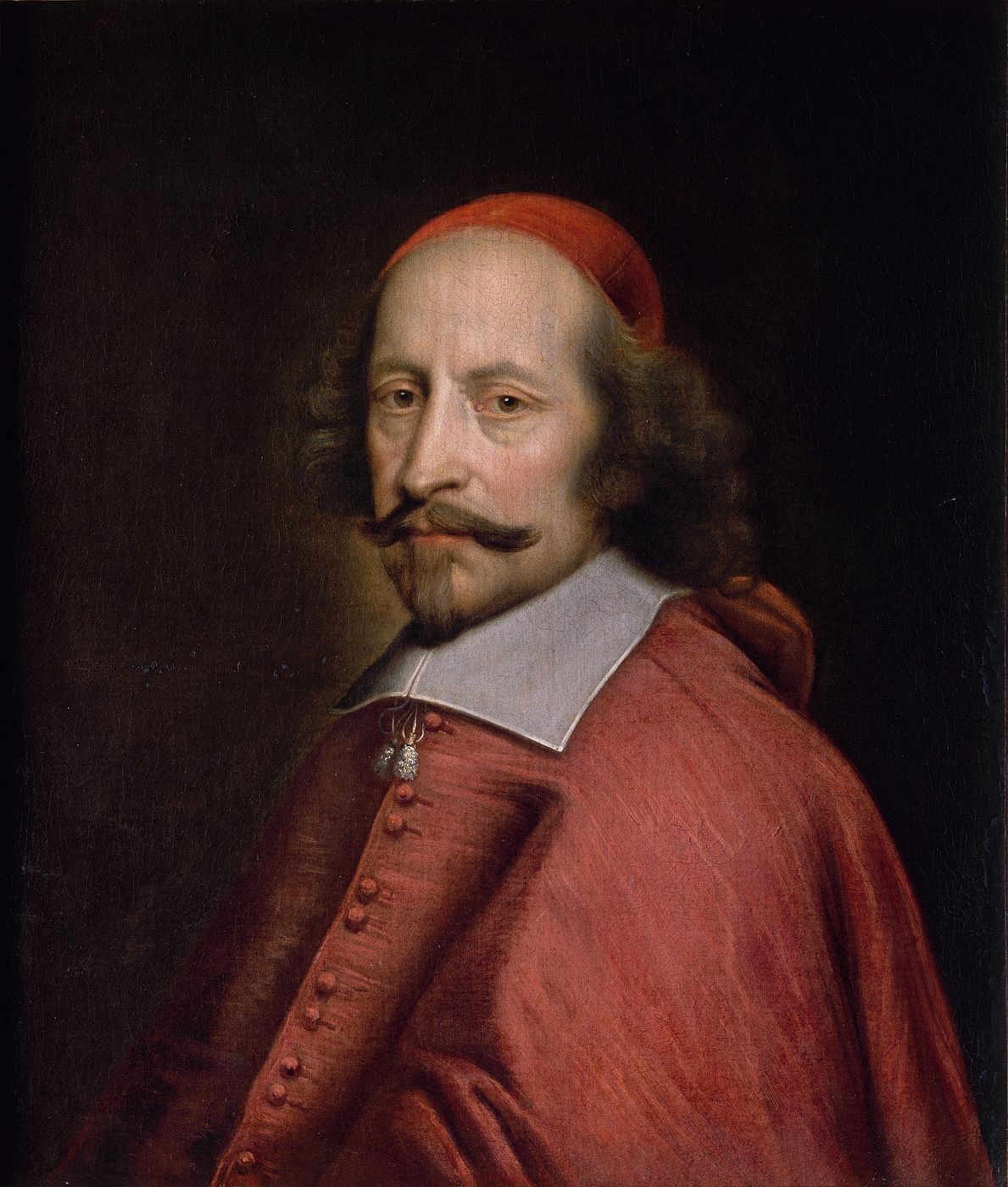

Now all of the above couples were either definitely lovers, probably lovers or in the case of Elizabeth I & Robert Dudley at the very least emotionally dependant and probably in love with one another. These two however are a bit more mysterious. They are of course Anne of Austria Queen Consort & Queen Regent of France and Cardinal Mazarin. Anne of Austria was born an Infanta of Spain as the daughter of Philip III of Spain and Margaret of Austria; in 1615 at the age of 11 she was betrothed to Louis XIII of France; the pair was part of a two part marriage alliance – whilst Anne and Louis married, her brother Philip also married Louis’ sister Elisabeth. Now Anne was a delight; she was charming, vivacious, intelligent, a talented equestrian, very beautiful and flirtatious (none of her flirtations in the early years of her marriage i.e the Duke of Buckingham ever went beyond flirtation) whilst Louis, well Louis was not quite so delightful, a fact that he made abundantly obvious when upon marrying he promptly began completely ignoring his new wife. His mother Marie de Medici (herself not the most likeable of monarchs) put considerable pressure on the couple to consummate the marriage, evidently wanting to dismiss the chance of it being annulled but Louis refused. This was partially down to his complex relationship with his over-bearing mother (Anne basically got caught up in the power struggle between the two) and potentially a result of his rumoured homosexuality; there’s the chance that Louis was gay but unlike other LGBTQ monarchs whose sexuality is a bit clearer, Louis’ is a bit more of a question mark. In 1617 with the assistance of his favourite Charles d’Albert Luynes, Louis staged a coup d’etat to remove his mother and her favourite Concino Concini from power. The plot was successful and Concini was assassinated in April of that year. In the aftermath of the coup Luynes began trying to bring the King and Queen closer recognising that a) the marriage needed to be consummated and b) an heir wasn’t going to happen without consummation. Basically Luynes went full on matchmaker; he sent away her Spanish lady in waitings and replaced them with French ones, advised Anne to start dressing in French styles and organised court events that would inevitably bring them together. We don’t know when exactly the marriage finally was consummated but it certainly was by 1619. It appears that the two became somewhat affectionate to other another to the point that Louis was visibly concerned when she suffered a brief illness. This martial bliss however didn’t last; a succession of miscarriages & stillbirths caused tension especially her stillbirth in March 1622 which was brought on by Anne falling down some stairs whilst playing with her ladies. Louis blamed her as well as Marie de Rohan (Luynes’ wife) who Louis disliked for having too much influence over Anne. In 1624 Cardinal Richelieu was named First Minister of France; Richelieu was not Anne’s number 1 fan nor did she like him and the two would spend the next 20 years loathing each other and trying to diminish the other’s influence. Anne was said to be involved in various plots to remove Richelieu, all of which were unsuccessful. Cardinal Mazarin interestingly enough was a Richelieu protégée. Now Richelieu’s main bug bear with Anne was that she was a Habsburg. He, like many Frenchmen had little love for their Spanish neighbours; Anne’s nationality would be a continuous issue for her especially in the mid 1630’s when France and Spain once again found themselves at war. This put her in a very awkward position, to say the least. She found herself in very hot waters when it was revealed she had been engaging in a secret correspondence with her brother (Louis had banned all communication between them); although she initially refused to confess, she eventually did and in response the Cardinal and Louis purged her household and filled it with loyalists to them. In 1637 the impossible happened; Anne fell pregnant!!! This was despite the fact that Louis and Anne were in a notoriously unhappy marriage; this led to the kind of rumours you might expect, rumours that suggested Louis was not the father. Contemporary sources at the time pointed to one particular night, when Louis planned to travel to Saint Mur but was prevented from doing so by a large storm meaning that he was forced to spend the night with Anne, as the date of conception. Louis evidently didn’t seem to question the paternity and there were huge celebrations at the birth of an heir. Fifteen months later Anne gave birth again to another son fully securing the line of succession. Two children and a secured line of succession did nothing to heal marital tensions and the two were as unhappy as ever. Richelieu died in 1642 followed by Louis a year later. On his deathbed, he decided to be spiteful one last time by trying to deny Anne the regency over their young son. His plan failed (lol) and Anne convinced the Parlement of Paris to declared her regent upon his death. She then shocked everyone by passing the majority of the powers of government to, you guessed it, Cardinal Mazarin. Now Anne and Mazarin met for the first time in 1632; Mazarin was at the time a papal diplomat who had established himself as a guardian of French interests in Rome. Throughout the 1630’s Mazarin was known to send various gifts to the most influential ladies at French court, Anne included. It wasn’t until he moved to Paris full time in 1640 that the two probably got to know each other better. Evidently between 1640 and 1642 they became close, or at least close enough that Anne trusted him to co-rule her son’s kingdom with her. Anne would go on to be regent from 1643 until her son came of age in 1651. During those eight years they were clearly devoted to one another and to her son’s rule. Evidence as to whether they were lovers, however is scarce. Letters between them clearly demonstrate that they were hugely fond of one another as does the fact they actually lived together – upon becoming regent, Anne decided to leave the Louvre and reside at the Palais Royale which amusingly had been Richelieu’s residence. Shortly afterwards Mazarin left his residence and moved in to the Palais Royale with her. They effectively raised her two sons together. This unsurprisingly serves as the basis for the rumours that they were lovers. There are even suggestions that the two secretly married (Mazarin was a lay-man not a full blown priest) although there’s even less evidence of that. When her son took power iii 1651 Mazarin was initially dismissed although allowed to return to some degree of influence two years later. When he died in 1661 he left an ENORMOUS fortune, the beneficiaries of which were his various nieces and nephew, Anne and her sons; her eldest Louis XIV received a set of eighteen diamonds known as the “Mazarins” worth two million livres. I would like think to think Anne and Mazarin were lovers; she had such an awful time with her husband and it’s nice to think she managed to build some degree of happiness. However it’s impossible to know for sure; it’s entirely possible that the relationship between the two was never physical. Despite that it’s hard to argue that they didn’t deeply care for one another.
Well there you go! I hope you enjoyed this post 🙂 I’ll see you very soon with another post!
Thank you
Alexandra x

 The Monstrous Regiment of Women
