I must once again begin a post apologising for my lack of posting! As you might remember from other posts in the last few months I was quite unwell for a while, seriously unwell in fact (not covid related!!!) and even after being discharged from hospital had to go back in for an operation. Ever since I’ve been getting used to a new routine and unfortunately life has just got completely in the way of this blog and posting, although I’ve been trying to stay active on the instagram which you can find here. I’m hoping however that with a new well of inspiration and a slightly more organised life I’ll be able to post more frequently! One perk of being in hospital is I get to read a lot, hence why I’m doing this post. The books in this post are a mix of ones I’ve already read before but wanted to re-read and some new goodies that I wanted to get my hands into!! I hope you enjoy this post and I’ll see you again soon 🙂
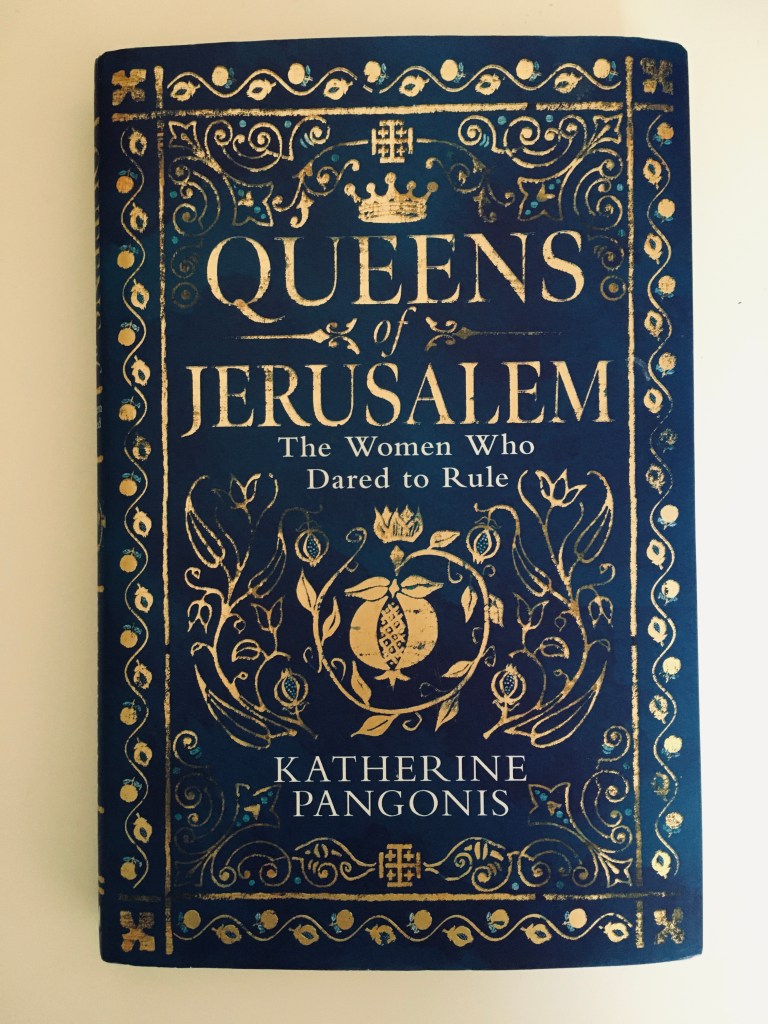
As some of you who have read this blog before will know, one of my all time favourite historical ladies is Melisende of Jerusalem (I did a deep dive into her life here & here). Something I found however when doing my research for those posts was the lack of material on Melisende and the other women that ruled Jerusalem; there’s of course some academic works (although not nearly enough) but there was virtually zero more-accessible works on her despite how incredible she was. Earlier on in the year when I was in hospital I was online and came across this book which I promptly ordered because not only a) is the subject of the book right up my street but b) the cover is particularly beautiful. I was so excited for this to arrive. Now Melisende is not the only woman covered in this book; as the first Queen Regnant she obviously warrants a decent portion of it but her mother Morphia of Melitene, her sister Alice of Jerusalem, her niece Constance of Antioch, her granddaughter Sibylla Queen of Jerusalem, her daughter-in-law Agnes Courteney, her great-niece Maria of Antioch Byzantine Empress and her other daughter in law Theodora Komnene are also featured. Much to my excitement, my number one historical woman of all time Eleanor of Aquitaine aka the Queen of my Heart also makes an appearance owing to her time in Outremer and the fact her uncle was Constance of Antioch’s husband. As I said I was very excited for this book to arrive and I wasn’t disappointed at all. It’s fascinating, well written and well-researched; Pangonis does such a good job of fleshing out the women she’s writing about, exploring beyond the stereotypes and caricatures in which they have been cast in historiography. It also does a pretty decent job of questioning the male-focused narrative of the Crusade-era; this has always been one of my biggest pet peeves. Historiography of the Crusades often fails to mention the plethora of women that played a real role in the Crusades and the politics of the period. This book goes some way to redressing that. As I said, it’s very well written; it’s not too overtly academic so people who perhaps don’t have an academic-background but enjoy history would find this book fascinating. This is actually Pangonis’ debut book and I’m aware that her second book is already in the works so I’m very much looking forward to seeing what she does next!
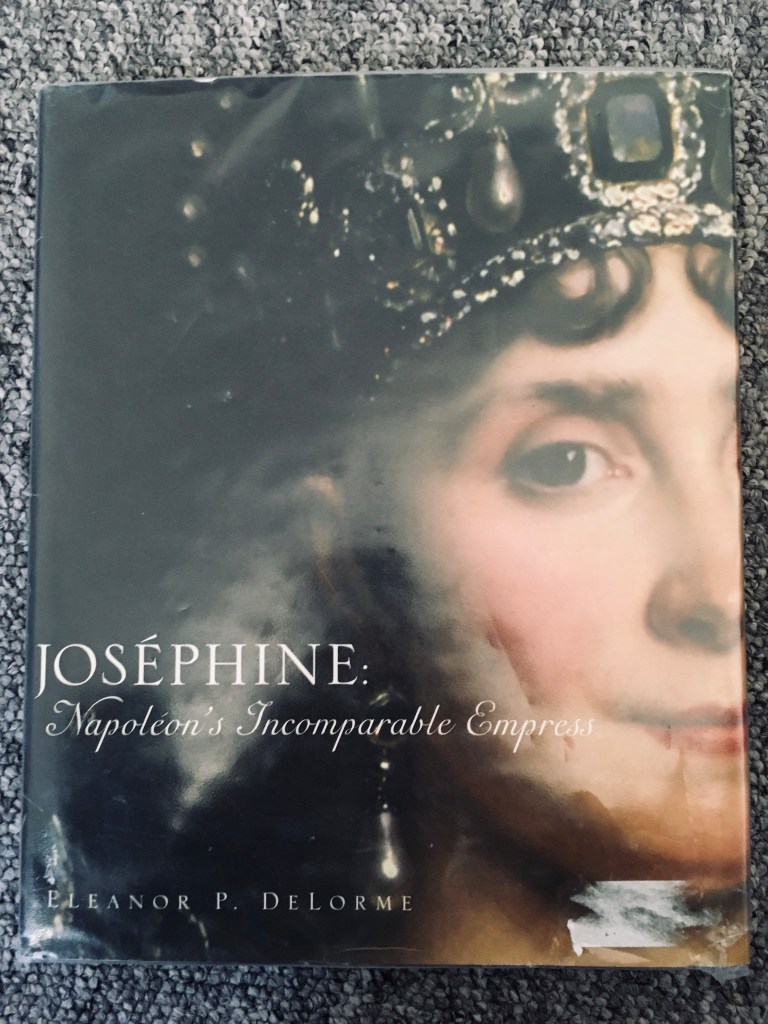
As my best-friends recently noted when visiting my flat and taking a peek at my extensive history-book collection, I have quite a lot of books on Josephine de Beauharnais. Out of all of them, this is probably the most aesthetically pleasing; it’s a really beautiful coffee table-esque book that I find is slightly different to other biographies of Josephine. As I’ve said before, historiography about Josephine is a difficult one; the majority of academia has been written by old upper class white-men who lack nuance particularly when it comes to women and Josephine is one of the greatest victims of this. Women in historic academia are often cast in either the whore or Madonna roles; Josephine is often cast in the former and accused of all sorts of love affairs and sexual scandals, many of which we actually have no factual evidence for beyond rumour and innuendo. DeLorme touches upon this in particular the supposed Hippolyte Charles-affair (as much as it irritates me I understand her referencing it; after all that entire debacle had an undeniable effect on the dynamic between Josephine and Napoleon) but thankfully she doesn’t dedicate huge portions of this book to Josephine’s supposed sins. A decent portion of the book is focused on Josephine’s passion for the sciences in particular botany, her love of interior design and her role in terms of art and culture during the Napoleonic era which is often ignored in favour of the more salacious aspects of her life story. DeLorme’s book does what many biographies of Josephine fail to do; it acknowledges her intelligence and recognises how crucial Josephine was to the empire, Napoleon built. It doesn’t as many books that mention Josephine do and minimise her importance. Napoleon after all considered her incomparable and it’s always been frustrating to me that historians have always portrayed her as being otherwise. This book is well researched, and well written and includes primary sources such as their surviving letters, the memoirs of both of her children and the memoirs of those around them. I do think the book is maybe too detailed at times for some people; whilst I find the book fascinating, I acknowledge some point may find that DeLorme includes unnecessary details. I also think the book is far easier to read if you already some basic knowledge on Josephine and the Napoleonic era. I probably wouldn’t recommend this to someone who has never done any academic reading on the subject. Going back to what I said about this being a particularly aesthetically pleasing book; some of the images are stunning and it’s beautifully presented.
Anyone who knows me well knows that I am a sucker for two things; 1) love letters between my favourite historical couples and 2) aesthetically pleasing books/journals/documents. This book right here edited by Daniel Smith, covers both of those things. As it’s a collection of love letters covering a number of centuries and countries, I obviously can’t comment on how it’s written; in regards to how well it’s researched I have to say my main critique of this book is that as someone who has read a lot of historical love letters, the couples covered i.e Anne Boleyn & Henry VIII and Josephine & Napoleon are to be honest pretty expected and well known. There aren’t any couples that surprised me or letters that I had never seen before. Napoleon’s love letters to Josephine for example are some of the most well known. There’s also a lack of diversity in this book; the editor clearly focused mostly on Europe. Which is fine and it didn’t take any enjoyment away from reading the book but there wasn’t anything new, that I hadn’t seen before. For people who are maybe new to studying the couples included or lack my fascination with historical-love letters then this book is a wonderful introduction. Despite my critique I did really enjoy this book, it just lacked the the excitement that I might get from a book where I learn something new or read a different theory on something or a explore a topic I’m not well acquainted with. As I said this book is also very aesthetically pleasing. The colour scheme is beautiful, and it looks wonderful on my book shelf.

I first brought this book quite a few years ago when it first came out and I’ve read it a number of times since, and I still enjoy it as much as the first time. It’s a really good starter book for people wanting to learn about the Romanovs. It explores pretty much the entire history of the dynasty and gives the reader a ton of really good basic, solid knowledge. If however you have an interest in a particular individual then this isn’t the book for you; whilst pretty much everyone of note in the Romanov dynasty is mentioned, Montefiore doesn’t go into huge amounts of detail about them all. Instead there are small sections on each. When a friend of mine who had no knowledge of the Romanov’s, wanted to get a basic understanding and asked me what to read, I suggested this. She then picked out two Romanovs that she was most interested in, in particular and then I suggested more in depth biographies of them. The issue with the Romanov’s that I think Montefiore navigates very well is that there are some dynastic figures whose lives are heavily documented (I’m referring to Peter the Great or Catherine the Great in particular) whilst there are others that we know very little about. I love that everyone regardless of how documented their lives are, are all mentioned in this book. It’s super well-researched and well-written; it’s not too academic and as I said perfect for beginners to history or the Romanov’s. I have to say I do really love the way it’s written because it portrays a fascinating narrative about the dynasty and you get their whole story from beginning to end. I would definitely recommend!!

This is yet another super beautifully presented book. I have to say when I was a kid I was obsessed with Ancient Egypt and my love for it has yet to abate. It’s such a fascinating era of history however I do find there is too much of an emphasis on the latter stages of Ancient Egypt (i.e Cleopatra) and not enough of a focus on the long history before. Cleopatra is also a woman that let’s be honest has hogged the spotlight quite a bit when it comes to women that ruled Egypt. Almost everyone has heard of Cleopatra but I know so many people that were unaware that five women ruled before her. In previous Dear Hollywood posts I have made my love of Hatshepsut and Nefertiti quite clear (I’m still waiting on Hollywood to do its thing!!!) and they are both included in this book which I must say I did really like. Egyptology is, if we’re being honest, pretty speculative; the lack of documented evidence especially in regards to women is scant at best and so books on this time period are not maybe as conclusive as books about other parts of history. I find the conclusions and speculations that Cooney comes to in this book somewhat solid and many of them I agree with based on the fragmented evidence I’ve seen; there were however some assertions that I really didn’t agree with particularly in regards to Nefertiti. That’s the thing with a subject like this though; because facts are scant, everyone has different interpretations. I love the fact that alongside Cleopatra, Hatshepsut and Nefertiti, she gave some attention to Merineth, Neferusobeck and Tawosret, the more unknown trinity of queens, and I appreciated how she portrayed the similarities and differences between the six women. The book is meticulously researched (even if a lot of the evidence is fragmented) and she uses the existing documentation well in coming to her conclusions (even if I disagree with some of those conclusions). The book’s fairly well written however one thing that did irritate me was the overused trope of comparing the queens of Egypt to modern-day political figures; I don’t think it’s relevant or useful and at times I actually found it jarring. I nearly always find comparisons between historical figures and modern figures unhelpful but I find them particularly so in this book. The thing is I did really enjoy this book even if there are parts I have issues with.
Hope you enjoyed this small round up!! See you all soon
Alexandra x

 The Monstrous Regiment of Women