Here’s the next & final installement of my Women’s History Month series, hope you enjoy!!
Urraca of Castile & Leon

When people think of the unification of Spain they think of the Catholic monarchs Ferdinand and Isabella; rarely will someone mention Urraca and Alfonso aka the first power couple to try the whole unification business first. This is probably due to the fact that the whole marriage business turned out to be a bit of a fiasco and the two ended up at civil war with one another. A match made in paradise they were not. I decided to select Urraca for the A-Z because she was the first Spanish regnant, setting a precedence for all the others that followed (Petronilla, Isabella and Juana etc) and her life was such an exciting one. She had mischievous illegitimate half siblings that frequently tried to take her throne from her, two husbands neither of whom were angels, pesky nobles who tried to turn her own son and heir against her, lovers who got a little too fond of power and illegitimate love children that caused scandal. Basically Urraca was super cool and I love her.
Violante of Bar

I first read about about Violante of Bar when I was researching her equally as extraordinary (if not more so) daughter Yolande of Aragon; I realised I had never really heard of her much before and so did some reading. I assumed that Violant was likely to be a standard consort, a politically passive wife sat at the side of her ruling husband. Safe to say my assumption was wildly inaccurate. Violant of Bar was anything but passive. Throughout her husband’s reign he suffered extensive periods of ill health to the point where Violant was the pre-dominant figure in Aragon, ruling as de-facto regent for almost the entirety of his tenure as King. Not only that but when she’d become the Queen of Aragon, she as a French princess (her maternal grandfather was the King of France whilst her father was the Duke of Bar) had clearly brought a taste of French-flair to the Iberian peninsula, creating a rich court that became a centre of art and music and learning and rivalled the sophisticated French court of her cousin. It’s not far fetched to suggest that the environment of Violant’s court and the experience of watching her mother rule, had a profound impact on Yolande who would go on to guide European politics for several decades and become one of Europe’s most powerhouse politicians. Like mother like daughter, clearly.
Wu Zetian

As you may know there’s nothing I love more than a good rags to riches story; admittedly Wu came from a wealthy clan (her mother’s family the Yang’s were in particular very influential) so she was never quite Cinderella level destitute, however no one in her youth could possibly have imagined the heights she would reach, becoming the 1st and only Empress Regnant in Chinese history. That in itself put Wu’s in a league of her own. The incredible, breathtakingly complex life she leads with all of it’s twists and turns further elevates her. Wu like many women who reach the summit of the world order, has been forced to endure centuries of historians vilifying her to the point where we don’t know where the real Wu ends and the Wu of lore and legend begins. Wu: The Chinese Empress who Schemed, Seduced and Murdered her way to Become a Living God by Jonathan Clements does a pretty good job of sorting through fact and fiction and trying to build a decent idea of a woman who is much larger than life. I personally find Chinese history fascinating and I don’t think it gets enough attention in the UK; when I did my BA the only time we touched on Chinese history was when it intersected with British/European history (i.e the Silk Road and the opium wars etc). Chinese history is so interesting, and full to the brim of rich and deeply unique historical figures, with Wu being one of the most interesting and deeply unique of them all.
Empress Xioqinxian/Dowager Empress Cixi

Having lived to 1908, Cixi’s period of history is not really in my wheelhouse. When it comes to history I tend not to stray past the 1800’s however Cixi ruled for so long and had such a huge impact on Chinese history that I was fascinated the first time I read about her. Cixi is one of the those historical figures that is so deeply polarising that it’s difficult to properly explain her; some historians portray her as a deeply flawed, even evil autocrat who cared nothing for her people and did everything she did to pursue her own ambitions and secure her own power, whilst other historians are slightly more nuanced with many coming to the conclusion that the Qing Empire only lasted as long as it did because of her. I find the most polarising historical figures the most interesting and Cixi definitely fits that description, hence why I had to include her on this A-Z!
Yolande of Flanders
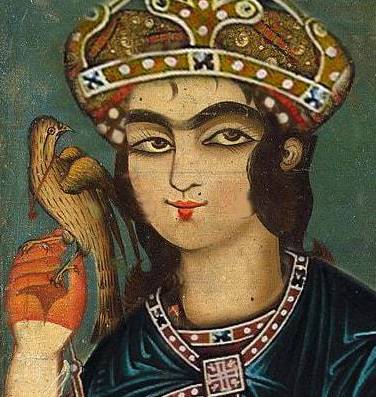
I have to confess I was going to do Yolande of Aragon for the Y in this A-Z however I’m mid-profile with her and so decided to instead use another, less well known Yolande (funnily enough there aren’t many other names beginning with Y!). Yolande was the younger sister of the man chosen to rule the Latin Empire; after his death their brother ruled for a while and then when a third brother died, Yolande was named the heir alongside her husband Peter II of Courtenay who was a grandson of Louis VI King of France. When her brother died, she travelled to Constantinople ahead of her husband who during his journey was attacked and subsequently vanished, leaving Yolande all alone in Constantinople with her children and an empire that needed a ruler. Because her husband’s body wasn’t found combined with the fact her son was too young to rule, she was named regent. Yolande’s fascinating to me because her circumstances are pretty unusual and although my knowledge on the Latin Empire is limited, I do know that it was a brand new empire that was facing immense political upheaval and numerous foreign threats. The fact she kept it all together until her death is pretty impressive. Regents like Catherine de Medici and Anne of Austria and Kösem Sultan understandably get significant attention, whereas the less-well known likes of Yolande of Flanders do not. I decided to include her in my A-Z because I’d like to change that.
Zenobia Queen of Palmyra
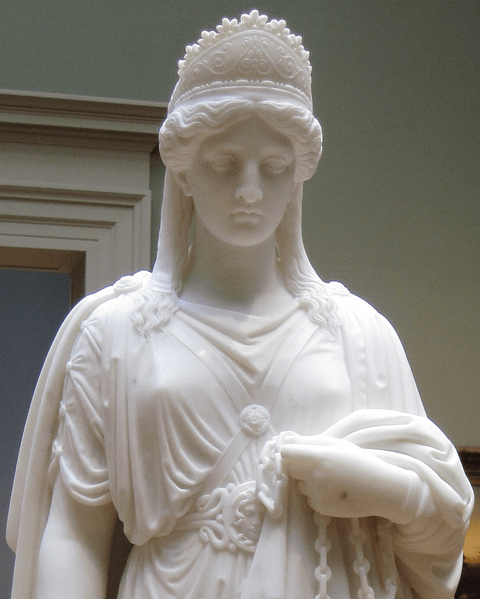
May I introduce you you to one third of the Holy Trinity aka the three women that took on the Roman Empire and admittedly lost, however it’s the taking on a global imperialistic superpower that’s impressive. Alongside Cleopatra and Boudica, Zenobia was one of the rare women in the Ancient world that earned her place in history not as a regent or consort but as a regnant/political leader in their own right. Technically Zenobia was regent for her son but then she ended up declaring herself Empress which unsurprisingly caused some issues with the Roman Empire who were her overlords. Zenobia is fascinating to me, partially because there’s a lot we don’t know but also because what we do know is so impressive; she managed to build an empire from Ankara to Southern Egypt right under the nose of the Romans and ruled as a just and tolerant ruler. Like Cleopatra and Boudica, she couldn’t defeat the superpower that was Rome but like the other two thirds of the trinity, she gave it a damn good shot.
Runner Up: Zubaidah bint Ja’Far
I hope you enjoyed the conclusion of my A-Z!! I have a new blog post coming up in a few days which is a fun run-down of the books I’ve read recently and the final part in my Yolande of Aragon series will be up next week!! See you all soon, thank you for reading
Alexandra x

 The Monstrous Regiment of Women