Happy New Year Everyone!!!
I know you may have been expecting Part 3 of the Yolande of Aragon profile which I promise is coming up soon! I just need to change a few things and it should be up soon! I’ve unfortunately spent the last few weeks in hospital hence the lack of posts so I do apologise. I should be putting up some posts in the next few weeks and I have some new things coming this year!! It dawned on me whilst I was going through old blog posts that although I’ve already done two Dear Hollywood posts, there are still a ton more women and historical events that I think deserve all the attention in the world and so here is yet another Dear Hollywood post for you all. Please enjoy!
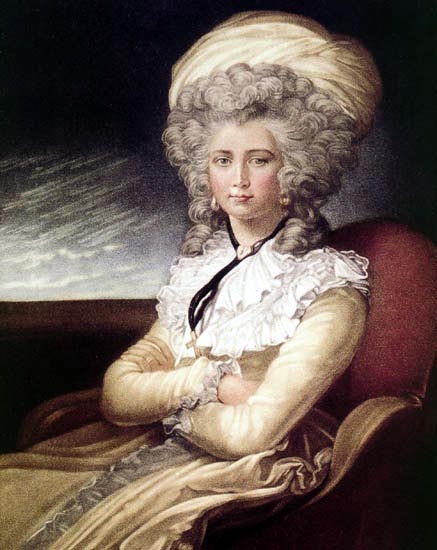
Allow me to introduce you to Maria Cosway. Born Maria Luisa Caterina Hadfield in Florence, Italy, she was the daughter of a very wealthy English-born inn keeper and an Italian-born mother, who owned a number of inns throughout Tuscany. Now Maria’s most famous for her exploits later on in life but her childhood was far from normal; she was originally one of eight children however four of those children were murdered by their nursemaid who it would turn out was mentally ill and was only caught after she was overhead muttering to herself about murdering Maria!!! Escaping a baby-murdering serial killer before the age of 10 is pretty messed up if you ask me. The maid was sentenced to life in prison whilst the family tried to move on from the tragedy. A few years later Maria’s father died, after which the family then ended up returning to England. At a very young age Maria showed a pretty immense talent for art and whilst still in Italy studied under two very talented neoclassical artists including Violante Cerroti. She copied Old Masters at the Uffizi Gallery in Florence from the age of 13 and also briefly studied in Rome. After returning to London she met Angelica Kauffman and Mary Moser, two original members of the Royal Academy of Art and Kauffman helped Maria participate in exhibitions at the academy. When Maria was 21 she married Richard Cosway (hence the surname) an unattractive but rich and talented artist twenty years her senior who was known for sleeping his way around London. The marriage it’s believed was a marriage of convenience certainly not of real love. Despite this the two became the toast of the London scene and their house became a fashionable place in London to hang out with the creme de la crop of society paying a visit; the Prince of Wales (later George IV) was a frequent guest as was the likes of Georgiana Cavendish, Horace Walpole and Governeur Morris. Due to her multi-lingual tongue, travels across Europe, charm and beauty she was an adored host and garnered an eclectic international groups of pals. I mean she was friends with EVERYONE from Thomas Jefferson to Georgiana Cavendish to Napoleon (she commissioned the first ever painting of him in England) to Angelica Schuyler; yes the Angelica Schuyler portrayed in the Hamilton musical, in fact the pair were very close. Maria Cosway was basically a one woman address book for some of the most famous names of the era. She even became known as the Goddess of Pall-Mall (Pall Mall is the street on which they lived in London). One of the most well known relationships of her lifetime was with none other than Thomas Jefferson. The two met during Jefferson’s time in Paris in the mid 1780’s and whilst we’re not 100% sure of the nature of their relationship, it’s pretty well accepted that Jefferson was a tad smitten with Maria. He was at this point widowed and Maria’s husband lets be honest was off having sex with just about everyone including Mary Moser. We don’t know if the relationship between Cosway and Jefferson was ever consummated (Cosway was a pretty devout Catholic) nor do we know if it was genuine love or merely a brief yet intense infatuation. Knowing what I know about Thomas Jefferson, I’m judging Maria for this romantic choice ever so slightly but we all have an ex we’d rather forget. What we do know is that when Maria returned to London and Jefferson went back to the US, he wrote a 4,000 word essay named “The Dialogue of the Head vs Heart”. Now this is where I point out that Jefferson (usually portrayed as a very serious human being) was at the time he wrote the essay recovering from a broken wrist having broken it whilst leaping over a fence to impress Maria. Yes you read that correctly. Thomas Jefferson writer of the Declaration of Independence, broke his wrist trying to impress a girl he liked. It’s embarrassing for him but very amusing for the rest of us. He then with said broken wrist wrote a 4,000 word essay lamenting the fact she was leaving. Some girls can’t even get a text back nowadays. In the essay he basically says that his feelings for her and her departure from Paris have made him “the most wretched of all earthly beings” which seems pretty damn dramatic. The two never saw each other but did write to one another for the rest of their lives, suggesting a degree of affection remained. Maria’s marriage ended up falling apart and the pair separated, sometime after the death of their only daughter. She eventually returned to France and Italy, at point one being convinced by Cardinal Joseph Fesch (the uncle of Napoleon) to set up a girl’s school in Paris which she ran for about a decade. She then opened a convent and girls school near Milan which she ran until her death. She did briefly return to London for care for her estranged husband when he was dying (she was far too much of an angel for her own good) and after his death she auctioned his pretty impressive art collection. She then returned to Italy where she lived until her death. In the midst of all that she continued painting and one of her most famous paintings was of her good pal Georgiana Cavendish the Duchess of Devonshire. Between the 1780’s and 1800, Maria would exhibit around 30 paintings at the Royal Academy. Now there’s a pretty irritating misconception that all artists of the past were men and that society kept women away from artistic pursuits. This, I emphasis, is total BS. There were a ton of female artists worthy of a film or tv show and my absolute dream would be an anthology series with each season focusing on a different female artist; Cosway could be one, Elisabetta Sirani could be another as could Angelica Kauffman, Elisabeth Vigee Le Brun, Sofonisba Anguissola and Artemesia Gentileschi who I mentioned in a previous Dear Hollywood post. An anthology series that focused on their art but also the goings on in their personal life/the world around them would dismiss the notion that women did not contribute to the history of art. I’d honestly do pretty much any anything for a series like that!
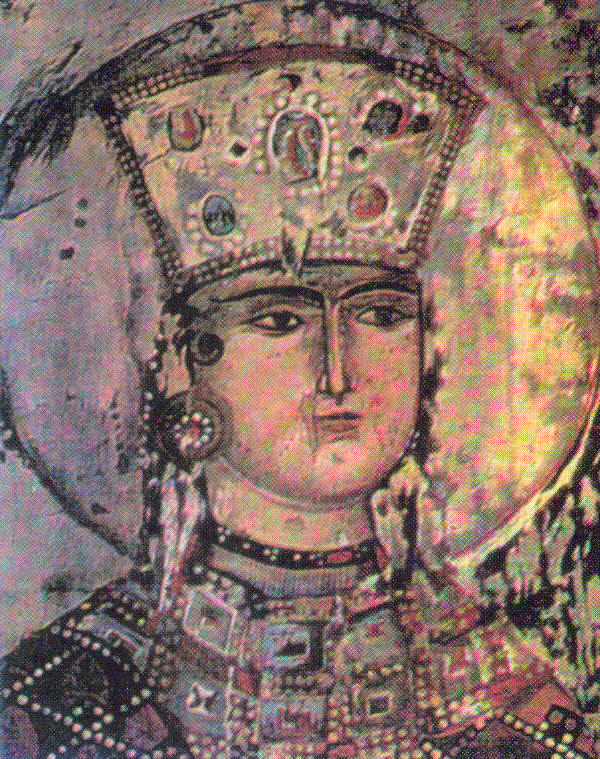
So you may have noticed that I clearly have a soft spot for the medieval-era ladies so this woman right here is absolutely without question in my wheel house. Tamar or Tamar the Great as she’s mostly known was born in 1160 the daughter of George III King of Georgia and his wife Burdukhan whose father was the King of Alania (Alania for those whose knowledge on medieval kingdoms that no longer exist, is a little rusty, was a small kingdom in the Northern Caucasus that existed from the late 9th century until they were conquered by the Mongols in 1238-1239. The founders of the kingdom were Iranian-nomads who settled in the Caucasus and at some point converted to Christianity, probably due to Byzantine missionaries). So basically Tamar had a pretty solid royal pedigree. Now her birth took place during what was considered the Georgian golden age when the Kingdom of Georgia was at it’s absolute peak. Tamar was one of two daughters and as the eldest was considered by her father to be his heir despite the fact that Georgia, like most countries in the medieval era wasn’t hugely fond of the idea of a woman ruling. Tamar was raised no doubt acutely aware of this fact and in 1177 she was was given a pretty dramatic crash course in how to be a monarch when an attempted coup by a rowdy faction of nobles (because apparently nobles everywhere love a rebellion) that sought to remove her father and replace him with his nephew/Tamar’s cousin Demna, took place. You see Tamar’s papa had came to power in slightly suspicious circumstances; his brother David V had been king first having himself come to power by forcing their father Demetre I to step down. David V had then died in questionable circumstances (chronicles from the time don’t specify how he died and it’s always been considered likely that he was murdered hence the unusual silence from the normally chatty chroniclers) resulting in their father Demetre I reclaiming his crown. When he died he broke royal protocol and left the throne to his favourite son George (aka Tamar’s father) rather than his grandson/David’s young son/the rightful heir to the throne Prince Demna. Although just a kid at the time, Demna grew to be an adult and was rightfully a little upset at not being King. His unhappiness combined with a willing bunch of pesky nobles and a female heir lead to a rebellion that ended pretty badly at least for Demna who was allegedly blinded & castrated at the end of it. Unsurprisingly he didn’t live long afterwards. The rebellion had a profound impact on Tamar’s father who became pretty aggressive and ordered a crackdown on anyone that defied him, in particular the kingdom’s influential aristocratic clans who he pretty much decimated. He then decided to name Tamar co-ruler, hoping that he could pre-emptively deal with any succession issues that might pop up after his death. He wanted it to be very clear that Tamar and only Tamar would rule after him. The father-daughter duo ruled as co-monarchs until his death in 1184 when he died and Tamar was crowned a second time, this time as the sole monarch of Georgia. Because of a linguistic quirk, she was crowned as King rather than Queen. She was crowned yet again when she married Yuri Bogolyubsky an exiled Kievan prince in 1185. Now the question of Tamar’s marriage was a super important one and everyone in Georgia had an opinion on who was the best choice for their young queen. The person whose opinion was most important was that of Tamar’s aunt Rusudan who played a very important role in the early years of Tamar’s reign helping secure her niece’s authority. She had been married to two Seljuk sultans and was very powerful. She backed the choice of Bogolyubsky for a husband which was probably a bit of a mistake. Yuri was a decent military leader but a shitty husband who it would appear felt immense jealously over his wife’s position and the fact that it was her and not him that held all the power. He was said to be a heavy drinker with a foul temper which often resulted in him being verbally abusive to his wife and he was also accused of sodomy and torture. We don’t know how much of the accusations against him are true. What we do know is the marriage was such a mistake that after just two years of marriage Tamar divorced and then exiled him. Yuri would go on to be a solid nominee for Worst Ex-Husband of the Century by trying to stage a number of unsuccessful and pretty terrible coups. Emphasis on unsuccessful. Following the divorce Tamar seemed to have growing confidence; she began to build her own power base with her own supporters and with that she flourished. Her foreign policy was to put it mildly very ambitious but the same nobles that had once questioned her abilities were equally as eager to assert Georgian dominance and with their support she managed to build a kingdom that had immense authority over the region. Not only did the kingdom itself reach it’s geographical peak but it dominated it’s neighbours. Her title engraved on coins that still exist to this day, is recorded as “By the Will of God, King of Kings and Queen of Queens of the Abkhazians, Kartvelians, Arranians, Kakhetians and Armenian’s, Shirvanshah and Shahanshah; Autocrat of all the East and West, Glory of the World and Faith, Champion of the Messiah”. A mouthful to be sure and I’d like to point out that she was never quite what we’d call an autocrat; throughout her reign she had to work with her aristocratic council however she expanded royal authority enough that none dared to cross her the way they had her father. In the midst of this, she had to remarry and she did so, except this time she married her own personal choice; David Soslan an Alanian prince and a relative of sorts on her mother’s side. Now I don’t know whether personal choice means it was a love match (I like to think it was) but regardless this marriage was infinitely better than the last. The two were a power duo, and he was a very talented military leader, who became responsible for dealing with her problematic ex-husband whenever he tried his coup bullshit. Unlike Yuri, David seemed to have no problem playing second fiddle to his pretty impressive wife and the two oversaw Georgia’s Golden Age. Not just in foreign policy but also in science and in art and architecture; you see Georgia was basically a melting point of culture with Byzantine, Christian, secular and Iranian influences creating a unique cultural environment. During Tamar’s reign a number of beautiful domed cathedrals were built which although Byzantine inspired, differed in ways that became a hallmark of Georgian Orthodox architecture. Georgian literature and art flourished and Tamar seems to have placed a particular emphasis on Georgia’s connection to the Middle East with coinage from that time being engraved with both Georgian and Arabic inscriptions. David and Tamar had two children, a son and a daughter, both of whom would go on to rule the country. In her later years, she like her father before her, had her eldest child crowned as co-ruler so he could learn how to be King. Tamar died at the age of 52-53 having been crowned for the first time 35 years before. Her position as a female-king and the fact she oversaw a golden period in Georgian history has led to her remaining an important symbol in Georgian history and culture. I cannot tell you how amazing a show about Tamar would be. Her life story has literally everything you could want from a tv show. I also think places like Georgia rarely if ever have their history explored and venerated in the same way that places like the UK and France do. As I said it was a melting pot of culture and to have a royal court full of all these different influences, portrayed on tv would be incredible. The sets would be beautiful, the costumes I can only imagine and it would also be a great opportunity to have a cast that is diverse and thus representative of Georgian history. Also there is no part of Tamar’s life that is in any way boring; it would be easy to do a smaller mini-series that focuses on a specific period. So you could have it begin with the rebellion that culminates in her being crowned co-monarch with her father and you could potentially end it with her marrying her second husband. You could show the young queen consolidating her power, growing into her role as king and enduring her pretty awful 1st marriage. You could probably cover the period 1177-1187 in one season. However you could also do a longer mini-series with multiple seasons that cover every part of her life. Either would be amazing.

Everyone knows Napoleon Bonaparte. He’s loved and hated in equal measure and he’s a pretty polarising historical figure. I however am far more interested in the woman that a) acted as the power behind the throne b) was crowned as Empress beside him and c) brought the man who held Europe in the palm of his hands, to his knees. Empress Josephine (or Josephine de Beauharnais or Josephine Bonaparte as she’s also known) may have ended up an Empress with the most powerful man in Europe by her side but she started off anything but. Born Marie Josephe Rose Tascher de la Pagerie, on the island of Martinique, at the time a slave colony of France, Josephine came from a once wealthy plantation owning family that lost significant wealth after hurricanes destroyed the plantation. Legend has it as a young girl she travelled to the hills near her family home and paid an Afro-Caribbean obeah for a palm reading. The older woman allegedly gave a fairly daunting response; she said the young girl would marry twice with the first marriage being an unhappy one and the second one granting her undreamed of glory and triumph. In conclusion she said the girl would one day become “more than a queen” but (and here’s the kicker) she’d die miserable, full of regret and sadness pining for the old days before her triumph. Whether that’s true we have no idea but if it is that’s some grade A+ future reading right there. Just a few years later that young girl supposedly destined to be a queen was married to the French aristocrat Alexandre de Beauharnais whose father the Marquis was the lover of Josephine’s aunt. Alexandre was to put it bluntly, a douche. I mean truly a terrible human being who was less than faithful quite literally from day 1 of their doomed marriage; he got Josephine pregnant, had an affair with a older woman who was distantly related to Josephine, had one or two illegitimate children, got Josephine pregnant again, disappeared back to Martinique with his mistress and then in an act of absolute hypocrisy dared to accuse his young understandably devastated and betrayed bride of infidelity when she gave birth! He then sent her a series of fairly abusive letters including one hand delivered by his mistress (!!!) that demanded she move out of their house. My blood boils when I think of how appallingly he treated Josephine and the fact he then had the audacity to blame everything on her is just ridiculous. After several years of misery and two children, Josephine filed for a legal separation and moved into a convent in Paris with her children Eugene and Hortense. During her time in the convent her estranged husband continued to prove how much of a shit he was by kidnapping their son whilst also doing absolutely nothing to financially provide for either his wife or children! Josephine however proved to be have more of a spine than Alexandre perhaps realised; not only did she take him to court in order to a) gain custody of her children and b) have the courts force him to pay her a generous living allowance, he was also forced to withdraw his previous clearly false accusations of infidelity. Meanwhile she continued to live in the convent. This wasn’t however just any convent; it was the most fashionable convent in Paris, full of aristocratic sophisticated educated women including several princesses. The women in the convent helped teach Josephine how to seduce, bewitch and exploit her natural charm, so that when she left the convent to live with her aunt and father in law, she was pretty irresistible. She moved to Fontainebleau where the royal court often hunted and began to come into contact with rich, older, wealthy noble men who absolutely couldn’t say no to a pretty woman with Josephine level charisma. They gave her gifts galore which was a good thing; Josephine’s number one character defect throughout her entire life would be her inability to manage her money. Gambling, shopping and giving to charity often left her with debts. Then the revolution hit and Alexandre who had a petty vindictive grudge against the monarchy, used his pettiness and habit of talking shit about the King to his advantage, becoming an early leader in the Revolution. This made Alexandre and Josephine a pretty in demand pairing in Paris. His political involvement would later backfire on them both during the Reign of Terror, leading to Alexander and Josephine ending up in prison. God can you think of anything worse than ending up in a prison cell with your shitty estranged husband? They were imprisoned inside the famous Les Carmes prison and I don’t know how much you all know about 18th century prisons but they were not exactly hotels. Starvation, malnutrition and disease were rife as was sex. Lots and lots of sex. With France falling apart around them, prisoners at places like Les Carmes thought to hell with decency and engaged in all sorts of orgies. Josephine allegedly became lovers with General Lazare Hoche whilst Alexandre also found a lover or two. The estranged spouses seem to have come to some sort of reconciliation/truce in prison and she was genuinely upset when he died. You see, Alexandre not exactly Mr Popular, did not survive the Reign of Terror. Josephine however miraculously did (one of my favourite stories of her time in prison is that her children would attach messages to her pug Fortunee aka the real star of the show who would then take them to Josephine. I don’t know how, I mean I truly don’t know how you train a pug to do that but I’m impressed). Josephine ultimately only survived Les Carmes by the skin of her teeth (the coup that overthrew Robespierre & thus ended the Reign of Terror allegedly took place the day before she was due to be executed) and afterwards found herself a young widow with two children and no income. Josephine however was not one for dwelling on her misery and decided to make the best of her circumstances. As the widow of a Revolutionary martyr, close friend of some the most powerful people in the country and one of the most naturally charming women in the city, Josephine became the toast of Paris. She was known as one of the Glories, a group of influential socialites, fashion icons and muses that the rest of the capital was obsessed with. They represented the new France; with Catholicism no longer the state religion, society became pretty raunchy and everyone was basically sleeping with everyone. Josephine was rumoured to have had, an extensive list of lovers, to put it politely although there’s very little evidence linking her to most of her rumoured beaus. It was in the midst of this she was introduced to Napoleon Bonaparte a young socially awkward Corsican-born general who within approximately 20 seconds of meeting her was head over heels. They were introduced by Paul Barras, the de-facto leader of the country who had met Napoleon at the Siege of Toulon and seen potential in the young man. He wanted to use that potential for his own political gain and decided the best way to control Napoleon was to have him fall for Josephine. Awkwardly Josephine was also Barras’ mistress at the time. Napoleon who was six years Josephine’s junior became completely and utterly obsessed with her, to the point where Josephine admitted she found his obsession a bit much at times. The thing is, Napoleon’s experience of women was very limited at this point. He’d lost his virginity at around 18 to a prostitute and there hadn’t really been many women since (as I pointed out he was pretty socially awkward and not exactly a chick magnet). He was sort of engaged to Desiree Clary the younger sister of his brother Joseph’s wife but that seems to have been quite an innocent relationship. His obsession with Josephine was anything but and she was basically his first real experience of love, passion, intimacy and sex. We don’t how quickly after their meeting they became lovers, however we do know that they were married within 5 months. Just 9 days after the wedding he went to lead the Army of Italy against Austria. That was the beginning of their problems. You see Napoleon even from hundreds of miles away was pretty possessive and he would write very long very romantic quite sexual letters to her, multiple times a day which she found overwhelming (you can read some of the letters here). Her letters which unfortunately we don’t have (Napoleon destroyed them at some point before his downfall) were evidently shorter, less romantic and not as frequent which frustrated Napoleon. His family who HATED Josephine, spent considerable effort trying to convince him she was having an affair hence why she wasn’t as doting as he was. Josephine wasn’t helped by the rumours in Paris that she was having an affair with Captain Hippolyte Charles a much younger, very good looking, very charming young man who I like to think of as being a bit of a himbo. He made her laugh, was known for his very eclectic fashion sense and lacked the overwhelming intensity of Napoleon. This is where I point out there’s no solid evidence that Hippolyte Charles and Josephine had an affair. I mean they were evidently close but there’s no love letters or eyewitness accounts of rendezvous’. There is nothing to back up that they had a sexual relationship despite what the gossip-mongers of Paris and infinite numbers of historians have claimed since. I’m not saying it’s outside of the realm of possibility, in fact it’s a very real possibility. We’re just not sure. Anyway during the Egyptian campaign a few unfortunate incidents took place that convinced Napoleon that his wife was being unfaithful. One such incident was that Josephine’s dog died in a tragic accident involving another dog, and Hippolyte Charles being the sweet guy he was brought her another. In late 1790’s France that’s quite an intimate gift and everyone in Paris took it as proof of their affair. Napoleon all the way in Cairo did the same and then decided his best option was to have his own less than discreet affair with a fellow soldier’s wife. The woman in question became known as Napoleon’s Cleopatra and his sisters made sure Josephine knew. What happened upon Napoleon’s return is pretty legendary. He locked himself in a room (either their bedroom or his study) and refused to open the door to her. She proceeded to kick off at him on the other side of the door ending up on the floor in tears. Her two children who Napoleon adored, joined her and the crying of all three broke Napoleon’s heart, leading him to open the damn door. The next morning his brother Lucien walked into Napoleon’s bedroom to find him “in a state of unmistakeable, total reconciliation” which is a really just a polite way of saying he walked in on Josephine and Napoleon doing it. In the aftermath of the Egyptian campaign Napoleon’s star was higher than ever before and he began plans to take hold of power within Paris. This led to a very famous coup that gave Napoleon not just control of Paris but the rest of France too. I actually disagree with the general belief that Josephine knew nothing of the coup. There’s a few reasons for this but the main two are that 1) Napoleon despite the whole infidelity thing was still pretty obsessed with her at this point so him not telling her would be a bit weird and 2) key to the coup actually succeeding was the likes of Barras aka the de facto leader of France remaining unaware of what was really going on. Barras was closer to Josephine than he was to Napoleon and I think the latter probably needed her to make sure that Barras and the other directors stayed in the dark. Also if the directors did find out about the coup, Josephine would have been in a position to a) find out and b) tell Napoleon. Also General Segur who admittedly wasn’t part of the coup but in the years afterwards knew those that were, wrote that “Josephine was in on the secret. Nothing was concealed from her. In every conference at which she was present her discretion, gentleness, grace and the ready ingenuity of her delicate and cool intelligence were of great service. She justified Bonaparte’s confidence in her”. Basically I am 100% in the camp that believes Josephine was far more of a politician that people, both back then and now give her credit for. I mean General Caulaincourt who was super close to the Bonaparte’s referred to Josephine as Napoleon’s “first confidante” and his valet Constant wrote in his memoirs that the two would talk for hours on end. I would also like to point out there are letters from later on in their marriage where she’s writing to some of his highest ranking generals (see here) during military campaigns and she’s clearly very aware of what’s going on. This is not a woman out of the loop which just makes me find it hard to believe she had no political influence throughout their marriage. At the very least I imagine she was a soundboard for some of his ideas including the initial coup. Regardless of what she knew the coup was successful and Napoleon became 1st Consul of France with pretty much complete control of the country. Initially he was named 1st Consul for 10 years but that then turned into 1st Consul for life and then eventually surprise, surprise, that turned into Emperor. Which meant that Josephine, a woman from the island of Martinique who had endured a life that had included a truly awful marriage, the world’s worst baby daddy, imprisonment, near execution and Revolution, found herself Empress of France. I do love a Rags to Riches tale. The coronation which took place on the 2nd December 1804 at the Notre Dame was an expectedly lavish affair; but it was a lavish affair with a twist. You see French Queens were traditionally either given their own small version of a coronation (which was the case with most French Queens) separate from their husband’s big day or were crowned in the same ceremony as their husband (Eleanor of Aquitaine being the first French consort to do; she was the first English consort too!!!) but after him. Those that were crowned at the same time as their husband would be given a simplified anointing, investiture, coronation and enthronement (which usually didn’t require them to handle regalia such as orbs and sceptres etc). This would happen only after their husband’s had completed a much more complex anointing, investiture, coronation and enthronement process. Josephine and Napoleon’s joint coronation was completely unique in that that each step of the coronation was performed jointly. Josephine was anointed immediately after him, she received her regalia immediately after him and she was enthroned immediately after him. I’ve personally not seen any precedent for that kind of crowning, there was certainly no precedent in French history nor did it have any resemblance to any Roman ceremony (Napoleon was heavily influenced by the Romans). What’s interesting is that Napoleon at this point was already being encouraged to divorce Josephine. After almost a decade of marriage she’d failed to give him a son and thus an heir. Her inability to have a child is believed to have stemmed from early onset menopause which was potentially caused by the trauma she suffered in prison. An accident early on in their marriage, where a balcony she was standing on collapsed causing her significant pelvic injuries that left her bed bound for months probably didn’t help matters nor did a possible botched abortion in the years between her marriages. Napoleon however chose to crown Josephine anyway. She was the love of his love, the most ride or die person he knew and if we’re being honest Napoleon was a petty man. His pesky family’s insistence that he divorce her probably made him want to crown her more just to annoy them. The years after the coronation were rocky ones; he expanded his empire across Europe, pretty much terrorising the continent, which meant he was constantly at war. At the Battle of Austerlitz in 1805 he apparently admitted his biggest concern about the battle was how he would explain a French defeat to Josephine. During these years however his infidelity also increased leading to a few infamous outbursts from Josephine although most of the time she kept her temper under control. Honestly she was a saint for putting up with him. Despite his infidelity, he always returned to her and he later commented in regard to the marriage “I generally had to give in”. The birth of a couple of illegitimate children proved that ultimately their failure to have a child was Josephine’s fault not Napoleon’s. His family remained as awful as ever, taking every opportunity they could to tear the marriage apart. Napoleon however maintained that he loved her and didn’t not wish to part from her. Eventually the needs of the state trumped his love for her and a divorce became necessary. Interestingly it’s believed some of Napoleon’s closest allies were wary of the idea of him divorcing her; Napoleon’s Chief of Staff Berthier apparently refused when he was asked to either find or conjure up evidence of infidelity on her part. One of his closest aide de camps Rapp was apparently vocal in his disapproval of how Josephine was being treated leading to a noticeable distance in that once-super close friendship whilst Lannes one of Napoleon’s best friends was also said to be vocally unimpressed. Napoleon’s family were understandably thrilled. Josephine was decidedly not and at their mortifyingly public divorce ceremony, Napoleon a man not known for being hugely emotional, read his statement through tears whilst Josephine started weeping half-way through hers and couldn’t finish. They left the ceremony together and she left the palace the next day. He lasted quite literally 24 hours without her before deciding he needed to go and see her.
The divorce lets be honest would go on to be one of his bigger mistakes (one of my favourite quotes about is from Jeanette Winterson’s the Passion which is “he divorced the only person who understood him, the only person he ever really loved”). I mean I understand the logic of needing an heir but I do think it was risky to have a child so late in the game. In an ideal world, he would have gone all Roman-empire esque and just adopted Josephine’s son Eugene who honestly would have been a fab Emperor. He had trained at Napoleon’s side, he was politically astute, popular, charming, was 100% French (which the public would have liked), had a universally adored mother and had the steadiness and temperament to keep the empire together. Alas Napoleon did not do that and everything went to hell after the divorce. Coincidence? I think not. After the divorce she was allowed to keep her title and was granted a huge allowance which she spent literally every penny of. Not only did Josephine like to shop, but she was super generous and gave huge amounts to charity. In fact she gave huge amounts to just about anyone that asked. The fact she remained Empress was a bit awkward when Napoleon married Marie Louise of Austria because there were now two Empresses. At the time of their marriage Napoleon allegedly referred to Marie Louise as nothing more than a womb (which is pretty damn insulting) and apparently hoped to live in some kind of imperial menage a trois with both of his Empresses. Unsurprisingly Marie Louise wasn’t fond of the idea and remained for the rest of her life VERY jealous of Napoleon and Josephine’s pretty unbreakable bond. Josephine was thus kept away from court. Napoleon continued to write and occasionally visited her at her country estate Malmaison, although all communication was kept secret from Marie Louise. When Marie Louise did finally give birth to the long awaited for heir, Josephine was publicly thrilled and congratulated Napoleon on the news although I can imagine it privately stung a bit. In the four years after their divorce she was forced to witness his pretty epic fall from a grace. A fall which she was openly gutted about. Whilst writing this my sister asked me if Napoleon’s empire would have survived had he been married to Josephine in 1814 instead of Marie Louise. I’ve spent half an hour thinking about this and I’m honestly not sure. I mean I think there’s an argument things might have been different had Napoleon and Josephine had a son at the beginning of their marriage circa 1796-1799. If they had then yes maybe things might have been different. I think one of the reasons Bonaparte’s political allies didn’t stick by him after his fall from grace was that the dynasty wasn’t strong enough to outlive Napoleon; his son wasn’t old enough to rule and Marie Louise wasn’t strong enough to take control. If however Napoleon and Josephine had, had a son between 1796 and 1799, then by the time everything started falling apart in 1812, the boy, would have been approaching between the ages of 16 and 13 and probably would have inspired more confidence than a literal baby. Not only that but if they had managed multiple children then marriage alliances with other European powers could have been arranged which would potentially have either prevented war or guaranteed the French more allies on the continent. One of the reasons Napoleon had stayed in power was because he was capable of maintaining government; he was feared and respected, adept at quelling internal power struggles and dissent and had a reasonable amount of political allies, many of whom relied on him. Marie Louise and her infant son on the other would not have maintained government at all. Josephine and a teenage son however I think could have managed it. You see Josephine was a pretty unique, dynamic figure. She represented so many things to so many people and she had been a prominent member of society through everything; from the Revolution to the Directory to the Consulship to the Empire. She was a constant and thus I think a unifying figure. As Eleanor P Delorme notes “Josephine’s presence among the people is well documented as a stabilising, reassuring authority during times of public stress”. The aristocracy trusted her, the political elite respected her and the French people ADORED her. As Napoleon said, “I win the battles, Josephine wins the hearts”. Because of all that I think Napoleon’s allies would have had more faith in Josephine as regent than Marie Louise. Not to mention that if Napoleon and Josephine’s son had turned out like either of his parents or like Eugene, then Napoleon’s allies would have a ton of faith in him too. I think there are other areas as well where Josephine as Empress instead of Marie Louise would have made a difference; firstly if it had got to the point where it did where the Allies were approaching Paris, Josephine would never had fled like Marie Louise did. Secondly she would not have been anywhere as easy to manipulate as Marie Louise was. She was older, wiser, had a bit more of a spine than Marie Louise, was nothing if not a survivor, probably had a lot more allies and was far more politically experienced; I don’t think anyone would have been able to turn her against Napoleon (people around Marie Louise told her that he had mistresses and that he was heartbroken over Josephine’s death which to be fair he was but Josephine was a pretty sore subject for Marie Louise who was A+ jealous about her husband’s ex-wife/love of his life. Telling her, her husband was full on grieving about Josephine didn’t exactly make her eager to reunite with him. If Josephine had been alive and been told he had mistresses, I don’t think it would have fazed her. She was pretty used to be his unfaithful BS at this point). Finally even if the empire had fallen, Josephine would 100% have gone into exile with him (Marie Louise did not. As a member of the House of Habsburg she went back to her native Austria). Josephine didn’t have those kind of dynastic ties so not going with him just wouldn’t have been an option. Josephine was nothing if not ride or die. I do think it’s interesting that Napoleon and Marie Louise’s son himself said that things would have been different had Josephine been his mother (I hope to god his mother never read that because ouch). Anyway back to the point of this post!!
In 1814 when Napoleon was forced to abdicate and the Allies entered Paris, she was treated with the upmost respect by his enemies who basically treated her as if she was still the Empress of France. Tsar Alexander I a former pal of Napoleon’s turned enemy, was eager to meet the woman who had kept Napoleon under thrall for so many years and visited her at Malmaison. He like every other man on the planet was charmed. I’ve seem some suggestion that what followed was him courting her however I don’t think that’s likely. Josephine was nothing if not a survivor and she probably knew this guy held not only her future in his hands but her children and grandchildren’s futures too and so used her greatest weapon to her advantage. In 1814 during a stroll with the Tsar, she suddenly caught a cold which turned into pneumonia and she died unexpectedly a few days later. The nation was pretty devastated at her death; despite everything she remained incredibly popular. Napoleon who was bored chilling on the island of Elba was also pretty cut up; we’re not sure 100% how he found out; I’ve seen some suggestion that he read it in a newspaper however I’ve also read that he received a letter from either Eugene or Hortense. I’m guessing the latter. After all I would think they would make it a priority to tell him. Either way he didn’t take it well and apparently locked himself in his room for a few days, not wanting to weep in public. His grief was then used to keep Marie Louise from joining him on Elba (as I previously mentioned she wasn’t thrilled to hear he was so upset about his ex-wife’s death). After Josephine died, her admirer Tsar Alexander I brought a ton of her art collection and made sure that her kids were well looked after; they enjoyed his favour for the rest of his life. We all know what happened to Napoleon. He got his empire back then lost it again and ended up dying seven years after her on the island of St Island in the Caribbean. His last word was allegedly Josephine’s name although this account comes from a less than reliable source. The romantic part of me which is pretty fond of a tragedy, however would like to think it’s true. Ultimately Josephine would be the dynastic victor; whilst Napoleon’s only legitimate son died without kids, Josephine’s descendants are the incumbent heads of the royal houses of Belgium, Luxembourg, Greece, Denmark, Norway and Sweden. In terms of an adaption of Josephine’s life, whilst I acknowledge that Napoleon played a pretty large part in her story, I’d like to point out she lived almost three decades before meeting him and those three decades were full of just as much drama as the 14 years they were married. When Josephine met Napoleon, she was already a prominent figure in French society with powerful friends. She was a widow, a mother, a friend, a celebrity and a survivor of a revolution that had taken her husband’s head and almost taken hers. I’d love to see an adaption of her life that actually acknowledges this rather than portraying Napoleon as the only thing in her life of note. As I repeatedly remind people, Napoleon was nothing when he met her. She was the one with the powerful contacts and the never-ending supply of charisma whilst he was a socially awkward general new to Paris and with very few allies. She was KEY to his rise to power. I think in any adaption of her life, it would be important to acknowledge her intelligence and political skills, I mean she was far more his equal than people give her credit for (another fave quote about them is once again from Winterson’s The Passion and is “he was the most powerful man in the world and yet he couldn’t beat Josephine at billiards”). Let’s be honest no one survives all the shit she did without being pretty damn brilliant. I’d love to see her love of science, her expertise in botany, her ridiculous generosity to just about everyone, her incredible charm, her patronage of the arts (which was extraordinary), her fondness for gambling, her love of literature (according to Charles Eloi Vial, in 1814 her library at Malmaison had near 13,000 books and was one of the largest & richest private libraries in France at the time) and her influence on the fashion of the era. I’d also make sure an adaption of her life had minimal slut-shaming which 99% of portrayals of her seem to have in abundance. I’d maybe be in favour of the Sandra Gulland trilogy being adapted. It’s written from Josephine’s perspective in the style of her personal diary, and it has three books which cover pretty much all of her adult life. Each book could translate as a single season meaning you’d end up with a three season show which isn’t too long. Napoleon doesn’t actually make an appearance until towards the end of the first book which ends with their wedding. The trilogy fleshes Josephine out in a way that’s very interesting and I also like the way the Napoleon-Josephine relationship is portrayed. It shows the relationship in all it’s all glorious dysfunction, doesn’t demonise or slut-shame Josephine, humanises Napoleon and shows the tragedy of two people so deeply loving each other but it not being enough (especially when one has an ego the size of Texas and enough ambition to rival Caesar). One of the saddest scenes in the final book is where they both know a divorce needs to happen but neither wants to admit it and they’re lying in bed, talking about living in a castle by the sea when they’re old and grey and at peace. It really humanises both of them and that’s what I’d love in a series about her. Also the fashion of the Napoleonic era was amazing so the costumes and sets would look great.

It’s very possible that you’ve never heard of the next woman I’d love to see a series or film about! Aisha al Hurra as she’s referred to by Muslims or Aixa as she’s referred to in most Spanish sources, was one of the most influential women in the history of the Emirate of Granada (aka the last independent Muslim state in Europe) and was a major powerhouse in the kingdom’s twilight years. Out of respect I’ll be referring to her as Aisha from here on. Now Aisha was born at some point in the 1400’s (unfortunately the patriarchal bullshit that is interwoven into every part of history means that the births of daughters were frequently unconsidered unimportant thus not recorded) as a member of the Nasirid dynasty that ruled Granada. It’s widely believed her father was Muhammad IX although the last few decades of the Nasirid dynasty’s 250 year reign was an absolute mess. Different branches of the dynasty were fighting left, right and centre for dominance and no-one could really decide who the hell was supposed to be in charge. Muhammad IX himself had multiple reigns ruling approx from 1419 to 1427 and again from 1429 to 1445 and yet again from 1447-1453. I mean it was practically royal musical chairs. Aixa as a princess clearly had no chance of inheriting the throne; it is however believed that she became a particularly wealthy princess with a particularly impressive property portfolio allegedly owning a number of stunning palaces. At some point in her youth she was married to a distant cousin (how distant we’re not sure) who after her father’s death became Muhammad XI (Muhammad X for those wondering if I’ve got that wrong was already being used by another guy claiming to be the rightful ruler). The two were seemingly not married for long and his reign appears to have only lasted a year. After his death his successor Sa’d who was in all likelihood her second cousin decided to marry her to his son and heir Abu l-Hasan Ali. Aisha and Abu’s marriage was very probably done as a way to hell the fracturing dynasty and bring all branches of the vast clan together. Together they had a son who was born circa 1460. The marriage appears to have been a fairly undramatic one (there’s very few references to it in any sources) until the early 1470’s when relations between Granada and the Catholic Kingdom of Castile hit boiling point. Both countries conducted raids on each other and in one particular raid Abu’s soldiers took Isabel de Solis hostage. Isabel de Solis was not just any random Spanish girl. She was the (allegedly) very beautiful daughter of a wealthy and influential Castilian nobleman. She ended up as a slave in Abu’s palace and I’m sure you can imagine what happened next. He ended up falling head over heels stupidly in love with her. Now Aisha’s reaction to her husband’s new Catholic mistress, is unknown. As with most Muslim dynasties there’s very little written on the women’s lives. In Muslim culture, men are legally allowed multiple wives so it’s unlikely that Aisha expected monogamy from her husband however it does appear that at the time of Isabel’s arrival in the palace, more than a decade after the birth of their son, Aisha was his only recorded wife. That might suggest a certain degree of affection had at some point existed between the two. Any remaining affection however was gone the minute Abu decided not just to take Isabel as a mistress but to marry her. He gave her ludicrous amounts of gifts, demanded her name be included in prayers in mosques, gave her the name Soraya upon her conversion to Islam and worse of all had two sons with her. Now the birth of two princes aka two new heirs to the throne was the nail in the coffin that was the marriage between Abu and Aisha, the latter of whom became convinced that her shitty husband would make his new sons with his favourite wife, his heirs over her son. This by all accounts was a concern shared by the religious leaders of the kingdom all of whom declared the marriage of Abu and Soraya (aka Isabel) a scandal. You see Aisha wasn’t just any princess. She was a living descendant of the Prophet Muhammad and thus so was her son. That gave them a certain amount of prestige that Soraya and her boys lacked. Abu in response to the overwhelming disapproval decided to just exile Aisha and her son away from the palace. Because exiling your popular, wealthy, politically influential wife who happens to have a holy bloodline and custody of your eldest son and heir, is such a wise political move (*sarcasm*). Honestly I have no idea what he was thinking. Aisha decided to do what just about any scorned wife would do. She began to plot. Now Aisha’s plotting doesn’t appear to have just been out of some petty grudge, it was also a political choice. I mean her husband wasn’t exactly Mr Competent and he was evidently far more focused on his Catholic bride and their new babies than the fact that his kingdom was on the brink of being conquered by the Spanish. Evidently the populace of Granada, various warlords and the kingdom’s religious leaders were a tad unhappy about all this, culminating in 1482 in a rebellion that overthrew Abu and put Aisha and her son in his place. There are very few sources about the coup that still exist but it does appear that Aisha played a rather significant role in it’s success. In the first year of her son’s reign, Aisha was a pretty powerful Queen Mother and appears to have been fairly involved in the governance of the kingdom. That however came to a screeching halt when in 1483 her son who apparently inherited his father’s incompetence, was taken hostage by the Kingdom of Castile, allowing her estranged husband to take back power. He held power for about two years during which time Aisha was furiously negotiating her son’s release; she allegedly paid the ransom money herself. Her estranged husband died in 1485, a death I’m sure Aisha wasn’t exactly cut up about. Instead of her son becoming the monarch however, Abu left the throne to his brother, disappointing Aisha one final time. His brother however would only reign for a year; why he abdicated power we’re not sure. I’ve seen some suggestion it was his own choice whilst I’ve seen other suggestions that Aisha and her faction forced his abdication. I’m inclined to believe the latter version. With her son back on the throne, Aisha was now once again Queen Mother. This time round however he appears to have listened to his mother far less than he did the first time he ruled. He agreed for Granada to become a tributary kingdom to Castile and then decided not to defend Malaga, an important stronghold that in 1487 was conquered by Isabella and Ferdinand (yes that Isabella and Ferdinand, the so called Catholic Monarchs). To say Aisha was unimpressed is an understatement. She, we believe, was a staunch advocate for fighting to the death against the Spanish rather than just giving up as her son appeared to. By the beginning of 1491 Granada was the only Muslim stronghold left in Spain and Aisha was understandably pissed about the whole situation. In 1492 Granada finally fell. Isabella and Ferdinand in a rare show of mercy allowed Aisha and her son to live; Aisha despite her immense disappointment in her son refused to abandon him and followed him into exile firstly in Alpujarras and secondly in Fes in Morocco. She may not have abandoned him but she certainly never forgave him and a famous legend says that upon their departure from Granada, he turned to look at the city and began to cry. Aisha then allegedly responded by saying “weep like a woman for the kingdom you could not defend as a man”. DAMN. She died some years later. Now I love Aisha, and I love her story and I think it would make an incredible television series. As I’ve said before Muslim women are so under represented in popular media especially mediums like television and film. The only portrayal I’ve ever seen of Aisha is in a Spanish tv series based on Isabella and Ferdinand; the problem with that show was that Isabella and Ferdinand were the protagonists of the series and thus they were painted as the heroes of the piece whilst the Muslim characters including Aisha were portrayed as the bad guys. I’d love to see a series that lacks such bias especially when in 2021 we’re dealing with such rampant Islamophobia. There’s no excuse in my opinion, for adding to the demonisation of the Muslim faith. I also think Aisha just as much as any European Quen Mother, deserves to have a tv show based around her life; it was after all a fascinating one full of drama. The latter part of her life was clearly the most interesting and the part of her life that we have the most evidence of. A series could very easily start with her husband falling in love with Soraya and ending with Granada’s fall. There was roughly two decades between those two events so in an ideal world you could cover each decade with a short-ish season or just have one long season that covers both decades. That would cover the breakdown of their marriage, Abu’s marriage to Soraya, Aisha’s exile, her fears in regards to Soraya’s sons, her plot to overthrow her husband, her son’s 1st reign and capture, her husband’s 2nd reign and her attempts to get her son back, her brother in law’s reign, the 2nd coup that put her son on the throne and her son’s 2nd reign culminating in the fall of her kingdom and dynasty. It’s all so dramatic and would make amazing tv!!! The costumes and sets would be incredible; Aisha after all lived in the Alhambra a stunning fortress in Granada that still exists to this day and I’m sure would be able to be used in filming. I love authentic historical Islamic outfits so having experts assist in choosing costumes that are historically accurate would be a must!! Overall I just think a show about Aisha and her life would be really pretty cool.

Everyone loves reading stories of inexplicable, extraordinary acts of heroism; sometimes we read about in newspapers or see them on the news. History nerds such as myself particularly enjoy reading stories of inexplicable, extraordinary acts of heroism that took in periods and centuries gone by. Often the historical figures that appear in these stories, failed to get the recognition they deserved in their own lifetime and disappointingly have never received the recognition they deserve since. I’m sure that for every Oskar Schindler or Harriet Tubman, there are hundreds of thousands of heroes that committed incredible acts of humanity and heroism in the face of extreme evil but whom were never granted the recognition they deserved. The next woman I’d like to highlight as someone whose life absolutely deserves a blockbuster film or series is one of those people. Gracia Mendes Nasi also known as Beatrice de Luna was born in Lisbon, Portugal at some point in 1510, the daughter of Alvaro de Luna and Philippa Benveniste Mendes (Mendes was her Spanish surname whilst Benveniste was her native Hebrew one). Gracia came from a super interesting background; she was from a Jewish family originally from Aragon who had been expelled by Isabella and Ferdinand in 1492 from their Spanish territories. Her mother’s family the Mendes-Benveniste clan were super prominent; in the 12th and 13th centuries various members of the family had served as the chief physician to the kings of Aragon whilst other family members became renowned as influential scholars and philosophers who held a variety of important government positions. Between the 11th and 15th centuries, the Benveniste’s were basically one of the most prominent Jewish clans on the Iberian peninsula however the Spanish Inquisition had put a stop to that. Gracia’s family were known as Conversos which were Jews born in Spain and Portugal who were forced to convert to Catholicism in the late 1490’s due to the rampant anti Semitic/Catholic supremacy ideology that people like Isabella and Ferdinand adhered to. A large amount of Conversos continued to secretly practise their Jewish faith whilst publicly declaring fidelity to Rome and the Pope. Gracia’s family were among them and in 1528 when she married Francisco Mendes a very rich black pepper trader who also happened to be her uncle (he was her mother’s brother), the pair had a very public, very OTT, very grand Catholic ceremony at the Lisbon Cathedral and then in private a Crypto-Jewish ceremony with the traditional signing of a ketubah. Considering the ramifications of being caught, this was all kept very hush hush. Now as I mentioned her husband/uncle was super wealthy. Whilst the Benveniste clan always had been, their wealth had flourished in the Age of Discovery and with the emergence of trade between Portugal and India, their trading company had become a particularly important spice and silver trader that had major ties to the finance and banking community. We know very little about Gracia’s marriage and her life during that time; she doesn’t really emerge as an important figure until her husband’s death in 1538, after just a decade of marriage. In his will Fransisco left half of his wealth to Gracia and the other half to his brother. His will also stipulated that Gracia was to take over his half of the business. Shortly after his death, Gracia, her daughter Ana and her sister Brianda de Luna left Portugal and moved to Antwerp. There were two reasons for this; a) in 1536 her husband and his brother had opened a branch of the business in Antwerp which was flourishing and b) the Pope had just ordered a new Portuguese Inquisition to target Jews in Portugal (it’s believed the establishment of the Portuguese Inquisition had been delayed by the influence of the Benveniste’s). Considering her family had survived the Spanish Inquisition, Gracia evidently thought it best to get the hell of dodge. They travelled to Antwerp where Gracia and her brother in law/uncle Diogo worked pretty fantastically together to continue growing their business empire; her sister Brianda and Diogo married to keep the bond between the two sides of the family strong. Business was booming and Gracia began to earn a reputation as a talented independent businesswoman. Then in 1542 Diogo died too and left everything he had; his fortune and the business to her making Gracia the sole head of a glittering business and banking empire that spanned Europe. This kind of influence gained her access to some of the most important people on the continent such as Henry II King of France, Charles V the Holy Roman Emperor and the Popes Paul III and Paul IV. The family’s commercial activities and the loans they provided to powerful people including Kings made Gracia extremely influential and and she made it a personal mission to use that influence to protect Conversos such as herself. Whilst in Antwerp she developed an escape network to help the Jewish communities still in Spain and Portugal who were facing increasing threat from the Inquisitions. Gracia’s trading company meant she had considerable access to ships that sailed frequently between Lisbon and Antwerp. Unbeknownst to the Spanish and Portuguese authorities, the ships were not just carrying spices, they were carrying families of Conversos who once in Antwerp were provided with funds, instructions and resources by Gracia. The instructions guided them over the Alps into the Republic of Venice where ships were waiting, to take them to the Ottoman Empire where under the pretty cool Suleyman the Magnificent (this is where I remind you I did a three-post profile on Suleyman’s even cooler wife that I think you should check out, see here, here & here) Jews were welcomed and even protected. In the Ottoman Empire they were able to start a new life, free from persecution. There’s very little solid evidence and due to the secretive nature of what Gracia was doing, almost no records of just how many people she saved but it’s so unbelievably extraordinary nevertheless. In 1544 for reasons I’m not 100% sure of, Gracia was forced to leave Antwerp and she fled to Venice which was nicer to Jewish communities than most European countries. Whilst they were able to conduct business and live their religion openly, they were confined to certain neighbourhoods. We know that Gracia didn’t live in one of those Jewish neighbourhoods, she lived in an incredible home on the Grand Canal so it’s likely she continued to publicly act as a Catholic whilst retaining her Jewish faith behind closed doors. The business continued trading primarily in spices, textiles, pepper and grain and she was clearly a very talented businesswoman. She however was forced to flee once again in 1549 when she had a bust up with her sister regarding Diogo’s estate and to avoid the Venetian state getting involved in her finances, she left the city and moved to the nearby city-state of Ferrera ruled by the d’Este family. Ferrera was eager to welcome her and for the first Gracia was able to drop the pretence of being a Catholic and openly practise her Jewish faith. It was during this time she took the Hebrew name Nasi and began being known by the name she’s usually referred as to today; Doña Gracia Nasi. Now publicly practising her faith, Gracia’s focus seems to have turned from her commercial activities to acting as a benefactor and organiser that played a significant role in resettling Jewish communities. She’s now considered a pretty important figure in the Jewish diaspora of the 16th century. She also acted as a patroness of Jewish art and literature in Ferrera and the Jewish version of the Ferrera Bible (published in 1553) was dedicated to her whilst another version of it was dedicated to Ercole II Duke of Ferrera and his wife Renee of France (a daughter of Louis XII of France). At some point between 1553 and 1556 (I’ve seen evidence of both dates) she left Europe (it’s believed this was due to the fact that the political atmosphere in regard to Jews in Italy was beginning to grow hostile) and moved with her daughter and large entourage to Constantinople (aka Istanbul) the capital of the Ottoman Empire. As she had in Ferrera, Gracia was able to continue openly practising her faith and she became one of the most prominent Jews in the city with close connections tot the Imperial Ottoman court. One of the most impressive things she did took place in 1556 when Pope Pius V sentenced a group of Conversos in the Italian city of Ancona to be burned at the state for continuing to practise their Jewish faith. Gracia by all accounts was horrified and used her considerable business and financial influence to organise a trade embargo against the Ancona port which hurt the city financially. Two years later in 1558 Suleyman the Magnificent who she seems to have developed a pretty good relationship with granted her the lease of the Tiberias region of Gailee (aka part of Ottoman Syria). Gracia began to rebuild the region’s abandoned towns with the idea of building a community of trade and learning where Jewish refugees could settle and live in peace. She donated significant sums of money not just to the Tiberias region but also to Jewish communities across the empire and funded the construction of synagogues and yeshiva’s (yeshiva’s are are Jewish institutions that focus on the study of ancestral Jewish texts). After her death in 1569, her daughter and son in law continued her work. Her son in law Joseph was another member of their family, I believe a nephew of either hers or her husbands and in the 1560’s he chose to support Suleyman the Magnificent’s eldest son Selim as the next Ottoman Sultan rather than his brother Bayezid. When Selim did indeed become Sultan, Joseph was rewarded for his loyalty and became an influential diplomat and minister at the Ottoman court. Gracia’s story is such a fascinating one and the period is so under-explored in period dramas. Also let’s be honest most depictions of the Spanish Inquisition are from the perspective of the Spanish and thus flawed in their lack of accuracy in regard to the horror the Inquisition inflicted. I think it would be very powerful to see a depiction of it through the lens of the Jewish people that actually endured it and Gracia is such an enigmatic, interesting figure who would be a fantastic lead character. Her actions in regard to protecting, aiding and supporting Jewish communities and the Conversos suffering excruciating persecution is just so heroic and it’s frankly disappointing she isn’t more well recognised. She deserves recognition and a well written, well cast, well produced series would do that. Gracia’s life from Portugal to Antwerp to Venice and Ferrera to the Ottoman Empire would provide a visual feast, I mean the costumes and sets and the differences between all the various locations would be a-m-a-z-i-n-g (albeit admittedly expensive). I’ve said before how there are absolutely not enough depictions of the Ottoman Empire’s history in Western media nor would I say to more portrayals of the Italian Peninsula in the Renaissance so this would be perfect. I do think the show would have to be multi-season based on the sheer scale of the project. The first season could be her life in Lisbon and Antwerp, the second season could be her life in Venice and Ferrera and the third season could be her final years in the Ottoman Empire. The inclusion of famous figures she interacted with such as Ercole II Duke of Ferrera and Suleyman the Magnificent would be a cool addition too. Also as Gracia was Jewish she would have been allowed inside Topkapi (aka the imperial Ottoman court) and therefore had access to the harem meaning it’s entirely possible she knew Hürrem Sultan. A power duo, dream team right there!!
Thats all for today folks, I hope you enjoyed this most recent instalment of Dear Hollywood. I have some interesting things coming up for you all!! So I hope to see you soon.
Alexandra x

 The Monstrous Regiment of Women
3 thoughts on “Dear Hollywood / Part 3”