In my second to last post, I gave Hollywood a few ideas about history-based films or tv shows I’d love to see. One post however didn’t feel like enough!! So here are a few more ideas. Enjoy!
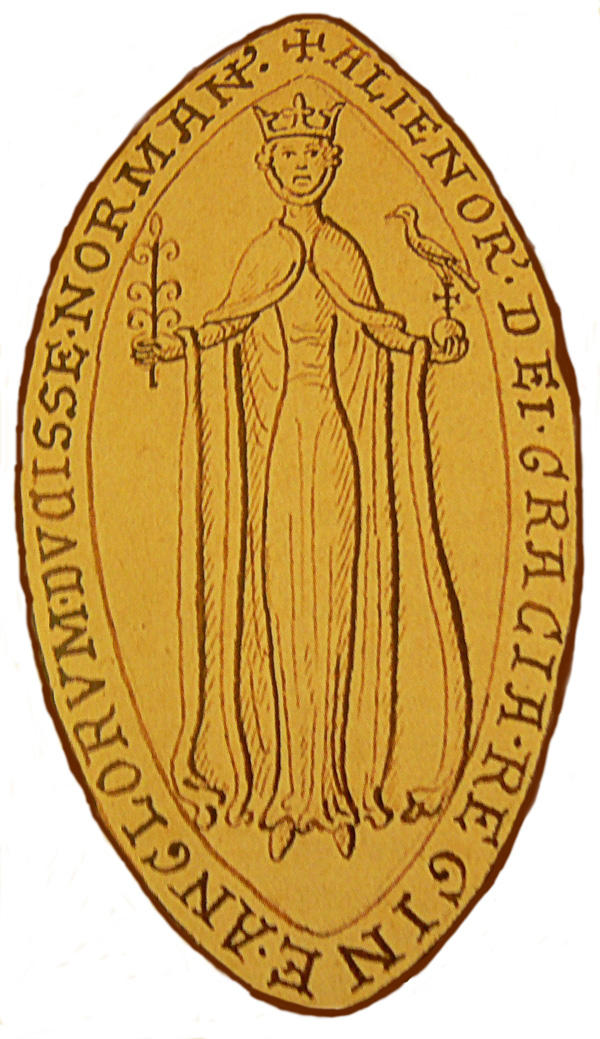
- If you’ve read any of the posts on this blog, you’ve probably noticed my true and unyielding love for Eleanor of Aquitaine. She was one of my first historical girl crushes (alongside Anne Boleyn of course) and I will read/watch pretty much anything about her. Unfortunately most representations of her on film portrays her in her later years and there’s next to nothing about her youth. The thing about Eleanor, even more so than Catherine de Medici, is that she lived a super dramatic soap opera esque life that almost defies belief and the logistics of a tv show about her would be pretty complex. A film wouldn’t suffice and as much as it grieves a girl to admit it, a mini-series about her entire life, from start to finish probably wouldn’t either. In fact it’d be a bit of a royal mess. Not only is her life super dramatic but it also covers 80 years of history which includes (but is not limited to); the Second, Third & Fourth Crusades, royal divorces, royal infidelity, international relations, overly dramatic love stories, debates about female primogeniture, multiple civil wars, romantic literature and the development of chivalry, the French-English rivalry, constant war, the life and death of Thomas Beckett, excommunications, family feuds, the Magna Carta and various attempted kidnappings and assassinations. That, might I point out is not even an exhaustive list. Taking that into account, if you were to make a series of her life, it would need to be a fairly decent number of seasons with multiple actors playing her, which is a problem because a) period dramas are not the kind of shows that last 6+ seasons, b) it’d be super expensive and c) everything is about ratings, so if the viewership wasn’t high enough for the network, it would be at risk of being cancelled before the story reached it’s finale. You could however do a number of series that focus on specific periods in her life. I’ve listed my favourite possibilities below.
- Eleanor’s life is fascinating because it literally comes with it’s own framing device (BECAUSE OF COURSE!!); as an old woman in her late 70’s-early 80’s, she handpicked the next Queen of France (her pre-teen granddaughter Blanche) and escorted her across the bloody Pyrenees mountains whilst teaching her all the ways to be a take no shit from anyone kinda queen, mirroring how Eleanor as a young teen had also been handpicked to be the next Queen of France. You could easily have the older Eleanor telling her granddaughter the story on their travels with the oral history serving as the narration to the story whilst flashing back 60 years earlier. That way we would get to see both the older and the younger Eleanor; to see a young Eleanor growing into her power would create an interesting juxtaposition with the the usual portrayal of Eleanor as an old, wise, well-established matriarch. The series could show her first few years in the French court, learning the ropes of queen-hood and the games of politics whilst wreaking havoc on the courts of Paris with her equally as scandalous sister and trying to navigate a once promising yet ultimately doomed marriage. The series could I suppose, end with Eleanor and Louis departing for the also once promising yet ultimately doomed Second Crusade. I’m not sure you could go much further with that. The Second Crusade is a bit of a mess and most of what we know about Eleanor’s time in Outremer is based mostly on slander and speculation and I think it would just be very complicated. Eleanor and Louis leaving for the crusade would be an ideal ending.
- Option number 2 would be set in the 1150’s and should absolutely start with the technically-still married Eleanor meeting the much-younger Henry because the drama that comes with these two very charismatic, very ruthless political animals meeting practically writes itself. Yes we’d miss the drama of early-Eleanor, the Second Crusade and her life at French court but on the plus side, we’d see a royal divorce, the quickie marriage of Eleanor and Henry that scandalised Europe (they married less than two months after her divorce) and the early years of them starting their family, winning a civil war and building their empire. Their marriage seems have been a fairly passionate and tempestuous one especially in the early years and that would be such a joy to see on screen. Focusing on this period would also mean bringing the likes of Stephen, Thomas Beckett, Empress Matilda and Eleanor’s aforementioned ex-husband Louis VII into the narrative. The difficulty would be in working out where you’d finish this series; depending on the length it could end either with Eleanor returning full-time to Aquitaine or if you wanted to go further, it could end with Eleanor’s now grown up sons declaring war against their father (maybe or maybe not with the support of mother dearest and her ex-husband).
- Option number 3 could be the latter part of her life, beginning with the death of her husband and her release from imprisonment; literally the first thing her son did when he was told his father was dead and he was now King was to order Eleanor’s release however Eleanor being Eleanor had already ordered her own release with the authority granted to her as the new Queen Mother. God I love her. Although this option would obviously show Eleanor in her later years as most portrayals of her do, previous portrayals centre either Richard or John with her as a side character reacting to their various (usually awful) life choices; if I had my way, Eleanor would be the focal point of the series, and I’d quite enjoy seeing Eleanor in her element ruling England in her son’s absence (Richard was away A LOT) whilst trying to juggle various other children including the infinitely problematic John. This would include Richard being held hostage and Eleanor having to find the money to save him, his various military expeditions, his death in battle, John’s coronation and early reign, the never-ending war between France and England and the feud between her son John and grandson Arthur which resulted in Arthur literally besieging the castle his grandma was staying in to prove a point. Eleanor outlived her husband by 15 years but those 15 years are super dramatic and full of material for a show to get it’s teeth into. Both this option and option 2 would be fab because Eleanor and Henry were extraordinary, dramatic, larger than life characters who gave birth to a football team of kids less charismatic, less brilliant but no less dramatic and if we’re being honest the Plantagenets in general are super entertaining. As with the other options, it’d be amazing to get a series with accurate sets, medieval battle scenes and costumes. So these are the main three options I’ve come up although as I noted, there are other options for tv shows about her life; the Second Crusade could work (although as I’ve previously mentioned the details of her time on Crusade are a little sketchy) as could a show focusing on the latter part of her 2nd marriage when her sons declared civil war against their father leading to him imprisoning her for over a decade because he thought she was too dangerous (to be fair to Henry, he wasn’t wrong). I’m just not overwhelmingly excited about watching a show where Eleanor spends the whole time imprisoned. I’d prefer to see her getting her hands dirty ruling and causing scandals, left, right and centre. Hard to do that from a prison cell. Regardless of what era of her life you’d focus on, Eleanor is such a vivid character that she would be an incredible protagonist.

- In Part 1 of this post I mentioned Elizabeth I of Russia as being deserving of her own tv show. I also lamented the never-ending stream of tv shows based around Catherine the Great. What some people don’t know about Catherine is that she wasn’t the first Catherine to sit on the Russian throne, she was in fact the second. The first was Elizabeth’s mother who was born in the Polish-Lithuanian Commonwealth, as a commoner, we believe by the name of Marta Helena Skowronska. Now we believe she was either a peasant and the daughter of a gravedigger and handyman or there’s even some suggestion that she was potentially from a family of serfs. I don’t want to get in too deep about Catherine because I am planning a full profile on her to be on the blog at some point but I will say that she manages to begin her life as a peasant/serf and end it as the first woman to sit on the Russian throne and rule the Russian Empire. How would that not make an amazing series?! Catherine’s life also covers a really interesting period of Russian history in which the empire not only expands geographically but becomes a major European power player and goes through a massive cultural revolution that modernised and Westernised Russia. It’s an incredible period of transition and costumes/sets would play a massive role in demonstrating that. Catherine as you can see in the portrait above is wearing very Western clothing not the traditional Russian-outfits of her predecessors; she was the first to dress in such a way. Also her story is full of really interesting characters that would be fab supporting roles. The only difficulty with this series would be deciding what period of Catherine’s life to cover. You could cover the period where she was Empress Consort as the wife of Peter the Great or you could cover her widowhood and indeed her own reign. I’d actually really like to see her early years and her marriage to Peter. You could start with her meeting him but she has such a fascinating story that is rooted in her life pre-Peter, so I’d like to see some of that. If it were up to me I’d probably start with her being married off at 17 to a Swedish soldier who she was literally married to for 8 days before he was sent back to Sweden; my reasoning for doing this is a) it adds context and background and b) some time after her marriage she ends up in the household of Prince Alexander Menshikov who was Peter’s BFF. She may have been his mistress or indeed just a servant however he not only introduces her to Peter but the two of them end up forming a life-long alliance. Menshikov is really a central figure in Catherine’s life so I think it’d be important to show the roots of that relationship and how she came to meet Peter.

- So clearly I have a fondness for women who start off at the bottom of society and end up on top (looking at you Hürrem Sultan & Catherine I) because I would truly kill for a good series or film about this woman!! Meet Empress Theodora, wife of Justinian I and consort of the Byzantine Empire from 527 to 548. Where she was born is somewhat of a mystery, I’ve seen Syria, Cyprus and northern Anatolia on the coast of the Black Sea (historically known as Paphalagonia) all given as potential birth-places but it’d widely believed she was of Greek-Cypriot descent and that she ended up as a child living in Constantinople (Istanbul) then the capital of the Byzantine Emperor. She was the daughter of Acacias a bear trainer at the Hippodrome and a unnamed woman who was a dancer and actress. Theodora followed in her mama’s footsteps and also became an actress; the thing is being an actress back in the 500’s was not quite what you might think. There was a very fine line between an actress and a sex worker and being an actress entailed providing sexual services off stage. She became renowned after performing a pretty scandalous portrayal of Leda and the Swan (based on the Greek myth) which included her wearing as little clothing in public as was legally acceptable. By the time she was 18 she was pretty well known in the capital and she’d had some pretty powerful lovers including a government official who she lived with for a couple of years in what is now Libya. Eventually she returned to Constantinople and caught the eye of Justinian the soon to be Emperor. She was around 21. He was more than a decade older. To say he was smitten is an understatement. Justinian made it abundantly clear he wanted to marry her but there was this little thing called the law standing in the way, you see Justinian as the heir to the throne was not allowed to marry an actress due to the promiscuous lifestyles of actresses. Clearly Justinian was a pretty persuasive guy because he convinced his uncle the Emperor to change the law thus allowing the couple to wed. Two years later they became Emperor and Empress. Now the thing about Theodora is that her pre-Empress life would make an incredible series but so would her post-Empress life. If it were up to me, I’d do a first season based around her teen years prior to meeting Justinian. Depending on the length of the series the first season could end with her marrying him and then the second season could begin with them becoming Emperor and Empress. And what an Empress she was. Justinian remained as he had been at the beginning of their relationship VERY smitten and Theodora was incredibly influential; he called her “his partner in deliberations” and she helped him make all the important decisions. She not only had her own imperial seal but was also put in charge of his meaning her consent was necessary before any document or order was considered legal. Her most famous moments as Empress included the Nika Riots when her husband and his council were ready to run and hide, and Theodora said hell no and addressed the cowards before her, saying the famous line “may I never see the day when those who meet me do not call me Empress”. As persuasive as her husband may have been, she was better and convinced the council the stay. The rioters were dealt with and Justinian apparently never forgot that it was his wife that saved the day. Theodora also became known for her support for women, particularly low-class women in society. She passed laws that advanced women’s rights, she made pimping an illegal offence which prevented illegal prostitution, expanded the rights of women in divorce, instituted the death penalty for rape and forbade the killing of an adulterous wife (which previously had apparently been legal). These were Justinian’s laws technically but had Theodora’s fingerprints all over them, and I think it’d be so powerful to see a portrayal of her life and the things she achieved. Then there’s the fact that the Byzantine Empire is so aesthetically beautiful that good, well researched, well shot representation of it would be incredible. There are not nearly enough good Byzantine period dramas that show the costumes and settings in all it’s glory, and to top it off, the Byzantine Empire was a very large, very ethnically diverse state so the cast of a series would have to reflect that. Representation as I stated in the last Dear Hollywood post, is so important and I’d love to see a Byzantine-set period drama that reflected that.
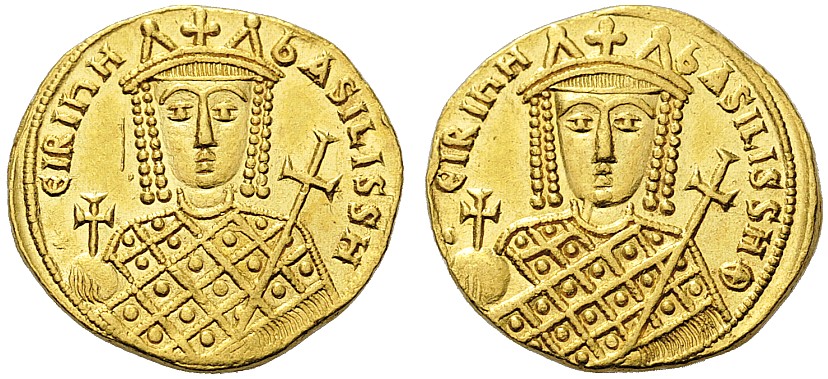
- In keeping with the Byzantine theme (I did try to keep it to one but couldn’t manage it!!) there’s another woman I’d love to see a series about. May I introduce you all to Irene of Athens who was Empress Consort, Empress Regent and Empress Regnant!! Born in the early 750’s in Athens, Irene was from an influential Greek noble family which had significant political influence. Orphaned at a young age, she was brought to Constantinople as a teenager where in 768 she married Leo the son of the then-Emperor Constantine V. Why or how she was chosen as the newest imperial bride isn’t exactly clear cut (she was an unusual choice) although it’s been suggested she was part of a bride show where young noblewomen are paraded around before one is chosen. This would explain her unusual promotion from orphaned noble-woman to future Empress. Then there was the religious aspect of her being chosen; her father in law and new husband were iconoclasts (her father in law in particular was pretty militant about it) whereas Irene evidently showed iconophile tendencies. Whether Constantine V knew about this, we don’t know. Regardless he died a few years after the marriage and Leo became Leo IV with Irene as his Empress. In the early period of his reign he was a lot more moderate than his father although that changed around 780. We have no idea what influence Irene had her on her husband in that regard; I’ve seen suggestions that actually she was a moderating influence and the reason he wasn’t as militant as his father whilst there’s the famous story that Leo’s crackdown on iconophiles in 780 was because he found icons under his wife’s pillow. How he’d never noticed them before I don’t know nor we do know how accurate that story actually is. Now Leo died shortly after and Irene became regent for their son. Despite various schemes and plots, she managed to stay regent and secured more power for herself than any regent had before. When her son came of age, it became clear she wasn’t going to give up power for anyone and pressed on ruling, despite the fact the throne technically wasn’t hers and her son was becoming increasingly pissed at the situation. This came to a head in 797 when Constantine was captured, deposed, blinded and died days later, all on the orders of mother dearest. Despite the fact her son was pretty unpopular, everyone was SHOCKED at how his own mother had treated him. She was then crowned as Empress Regnant and ruled in her own right for a number of years until she was de-throned and replaced with Nikephoros I who had actually supported her against her son and who had been one of her ministers. She died a year later in exile on the island of Lesbos. Now as I’ve said before in tv shows and in history, men are usually allowed to be the anti-heroes who make morally questionable choices whilst still somehow remaining the hero whilst women either have to be the slut, the madonna or the villain. Irene made some pretty immoral decisions but none more immoral than the decisions of many a male monarch. I think it’d be incredible to see a complex powerful female character being the lead in the way Cersei Lannister should have been the lead in Game of Thrones. A series about Irene could easily start with her marriage or if you wanted to skip her father’s in law reign, it could start off with her and her husband became Emperor. I think that’d probably be the way to go and Leo wasn’t emperor for that long; less than a decade so you could easily fit his reign into one season and have the season end with her son becoming Emperor and her his regent. A second season focusing on her regency could then be optional. Once again, the costumes and sets would be stunning and would make a glorious difference to the never-ending Tudor series and costumes that appear on tv consistently!

- Whenever I hear the song Bad Girls by M.I.A which has the lines “live fast, die young, bad girls do it well” I always think of this woman. Pari Khan Khanum. Born in 1548 she was the daughter of Tahmasp I Shah of Persia and one of his various wives. She was married off at the age of around 10 to her cousin Badi-al Zaman Mirza Safavi who her father then named Governor of Sistan. Unusually Pari didn’t go with her husband to Sistan, rather she stayed in the capital with her father; some have suggested that because she was his favourite daughter Tahmasp didn’t want to let her go (although I’d question why he arranged the marriage in the first place if that was the case) whilst I’ve also seen the argument that she never actually married her cousin at all. That they were only engaged but that she chose a life with her father in the capital over married life in Sistan. There doesn’t appear to have been any further interaction between husband and wife; she never visited him, he doesn’t appear to have ever visited the capital again and they never had kids. It’s possible I suppose that there was some communication via letters but there’s no proof of that. So Pari decided to live a life with her dad instead. It wasn’t until his health started deteriorating however that things got interesting. In 1547, he fell ill twice, both times without naming a successor, and the complicating factor in all this was that there was various possible successors with different factions supporting different people. Some clans favoured Pari’s half-brother Haydar whilst others favoured her other half-brother Ismail who was imprisoned at the time. Pari threw her support behind Ismail and even got the Circassians to support him (her mother was Circassian). During her father’s first illness, supporters of Haydar tried to have Ismail killed in prison; it was down to Pari that his death was prevented. Two years later when her father did eventually die, only Haydar was with him and he promptly announced himself as the new Shah. The only problem was that all the guards and men in the palace that day happened to be from the clans that supported Ismail. Realising that he was in deep trouble, Haydar took Pari hostage. That however wasn’t a problem for Pari who managed to get out of it by promising him that not only would she acknowledge him as the new Shah but that she would also convince her half-brother, his supporters, her full blood brother Suleiman Mirza and her powerful uncle Shamkhal Sultan to back him. He naively agreed and let her go which turned out to be a colossal mistake because Pari was bare-faced lying and literally handed the palace keys to her uncle on her way out. Ismail’s supporters entered the palace and promptly founded Haydar (allegedly dressed in disguise as a woman in the royal harem) and beheaded him, meaning that Pari’s half-brother (and her favoured choice) Ismail was now Shah of Persia. However he was still technically in prison so Pari became de-facto head of state and in the immediate period after her father’s death, her home became the centre of government with all the various clans and factions visiting daily. One contemporary wrote that “nobody had any inclination or dared to disobey her command”. Due to a series of unexpected events, it took Ismail some time to get to the capital and when he eventually did, the reunion between brother and sister did not go well. Apparently 19 years in prison had effected Ismail and he was particularly militant about sharing power. And by that I mean he didn’t want to share any semblance of power with anyone. He banned government officials and and high ranking members of the clans from visiting her, seized a number of her properties and dismissed a number of her court officers. Pari as one can imagine was pretty pissed considering all the trouble she’d gone to (including being taken hostage!!) to get Ismail on the throne. Within a year however he too was dead, allegedly at Pari’s orders. In the aftermath of his death, she regained her power and was even allegedly asked to succeed her brother. She refused and along with the high ranking government officials and clan leaders she now had command of, chose Ismail’s successor; his older brother Mohammad Khodabanda. Mohammad was old, blind and had more interest in pleasure than politics. This meant Pari could make a deal with the various clans that made Mohammad shah in name but her Shah in reality. Now this seems like a pretty good idea but it failed. In fact it failed spectacularly because whilst Mohammad was weak, his wife Khayr al Nisa Begum was not and she realised neither her nor her husband were ever going to have power with Pari in the picture. This led to Pari’s sudden and unexpected assassination (she was kidnapped whilst travelling from palace to palace and then strangled). I remember the first time I read Pari’s story and my first thought was, this would make such a great series. Firstly it would have everything I would want in a period drama; scheming, politics, fab costumes and a lead female character that is powerful and brave and bold. It’s such an interesting story and doesn’t happen over a huge period of time so you could cover it in one season. Also The Persian Empire rarely get’s the attention it deserves and there isn’t much of a television-entertainment industry in Iran so they don’t make many series about their history, unlike Turkey which regularly covers different parts of Turkish (usually Ottoman) history. To have a series that shows a rarely-represented period of Persian history would be absolutely amazing and I’d also love to see such an ethnically diverse cast. After all as I mentioned Pari’s mother was Circassian, another one of her father’s wives was Georgian and the different clans all varied ethnically.
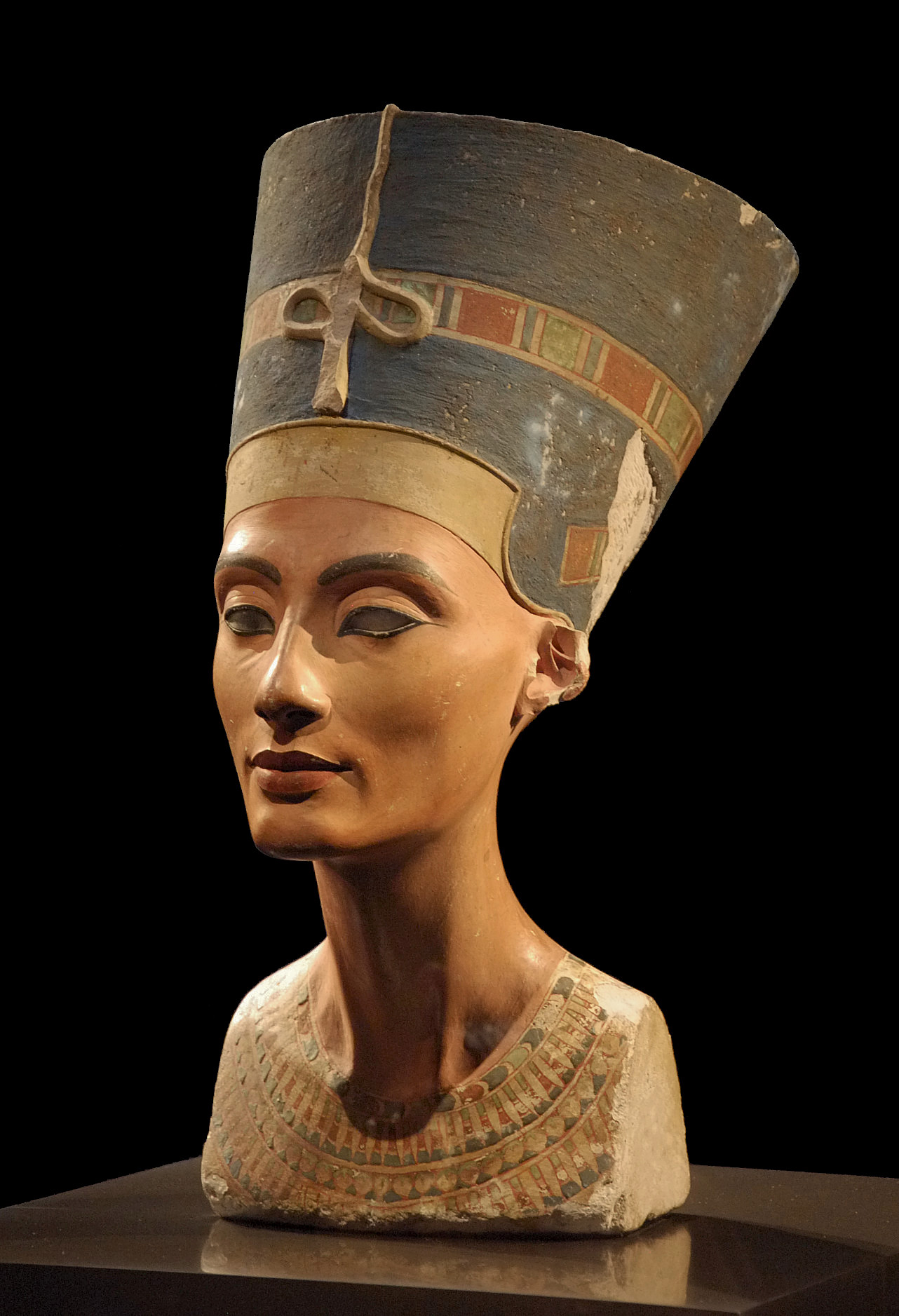
- In the last Dear Hollywood post, I mentioned that if I could get an Ancient-Egypt themed period drama, I’d choose either Hatshepsut (who I wrote about in that post) or Akhenaten and Nefertiti. I chose Hatshepsut (I don’t feel guilty, I adore her) but it was very close and I couldn’t write about another post without mentioning my second choice. Akhenaten and Nefertiti were the rulers of Egypt from either 1353 to 1336 BC or 1351 to 1334 BC; Akhenaten was the son of his predecessor Amenhotep III and his Great Royal Wife Tiye whilst Nefertiti’s origin are pretty much unknown. There are various theories; one is that she was his full blood sister (the Egyptian’s were big into the the whole brother-sister intermarriage thing) however her titles are not consistent with those used by the daughters of Pharoah’s, another theory is that she was the daughter of Ay an influential government advisor who later actually became the Pharaoh and his first wife a priestess Iuy (this theory stems from Ay later calling himself God’s Father which it’s been argued could be used by a man whose daughter married the Pharaoh. There’s no proof of this however) and the third main theory is that she was a foreign princess who came to Egypt to marry Akhenaten (the only evidence for this is that her name means “The Beautiful Woman has Come” which could signify foreign origin). Her origins are not the only unknown thing about her; we have no idea when she married Akhenaten, just that the first of their six daughters was born the year his reign began. When he became Pharaoh she became his Great Royal Wife, in fact it’s entirely possible that she was his only wife at the beginning of his reign, but that the lack of sons, led to him taking others wives (he ended up with four including one of his own sisters). Lets be honest, the main number 1 duty of a queen is to have a son, so the fact she didn’t but remained his Great Royal Wife is pretty interesting. The most fascinating thing about Akhenaten and Nefertiti and the thing that I would base a series about her around, was that they presided over a religious revolution in which they went from worshipping a ton of super important gods to only worshipping one Aten (the sun god). Egyptian religion back then was a super complex polytheistic system that worshipped a literally hundreds of different gods, all of whom were super important and who instilled their powers in the pharaoh. Akhenaten and Nefertiti’s decision to forgo the other gods and focus on a random obscure one was a massive departure from that established system. It’s basically like the Pope deciding there’s more than one god. To say the changes were controversial is putting it mildly and actually after his death, everything reverted back to normal. I mean it’s just bonkers that Akhenaten literally said “forget those gods we’ve been worshipping for thousands of years, we now only pray to the sun god” and then afterwards everyone just sort of pretended it didn’t happen. Insane. One really interesting thing about Nefertiti is the sheer amount of representation she has in artefacts from the period. There are some ancient queens of whom we have 0 evidence of, not even an engraving. Nefertiti’s face however was everywhere. Her likeness appeared on temples and tombs and artefacts and busts and she’s depicted throughout her husband’s reign, consistently with a frequency that far outweighs any other royal wife. In other words it appears Akhenaten was very into his wife. She was also depicted with Akhenaten and their children in ways that were different from other generations of the dynasty; some engravings of Akhenaten and Nefertiti show them doing super mundane super domestic non-kingly things which was unique, as was the style of artwork. Akhenaten and Nefertiti’s era was not just a period of religious upheaval but also of significant artistic changes. Egyptian art at this point presented an idealised portrayal of the pharaoh’s and looking at artwork from before Akhenaten and Nefertiti, you can’t really tell which Pharaoh your actually looking at. This changed during their reign although interestingly Akhenaten and Nefertiti are often difficult to tell apart; she was basically portrayed as the female version of her husband. From what we can gather Akhenaten was not only a pretty devoted husband but that Nefertiti was a very powerful wife to the point where it’s believed in the last few years of his reign she acted as co-regent, potentially due to a plague that was ravaging the empire. One piece of evidence to support this is that in many of the images of her, she’s depicted as her husband’s equal, doing Pharaoh things such as worshipping Aten, fighting Egypt’s enemies and riding a chariot (apparently only kings were depicted doing these things). Now the 3-4 years after her husband’s death is a mess in terms of historiography, due to the fact that because of Akhenaten and Nefertiti’s religious shenanigans, their successors basically tried to write them out of history. Which is why, while we know some things about them because they were so batshit interesting, there’s also a lot we don’t know. There’s evidence of two rulers in that short period after Akhenaten’s unexpected demise; Smenkhare and Neferneferuaten although there’s no broad consensus on who came first. Who was Smenkhare and Neferneferuaten you ask? Well we’re not actually sure. Smenkhare may have been a son in law who ruled for a year or so or Smenkhare might actually have been Nefertiti who took on a male alter ego in order to rule in a similar fashion to Hatshepsut. Neferneferuaten on the other hand was a female Pharaoh who either ruled before or after Smenkhare and who it’s believed was either Nefertiti or her daughter. I’d put my money on it being Nefertiti to be honest; she was front and centre during her husband’s reign and her prominence was unprecedented amongst Egyptian consorts. I mean a politically powerful experienced queen would have been far more likely than her younger, less experienced daughter to have succeeded as Pharaoh. Also due to Hatshepsut there was precedent for a royal wife to wear the crown. Also for a very long time it was believed that Nefertiti died in the 14th year of her husband’s reign however evidence has since been found that she was very much alive and kicking and still very much adored by her husband in the last year of his reign and that she served as co-regent adding to the basis for the theory of her ruling as Nerferneferuaten who was then succeeded by Akhenaten’s son with one of his other wives. That son was none other than Tutankhamun (with one of Nefertiti’s daughters as his Great Royal Wife). Truthfully it’s unlikely we’re ever going to know the exact details of what happened in the years after Akhenaten’s death but before Tutankhamun became Pharaoh however there’s enough source material for a group of talented writers to write a hell of a series. I mean imagine all the things that could be explored; religious upheaval, political drama, questions of succession, the connection between art and politics and the complexity of royal marriages not to mentioned unprecedented wealth; Akhenaten and Nefertiti oversaw arguably the wealthiest period of Egyptian history so I can only begin to imagine how phenomenal the sets and costumes of a tv based on them would be. It would also, as I said in part 1 with my thoughts on a Hatshepsut series, show a different aspect of (North) African history which 9 times out of 10 is based on the last three hundred years in particular slavery. To see Akhenaten and Nefertiti in all their glory would be so cool. You could also fit Akhenaten’s reign and therefore all of his religious shenanigans into one season rather than it being long, drawn out and too complex for a single season. A second season could easily be done if you wanted to continue the story past Akhenaten’s death.

- If any of you have any interest in ancient history, then you may have seen the HBO series Rome that was unceremoniously cut in order to make way for Game of Thrones. The show focused on the twilight years of the Roman Republic and ended with the beginning of the Roman Empire and the crowning of Augustus (in the show he’s usually referred to as Octavian). The drama however didn’t stop with the fall of the Republic and the life of this woman right here is evidence enough of that. Julia Agrippina or Agrippina the Younger as she’s usually referred as, to differentiate her from the mother who shared her name, was the great-great granddaughter (twice over) of Atia, great-granddaughter of Octavia and Mark Antony, great-granddaughter of Augustus, sister of Caligula, niece and wife of Claudius and mother of Nero (yes that Nero). It’s safe to say the apple doesn’t fall far from the tree in this family. Agrippina being a member of that family had a pretty dramatic life from beginning to end; as a child her extremely popular father Germanicus died suddenly (the cause of death is officially unknown but there was a ton of speculation that his paternal uncle and the-then Emperor Tiberius had ordered his death due to paranoia over Germanicus’ significant popularity & increasing power). The death of Germancius, the rumours about Tiberius’ potential involvement and the increasing unpopularity of the Emperor led to a period of intense suspicion and conspiracy, not helped at all by Agrippina’s (very brave) mother who was, to put it nicely, extremely vocal about her belief that her husband had been murdered on the order of the Emperor. This put her at odds with Tiberius and Tiberius’ right hand man Sejanus who after the death of Tiberius’ son led what some might call a crusade against Agrippina’s family. Agrippina’s eldest two brothers were becoming pretty popular and there was a growing consensus that they as Germanicus’ sons should get the throne after Tiberius which threatened the growing influence of the very ambitious Sejanus. This in turn lead to a pretty intense feud between Sejanus and Agrippina’s mother who in true Roman matriarch style absolutely refused to back down. Things in Rome became very testy and very factionalised and Tiberius apparently couldn’t handle the intensity of the situation and so left Rome to live a more relaxing life on the island of Capri, which quite frankly is an idea I understand. It however left Agrippina and her family at the mercy of Sejanus who was left in charge of the empire. Sejanus as I said led somewhat of a crusade against Agrippina’s family, holding a series of show trials against her mother’s supporters, accusing them of treason and sexual misconduct. Various people were executed and exiled, including Agrippina’s brothers one of whom was exiled to Pontia where he was either murdered or forced to commit suicide and another who died in prison after being starved of food. Her mother meanwhile was also exiled to the island of Pandateria where she died two years later of starvation. This left only Agrippina, her youngest brother and her two sisters Livia and Drusilla remaining. Now Agrippina at this point was already a wife having been married off at the age of 13 to her first-cousin once removed who was double her age (ew). We know next to nothing about the marriage and about this brief period of her life in general. It wasn’t until Tiberius’ died and Agrippina’s youngest brother Caligula became Emperor (Sejanus if you’re wondering got his comeuppance and suffered a sudden and unexplained downfall not long after he exiled Agrippina’s mother). Caligula was very close to his sisters (arguably too close if you believe the incest rumours) and gave them a ton of honours, befitting an empress. Around the time Caligula became Emperor, Agrippina gave birth to her son Nero. Apparently her husband after the birth of their son, commented something to the effect of “I don’t think anything produced by me and Agrippina could possibly be good for the state or the people” which I mean isn’t the greatest thing to say about your newborn son but you’ve got to give the guy pointers for self-awareness (and foresight) I suppose. The closeness between brother and sister didn’t last and Agrippina ended up being exiled by her own brother due to allegedly being involved in a conspiracy against him. When Caligula died she returned to Rome and for a while kept a low profile until the downfall of her uncle Claudius’ wife Empress Messalina led to Claudius being in need of a new wife; Agrippina as a great-granddaughter of Augustus and daughter of a still very beloved yet very dead Germanicus brought legitimacy to Claudius’s reign. It also much to the relief of the Roman Senate brought he two branches of the imperial family; the Julians and the Claudian’s together, with the two sides having been feuding pretty much ever since the death of Agrippina’s father. She as Claudius’ Empress was pretty influential; she signed government documents, met foreign ambassadors and basically became Claudius second in command. She also convinced him to adopt her son, something he apparently began to regret before he died quite suddenly. Ancient sources are near unanimous that he was poisoned and 99% of said sources accuse Agrippina; their marriage had become pretty tense in the months leading up to his death and there were concerns amongst Agrippina’s faction that Claudius would name his own son heir above Nero. There’s no consensus of who killed Claudius; ancient sources accuse Agrippina whilst modern historians have cast doubt on his death being murder and have instead focused on his ill health and old age (he was 63) suggesting natural causes. Regardless of how he died, his death made Agrippina’s son Nero Emperor. Now Nero was only 17 and so Agrippina took advantage of his youth and inexperience; she was openly de-facto co ruler and watched senate meetings, issued orders, held court and in all coins and statues, she appeared as an empress regnant. Fo the first year or so of his reign she was basically the one calling the shots however tensions between mother and son grew in the few years afterwards. She ended up being removed from Rome and lived in Misenum where she remained influential, wealthy and popular. Then in 59 AD, Nero ordered his mother’s death. The reasons for the execution are pretty much open to interpretation; contemporary sources couldn’t agree on why Nero did it and in fact they couldn’t even agree on the how. What we do know is that Nero, whose reign is usually associated with decadence, tyranny and debachery, only began to go off the rails after his mother’s death. A guilty conscience perhaps? Without Agrippina, Rome fell into disarray and Nero’s death without an heir to succeed him resulted in the end of the Julio-Claudian dynasty and an intense period of civil war known as the Year of the Four Emperors. Now despite her morally questionable ways I love Agrippina and there’s a line in the film Gladiator that always reminds me of her which is when Marcus Aurelius says to his daughter, “if only you had been born a man. What a Caesar you would have made”. This line is literally perfect for Agrippina; she was cannier, more cunning, sharper, more ambitious and 100x more ruthless than the men around her and let’s be honest pretty much outlived them all bar her son . If I had my way I’d have a season per Emperor; the first would be set during the reign of Tiberius and would show the pretty perilous childhood Agrippina had to endure. The second would be during the reign of Caligula beginning with a young prince full of ambition and dreams of glory and his sisters by his side and would focus on Agrippina having to navigate Rome as her brother’s reign went from promising to disastrous. The third would be during the reign of Claudius and would show Agrippina becoming Rome’s third empress and all the power that comes with that followed by a fourth and final season about the reign of her son Nero that would focus on the feud between mother and son culminating in Agrippina’s downfall and death on Nero’s orders. As much as I’d adore a multi-season show, any of those periods of Agrippina’s life would make a fab series if I’m honest. I’m actually surprised no big budget period drama has ever been made about this era of Roman history. It’s so non-stop dramatic and the costumes and sets would be incredible considering the excess of wealth in this period. As a side-note there’s apparently a new tv show coming that focuses on Livia the first Roman Empress and wife of Agrippina’s great-grandfather Augustus so I’m SUPER excited about that.
Now that’s all for today folks! There will actually be another Dear Hollywood post because I came up with so many ideas so check back soon for more!!!
Thank you, Alexandra x

 The Monstrous Regiment of Women
5 thoughts on “Dear Hollywood // A Wish-List Part 2”