Have any of you ever seen the film Kingdom of Heaven? It’s a Ridley Scott epic released circa 2005 starring Orlando Bloom, Eva Green and Edward Norton among others, that focuses on Jerusalem and the events leading up to the Third Crusade. Male characters (and real life figures) like Saladin, Baldwin IV King of Jerusalem and Guy de Luisgnan are centre-stage whereas the film has only one female character Sibylla Queen of Jerusalem and her storyline culminates in her loosing everything including her son, her hair, her dignity and her strength, only to be saved by a male character/romantic interest at the end. The fact that the real Sibylla ruled for four years as queen in her own right after her sons death is pretty much ignored as is the fact that she had a half-sister Isabella who ruled after her (Isabella doesn’t actually exist in the film at all). At the end of the movie, even Richard the Lionheart makes an appearance. Often in Western media, Richard is exalted and revered as one of England’s greatest kings (despite spending almost 0% of his reign in the country, leaving his legend of a mother to rule) purely because of his antics during the Third Crusade in the 1190’s. But the Third Crusade was not exactly a success and yet Western media often acts as though it were. The reason I bring up Kingdom of Heaven, is that it’s a pretty good example of how Western media has crafted a narrative about the Crusades; it was a bunch of men doing big, brave, bold things with swords in far off lands. Women are left out of the narrative entirely; pretty much the only woman whose crusading shenanigans ever get any real attention is the one and only Duchess of Aquitaine / Queen of France / Queen of England / Duchess of Normandy / Countess of Everything & Queen of my Heart Eleanor of Aquitaine (if you haven’t guessed I love her with my whole heart and could/probably will write about her brilliance at a later date). Part of the reason that Eleanor’s crusading actions get attention is that she was so controversial in her own time that pretty much every man was threatened by her and started all sorts of salacious rumours about her time in the Holy Land. Eleanor however was not the only powerful woman in Jerusalem in the 1100’s nor was she the only one that had to put up with men and their incessant gossip-mongering. So ladies & gentlemen, may I introduce you all to the next subject of my profiles; Melisende of Jerusalem, daughter of a king, wife of a king, queen in her own right, mother of two kings, grandmother to a king and two queens, political extraordinaire and all around superstar.
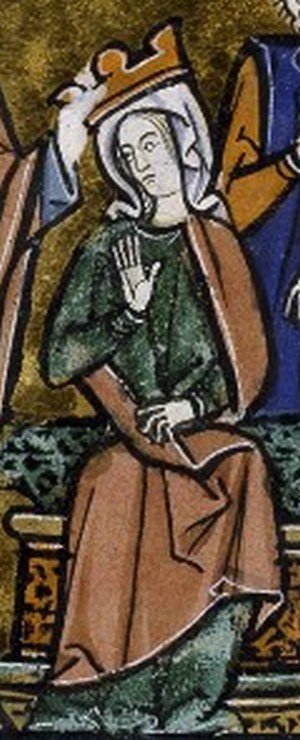
Melisende was born in 1105, the eldest daughter of Baldwin II King of Jerusalem and the Armenian princess Morphia of Melitene. Now at the time of her birth, the Kingdom of Jerusalem was pretty new; it had only been founded in 1099 during the First Crusade and her father who became king in 1118 was only it’s second king. Due to the Christian-Muslim feud and the general political tension in that part of the world, Melisende’s childhood had it’s fair share of volatility; not only was her kingdom and therefore her father at near-constant war but her father at one point in 1123 was taken prisoner and her youngest sister Ioveta ended up being given as one of the hostages to secure his release. Melisende was the eldest of her happily married parent’s four daughters with her mother giving birth to Alice, Hodierna and Ioveta after her. Most kings let’s be honest, would be pretty gutted by four daughters and zero sons and whilst Baldwin may indeed have felt some disappointment, he didn’t show it and openly treated Melisende as his heir, with her taking special precedence in the years after his imprisonment. By 1129 she was referring to herself in official documents as “filia regis et regni Jerosolimitani haeres” [1] and in March of that year she was noted as having witnessed her father making a grant to the Holy Sepulchre in a ceremony in which “she took precedence over all the clergy” [2]. One important contextual piece of info to note is that women were super important to society in Jerusalem and the surrounding Crusader states at this time. Whilst this may be hard to imagine considering their exclusion from the battlefield, it was their exclusion that made them so important. You see men spent so much time focusing on constant-warfare that power was often delegated to their wives, mothers and daughters. Another important factor was that due to the constant-warfare (and the accompanying diseases that often wrecked havoc in wartime) the mortality rate for women was far higher than the mortality rate for men. This meant that compared to other parts of the world women had an elevated position in Jerusalem.
Despite this and the affection Baldwin II evidently had for his daughter/heir, he evidently still hoped for a son; this is inferred by the fact that he didn’t begin looking for a husband for Melisende until she was around 19, an age when most princesses in Western Europe were already married off. Eleanor of Aquitaine for example, who like Melisende was her father’s heir was married off at 14. Eventually with no son on the horizon, Baldwin found it necessary to find her a powerful husband that could rule alongside her. In fact bar Ioveta who took the veil and became a nun, all of his daughters became very political involved wives to powerful men; Alice became Princess of Antioch through her marriage to Bohemond II whilst Hodierna married Raymond II Count of Tripoli. How Melisende felt about being married off to a man she was forced to share her power with, we don’t know. In the late 1120’s, a husband was chosen and in 1129 the marriage took place. Enter this guy below.
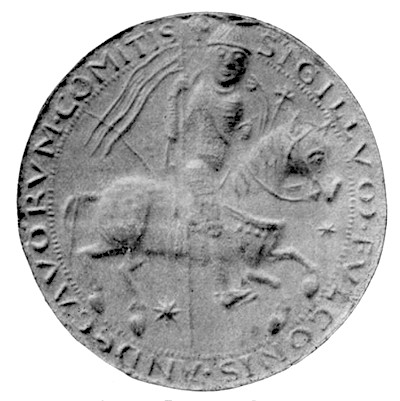
May I introduce to Fulk V Count of Anjou, a powerful and (importantly) wealthy French vassal who was not only a gifted and experienced military leader (which would came in handy in a land as volatile as Jerusalem) but he was also a respected political leader and a widower to boot. He had had multiple children with his first wife Ermengarde of Maine so the succession to his lands in France were secure and his overlord The King of France Louis VI was more than happy to see Fulk go, even encouraging the marriage, having become increasingly irritated by the Anjou dynasty’s growing wealth and power and their inability to do what the French crown told them to. Fulk was chosen not just by Baldwin but also according to William of Tyre, “by the universal counsel of all the princes, ecclesiastical as well as lay” [3]. Effectively the nobility in Jerusalem had to come together to choose someone they considered worthy. Fulk they decided was that guy (even if he was around 15-years older than his new wife). Fulk soon abdicated his role as Count of Anjou and Maine, giving the titles and land to his eldest son Geoffrey (also known as Geoffrey the Handsome) and then said Au Revoir to France and Bonjour to Jerusalem. Fulk and Melisende were married in June of 1129 and unlike other marriages of the period (I’m looking at you Louis VII and Eleanor of Aquitaine), sex was clearly not a problem because their first son was born within a year. There is some debate as to whether Baldwin intended for his new-son-in-law to rule Jerusalem or for Melisende and Fulk to rule jointly. Bernard Hamilton and Hans Eberhard Mayer have differing opinions on this; I tend to favour Hamilton’s view that Baldwin always intended for them to rule together. Mayer on the other hand suggests that after the marriage in 1129, Baldwin considered Fulk the sole heir (having apparently promised this to Fulk) although changed his mind towards the end of his life/on his death bed and instead stipulated that Melisende, Fulk and their son Baldwin (the future Baldwin III) inherit jointly. I’ve seen some suggestion that if Baldwin lived longer, he would have preferred to have passed the throne directly to his grandson although the high infant mortality of the period made that impossible. As I said I’m of the opinion that Baldwin always considered his daughter his heir as he refers to her as such, even in documents signed after her marriage. Her prominence in these documents would have been pointless if Baldwin had no intention of her having any real tangible power. If he was looking to bypass her in favour of her husband, he wouldn’t have bothered. I also think that Baldwin naming Melisende the sole guardian of her son/his grandson, strengthened her position, not just as his daughter but also as the mother of the future king. Now passing power from a father to a daughter was a tricky business in the 12th century and Hodgson makes a point of likening the situation to Henry I in England who tried to leave the throne to his daughter Matilda in 1135 (we all know how that one turned out) [4]. Coincidentally Matilda was married to Melisende’s step-son Geoffrey (who was awkwardly only 7-8 years than his stepmother & 11 years than his wife). Whilst the comparison is an interesting one, it’s important to note that the political situations in England and Jerusalem were vastly different as was the role of women. Another important factor was that Melisende had been raised to be Queen in her own right. Matilda had not.
When Baldwin II died in 1131, Melisende and Fulk were crowned together as co-monarchs with the expectation of the pair holding authority together. That however didn’t necessarily turn out that way. You see Fulk did everything he could to exclude Melisende from power, and he did a pretty good job; there’s very little mention of Melisende in the first five years of their reign and she doesn’t appear to have played a major role in the governance of the kingdom. He also brought a large retinue of men from his native France and effectively stocked the government with these men who were completely and utterly loyal to him. These men were not hugely popular; Angevin men lets be honest are not renowned for being wallflowers and Fulk and his men taking over Jerusalem offended the nobility of the kingdom. There was also apparently some concern that Fulk would try to ignore his father in law’s will and try to install one of his children from his 1st marriage on the throne after him instead of him and Melisende’s son. In those five years, Melisende also failed to bear another child. Having more children in a kingdom that only had one heir would have been an absolute must and Melisende and Fulk’s lack of children (there’s no recorded pregnancies either) could suggest a personal estrangement as well as a political one. If I were Melisende I’d be pretty pissed and I’m not sure I’d want to sleep with the guy either. Keeping Melisende away from power turned out to be a questionable choice as not only did it piss off Melisende but it severely pissed off her supporters within government who were resentful towards Fulk disrespecting the will of Baldwin II who had considered his daughter his heir and who had expected his daughter and son in law to rule together.
One of the most prominent (and most loyal) of Melisende’s supporters was Hugh II du Puiset the Count of Jaffa, a distant relative of Melisende’s who was noted for being particularly loyal to her father. His loyalty evidently extended to his daughter and in 1134 he rebelled. This is where I point out that we don’t 100% know the date of the rebellion but the fall of 1134 seems the most accurate; Hugh was still in control of the county of Jaffa in 1133 and still granting charters meaning he was still in royal favour whilst in the spring of 1134 he’s recorded as staying with Melisende’s sister Alice. He would not have been staying with her, had he openly rebelled against the King, so sometime in the fall of 1134 seems the most likely date. Now Melisende and Hugh were apparently rather close with Bernard Hamilton noting that Hugh as “the only great nobleman of the blood royal in the kingdom, was the natural leader of the queen’s party” [5]. Their closeness was hinted as being more than just a familial bond and the rumour around Jerusalem was that the two had engaged in some of romantic/sexual relationship thus incurring the wrath of the apparently jealous Fulk. That is, to put it mildly, absolute bullshit. There’s simply no evidence of any inappropriate relationship between the two. None whatsoever but sexual slander is the easiest way to ruin a woman. It was then and it still is now. Also might I add, a medieval queen was surrounded constantly by attendants, so logistically it would have been an absolute nightmare slash virtually impossible to have an affair without anyone knowing.
William of Tyre is one of the only chroniclers of the period to explicitly reference the rumoured relationship and he barely mentions it, only suggesting that Hugh was thought to be too intimate with Melisende but offering no evidence or further analysis. He instead says that the true reasons for Melisende and Fulk’s estrangement is unknown. His stating that the true reasons are unknown and his failure to mention the rumoured affair further would suggest that William didn’t give the rumour much credence. Also if she had indeed had an affair, Fulk would absolutely have had the church elements of government not to mention public opinion on his side; this however was not the case. The thing is, I’m not the only one to think the rumour’s bullshit. Most historians do too and even Hans Eberhard Mayer who I’ve disagreed with previously, dismisses a possible Melisende-Hugh love connection as playing a role in Hugh’s decision to rebel. Hugh’s decision to rebel, was a purely political one and he as Melisende’s closest male relative was focused “on safeguarding the rights of the dynasty” [6]. He was evidently not alone in his opposition of Fulk, a there was a significant portion of Jerusalem’s nobles who were openly exasperated with Fulk’s regime and Melisende became the focal point of their opposition; “as the daughter and designated heir of Baldwin II, Melisende embodied the interests of the older nobility of the kingdom who resented their marginalisation by Fulk and his disregard for the precedents established by Baldwin II” [7] . Not only were these nobles being deprived of political power by the Angevin loyalists Fulk had filled government with but as Hamilton notes, depriving Melisende was “not simply a matter of protocol, but one of of patronage; unless the queen had some effective share in the affairs of state, she could not reward her supporters” [8]. Hugh was then openly accused by his step-son of conspiring against the King, a charge that Hugh denied however Eberhard does mention that even his own supporters admitted that he “had refused to obey the king’s commands and was not willing to behave as his subject like the other magnates” [9]. According to Eberhard, Hugh was then summoned to judicially defend himself however failed to show up, and due to the way the law was structured, the failure of a defendant to show up, resulted in them automatically being found guilty which doesn’t seem like a great system but hey it was 1136, what can we expect. This according to William of Tyre lead to Hugh full on rebelling against the King and he could have been successful had he not sought the support of the Egyptians in Ascalon. Eberhard and Hamilton both agree this was a stupid decision, one that lead to Hugh losing the support of the nobles that had once supported him. He also lost public support. The fact Hugh represented a real threat to the King shows how much resentment Fulk had fermented in five short years. Luckily for everyone involved the Patriarch got involved and was able to peacefully negotiate before it could descend into military chaos. Hugh was exiled for three years along with those that still supported him and it was agreed that the money made from his estates in those three years would go to the King instead of Hugh. Shortly before Hugh was meant to leave Jerusalem however he was stabbed in the street (see illustration of said stabbing below) which “caused a colossal uproar in the city and everyone immediately accused the King of having arranged the attempted assassination” [10]. Now according to William of Tyre, the knight accused of stabbing Hugh denied that he had been ordered by the King but did admit he’d done it to get in Fulk’s good books. Although this absolved Fulk of being directly involved, the whole situation was very damaging to his his already unpopular position. Do I think Fulk was involved??? Probably. I wouldn’t put it past him however as we all know from Fulk’s grandson Henry II in 1170, King’s don’t need to explicitly order something for it to be done.

Now where was Melisende in all of this? I’m guessing she was somewhere lamenting the ineptitude of the men around her. I would have been if I’d been her. William of Tyre doesn’t mention her much neither do many other chroniclers however we do know that in the aftermath of the rebellion she “showed her considerable powers of initiative. She rallied her supporters, particularly the church men, obtained lenient terms for the rebel count and when an attempt was made to infringe this settlement, made life so unpleasant for the king that he was forced to recognise that he could only continue to rule with her co-operation” [11]. The first time I read that I laughed out loud. Melisende was clearly not a shrinking wallflower and in the aftermath of an almost rebellion, she showed it. She was apparently extremely livid at the whole ridiculous series of shenanigans that had taken place and in the aftermath took far greater control of the kingdom than she had done before. Many of the nobles rallied to her side, as did the church and the public, thus giving her an upper hand over her husband; the church siding with her is important, it was the first time they had openly done so and showed that Fulk had lost the moral authority to continue as the sole ruler of Jerusalem. Now after the attempted assassination, Hugh fled to Apulia where he died not long after and his death only seemed to further infuriate Melisende who Fulk apparently came to fear. William of Tyre wrote “new domino regis inter fautores et consanguineous retinae tutus omnio erat locus” [12] which according to Eberhard was translated by a contemporary French translator to mean that Fulk actually feared for his own life. Melisende’s wrath was significant and it lasted for quite some time. Eventually the clergy of Jerusalem were able to facilitate a reconciliation between the two resulting in the birth of another son Amalric in 1136. This reconciliation was both personal and political; from 1135 every charter Fulk issued was noted as having Melisende’s consent and William of Tyre pointedly said that Fulk “did not attempt to take the initiative, even in trivial matters, without her knowledge” [13] and it’s also noted by Alan V Murray that when Melisende’s sister Alice “seized the regency of Antioch going against dispositions made by Fulk when he had been accepted as regent there, the King took the Queen’s advice not to make an attempt to remove her” [14]. Which I like to interpret as Melisende warning her husband not to go against her little sister. Sisterhood, we like to see it. Further sources from the period confirm that Melisende was fully engaged in the politics of the state after their reconciliation and William of Tyre “attributes the successful siege of Banyas to the zealous efforts of the Queen aided by the vigorous work of those left in the kingdom during Fulk’s extended absence with the royal army” [15]. Between their reconciliation in 1135/1136 and Fulk’s death in 1143, the pair ruled fully as co-monarchs, the way they should have from the minute her father died. Not only did she now have political power, but she was also able to flex her patronage muscles and together with her husband she co-founded the Abbey of Bethany. Melisende was also noted to have “directed donations to a number of other religious communities throughout the realm” [16] and the royal couple were seemingly involved in the renovation Church of the Holy Sepulchre, the central Christian place of worship in the city. Fulk also commissioned the Melisende Psalter, an illuminated manuscript now kept in the British Library (see image below).

The whole co-ruling thing was finally going pretty well for them after a rough few years initially. This peace however wouldn’t last and in 1143 Fulk died in a hunting accident leaving Melisende in somewhat uncharted waters. What happens next you may wonder?? Well you’ll just have to come back and have a look at part 2 which should be up soon.
Hope you enjoyed part 1 of my profile of Melisende of Jerusalem. See you soon!
Alexandra x
References
[1] Bernard Hamilton, “Women in the Crusader States: The Queens of Jerusalem 1100-1190”, in Crusaders, Cathars and the Holy Places, ed by Bernard Hamilton, (Ashgate Publishing, 1999) p. 149.
[2] Bernard Hamilton “Women in the Crusader States: The Queens of Jerusalem 1100-1190”, in Crusaders, Cathars and the Holy Places, ed by Bernard Hamilton, (Ashgate Publishing, 1999), p. 148.
[3] Natasha R Hodgson, “Women, Crusading and the Holy Land in Historical Narrative”, (The Boydell Press, Woodbridge, Suffolk, 2007), p. 76.
[4] Natasha R Hodgson, “Women, Crusading and the Holy Land in Historical Narrative”, (The Boydell Press, Woodbridge, Suffolk, 2007), p. 77.
[5] Bernard Hamilton, “Women in the Crusader States: The Queens of Jerusalem 1100-1190”, in Crusaders, Cathars and the Holy Places, ed by Bernard Hamilton, (Ashgate Publishing, 1999) p. 159.
[6] Alan V Murray, “Women in the Royal Succession of the Latin Kingdom of Jerusalem 1099-1291″, in Mächtige Frauen? Koniginnen and Fürstinnen in europäischen Mittelalter”, 11-14, ed Claudia Zey, (Ostfildren, Verlagsgruppe Patmos, 2015), p. 141-142.
[7] Erin Jordan, “Corporate Monarchy in the Twelfth-Century Kingdom of Jerusalem”, Royal Studies Journal, Vol 6, No.1, (2019), p. 7.
[8] Bernard Hamilton, “Women in the Crusader States: The Queens of Jerusalem 1100-1190”, in Crusaders, Cathars and the Holy Places, ed by Bernard Hamilton, (Ashgate Publishing, 1999) p. 150.
[9] Hans Eberhard Mayer, “Studies in the History of Queen Melisende of Jerusalem”, Dumbarton Oaks Papers, Vol 26, (1972), p. 102
[10] Hans Eberhard Mayer, “Studies in the History of Queen Melisende of Jerusalem”, Dumbarton Oaks Papers, Vol 26, (1972), p. 103.
[11] Bernard Hamilton, “Women in the Crusader States: The Queens of Jerusalem 1100-1190”, in Crusaders, Cathars and the Holy Places, ed by Bernard Hamilton, (Ashgate Publishing, 1999) p. 151.
[12] Hans Eberhard Mayer, “Studies in the History of Queen Melisende of Jerusalem”, Dumbarton Oaks Papers, Vol 26, (1972), p. 106.
[13] Bernard Hamilton, “Women in the Crusader States: The Queens of Jerusalem 1100-1190”, in Crusaders, Cathars and the Holy Places, ed by Bernard Hamilton, (Ashgate Publishing, 1999) p. 150.
[14] Alan V Murray, “Women in the Royal Succession of the Latin Kingdom of Jerusalem 1099-1291″, in Mächtige Frauen? Koniginnen and Fürstinnen in europäischen Mittelalter”, 11-14, ed Claudia Zey, (Ostfildren, Verlagsgruppe Patmos, 2015), p. 142.
[15] Erin Jordan, “Corporate Monarchy in the Twelfth-Century Kingdom of Jerusalem”, Royal Studies Journal, Vol 6, No.1, (2019), p. 8.
[16] Erin Jordan, “Corporate Monarchy in the Twelfth-Century Kingdom of Jerusalem”, Royal Studies Journal, Vol 6, No.1, (2019), p. 8

 The Monstrous Regiment of Women
3 thoughts on “MELISENDE OF JERUSALEM // Part 1.”